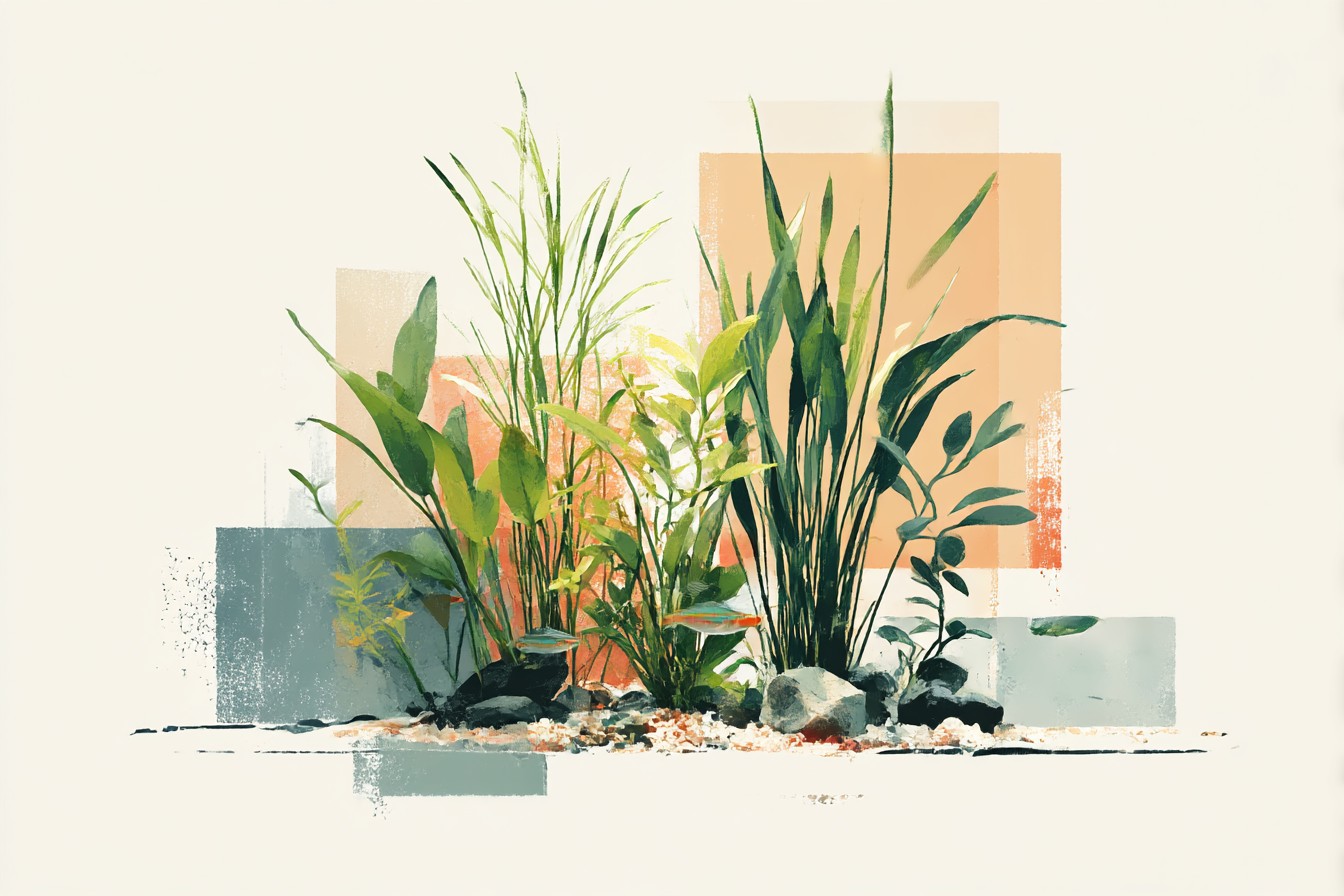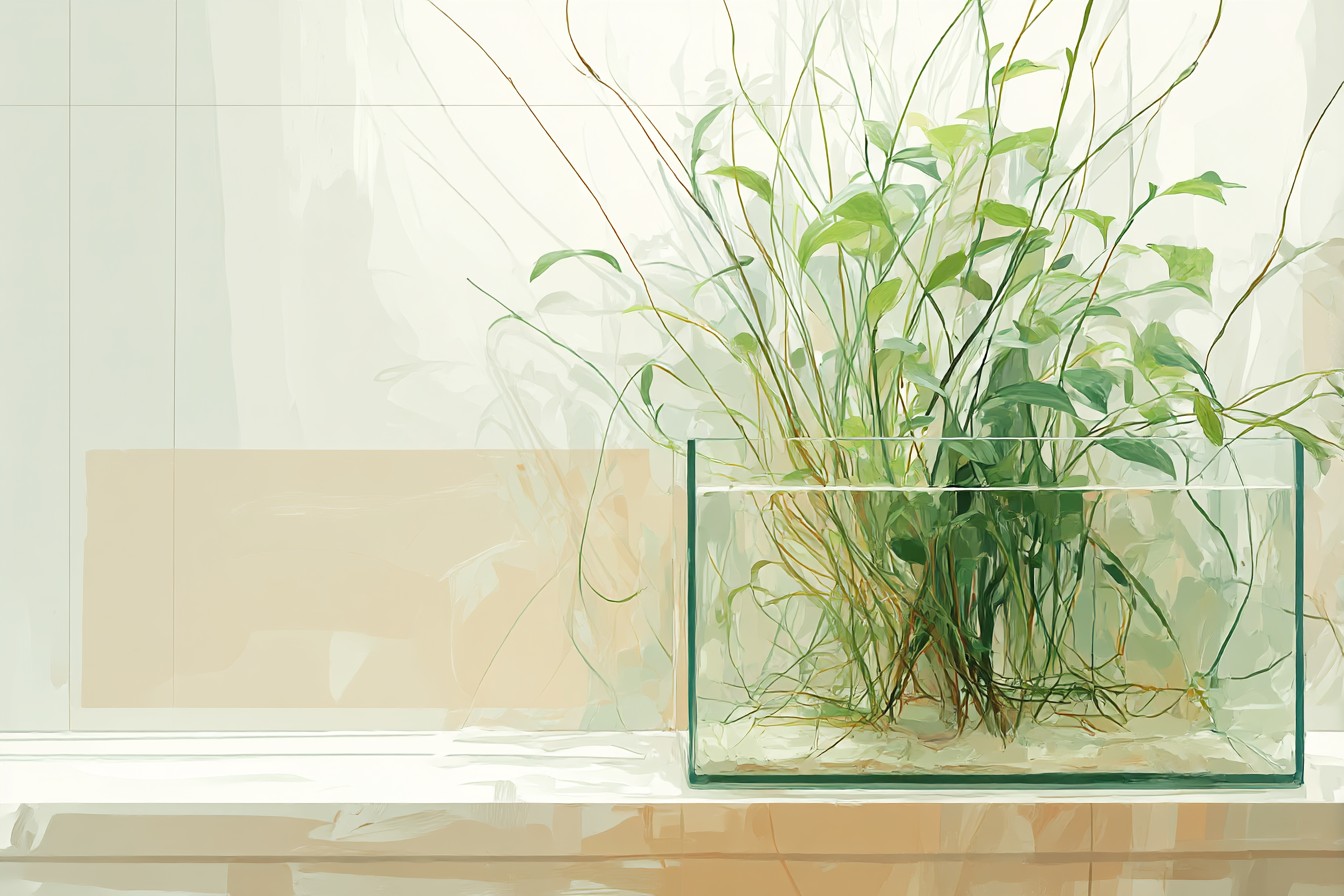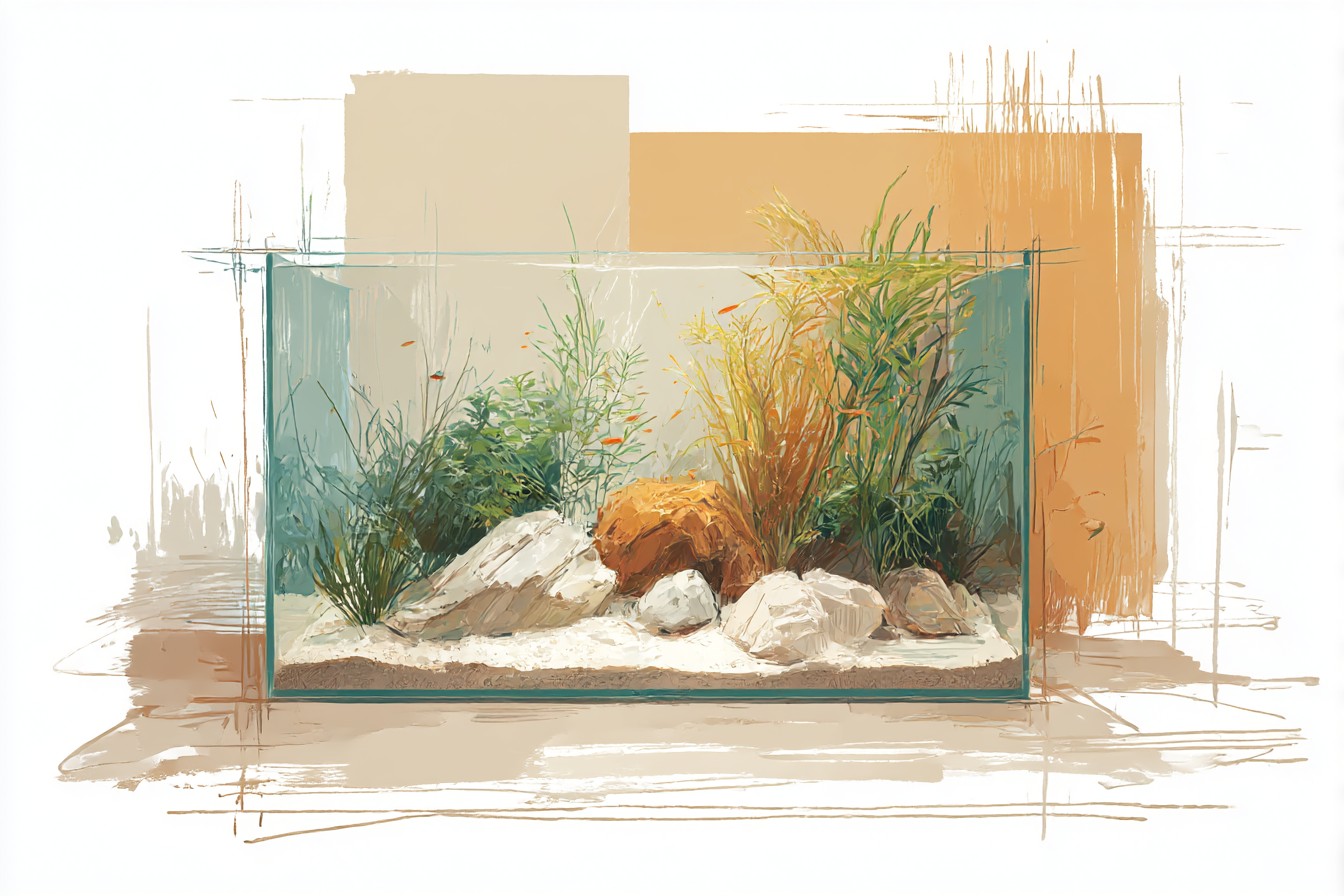
You know what’s funny? After setting up tanks from 5-gallon cubes for desktops, to 75 gallons that nearly cracked my floor, I always find myself coming back to a 20 gallon. There’s just something about that size that… works.
It’s not so small that you’re bashing your head against its limitations, but it won’t easily take over your life either. Believe me, I’ve been on both of those paths and neither of them were too much fun. When I moved into my one bedroom flat after the divorce space was definitely on my mind.
I set up a simple 20 gallon long purchased from Petco in one of their dollar-per-gallon sales – somewhere in between “I want to try this hobby” and “I don’t want to be evicted.” The first one definitely taught me more about aquascaping than any forum post or YouTube video ever could. Mostly through my spectacular failures which found me staring into the green gunk I’d created at 2am trying to figure out what I did wrong. 20 gallons are very forgiving though, and allow you enough room to make something that resembles intent.
I remember my first legitimate aquascape created in that old 20-long, an Iwagumi that I spent about three weeks planning.
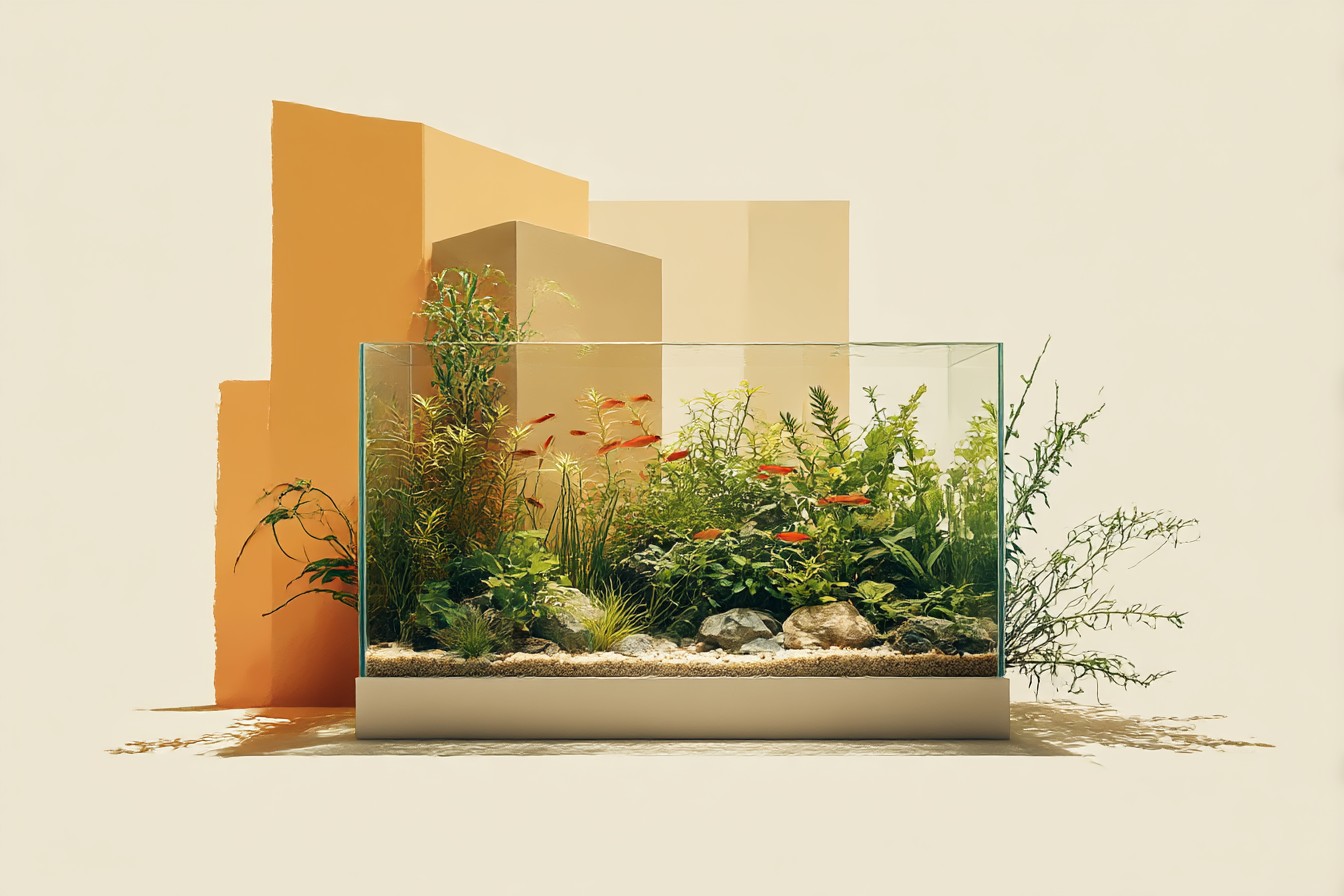
Three pieces of Seiryu stone nestled into artfully arranged asymmetry (or so I hoped) carpeted with dwarf baby tears that I ordered online after reading that they were “beginner-friendly.” They aren’t really, but at the time, I didn’t know that yet. The scale of a 20-gallon tank gives you room to really create depth and visual interest.
In my tiny 5-gallon attempt, everything just looked artificially cramped no matter how I arranged things. The 75-gallon attempts were so overbearing in aspect that I could only stand in front of them paralysed, not knowing where to even begin. 20 gallons, though?
That’s the sweet spot, allowing you to experiment with different styles without losing your sanity or your security deposit. I’ve attempted and failed almost every style imaginable in that size tank. Dutch style, ultra-organised chaos of colour if you’re not familiar – I bombed terribly at this style because I couldn’t keep up with the cutting schedule that comes with it.
Nature style, the one that mimics actual underwater habitats – more successful here, especially with one layout that I did early on using spider wood reminiscent of fallen tree branches. Ironically, Iwagumi keeps calling me back. There’s something meditative about the minimalistic stoic positioning of stones, even if I did intentionally spend a whole Saturday moving three rocks intermittently only a millimeter or two at times trying to find a perfect balance.
Doing a 20-gallon layout properly starts with a good foundation. I learned that the hard way after my first attempt devolved to a swamp within two months. It turns out substrate is of more importance than I thought starting out.
I started with just basic aquarium gravel since it was cheap, and then I wondered why my plants looked like they were slowly dying. I switched to ADA Aqua Soil after reading recommendations for it on some aquascaping forum, and the difference was immediate. Plants actually started growing instead of just… existing.
One trick I picked up from watching way too many Japanese aquascaping videos is to slope the substrate higher in the back. Sounds simple but it makes a huge difference in creating depth. I usually build the back up to about 4-5 inches thick using a mix of Aqua Soil and small pieces of lava rock for structure, with the front about 2 inches deep.
Creates this illusion of actually looking into a landscape instead of just staring into a tank with stuff in it. Hardscaping is where things get interesting and some of my biggest mistakes have taken place. Earlier on I had this horrible tendency of cramming way too much wood/rock into a tank.
I saw these amazing competition aquascapes on line and thought “more must be better” then ended up with something that looked like a hardware store exploded underwater. Learning the power of restraint took time and a few awful rescapes where I stripped a tank down and re built it from goldfish rocks. The golden rule I eventually figured out is “usually about a third hardscape, two thirds open”.
That gives you structure without making everything feel crowded together. My current favourite 20 gallon method uses a single large piece of spider wood positioned off centre and angled down to create the illusion of large tree roots. Added a few small pieces of dragon stone around the base for contrast – the smooth round stone plays really nicely against the detail of the branching wood.
With a 20-gallon you can really branch out (pun intended) in the plant selection. You have a fair amount of room to make layers – carpeting plants in front of the mid-ground species which play off of the hardscape, then taller background plants which provide a sweet sense of depth. I’ve recently become quite fond of Monte Carlo for carpeting, as it’s a lot more forgiving than dwarf baby tears but still grows in to that nice lush lawn effect.
Excelsior plants for the mid-ground are always fun for me, so Cryptocoryne wendiis work great ‘round the rocks, waving nonchalantly as some fish sweeps low across their surface. A decent plant for the back is Rotala H’ra. It grows potently but not overly so, fast enough to satisfy me, and slow enough not to create total chaos.
A good idea is to find mixes that work but look vastly different in texture so there’s visual distinction. Too similar, and everything falls to green mush; too different, and it’s as if a nameless plant shop exploded. One plant I adore using in this size tank is Bucephalandra.
Some people think they’re boring because they won’t grow into a green mass overnight. I like that they settle in when you arrange them, when you tie a few pieces to your driftwood with some fishing line and let it do what it do. Have fun watching them spread themselves naturally over the course of months, until one day they look as if they’ve always been there.
That’s magic! Lighting almost ruined my first honed aquascaping attempt. I made the newbie mistake of thinking more light was better, cranked it up on a cheap LED fixture and within 2 weeks had an algae explosion that would make a swamp look clean.
Everything covered in nasty ass hair algae no method of manual assistance could control. Now I run a Twinstar 600E on my main 20 gall at ~60% intensity for about 6-7hrs every day. Moderate lighting seems to temp the algae enough to alleviate most problems whilst still giving the plants plenty of power for growing.
Consistency was more important than intensity – having the same length photoperiod each day gave the plants a chance to find their own rhythm. Speaking of algae remember my epic battle with green spot algae in what was to be my masterwork Nature style scape. Everything went to plan and everything was going brilliantly, plants growing well, hardscape appearing totally natural, even establishing a decent moss carpet on the driftwood!
You Might Also Like
And then came the little green dots on my glass and rocks. For some unknown reason everything tumbled into oblivion, in a couple of weeks everything was covered. Tried everything, reducing the lighting, changing the fert dosing, increasing the frequency of water changes, nothing worked.
Even tried being pro-active and in despair added in an army of Amano shrimp, and nerite snails. Took about 3 weeks but they started to clean everything up, interesting to watch as well. The shrimp went back and forth methodically over every surface whilst the snails went for glass and smooth rock.
Made me realise how important the cleanup crew is in maintaining balance. Water maintenance in a 20-gallon isn’t hard, but it does require consistency. I do a 25-30% water change every week, generally Sunday mornings while I have my coffee and watch my tank.
Some think that’s excessive, but smaller tanks are less stable than larger systems. The parameters can swing faster in 20 gallons than they can in 75, so I do regular water changes to help maintain that stability. I do test the parameters from time to time, but quite honestly, I’ve found I can read my tank through observation more than numbers.
If my plants are healthy and my fish are active, I don’t even worry if my pH is 6.8 or 7.1 – as long as it remains stable, duties and all that. My worst tanks have been the ones where I obsessively tweak the chemistry trying attain “perfect” parameters I read about online. Plant trimming is hands down my favourite maintenance task.
Sounds weird, right? Just something satisfying about remolding that growth, keeping to the design you laid out originally. Stem plants like Rotala need to be trimmed every two or three week before they hit the surface and start creating shade.
I use real aquascaping scissors now – I bought myself a nice long pair from Green Leaf Aquariums after some painful times struggling with regular scissors that were too short and awkward to use underwater. I always found that the trimming becomes almost a meditative thing. Making careful cuts through stems, and replanting the healthy tops, heaving away the lower portions that had lost their leaves.
Every trim is another opportunity to tweak the design or redirect growth, or keep in cheque each species when it starts to dominate. CO2 injection is where things get technical, and to be honest, it’s where things get expensive! My first few 20 gallon tanks were low-tech affairs, simply good lighting and regular fertilizing, and hardy plants for the most part.
I had good success with java ferns, Anubias, Crypts, mosses, so on. But when I began playing with more demanding plants like glossostigma, or trying to grow dwarf hairgrass, CO2 had to come into play as well. I currently use a basic paintball CO2 system on my high-tech 20-gallon, shooting for around 30 ppm during the photoperiod.
I monitor with a drop checker which will change colour based on the amount of CO2 floating in the water. When dialed in, it makes a dramatic difference in the rate of growth and colours of the plants. Not only does the tank grow much quicker, but previously impossible plants to have done well in a low-tech fashion can now be grown!
I’m a big fan of CO2, and even learned about it the hard way. After a malfunction on my regulator, I overnight overdosed the tank with CO2 and woke up the next morning to all of my fish gasping at the surface of the water, CO2 poisoning. By simply shutting off the CO2 supply and dramatically increasing surface agitation with an air stone, I was able to save the majority of my fish (but lost several ember tetras that I had grown rather attached to!!).
Now I keep a backup air pump just in case and cheque my drop checker religiously! You will need to exercise restraint in fish selection for a 20 gallon aquascape. The tank is much bigger than you think, especially when empty, but that bioload accumulates quickly.
In terms of schooling fish, I like species that occupy a smaller niche and complement the plants rather than overpowering the space visually. Ember tetras are a favourite; their orange bodies bright against the green plants, they remain small, and a school of 10-12 creates lovely movement without dominating. Cleanup crew is pretty important.
Oto catfish do a wonderful job with the soft stubbly green biofilm growing on leaves and glass, and don’t harm a single thing as they work through the tank. In addition to otos, amano shrimp are bulldozers – algae eating maniacs, but strangely interesting to watch as they methodically scour every surface for tidbits. A few nerites will take care of any spots missed, plus they won’t breed in freshwater, so no invasion of snails overrunning your tank with baby wyvern shells everywhere—at least until you expand your snail farm in a few months, the next infection settled strategically around the kitchen, while an unfortunate amphibian infestation spreads beyond your wet tank.
My current favourite 20g contains a school of twelve ember tetras, six otos, four amano shrimp, and two zebra nerite snails. It’s a low bioload, well within limits, but everyone knows their ecological purpose, and visually speaks to each other. They provide focal interest points that pull your eye wandering around the tank, glassy poppers now and then blasting through the plants.
Meanwhile, the cleanup crew works quietly in the background, keeping the maintenance peeling away.
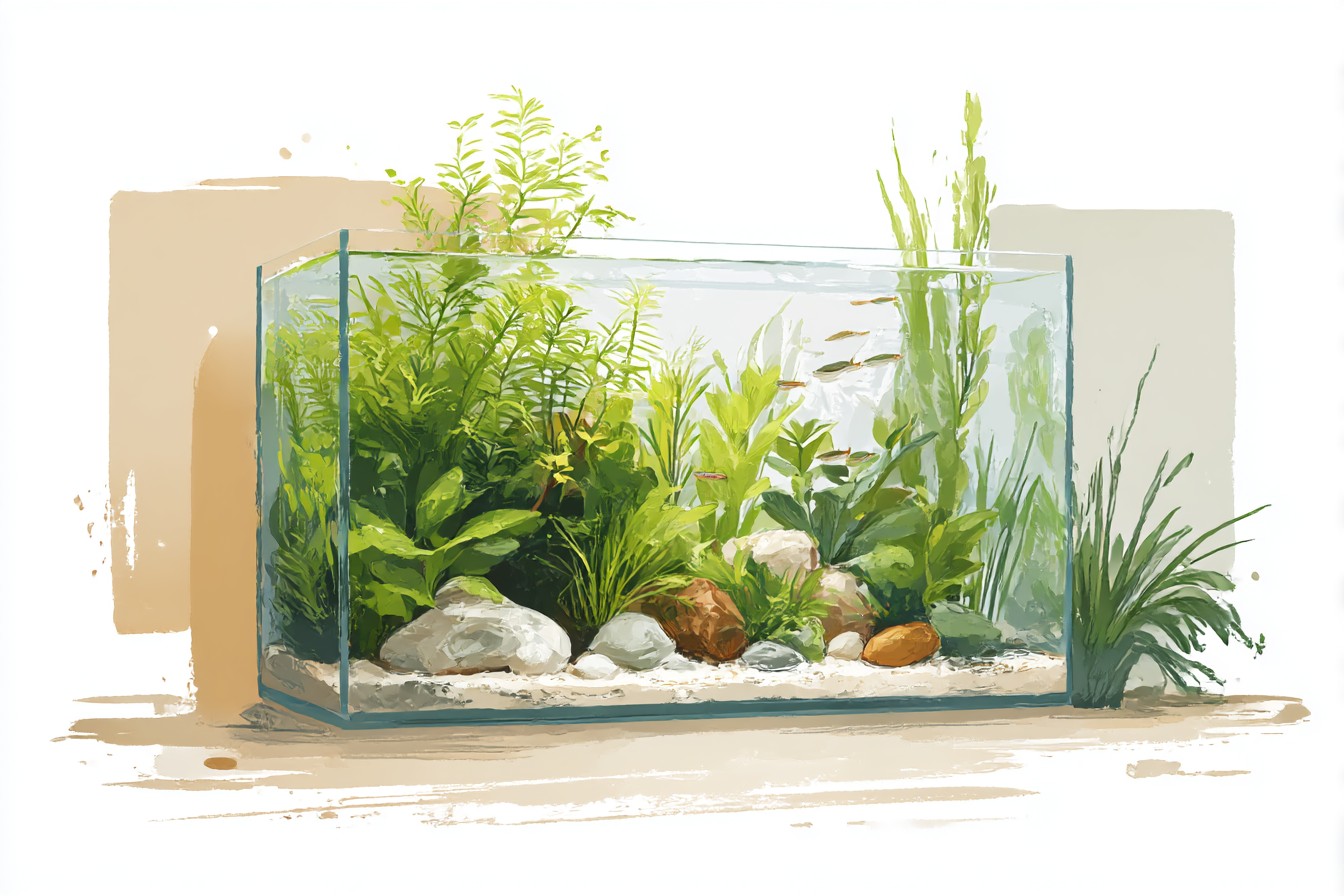
What I love about the 20g is how it restricts you, forcing you to choose deliberately. It won’t work strewing random things you like about willy-nilly.
There’s no room for that. Each plant choice, each piece of hardscape, how many fish—all of it has to play a specific role in the narrative you’re building together. It’s like the poetry of haiku versus prattling enormous novels of introspection; the limitation found in each magical syllable removes the need for introductions and word strings that pad the way and takes you somewhere more authentic.
Five years later, and probably a dozen variations of 20g, I’m still discovering what else these tanks are capable of housing. I’m currently planning a paludarium build in a 20-long, part underwater forest, part terrestrial landscape to write in. In making this my most ambitious so far, I’m sure it’ll go pear shaped, fail miserably, and I’ll butcher the entire thing into previously confessed pwnsome mistakes.
But that’s the addictive part, that keeping me hooked in the first place and renewing my excitement; always something new to try, some new way to step on my high ideals while flipping them upside down. And in this 20g? Failure is easy.
Success is possible.