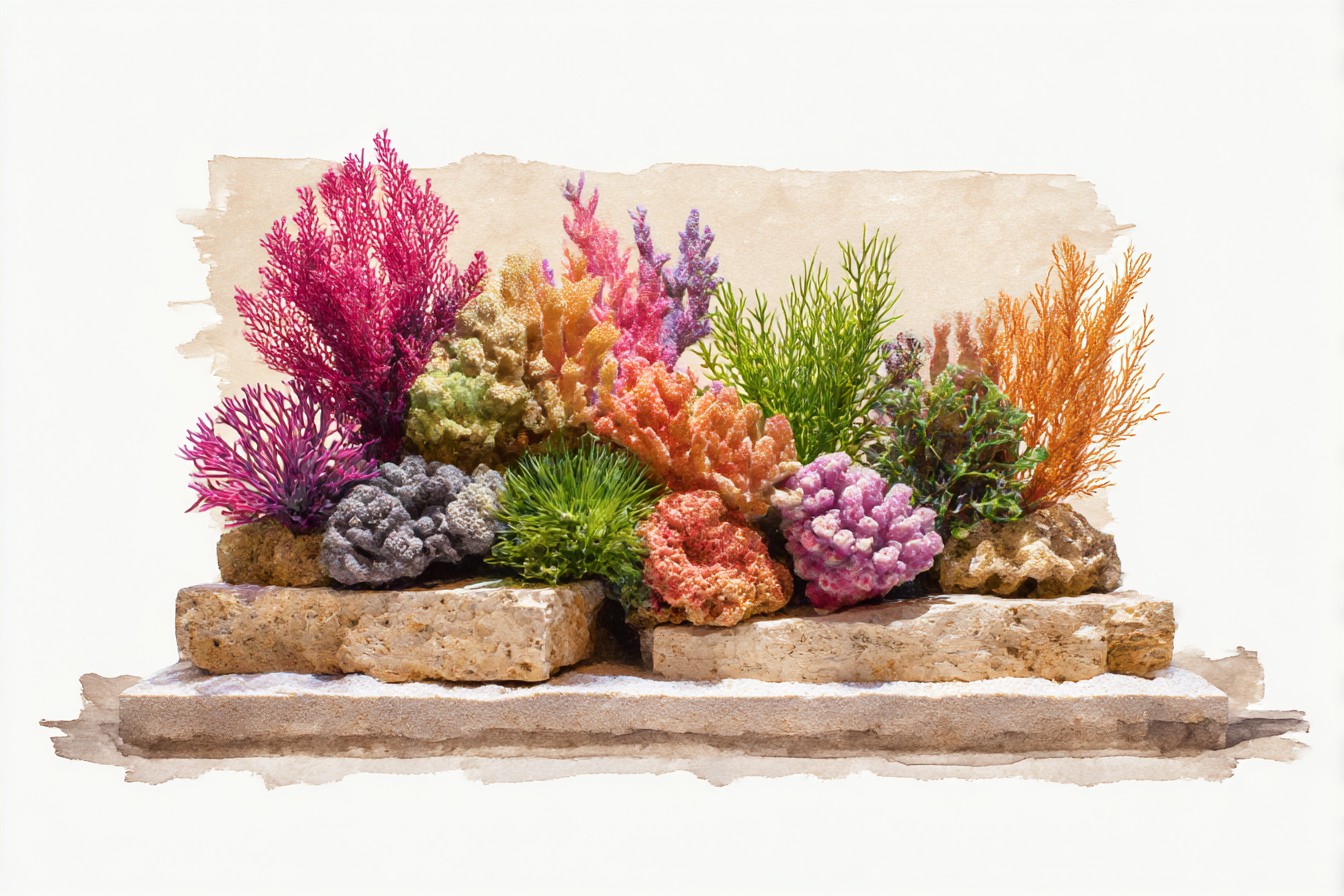
Building your reef tank hardscape correctly is what decides if your corals will flourish or suffer for the coming years. Do it wrong and you’ll be battling algae outbreaks for months, watching countless dollars worth of corals die because they cannot take hold, or agonising over dead spots where water stops flowing. Build it right and you give your marine life a chance to prosper whilst making your maintenance workload as easy as possible.
The construction isn’t just for show. Aside from giving your fish places to explore and coral places to attach, your hardscape provides biofiltration surface area, creates flow throughout the aquarium and delineates territories that allow schooling fish and territorial specimens to live together.
There are scientific reasons behind the best practices of successful reef aquarium hardscaping.
Let’s examine them.
The Science of Reef Tank Hardscape Construction
Biological Surface Area and Beneficial Bacteria
Your live rock is your aquarium’s main biological filter. The porous nature of rock provides lots of space for beneficial bacteria to colonise and start processing fish waste, detritus and anything else that comes along.
In fact, properly cured live rock develops colonies dense enough to handle the bioload from a densely stocked reef aquarium within weeks (Institute for Environmental Research and Education).
The challenge comes in building enough rock into your tank to provide sufficient surface area for biological filtration without crushing your budget or inhibiting water circulation. Not allowing enough water flow through your live rock leads to dead spots where anaerobic bacteria take hold. Too little live rock in your system means you won’t have enough surface area to filter out the nasties.
Water Flow and Circulation
Your tank hardscape also determines flow characteristics. Corals get food and oust waste via water movement. Certain species, such as large gorgonians and azalea corals, actually require low flow in order to survive. Other species, such as staghorn corals need high flow to blast away detritus and deliver zooplankton.
Branching structures within your aquarium help provide these various needs all within the same tank. If water flow is too slow or stops entirely, your tank develops dead spots. These become nutrient traps that feed algae and cause dead zones where little marine life will thrive due to lack of oxygen.
By carefully placing rocks within your tank you can create channels that push water flow throughout the aquarium, stopping just short of creating areas of excessive turbulence that can damage corals.
pH Stability and Alkalinity
Having enough live rock in your aquarium also contributes to pH stability. Calcium carbonate, what live rock is made from, slowly dissolves in your aquarium adding buffering agents to the water column. This helps maintain steady alkalinity levels which your corals require to build their skeletons and leads to less frequent water changes.
Uncured live rock can actually have the opposite effect as it introduces organic debris to your system. As that decomposes it releases ammonia, nitrites, phosphates and other nutrients that can cause spikes and crashes in water parameters. Most people allow their live rock to cure for 2 to 6 weeks (Institute for Environmental Research and Education) which eliminates this threat before fish or coral are added to the aquarium.
Primary Reef Tank Hardscape Construction Considerations
Amount and Type of Live Rock
The old rule of thumb was 1 to 2 lbs. of live rock per gallon (Institute for Environmental Research and Education). While that still works, many people shoot for 1 to 1.75 pounds of rock per gallon (Reef Tank Resource). Using a 200 litre tank, this equates to about 45-70kg of live rock. Depending on where you shop, live rock can cost anywhere from 4 to 10 dollars per pound (Aquariumia). That’s anywhere from £360-700 worth of rock.
The type of rock you choose matters too. Dense, heavy rock won’t provide near as much surface area as a light, porous variety. However, it does create a more stable base to work from when building your hardscape. Most people use a combination of the two. Choosing heavier rock for the skeleton of their design and then supplementing with interesting shapes and lighter rock for the areas that are visible.
If you want to cut some of the cost of your build, you can substitute base rock for some or all of your live rock. Base rock takes anywhere from 8-12 weeks to collect enough beneficial bacteria to cycle your aquarium, assuming you seed it with live rock or bacteria supplements. It takes longer than cured live rock, but gives you the same biological filtration capabilities in the end.
Stability
One of the worst disasters you can run into is having your aquarium collapse. Water rushed out everywhere, holes in glass, and pretty much crushed any corals you happened to have in that area. Avoid this disaster by making sure all parts of your hardscape are stable. Don’t rely on sand to keep things in place. While it might look pretty to have rock peeking out from the sand, water flow will eventually move that sand and could cause what you built to collapse.
You Might Also Like
Pay attention to how each piece connects to another. Notching rocks together where they meet helps bind them together. Natural rock formations should fit together without too much gap. Once completed, give the whole thing a gentle shake from a few angles. Rock should not be moving. If it does, reposition until everything is stable.
Bonding your Rocks Together
If you want something to stay put, bonding your rocks together is the way to go. There are aquatics safe underwater epoxy putties that allow you to permanently connect rocks. Seachem’s CoralCrete (official link) has a working time of about 5 minutes so once you push it into place, you have 5 minutes to adjust. It takes 24 hours to fully cure so it isn’t a rush job.
Nyos Reef Putty (official link) is another popular option. Nyos has an initial set time of about 3 hours, but doesn’t fully Harden until about 24 hours. This gives you more time to position rocks, but you’ll need to work faster than you would with CoralCrete.
Cleaning both surfaces you want to bond is imperative. Brush off algae, detritus or any other material that could prevent the rocks from bonding to each other. Get the putty into any crevices you can. This isn’t just a chemical bond, you’re creating little pockets that fit rocks together like a jigsaw puzzle. When possible, allow your connections to cure out of the water. It may take longer, but is stronger than curing them underwater.
Think about future access when putting rocks together. You don’t want to permanently glue your entire hardscape together. There are places you’ll need to access for cleaning, maintenance or equipment installation. Leave access to these places open.
Sand Bed Tips and Tricks
Sand Depth
Suggestions range from 1 inch to 2 inches deep (Bulk Reef Supply). Deep enough to look good and provide ample surface area for beneficial bacteria, but not so deep that it fosters anaerobic bacteria growth or makes maintenance a pain. Deeper sand beds require more effort to keep clean. Shallow sand beds don’t stay aerated deep down which can cause problems with breaking down detritus.
Depending on the species you intend to keep some species of fish and invertebrates require deep sand beds. Certain wrasses are burrowers and like to spend the night inside your sand bed. Likewise, some filter feeders process sand as part of their diets. These organisms may require beds up to 6 inches deep (Bulk Reef Supply).
Avoid sand beds that are 3-4 inches deep. They don’t stay fully aerated, like deeper beds, but aren’t shallow enough to allow the aerobic bacteria to establish themselves. You’ll soon find these beds developing areas of partially decomposed detritus that leech out nutrients and smell awful.
Sand Grain Size
Fine grain sand may provide more surface area for bacterial development, but it moves. A lot! If you have high flow areas that blow around your sand every time the powerheads kick on, you’ll find that same sand moving over your corals trying to settle. Coarse grain sand stays put, but doesn’t offer much surface area for good bacteria to colonise.
Mix it up! Use fine sand in lower flow areas and coarse grain sand near powerheads and such. Different sized grains also create different micro-environments within the aquarium which promotes different bacterial colonies.
Avoid play sand or sandbox sand from the hardware store. You just don’t know what else is in that sand. Marine aquarium substrate has been screened and is pH neutral before packaging. Sure it costs more, but can prevent foul smells and poisoned fish.
Do you remember building that awesome sandcastle at the beach as a kid? Hopefully, you took your time and paid attention to how each grain of sand locked together when making your towers. Same principal applies here.
Mistakes to Avoid When Building Your Reef Tank Hardscape
Thinking ahead can save you a lot of hassle down the road.
Resources Used in this Article
- Aquifarm – Livestock Considerations when aquascaping
- Bulk Reef Supply – Aquarium sand bed depth guide
- Charterhouse Aquatics – Nyos Reef Putty Product Info
- Marine Depot – Reef Skimmers forum discusses live rock quantities
- Marine Depot – Blog post on how much live rock
- Marine Engineers – Determining flow in your tank
- Marine Engineers – Designing water flow through your tank
- Marine Engineers – Live rock curing process
- Marine Engineers – How to properly turn over water in your tank
- Marine Engineers – How much pH buffering live rock adds to a system
- Marine Engineers – Match stock bioload with appropriate filtration
- Marine Livestock Conservation – Best practices for tank layout
- MLC – Container Media for Beneficial Bacteria
- Nature SucES – How to cure Live Rock
- Nano Reefs – Recommended quantity of live rock
- Nano Reefs – How to cure live rock
- Reef2Reef Aquarium – How much live rock should I buy?
- Reef Botanicals – Live Rock quantities
- Reef Botanicals – Live rock as a pH buffer
- Reef Central – Flow effects on livestock
- reefculture – Live rock curing times and hints for building your aquarium rock scape
- Reef Tank Resource – How Much Live Rock Calculator
- Reef Times Online – Difference between cured versus uncured live rock
- Reefurniture – How Much Live Rock Should I Buy
- Rethink Aqua – Learn How Much Live Rock You Need
- Solutions @ Marine Depot – Building your Aquarium Hardscape
- Seachem – CoralCrete FAQs
- The Reef Building Blog – Step by step guide on building your aquarium hardscape
Wrapping It Up
The long term health of your aquarium depends on you putting in the time to build your reef tank hardscape properly. Don’t rush the process. Take your time and make sure everything is done right. Sure it takes longer up front, but can save you money and heartache later on.<|end_of_document|>