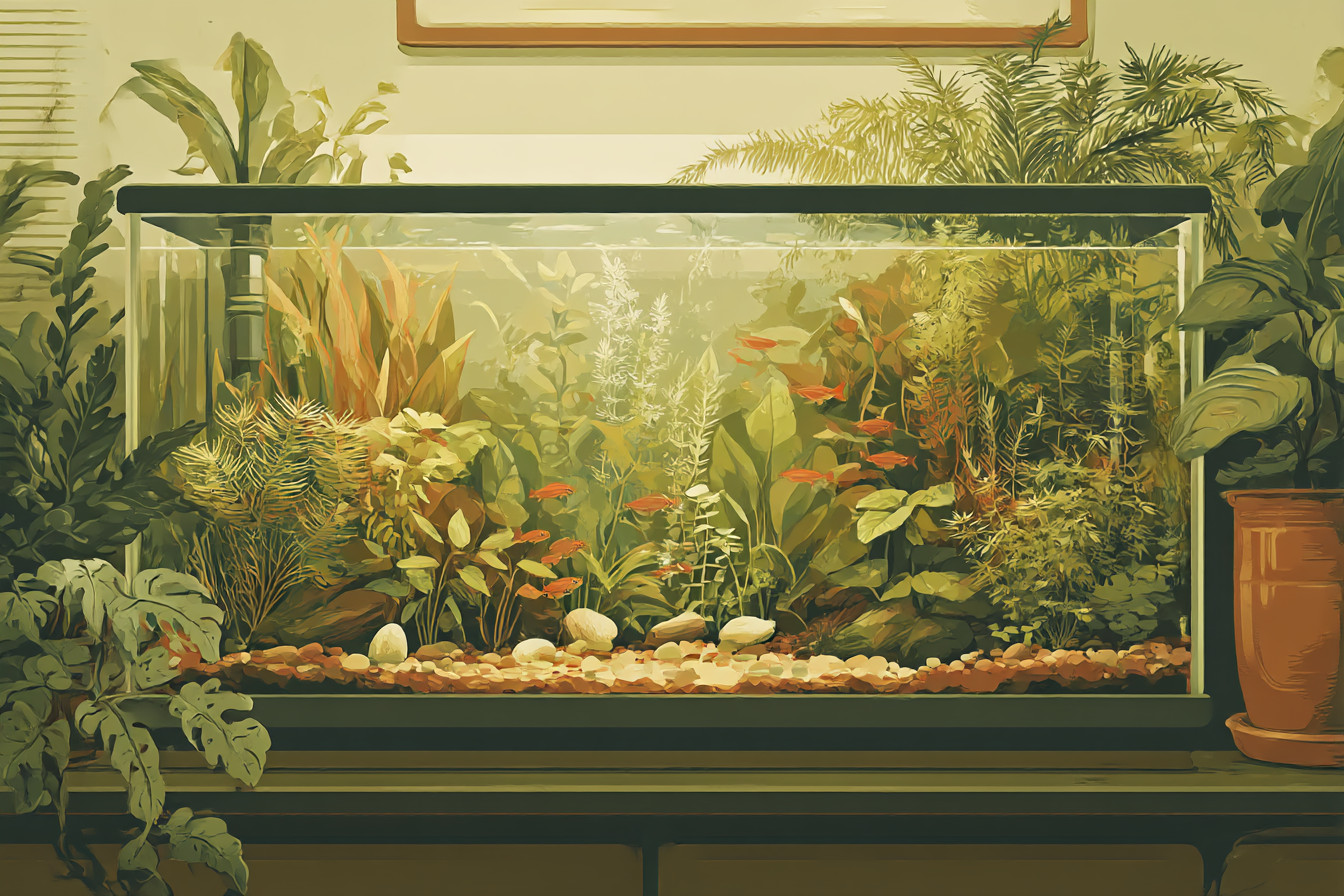
You know what’s funny? Most people assume the larger the tank, the simpler the task; however, I’ve found that my five-gallon setups (a 5-gallon-betta-tank-aquascape-creating-a-perfect-micro-habitat-for-your-betta-2/”>5-gallon-masterpiece-creating-an-award-winning-nano-planted-aquascape/”>5-gallon-betta-tank-aquascape-creating-a-perfect-micro-habitat-for-your-betta-2/”>5-gallon-masterpiece-creating-an-award-winning-nano-planted-aquascape/”>5-gallon) have taught me more about aquascaping than any of my larger tanks ever did. There’s something about working in such a tight space that causes you to really think about every single detail – and I mean every single detail – from which rock is placed in what location to how many stems of rotala you can fit into your layout without making it into a jungle.
My first 5-gallon tank was set up around three years ago when my daughter was still young enough to “try” to help by randomly placing toys into whatever tank I was building. I assumed that a smaller tank would equate to less maintenance, correct? Wrong. So very wrong. What I realised is that every slight deviation in a small area of water will be amplified in comparison to a large volume of water, and next thing you know, you’ll have algae blooms or parameter swings that would hardly cause a ripple in a twenty-gallon tank, but could easily destroy a nano tank.
Working in a 5-gallon tank forces you to be a minimalist, and being a person who loves to complicate things, this is not easy for me to do. My first attempt was this mess where I attempted to cram into my 5-gallon tank three different types of rocks, four different species of plants and so much hardscaping that I filled a forty-gallon tank. It looked like a pet store exploded in a fishbowl. My daughter looked at it and said, “Daddy, it is too busy,” and she was exactly right.
That is when I realised that negative space — the empty areas of your eye to rest upon — is just as important in aquascaping as it is in graphic design. In the same respect, the principles I use to guide my client work apply here also: what you do not include may be as important as what you do include. I ultimately stripped my tank down to a single piece of dragon stone and approximately three species of plants and suddenly it resembled an underwater landscape as opposed to aquatic chaos.
Dragon stone is my go-to hardscape for small tanks due to its vast array of textures and crevices which provide visual interest without consuming a lot of space. I have a piece of dragon stone (cost me far too much money for what I paid for it, but again whatever) that I have used in three different layouts thus far. With each successive layout I rescape, I am able to identify new angles and layouts that completely alter the look of the tank.
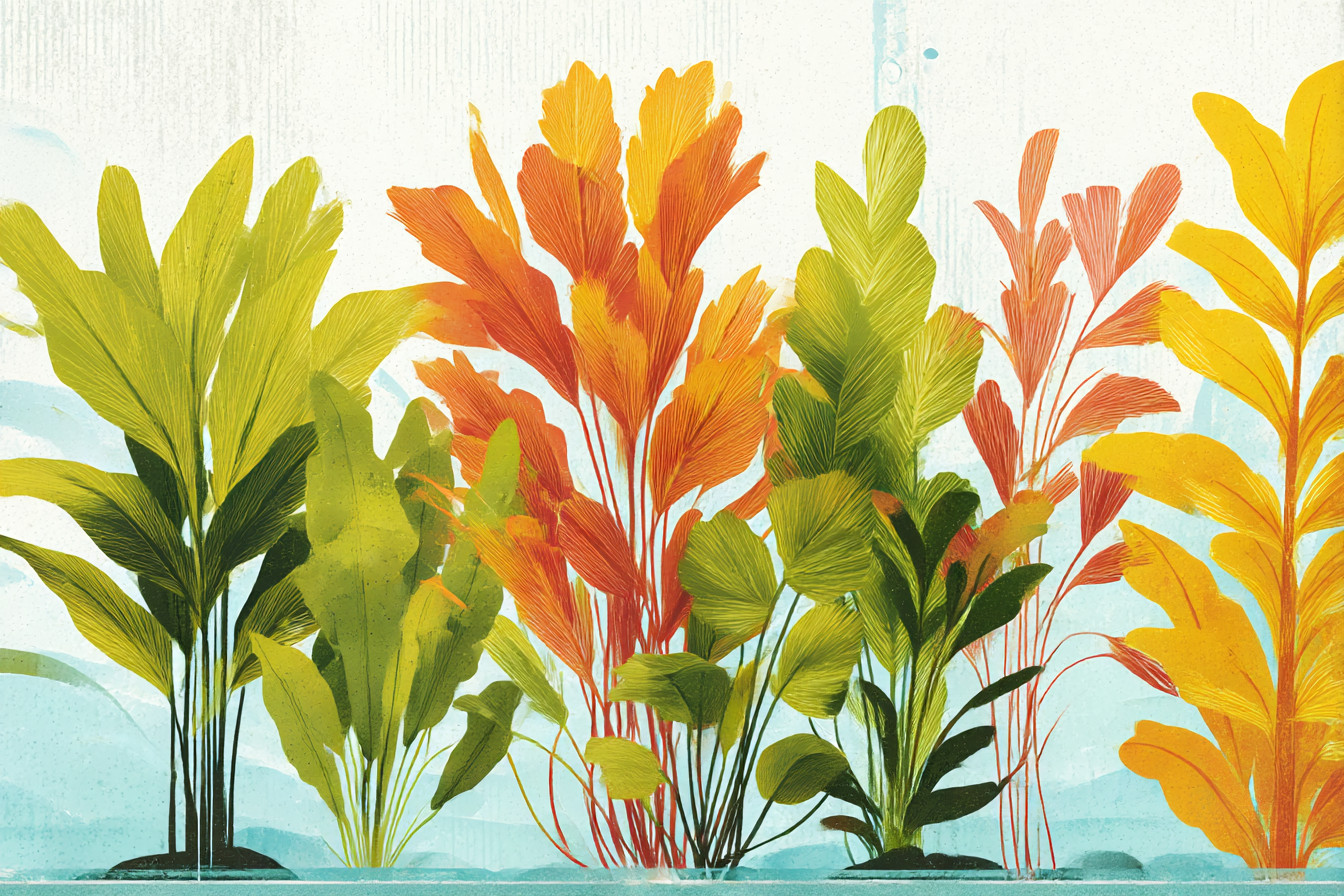
Choosing plants for a 5-gallon is possibly the most fun aspect of designing a nano tank, and by fun I mean occasionally frustrating. Plants that behave themselves flawlessly in larger setups turn into these invasive space aliens in nano tanks. I experienced this firsthand with a certain type of rotala that I wanted to add a touch of red to one of my layouts. By the end of two weeks, it had taken over the tank and was blocking out the majority of the remaining plants. My carefully constructed carpet of Monte Carlo began to wilt due to lack of light.
Since then I have limited myself to slow growing plants for small setups. Anubias Nana Petite is essentially ideal for nano tanks — remains small, does not require a lot of light, and my children enjoy the broad leaves because they believe the fish use them as hammocks (they are not entirely wrong). Bucephalandra is another favorite of mine due to the numerous colour and texture options available, and the fact that it grows so slowly I can essentially ignore trimming it for months.
Monte Carlo has proven itself to be the best carpeting plant option for me in 5-gallon setups. While it is more demanding than Dwarf Baby Tears, it still produces the lush carpeting effect that gives the appearance of a larger tank. Although I must admit, achieving a successful carpet in a small tank requires patience that I often do not have. There are several instances where I have gazed upon a spotty carpet and have felt the desire to simply give up and switch to Java Moss.
Java Moss is the ultimate example of a plant that is both the best and worst for nano tanks. Best because it is virtually indestructible and adds a wonderful organic texture when it grows across hardscapes. Worst because if you do not trim it regularly, it will consume your entire aquascape. I have seen moss grow to cover a section of stone to the extent that I could no longer view the hardscape. My spouse walked by one of my tanks and asked if I was attempting to create an underwater version of Kudzu.
When it comes to filtration for a 5-gallon, you are forced to get creative as most filters are either too strong or too weak for the space. I have probably gone through close to six different filtration setups attempting to locate something that will provide sufficient biological filtration without creating a whirlwind in the tank. At present I am utilizing a small sponge filter connected to an air pump, which functions well although it can drive me crazy during late night work sessions with its constant humming.
Water changes in small tanks are easier to perform as you only have to deal with a gallon or two of water per week, however, they are also more critical due to the fact that any fluctuation in parameters will affect the tank more severely due to the smaller volume of water. This lesson was learned the hard way with one of my shrimp tanks. I became lax with performing water changes and ended up losing half of my shrimp population due to a nitrogen spike. Since that experience, I am a zealot when it comes to performing 25% water changes every week, which typically takes around ten minutes, yet results in a tremendous difference.
In terms of stocking a 5-gallon, it is easy to fall prey to the temptation to stock it to capacity, particularly when you see all of those tiny fish at the pet store that appear to be the perfect candidates for a nano tank. I have committed this sin more times than I care to admit. Those schools of ember tetras that appear so adorable at the store are problematic when you realise they require significantly more swimming space than a 5-gallon tank affords.
Currently I mostly keep a solitary betta or a few shrimp in my 5-gallon tanks. One of my current favorites is a blue half moon betta that my daughter named Sparkles (it was not my idea, but it stuck). Seeing him weave in and out of the plants and examine every nook and cranny of his tiny universe never fails to delight. He has personality and interacts with us when we pass by and does not generate enough waste to overload the system.
Cherry Shrimp are the other excellent inhabitant of nano tanks, and they are essentially the ultimate cleanup crew while also being entertaining to observe. I have a colony in one of my 5-gallon setups that began with approximately ten shrimp and has evolved into a thriving community. My kids enjoy counting the babies and locating the berried females, and the shrimp are phenomenal at controlling algae growth, which is essential in a small tank where algae can rapidly take over.
Lighting requirements for nano tanks require a careful balancing act, as too much light can result in algae issues, while too little light will impede plant development. I currently utilize adjustable LED lighting fixtures on timers and run them for roughly seven hours daily at approximately sixty percent light intensity. Through trial and error, I have determined that it is better to begin with reduced light levels and gradually increase them as necessary.
CO2 requirements in a 5-gallon setup are where things can get interesting. I have tried everything from homemade yeast reactors to small CO2 systems specifically designed for nano tanks. To be honest, most of my 5-gallon setups function adequately with nothing more than liquid carbon supplements and suitable plant selection. The plants I utilize are not overly demanding, and the relatively small water volume results in an immediate reaction to any added CO2.
Managing algae in a 5-gallon is arguably the largest challenge I confront on a regular basis. As previously stated, everything occurs at a much faster rate in a 5-gallon — nutrient buildup is accelerated, light penetration is more intense relative to the space, and algae can rapidly take over a 5-gallon tank in a matter of days if conditions are not favourable. I have witnessed a 5-gallon tank transition from crystal clear to a murky green soup in the span of a few days due to incorrect fertilizer dosage or prolonged exposure to lighting.
The maintenance routine I have established for my nano tanks has become an oddly meditative aspect of my week. Every Sunday morning, prior to the kids waking up and before the chaos ensues, I perform water changes on all of my small tanks. This entire process takes approximately one hour to complete, and I find it enjoyable to accomplish the precision involved — precisely measuring fertilizer amounts, delicately trimming plants using miniature scissors, etc., adjusting equipment to maintain that precise equilibrium.
One item I have observed is that 5-gallon setups (5-gallon-betta-tank-aquascape-creating-a-perfect-micro-habitat-for-your-betta-2/”>5-gallon-masterpiece-creating-an-award-winning-nano-planted-aquascape/”>5-gallon-betta-tank-aquascape-creating-a-perfect-micro-habitat-for-your-betta-2/”>5-gallon-masterpiece-creating-an-award-winning-nano-planted-aquascape/”>5-gallon) photograph extremely well, which is likely attributed to the small scale and ability to illuminate the entire scene uniformly. I have begun documenting the progression of my nano tanks, and it is fascinating to observe the transformations that occur over time. Plants grow in, hardscapes become covered in biofilm and moss, and the entire ecosystem develops a lived-in quality that cannot be achieved immediately after setup.
Perhaps the greatest lesson I have learned from working with 5-gallon tanks is that limitations can, in reality, foster creativity as opposed to stifling it. When you are unable to simply pour additional space or additional equipment onto a problem, you are compelled to develop innovative solutions that exist within the boundaries. This has made me a better aquascaper overall and the skills I have acquired developing nano tank designs have positively impacted my approach to larger tank designs.
If you are considering constructing a 5-gallon-betta-tank-aquascape-creating-a-perfect-micro-habitat-for-your-betta-2/”>5-gallon-masterpiece-creating-an-award-winning-nano-planted-aquascape/”>5-gallon aquascape, I recommend that you begin with simplicity and avoid the tendency to pack every possible element into your tank at once. Identify a primary focus point, select plants that remain compact, and be patient with the development process. Small tanks possess their own unique rhythm and once you learn to work with that rhythm as opposed to against it, they can be truly rewarding to maintain.
The most appealing aspect of nano tanks is that they are accessible — you do not require a significant amount of space or funds to construct something visually pleasing. My 5-gallon-betta-tank-aquascape-creating-a-perfect-micro-habitat-for-your-betta-2/”>5-gallon-masterpiece-creating-an-award-winning-nano-planted-aquascape/”>5-gallon setups have provided just as much satisfaction to my family as have the larger tanks and they are obviously easier for my children to comprehend due to their ability to view the entire scene at one time. Additionally, when my daughter desires to assist with aquascaping, a 5-gallon tank is the optimal size for her to contribute without overwhelming the design.