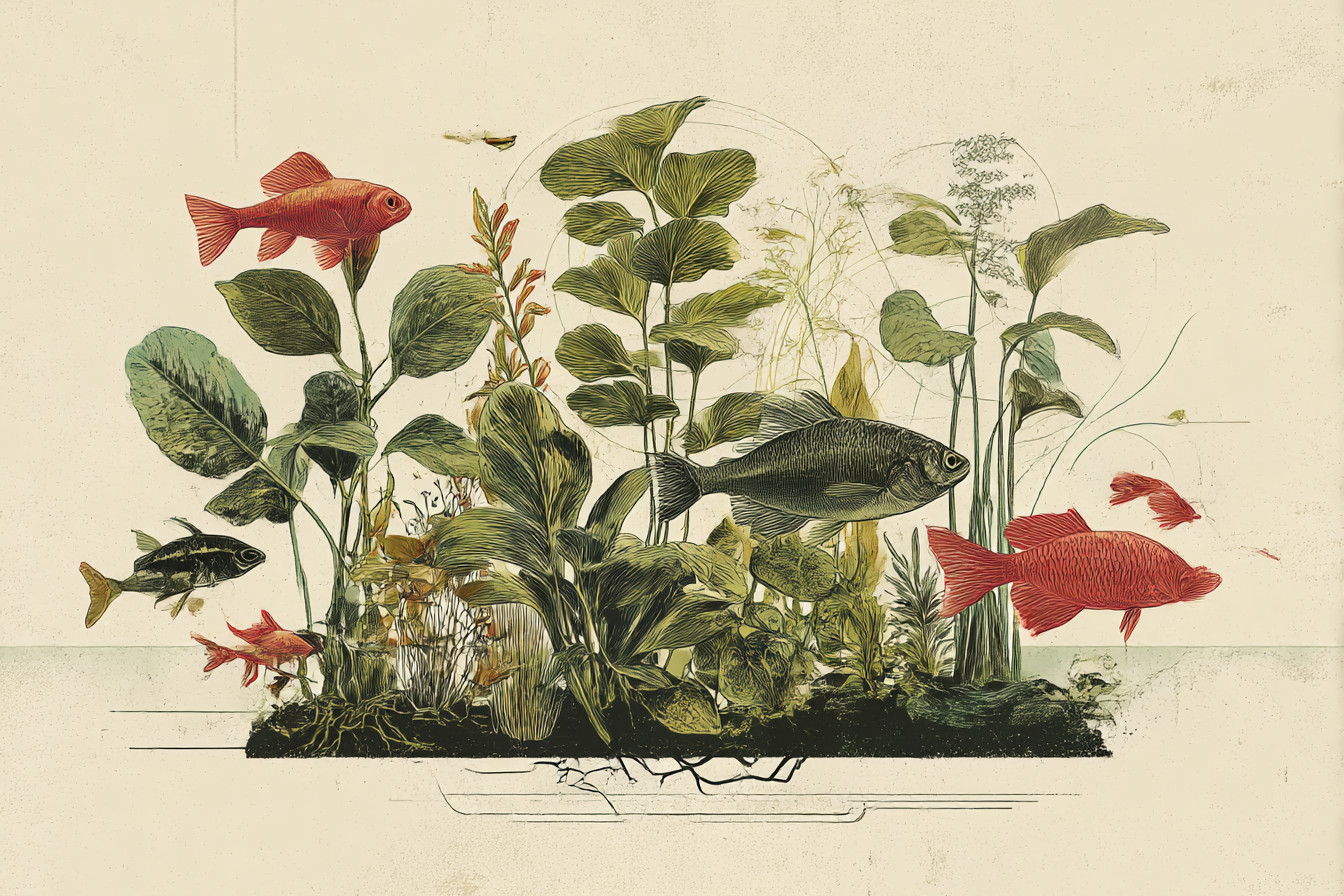
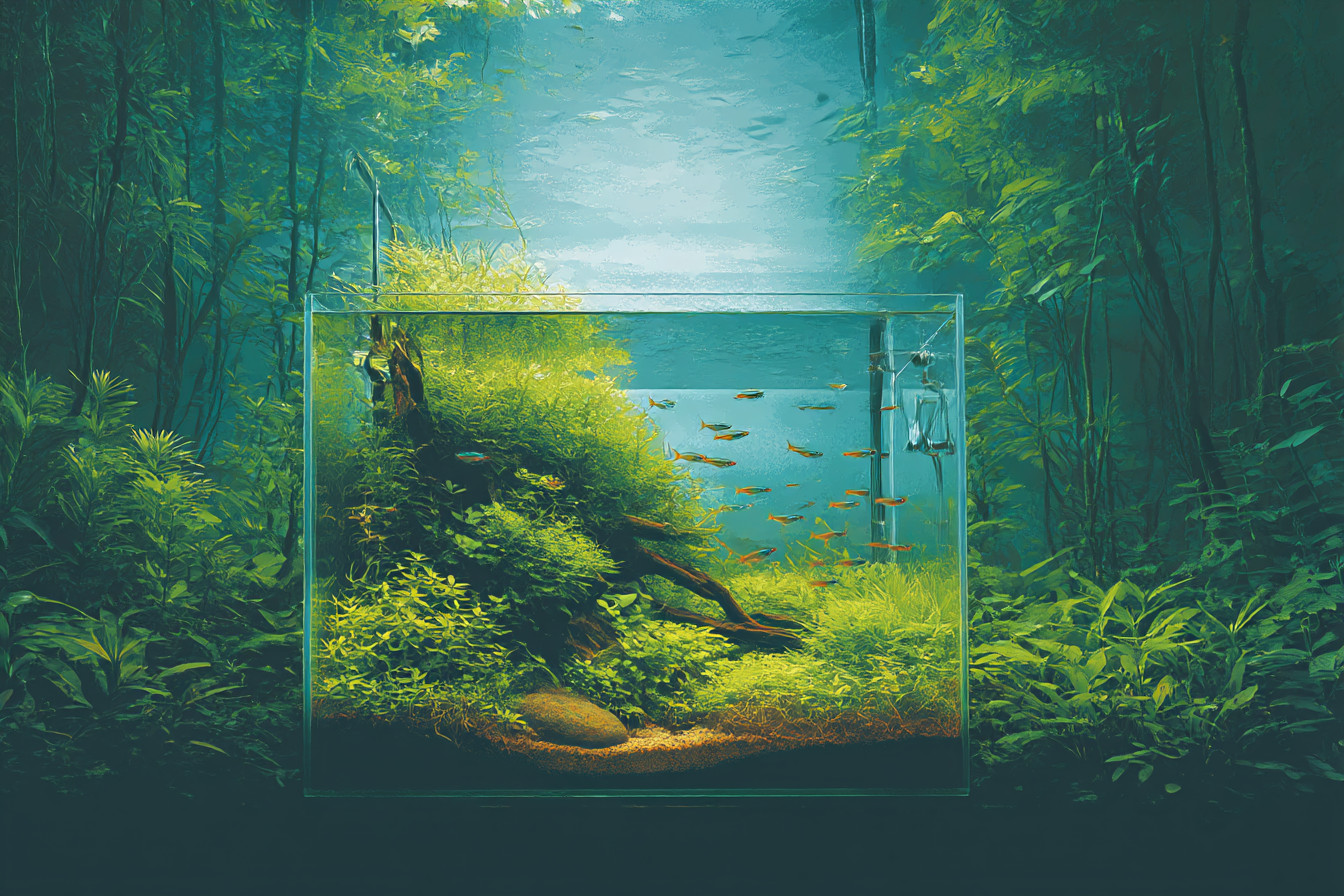
So I thought I was super cool and clever with my first real shot at aquascaping. I’d seen (probably) 50 YouTube videos; I’d spent a fortune at the pet store; and I’d designed what I truly believed to be an amazing Amazonian biotope aquarium. Plants all over the place, very carefully placed driftwood that I had spent like 2 hours positioning perfectly; and gorgeous rocks I’d purchased on line. It looked great — just like those contest tanks I’d been ogling on Instagram.
Then I added my fish and… oh boy, complete catastrophe.
My tetras were frantically darting around, as though they were being pursued by unseen predators. My angel fish were attempting to squeeze themselves into each corner. Even my normally laid-back corydoras appeared stressed, constantly looking for places to hide that apparently did not exist in my “perfectly” designed layout. I sat there and watched this absolute mayhem and thought, “What have I done wrong?” The tank looked wonderful in pictures, but my fish were obviously miserable.
At this point I figured out that I’d been designing for my own eyes, not for the actual living creatures that had to survive inside it. I’d concentrated on making it look beautiful rather than creating an environment that met the needs of the specific fish that I was caring for. This whole experience taught me that the art of successfully designing an aquarium is not simply following design principles or replicating other people’s attractive designs. Rather, you need to learn about the unique needs and desires of the individual species of fish that you are housing, then figure out how to create that as visually appealing as possible. It’s far more difficult than I thought it would be, but also far more fascinating once you begin to understand and appreciate how it works.
Each fish species originated from a particular location in the wild, and that origin determines almost every aspect of how that species behaves. For example, my cardinal tetras are typically found in large schools swimming through areas with both open water and heavily planted areas in the wild. However, I had created a super dense jungle with hardly any swimming space in my tank. Is it any wonder that they freaked out?
Or take betta fish, which I discovered the hard way when I put one in a tank with way too much water circulation. These fish originated in still rice paddies and slow moving streams in the wild, so my powerful filter was basically forcing them to swim in a hurricane all day long. My poor little guy was exhausted in just a couple of hours.
From that point forward, I began studying the native habitats of every fish species that I wished to care for and I have to say that it quickly became an obsession. I would find myself reading scientific articles about South America’s river systems during my lunch break at work trying to understand what type of environmental conditions my fish would face in the wild. I am sure my coworkers thought I had lost my mind.
The lightbulb moment occurred when I remade that failed Amazonian biotope tank. I decided instead of simply packing plants all over the tank, I would establish separate zones. Swimming zones for schooling fish, densely planted zones for timid species, and rocky caves for aggressive species. I utilized the principle of thirds, not only to create a visually pleasing arrangement, but to create separate zones in the tank that would provide biological functionality to the fish.
Watching my fish settle into their preferred zones was absolutely magical. The tetras immediately began schooling correctly in the open water column. My shy apistogramma claimed the cave I had constructed under a piece of driftwood. Even the corydoras appeared to relax once they had suitable substrate to sift through in their designated lower zone.
Plants ended up being a lot more important than I initially appreciated, and not just for aesthetics. With the addition of broad leaf anubias to my betta tank, he immediately began resting upon the leaves — apparently it’s a behavior exhibited by betta in nature when they utilize lily-pad-like structures as hammocks. Who knew? I certainly didn’t learn that from any aquascaping tutorial.
I also learned that some fish will use plants for reproduction purposes that I wouldn’t have thought of. My cherry barbs completely disregarded the expensive spawning mats I’d purchased on-line, however, they were utterly enthralled to lay eggs on top of the fine-leafed cabomba I’d planted behind the tank. Apparently the plant structure was ideal for their natural reproduction behaviors and my artificial spawning materials were merely artificial.
The hardscaping component presented a new set of challenges. Prior to this experience, I’d selected rocks and driftwood strictly based on their aesthetic qualities. However, different fish species interact with the hardscaping components in dramatically different ways. My bristlenose pleco essentially moved into a hollow piece of mopani wood the minute I placed it in the tank. Apparently, bristlenose plecos are cave spawners in nature, therefore, providing that sort of habitat structure is not only desirable but essential for their mental health.
Concern for safety also increased after I made some rookie errors. I had a beautiful piece of dragon stone with great texture, but I hadn’t realised the sharpness of some of its edges until I saw that my rainbowfish had injured fins. I now thoroughly inspect my hand prior to placing any rock into a tank. If it would slice my skin, it will surely injure a fish.
Lighting also required a complete overhaul of my previous mindset. I had been blasting my tanks with extremely high powered LED lights because that is what the plant books recommend, however, many fish species actually prefer low-light conditions. The coloration of my tetras improved dramatically once I reduced the power of the lighting and incorporated floating plants to provide natural shading. It was as though they were finally relaxed enough to display their true colours.
The day/night cycle concept was also a revelation. I installed a timer-controlled system to simulate the gradual transition from dawn simulation to full daylight, then back again to dusk and night-time. My nocturnal catfish were noticeably more active during evening feeding times, and the entire tank felt more … alive? It’s really difficult to describe, but there was a natural cadence to the tank that emerged.
Almost killing one of my early tanks due to excessive water flow was a major lesson. I had read that the movement of the water in the tank helps prevent stagnant areas and improves oxygen exchange, so I installed this very powerful circulation pump. Unfortunately, my fish were literally blown around like leaves in a gust of wind. The betta fish could barely get to the surface to breathe, and my less mobile species were constantly fighting the current.
Presently, I research the native water conditions of every fish species I wish to house prior to establishing their water circulation patterns. Hillstream loaches, for instance, thrive in very strong currents and will often engage in playing in the flow from the outlet of my filters. Conversely, the same current that gives hillstream loaches such joy will likely cause undue stress to less mobile fish from still-water environments.
Developing water circulation patterns that are acceptable to a variety of species is similar to solving a puzzle. I use plants and hardscaping to create low-flow zones in a tank with generally good circulation. The fish can then select their desired current level, similar to their natural environment with fast flowing channels and quiet backwater areas.
One of my most successful tanks is a Southeast Asian biotope tank that I spent weeks perfecting the water circulation. At first, my rasboras seemed lethargic and were ignoring all of the proper plants and hiding places. It ultimately proved that they required slightly more water circulation than I provided — not so much as to cause them undue stress, but enough to replicate the gentle flows they are accustomed to in their natural habitat. As soon as I adjusted the circulation, they changed into this incredibly active and colorful school of fish that is simply captivating to watch.
Overall, this experience taught me that successful aquascaping is equally a form of art and animal husbandry. You can build a tank that looks fantastic, but if the fish housed in it are stressed or unhappy, you’ve simply built a beautiful prison. The true talent lies in finding ways to provide for the biological and emotional needs of the fish you are housing, while creating something that is both visually pleasing and intended.
I have begun to refer to it as collaborative design — I’m not imposing my own vision on the tank, I’m working in conjunction with the fish to develop a tank that meets the needs of both.
Occasionally, this requires me to compromise on my initial design concepts, however, the final product is always superior when the fish are actively thriving and content.
Currently, before planning any new aquascape, I spend time simply observing established tanks to determine how the various fish species utilize their space. Do they prefer swimming in open spaces or maneuvering through plants? Do they tend to congregate near the bottom or cruise the mid-levels? Are they constantly seeking refuge or claiming territory openly?
Understanding these behaviors has made me a much better aquascaper than any design principle ever could be. While my tanks may not resemble the competitive tanks I previously obsessed over, they are filled with active, healthy fish that are exhibiting natural behaviors. To be honest? There is nothing more fulfilling than achieving that.
The greatest compliment I received was from a friend who told me my tanks looked “alive” in a manner that was different from other aquariums she’d viewed. That is precisely what I am striving to achieve — creating underwater ecosystems that are authentic and functional, not simply decorative.