To make myself sound less like a total geek, I need to confess that I have over 300 photos of moss on my phone. This isn’t aquarium moss; this is just the ordinary type of moss I find while I am hiking around Seattle. I know my roommates think I’ve gone nuts, especially since I occasionally interrupt our conversations on hikes to take a photo of a random patch of moss growing on a log.
Once you become aware of how amazing moss is in nature, however, you can’t “unsee” the beauty of how it transforms coarse surfaces into these soft, old-world looking landscapes. Also, moss makes everything look like it’s been there for hundreds of years rather than a few. It’s this aspect that caused me to autumn in love with using moss in my aquariums.
My first experience with aquatic moss was purely by accident. I ordered plants online during my second year in college (at this time, I was becoming more serious about the hobby), and the seller included a small, brownish clump of Java moss as a “free gift.” Honestly, it looked dead, possibly as large as a ping pong ball.
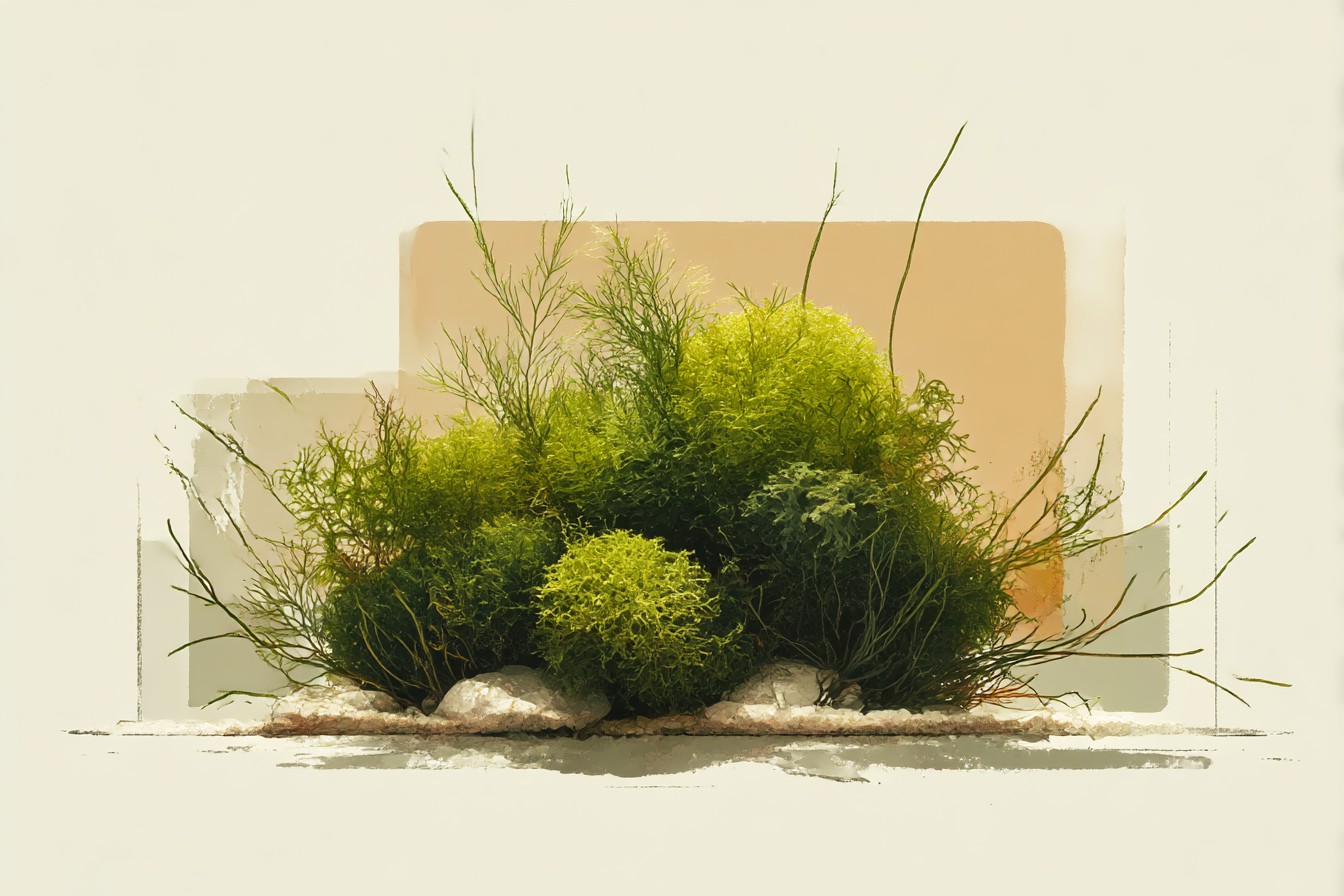
I simply placed it between two large pieces of driftwood in my 20-gallon tank and assumed it may capture some excess nutrients.
Three months later? That pathetic clump of Java moss had transformed into a lush, green cloud that completely covered both pieces of driftwood. At this point, I hadn’t even noticed I had a small shrimp population until I observed them swimming out of the moss jungle I’d unintentionally created.
This was my “wow, moss is cool!” moment. As of today, my UPS driver certainly believes I have a problem. I receive numerous deliveries of rare moss species from specialty sellers, including international shipments costing me more than my textbooks.
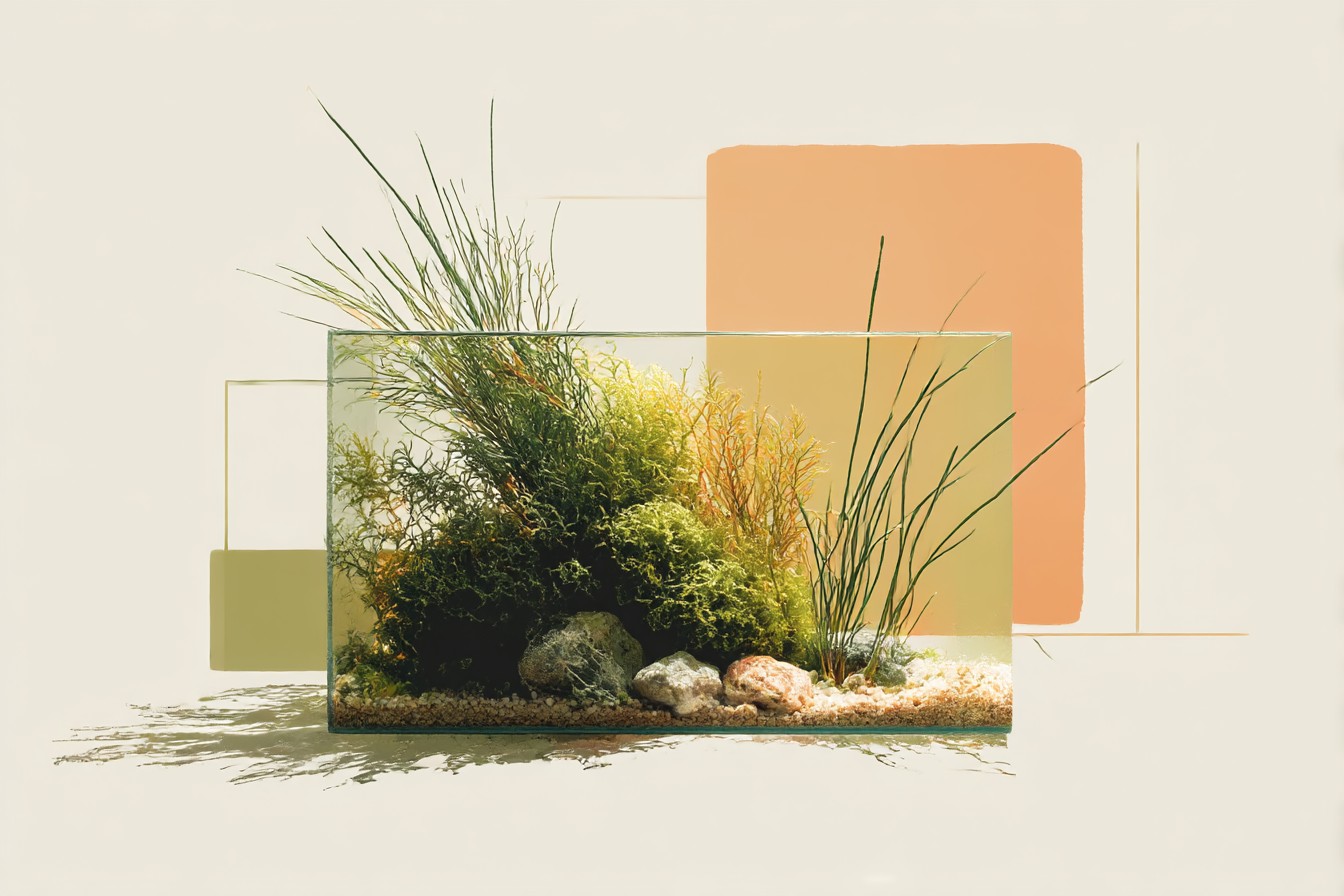
I currently have several labelled containers of different types of moss in my mini-fridge (which my roommates love), along with detailed information regarding where the moss originated, as well as the preferred conditions for each type. It’s the ability of moss to change the scale of everything in an aquarium that makes it perfect for aquascaping. Take a large piece of dragon stone that appears to be obviously new and artificial, add some moss, wait a few months and suddenly it appears to be an ancient boulder that has been sitting underwater for decades.
It’s like time travel for your hardscaping. Allow me to walk you through the twelve species of moss that I have used extensively, beginning with the easiest to work with and ending with the “you’re slightly insane to attempt this” varieties. Java moss (Taxiphyllum barbieri) is the place where every single person begins and honestly, it’s where every person should begin.
Java moss is virtually indestructible – I’ve seen it survive in tanks with no CO2, poor lighting and water parameters that would kill almost all other plants. Java moss is like the Nokia cell phone of aquarium plants. When I assist other students in setting up their first planted aquariums, I always give them some Java moss, as there’s something very reassuring about knowing you have at least one plant that will not die on you.
One disadvantage of Java moss is that it grows extremely rapidly and has no concern as to where it grows. Java moss will quickly cover an entire aquarium and trap debris like nobody’s business, requiring regular maintenance to keep it looking organised. I once believed Java moss was too easy for my more advanced aquariums, but I’ve come to appreciate it for jungle-style aquariums where you desire a wild, overgrown appearance.
Next on my list of obsessions was Christmas moss (Vesicularia montagnei). The fronds of Christmas moss develop in a manner that produces perfect little triangular arrangements that truly resemble tiny Christmas trees – it’s not just marketing jargon. More structured than Java moss, Christmas moss is still relatively easy to care for.
However, do not subject Christmas moss to extreme heat; I made this costly mistake when I installed an oversized heater and effectively cooked my entire Christmas moss wall to a dark brown, crispy mess within three days. Phoenix moss (Fissidens fontanus) was my true awakening to the potential of moss. Unlike the expansive, spreading growth of Java moss, Phoenix moss develops in tightly packed formations that naturally adhere to hardscape without requiring attachment via string or adhesive.
The first time I observed Phoenix moss being grown properly was at an aquarium store in Vancouver – they had a tank designed specifically to showcase various Fissidens varieties and I stood there staring at it for approximately an hour. Phoenix moss is a bit of a frustration – it’s extremely slow-growing. While Java moss demonstrates visible growth in a matter of days, Phoenix moss takes weeks to establish itself and months to create the dense mats seen in many contest-winning aquariums.
I have had multiple individuals inquire as to why their Phoenix moss “wasn’t growing” after only two weeks and I have to explain that observing Phoenix moss grow is akin to watching paint dry, except paint dries faster. However, when it does finally fill in, it’s well worth waiting for. Phoenix moss creates a soft, velvety surface that adds an air of age and wear to hardscape.
Additionally, it doesn’t trap debris nearly as badly as Java moss and remains compact without the need for frequent pruning to control its growth. My absolute favourite, and I’m fairly certain I’ve spent far too much money on it, is Riccardia chamedryfolia, commonly referred to as Mini Pellia or Coral Moss. Although technically not a moss (it’s a liverwort), Mini Pellia features extremely small branching stems that produce a miniature coral-like growth.
You Might Also Like
Using a magnifying glass, it’s surprisingly alien-looking. Working with Mini Pellia requires a tremendous amount of patience and a high degree of surgical precision. I attach individual pieces of Mini Pellia, typically no larger than a pencil eraser, using aquarium-safe super glue, and each piece must be positioned carefully as it grows at an excruciatingly slow rate, leaving little room for error.
I recall spending approximately four hours once attaching Mini Pellia to a large piece of dragon stone, utilising tweezers and an enormous magnifying headlamp I purchased from Amazon. Upon entering the room, my roommate witnessed me for a few minutes and merely stated, “that’s why you’re weird,” before departing. A fair assessment, I agree.
When it comes to creating a carpet effect, I believe nothing compares to Flame Moss (Taxiphyllum sp. ‘Flame’). Flame Moss exhibits a curled, upright growth habit that, upon closer inspection, resembles tiny green flames. I utilise Flame Moss on horizontal surfaces such as flat rocks where the vertical growth provides an aesthetically pleasing contrast with other plants.
Be cautious, however, as incorrect trimming can destroy the flame effect. Unfortunately, I discovered this fact the hard way through numerous expensive mistakes. I believe Weeping Moss (Vesicularia ferriei) is the most dramatic moss I’ve utilised in my aquariums.
Long strands of Weeping Moss develop downward in a manner that creates a curtain-like effect, waving gently with the movement of the water. I’ve constructed entire aquariums centred around Weeping Moss draped across elevated driftwood and the results are nothing short of breathtaking. Weeping Moss, unfortunately, is more finicky than other mosses – it requires more light to achieve the desired hanging effect, but too much light causes algae issues in the dense areas of growth.
Due to the difficulty in establishing the correct conditions, I actually maintain a separate aquarium solely for cultivating Weeping Moss. In addition to the above species, I consider Nano Moss to be the ultimate Holy Grail of my collection. Nano Moss features an exceptionally small growth habit and a striking blue-green colour that is perfect for nano tanks where scale is critical.
I obtained my initial supply of Nano Moss through…let’s say a “grey market” exchange with a Japanese aquascaper, involving the shipment of certain U.S. aquarium products that were not allowed to be exported. That golf ball-sized quantity cost me more than my first semester’s textbooks. The growth rate of Nano Moss is glacial – perhaps a centimeter annually in optimal conditions.
I’ve been propagating the original quantity of Nano Moss for three years now and I finally have sufficient quantities to utilise in actual aquarium projects. I’m confident that it is some variety of Plagiomnium, but I would likely require DNA testing to confirm, and I’m not quite that obsessive. Yet.
In addition to the previously mentioned species, I’ve also worked extensively with Singapore Moss. Singapore Moss has an unusual twisty growth habit that is visually appealing on vertical surfaces. Peacock Moss produces fan-shaped fronds that are beautiful, but must be maintained in near-perfect conditions to retain their form.
Taiwan Moss is similar to Java Moss but grows more slowly and has a finer texture. Spiky Moss (Taxiphyllum sp. ‘Spiky’) produces fronds with points that provide contrasting textures.
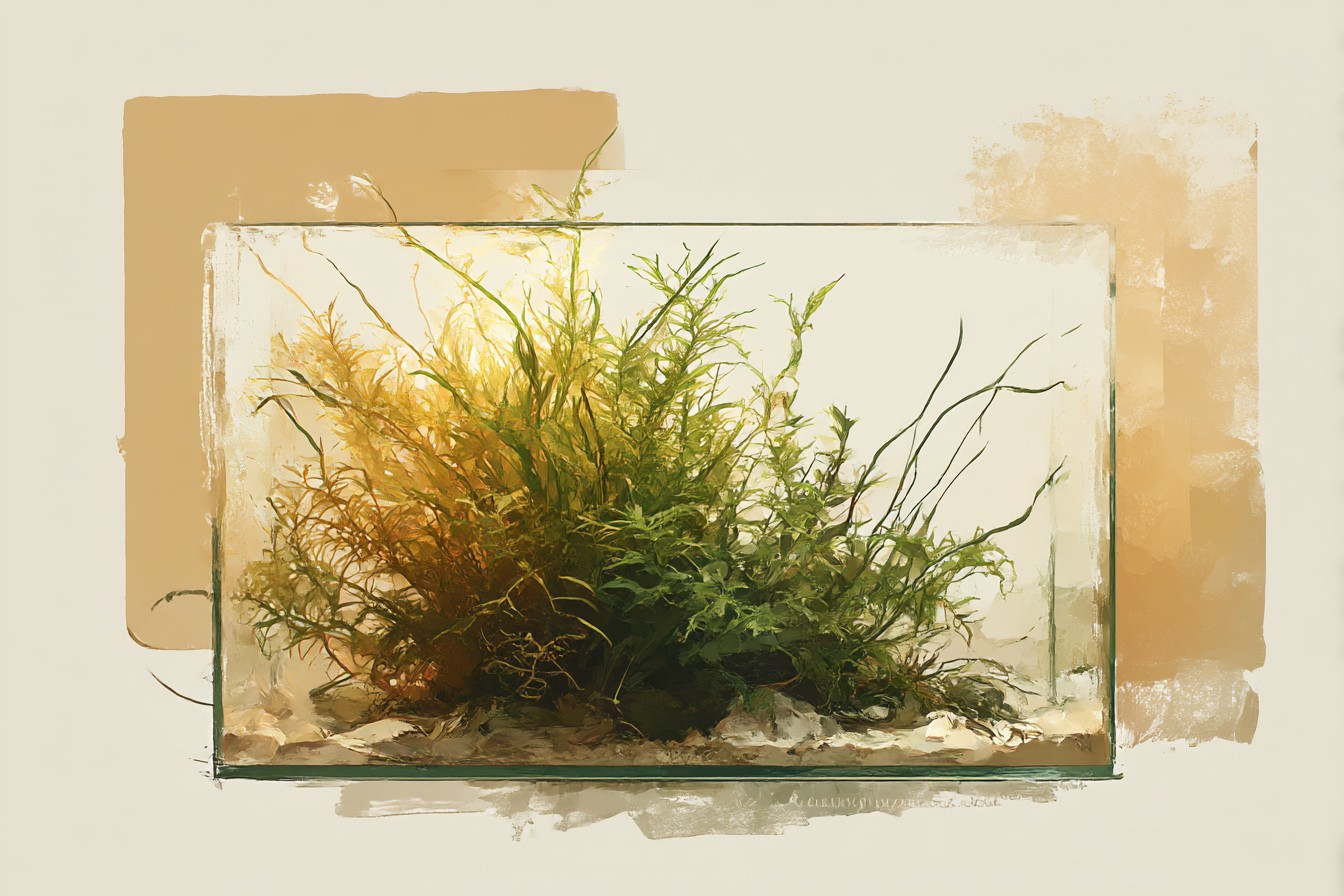
Rose Moss is a liverwort similar to Mini Pellia but has a more rose-like growth habit – extremely slow-growing, but produces the most extraordinary miniature landscape effects.
There is also a mystery species I acquired from a German collector that I refer to as Velvet Moss due to its excessively soft appearance and deep green colour. If you are just starting to experiment with moss in your aquariums, I offer a very simple recommendation: begin with Java Moss to gain confidence and learn the basic principles of growth and maintenance. Once you feel comfortable with Java Moss and the principles of growth and maintenance, move on to Christmas Moss.
Once you are prepared for something a bit more refined, try Fissidens. Each species of moss offers a distinct challenge and opportunity to hone your skills as an aquarist. Regardless of the type of moss you choose to cultivate, all mosses share common needs – gentle water flow (to allow for the prevention of debris accumulation, but not so strong as to damage the moss); stable water parameters; and moderate lighting.
Most mosses prefer moderate levels of light – too much light and you’ll experience algae issues; too little light and the moss will grow extremely slowly. Warning: moss collecting is an extremely addictive pastime. You begin with casual interest and ultimately find yourself maintaining a refrigerator stocked with labelled specimens and refusing invitations to hike with friends because you continually stop to photograph random patches of bryophytes.
Nevertheless, for transforming artificial hardscape into aged, natural-looking aquascape that appears to have developed over the course of years, as opposed to mere months, moss is an unparalleled medium. I assure you, once you witness the impact of moss on an aquarium, there is no turning back.