
# Dwarf Sagittaria and the Grasslike Carpet That Spreads by Runners I started with six small plugs of dwarf sagittaria in a 40-litre cube, thinking I’d have a nice patch of greenery in the front corner. Six months later, I was dividing runners and giving away grocery bags full of the stuff to anyone who’d take it. That’s dwarf sag for you – give it half a chance and it’ll carpet your entire tank floor like grass spreading across a lawn, whether you planned for it or not.
Also known as Awl-leaf Arrowhead, Hudson Sagittaria, or Ribbon Wapato (Fishkeeping World), this is one of those plants that does exactly what it says on the tin. It spreads through runners (Aquarium Tidings), creates that lawn-like effect most of us are after (Fishkeeping World), and manages to look proper without demanding the earth. In a hobby where “beginner friendly” often means “will survive in a bucket,” dwarf sag actually lives up to its easy rating (Aqua-Fish.net).
If you’ve been put off carpeting plants because you can’t run CO2 or because your lighting budget ended at whatever was cheapest on Amazon, this might be the answer you’ve been looking for. ## Quick Reference | Care Level | Easy | |————|——| | Lighting Needs | Low to moderate | | CO2 Required | No | | Growth Rate | Moderate to fast | | Max Size | 4-12 inches (10-30 cm) | | Our Rating | 8/10 | ## Background and Natural History Dwarf sagittaria comes from the same family as the larger sagittaria species you’ll see dominating the backgrounds of nature aquariums, but this one stayed small and learned to spread sideways instead of just growing tall. In the wild, it’s an adaptable little thing that grows both submerged and emerged, which explains why it handles the weird conditions we put it through in our tanks so well.
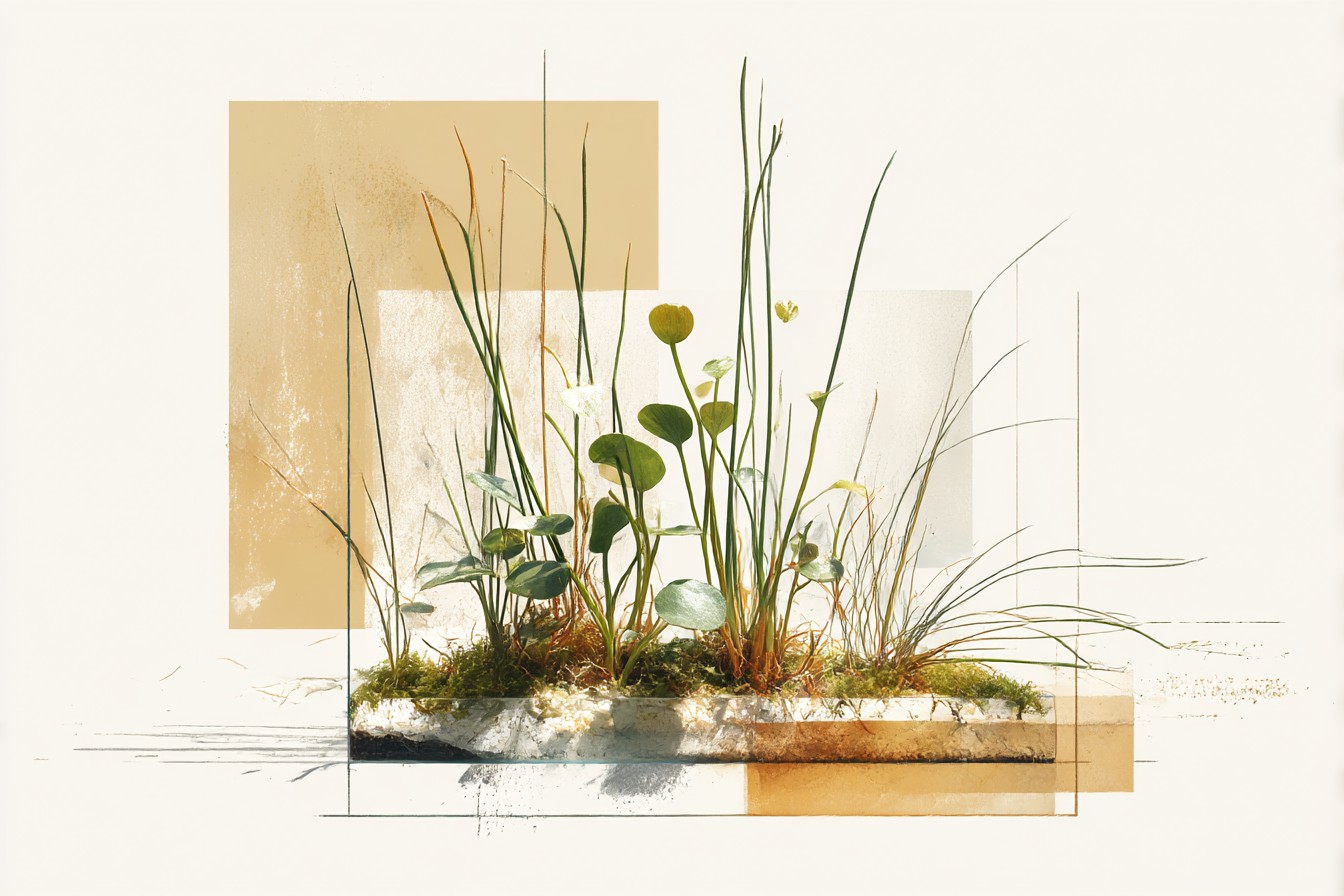
The plant made its way into the aquarium trade because someone noticed it could create that coveted grass-like carpet effect without needing the kind of setup that costs more than most people’s cars.
Where plants like glossostigma and HC Cuba demand perfect conditions and constant attention, dwarf sag just gets on with it. It propagates primarily through runners, with plantlets forming along stolons that spread across the substrate (Aqua-Fish.net). The appeal was immediate.
Here was a plant that could give you that lawn effect without CO2 injection, without high-end lighting, and without the constant trimming that makes some carpeting plants feel like a part-time job. It’s been a staple in community tanks and low-tech setups ever since, the kind of reliable performer that newer aquascapers discover and experienced ones keep coming back to. What’s interesting is how it behaves differently depending on what you give it.
In low light with minimal fertilisation, it stays compact and spreads slowly but steadily. Give it better conditions and it can reach heights of 12 inches when well-tended (Aquarium Tidings), though most people see it topping out around 4-6 inches (Fishkeeping World) in typical tank conditions. ## What Makes It Special The runner system is what makes dwarf sag genuinely useful rather than just another pretty plant. Unlike plants that spread by seeds or fragmentation, the runner system means you get proper coverage that looks intentional.
Each mother plant sends out stolons that develop plantlets at intervals, creating a connected network across your substrate. It’s like watching someone install a living carpet in slow motion. I’ve watched it spread in my own tanks, and there’s something satisfying about seeing those thin white runners snake out across the sand, putting down new plants every few centimetres.
The new plantlets start small but develop their own root systems quickly, then send out their own runners. Within a few months, what started as a small patch becomes a proper lawn effect. The growth habit is predictable in a way that makes planning easier.
It doesn’t send runners upward or try to climb hardscape like some plants do. It stays ground-level, filling in gaps between rocks or around driftwood without overwhelming the rest of the scape. If you want coverage in a specific area, you plant it there and it spreads outward.
If you don’t want it somewhere, you just pull up the runners before they establish. What surprised me was how well it handles different water conditions. I’ve run it in tanks with pH anywhere from 6.8 to 7.6, in both soft and moderately hard water, under everything from basic LED strips to proper planted tank lighting.
It adapts. The growth rate changes and the leaf colour shifts slightly, but it keeps growing and spreading regardless. The visual effect is more natural than most artificial carpeting options but less demanding than the high-maintenance carpet plants.
The leaves have a genuine grass-like appearance that moves nicely in current, creating that gentle swaying effect that makes a tank feel alive. It’s substantial enough to provide good cover for bottom-dwelling fish and shrimp, but not so dense that it creates dead spots or traps debris. Under good lighting, it can even flower while submerged, producing small white flowers that reach the surface (Aqua-Fish.net).
I’ve only seen this happen once in my own tanks, but it was a nice surprise when it did. The flowering doesn’t seem to affect the plant’s growth or health, just adds an unexpected bonus. The spreading behaviour means you get excellent value from a small initial purchase.
Buy six plants and you’ll have enough to cover a substantial area within six months, assuming reasonable conditions. Compare that to carpet plants where you need to buy enough to plant densely from the start or risk patchy coverage, and the economics make sense even for budget-conscious setups. ## The Honest Assessment Dwarf sag’s biggest weakness is also its biggest strength – it spreads. If you plant it thinking you’ll get a neat patch that stays put, you’re in for a surprise.
You Might Also Like
It will spread over the tank like lawn grass (Fishkeeping World), and controlling that spread requires regular maintenance. I’ve had runners pop up behind filters, under heaters, and in corners I didn’t even know existed. The control issue is real if you’re after a precise aquascape.
You can’t just plant it and forget it unless you want it everywhere. Every few months, you’ll need to pull up runners that have wandered into areas where you don’t want carpet coverage. It’s not difficult work, but it is ongoing work.
The plant can be fussy about planting depth, and this trips up a lot of people initially. Don’t bury the crown or you’ll risk rot (Aqua-Fish.net). The crown needs to sit at substrate level, with just the roots buried.
Get this wrong and your new plants will melt within a week or two. I learned this the hard way with my first batch. Growth rate varies more than I expected when I started using it.
In my experience, it’s quite sensitive to nutrient availability. In tanks where I’ve been slack about fertilisation, it grows slowly and stays short. This isn’t necessarily bad – sometimes you want slow, controlled growth – but it means you can’t count on consistent timing if you’re planning a scape around its spread.
The leaf structure, while grass-like, isn’t as fine as some of the carpet plants people see in competition aquascapes. If you’re after that ultra-fine, manicured lawn look, dwarf sag might feel a bit coarse. It’s more like meadow grass than putting green grass, if that makes sense.
It’s also not the fastest carpeting option if you’re in a hurry. While it spreads reliably, it’s not explosive like some plants can be under high-tech conditions. If you need full coverage quickly, you might find yourself waiting longer than you’d like. ## Legacy and Influence Dwarf sag has quietly influenced how a lot of people think about carpeting plants in low-tech setups.
Before it became widely available, achieving that lawn effect generally meant either high-tech conditions or settling for moss tied to mesh, which never looked quite right. It’s become the go-to recommendation for people wanting to add carpeting to established community tanks without overhauling their entire setup. You see it recommended constantly in forums and Facebook groups, usually by people who’ve actually grown it successfully rather than just read about it somewhere.
The plant has probably done more to make aquascaping accessible to budget-conscious hobbyists than most people realise. It proves you can get professional-looking results without professional-level equipment, which opens up the visual techniques to people who might otherwise think aquascaping isn’t for them. I’ve noticed it appearing in more competition tanks recently, not as the star but as reliable groundwork that lets aquascapers focus their attention on more demanding feature plants.
That’s a sign of maturity – when something becomes so dependable that experts use it as foundational rather than experimental. ## The Verdict Dwarf sagittaria earned its place in my plant rotation because it does what it promises without drama.

If you want a carpeting plant that will give you that lawn effect without CO2, without expensive lighting, and without constant fussing, this is probably your best bet. It’s ideal for people running community tanks who want to add some visual depth without starting over.
It’s perfect for budget builds where you need reliable results from affordable plants. It works well in tanks where you’re focusing your attention on fish or shrimp and want the plants to just get on with it quietly. It’s not right for everyone.
If you’re after precise control or ultra-fine textures, look elsewhere. If you don’t want to deal with regular runner management, consider something that stays put better. But if you want reliable carpeting that improves the look of your tank without taking over your life, dwarf sag delivers exactly that.
I still use it in most of my setups, usually as background coverage that lets me experiment with more temperamental plants in featured spots. It’s the kind of reliable performer that makes other aspects of aquascaping possible, and there’s genuine value in that. See where this placed in our full ranking of carpeting plants.


