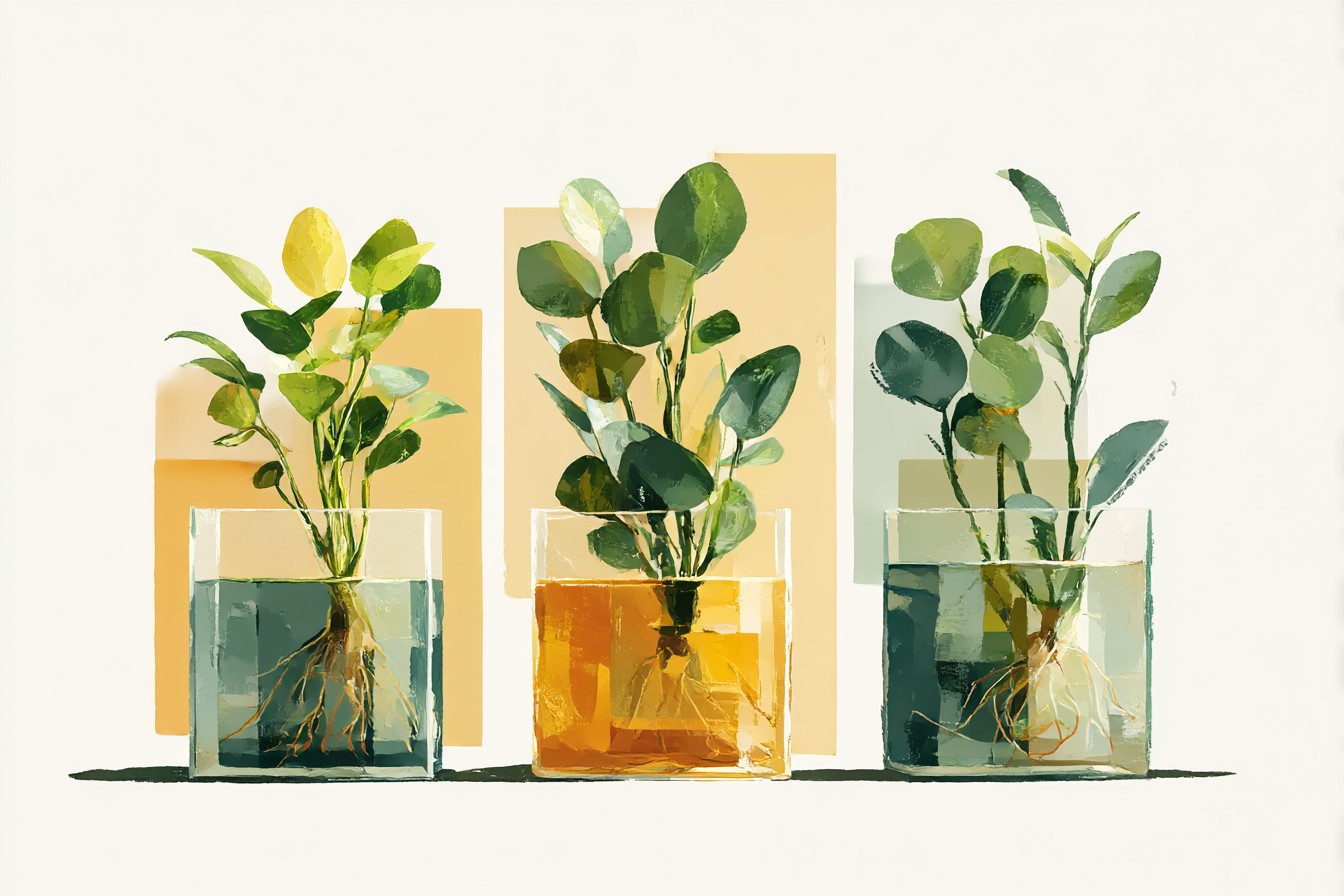
# House Plants That Grow With Roots in Aquarium Water and How to Set Them Up Getting houseplants to grow with their roots directly in your aquarium water isn’t just possible, it’s one of the smartest things you can do for both your tank and your room. I started experimenting with this setup during my second year at uni when I had limited space but wanted both plants and fish. What began as a space-saving compromise turned into something that actually works better than keeping them separate.
The concept makes sense when you think about it. Your fish produce waste that contains nitrogen compounds. Your houseplants need those exact compounds to grow.
Put the plant roots in the tank water and you’ve created a natural filtration system that benefits everyone involved. The plants get continuous nutrients, the fish get cleaner water, and you get a setup that looks considerably more interesting than a basic rectangular tank sitting by itself.
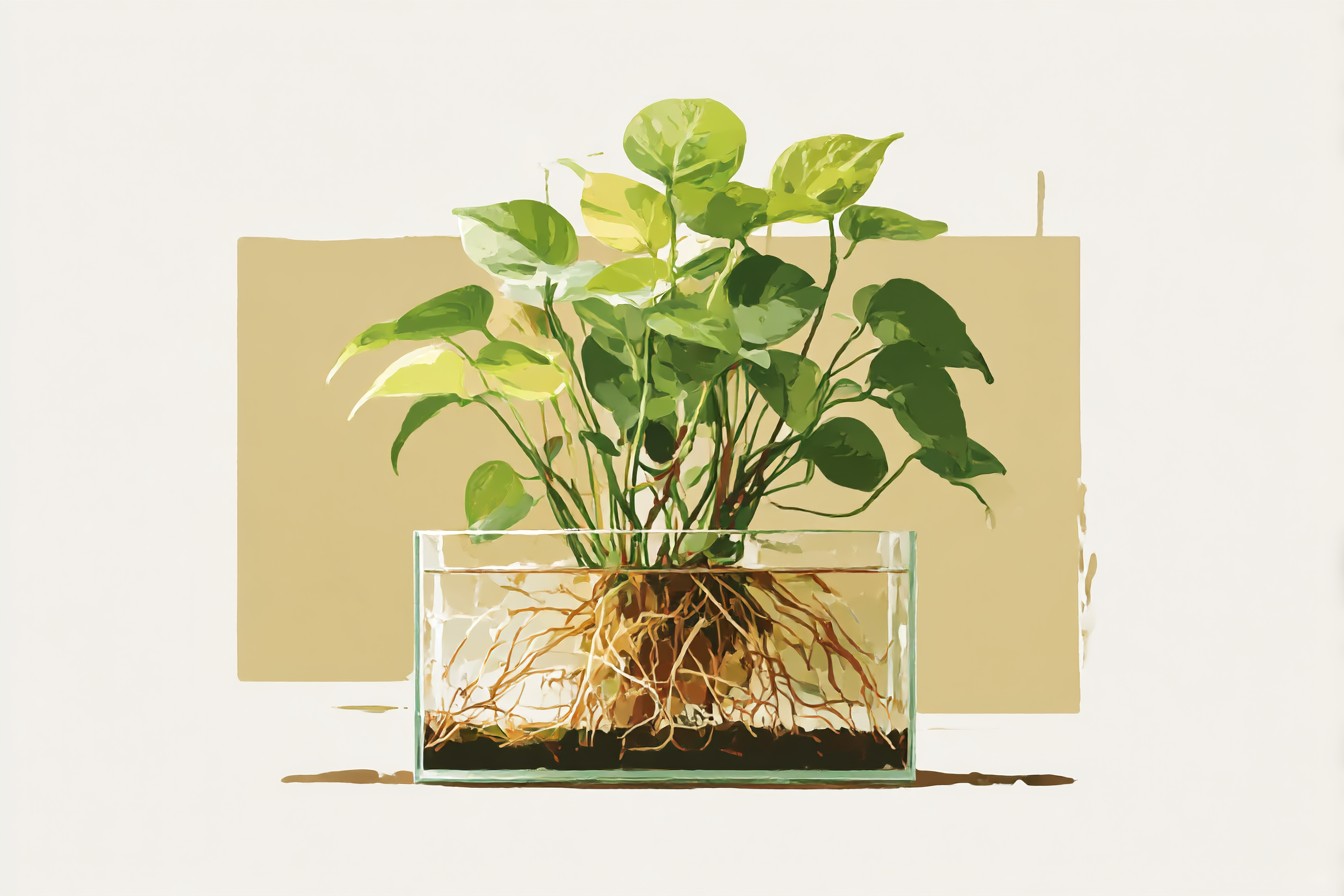
This approach works because many common houseplants are actually semi-aquatic in nature.
They’ve evolved to handle wet conditions and can adapt their root systems to function completely underwater. The key is choosing the right species and setting everything up properly so both plants and fish thrive long term. ## The Science Behind Aquatic Root Systems **Nitrogen Cycle Integration** The biological foundation here is straightforward. Fish waste breaks down into ammonia, then nitrite, then nitrate through your tank’s established bacterial colonies.
In most tanks, nitrate just builds up until you remove it with water changes. When you add terrestrial plants with their roots in the water, they absorb nitrate directly as a primary nutrient source. **Emergent Plant Efficiency** Research shows that emergent arums like pothos have about 75% nitrate removal potential compared to surface water plants (Aquarium Science). This is because their root systems can develop much larger surface areas when unrestricted by soil, and they’re actively growing above water where they have unlimited access to CO2 for photosynthesis. **Root Adaptation Mechanisms** When terrestrial plants transition to aquatic conditions, they develop specialised root structures.
The roots become more fleshy and develop aerenchyma tissue that allows oxygen transport from the leaves down to underwater portions. This process typically takes 4-8 weeks for most species, during which you’ll see the original soil roots either die back or transform. **Water Quality Relationships** Hydroculture is described as growing roots submerged in water with water quality tied directly to plant health (Biology Insights). In an aquarium setup, this relationship works in reverse as well.
Healthy plant growth indicates good water conditions for fish, while struggling plants often signal parameter issues that affect fish health too. ## Primary Implementation Strategy: The Integrated Approach **Tank Selection and Positioning** You want a tank with an open top or easily removable hood. Standard aquarium covers don’t leave room for plant stems and leaves growing upward. I use tanks with glass canopies that I can slide back partially, or rimless tanks where plants can grow over the edges.
Position your tank where the plants can get adequate light from above, either from room lighting or a separate grow light positioned over the emergent portion. **Plant Selection and Sourcing** Start with species that transition easily to aquatic conditions. Houseplants that grow in water include 25 species including pothos, spider plant, and lucky bamboo (Real Simple). Pothos is probably your best starting point because it’s nearly indestructible, grows quickly, and has dramatic visual impact.
Buy healthy specimens from garden centres rather than trying to rescue struggling plants. You want vigorous growth from the start. Avoid anything that’s been treated with systemic pesticides recently, as these can harm fish.
If you’re unsure, ask specifically about recent chemical treatments. **Root Preparation Process** For pothos, take cuttings that are 3-4 inches long (Gardening Know How). Each cutting needs at least one node where roots will develop. If you’re using an established plant, carefully wash all soil from the roots under lukewarm tap water.
This is tedious but essential – any soil left on the roots will cloud your tank water and potentially introduce unwanted bacteria. Let freshly cleaned roots sit in dechlorinated water for 24-48 hours before adding them to the tank. This helps any damaged root tissue callus over and reduces the shock of transition. **Tank Integration Methods** The simplest approach is suspending plants so their roots hang into the water while leaves stay above surface.
You can wedge plant stems into the gap between glass canopy and tank rim, or create custom holders from aquarium-safe materials. For a cleaner look, drill holes in the tank hood to accommodate plant stems. Use rubber grommets to seal around the stems and prevent excessive evaporation.
This requires more setup work but looks considerably more professional. Budget considerations vary significantly. Basic setups using pothos cuttings and improvised supports cost under £15.
Custom drilled hoods with proper plant supports can run £50-80 depending on your tank size and how many plants you want to integrate. ## Plant Species Breakdown and Setup Requirements **Pothos (Epipremnum aureum)** The gold standard for aquarium integration. Pothos adapts to aquatic conditions faster than most other houseplants and tolerates a wide range of water parameters. The trailing growth habit works well draped over tank edges or trained up room walls.
Setup requirements are minimal. Cut 4-inch sections with nodes, place in dechlorinated water until roots appear (usually 7-14 days), then transfer to your tank. For ongoing maintenance, pothos water culture requires full water changes every 2-3 weeks (Gardening Know How) when grown in isolation, but in an established aquarium the regular water changes you’re already doing handle this. **Spider Plant (Chlorophytum comosum)** Spider plants work well because they naturally produce plantlets that root easily in water.
The main plant stays above the waterline while roots and potentially some plantlets can be submerged. Spider plant water culture guidance recommends changing water weekly (Homes and Gardens) in standalone setups, but again, your aquarium maintenance schedule covers this. The key with spider plants is ensuring the crown stays dry – only roots should be underwater. **Lucky Bamboo (Dracaena sanderiana)** Despite the name, this isn’t actually bamboo but a Dracaena that’s been marketed cleverly.
It grows well with roots submerged and stems extending above water. Lucky bamboo results in one aquarium were reported as appearing after about 4 weeks (Aquarium Co-Op Forum), though this likely refers to visible new growth rather than initial establishment. Lucky bamboo is more sensitive to water chemistry than pothos.
It prefers softer water and can develop brown leaf tips in very hard water areas. If your tap water is particularly hard, consider using RO water for top-offs. **Other Dracaena Species** Various Dracaena species adapt well to aquatic root systems. Dracaena in hydroponic water culture can develop a complete root system within 2 months (Real Simple).
This timeframe is typical for full adaptation from soil to water culture. ## Common Implementation Mistakes
You Might Also Like
Mistake #1: Not dechlorinating water first. Municipal water supplies contain chlorine (US EPA) that will damage both plant roots and fish. Always use water conditioner or let tap water sit for 24 hours before adding plants or doing water changes. This kills plant cuttings faster than any other single factor.
Mistake #2: Submerging leaves and stems. Only roots should be underwater for most species.
Submerged leaves will rot, cloud your water, and potentially crash your tank’s nitrogen cycle. Keep crown and growing points above the waterline unless you’re working with true aquatic plants.
Mistake #3: Rushing the transition process. Plants need time to adapt their root systems to aquatic conditions. Adding soil-grown plants directly to your tank often results in root rot and stressed fish from decomposing plant matter.
Take time to clean roots thoroughly and let them adapt gradually.
Mistake #4: Ignoring pet safety. Pothos toxicity is listed as toxic to dogs and cats due to insoluble calcium oxalates (ASPCA). If you have pets that might chew on plant leaves, choose different species or position plants out of reach.
Mistake #5: Inadequate lighting for plant portions. The above-water portions still need adequate light for photosynthesis. Don’t assume room lighting is sufficient, especially in winter.
Many setups benefit from supplemental grow lights positioned above the emergent plant portions.
## Research Foundation and Evidence Base Multiple studies support the effectiveness of emergent plant systems for aquarium filtration. The 75% nitrate removal efficiency of emergent arums compared to surface plants (Aquarium Science) demonstrates significant biological filtration potential beyond what traditional aquarium plants provide. The relationship between water quality and plant health in hydroponic systems (Biology Insights) explains why these integrated systems tend to be more stable than expected.
Plants respond quickly to parameter changes, giving you early warning of issues before they affect fish health. Research on specific species adaptation timelines, like the 2-month root development period for Dracaena (Real Simple) and the 4-week growth response period for lucky bamboo in aquarium conditions (Aquarium Co-Op Forum), helps set realistic expectations for system establishment. ## Applications Across Different Tank Types **Small Nano Setups (10-30 litres):** Single pothos cutting or small spider plant. Focus on species that won’t outgrow the space quickly.
Monitor water parameters more closely as small volumes change faster. **Community Tanks (50-200 litres):** Multiple plant species create more visual interest and redundant filtration. Mix trailing species like pothos with upright growers like lucky bamboo for varied heights and textures. **Heavily Stocked Tanks:** Emergent plants provide extra biological filtration capacity. Particularly useful in tanks approaching maximum bioload where additional nutrient export helps maintain stability. **Breeding Setups:** Plants can provide natural water conditioning and cover for fry while parents are above in the main display.
Particularly effective in species that prefer soft, acidic water. **Quarantine Tanks:** Fast-growing species like pothos help maintain water quality in temporary setups that might not have fully established biological filtration yet. ## Key Benefits of Integration **Enhanced Water Quality** happens through direct nutrient uptake by plant roots, reducing the frequency of water changes needed and providing backup biological filtration. Most setups show measurable nitrate reduction within 3-4 weeks of plant establishment. **Natural Humidity Control** occurs as plants transpire water into your room air. This is particularly beneficial during winter months when heating systems dry indoor air significantly. **Space Efficiency** lets you maintain both houseplants and aquarium in the same footprint, important in small flats or shared spaces where every square foot matters. **Reduced Maintenance** results from the natural balance created between fish waste and plant nutrient uptake.
Once established, these systems typically require less intervention than separate houseplant and aquarium maintenance routines. **Visual Appeal** creates a more natural, integrated appearance than standard rectangular tanks. The varied heights and growth patterns make the entire setup more interesting as a room feature. **Cost Effectiveness** emerges over time through reduced need for chemical filtration media and fertilizers for houseplants, plus lower electricity usage from reduced filter runtime requirements. ## Phase-by-Phase Setup Implementation **Phase 1: Foundation Setup (Week 1-2)** Start with your established aquarium and basic plant materials. Purchase healthy pothos or spider plant specimens from your local garden centre.
Clean one or two cuttings thoroughly and place them in dechlorinated water to begin root development. Create temporary plant supports using aquarium-safe materials. Cable ties, suction cups, and plastic clips work well for initial testing before you commit to permanent modifications. **Budget Breakdown:** * Pothos plant: £3-6 * Basic support materials: £5-8 * Water conditioner if needed: £4-6 **Total Budget: £12-20** **Phase 2: Plant Establishment (Week 3-6)** Transfer rooted cuttings to your aquarium once roots are 2-3cm long.
Monitor both plant health and water parameters closely during this transition period.
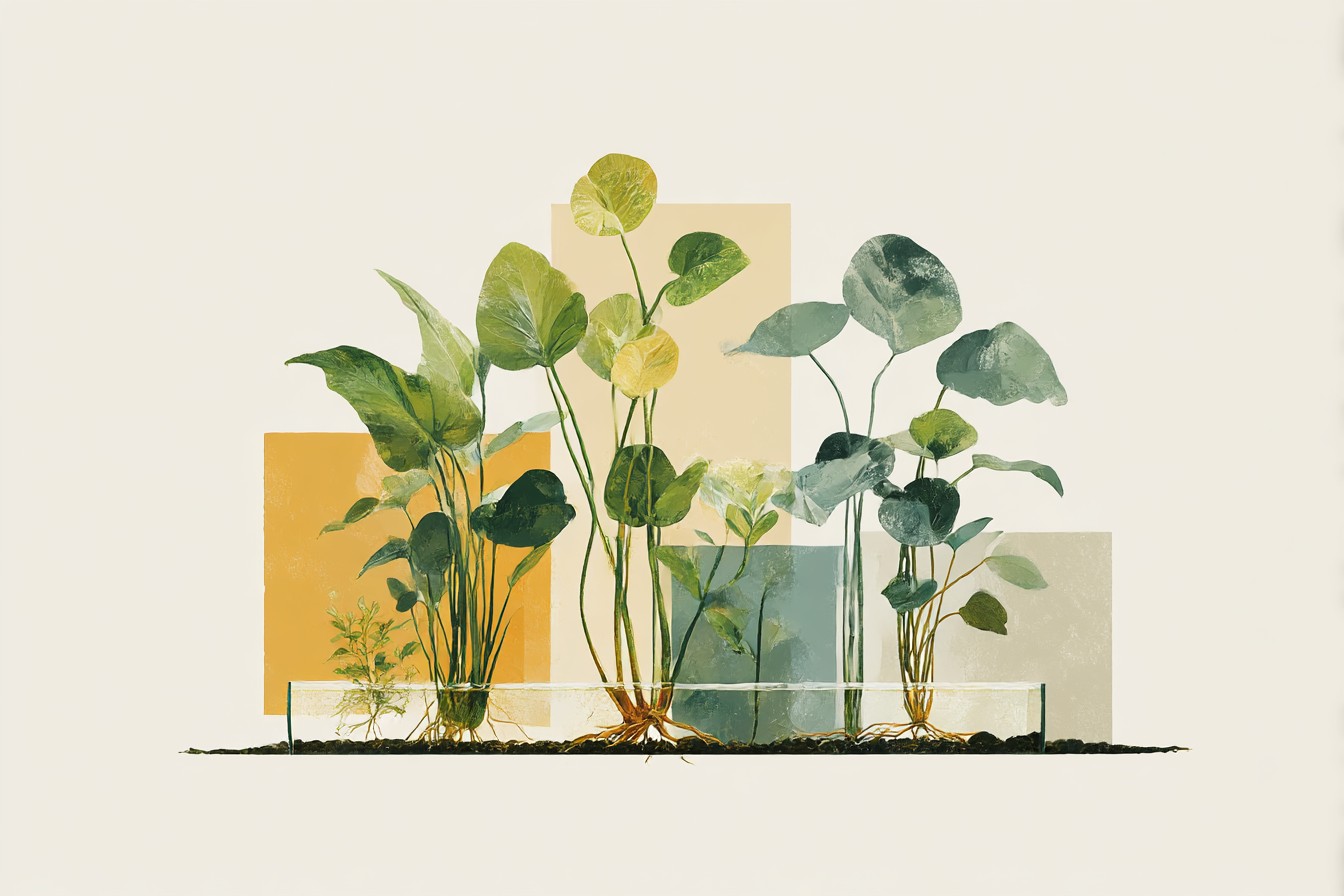
Plants may lose some leaves initially as they adapt – this is normal. Add additional species if the first ones adapt successfully.
Spider plants or lucky bamboo make good second additions as they require similar conditions but offer different visual appeal. **Phase 3: System Optimization (Week 7-12)** Fine-tune plant positioning for optimal growth and visual appeal. Add supplemental lighting if needed for healthy above-water growth. Consider permanent mounting solutions if temporary supports have worked well.
Monitor nitrate levels to confirm biological filtration benefits. Most systems show measurable improvement by this point. **Budget Breakdown:** * Additional plants: £8-15 * Grow light if needed: £15-30 * Permanent mounting materials: £10-15 **Total Budget: £33-60** **Phase 4: Long-term Integration (Month 4+)** Establish pruning and maintenance routines. Fast-growing species like pothos may need monthly trimming to prevent them from taking over your room.
Use trimmings to expand the system or share with other hobbyists. Consider adding more challenging species like philodendrons or additional Dracaena varieties once you understand how your specific setup responds. This phased approach lets you test the concept affordably before investing in more complex setups, and gives both plants and fish time to adapt gradually rather than shocking the system with too many changes at once.


