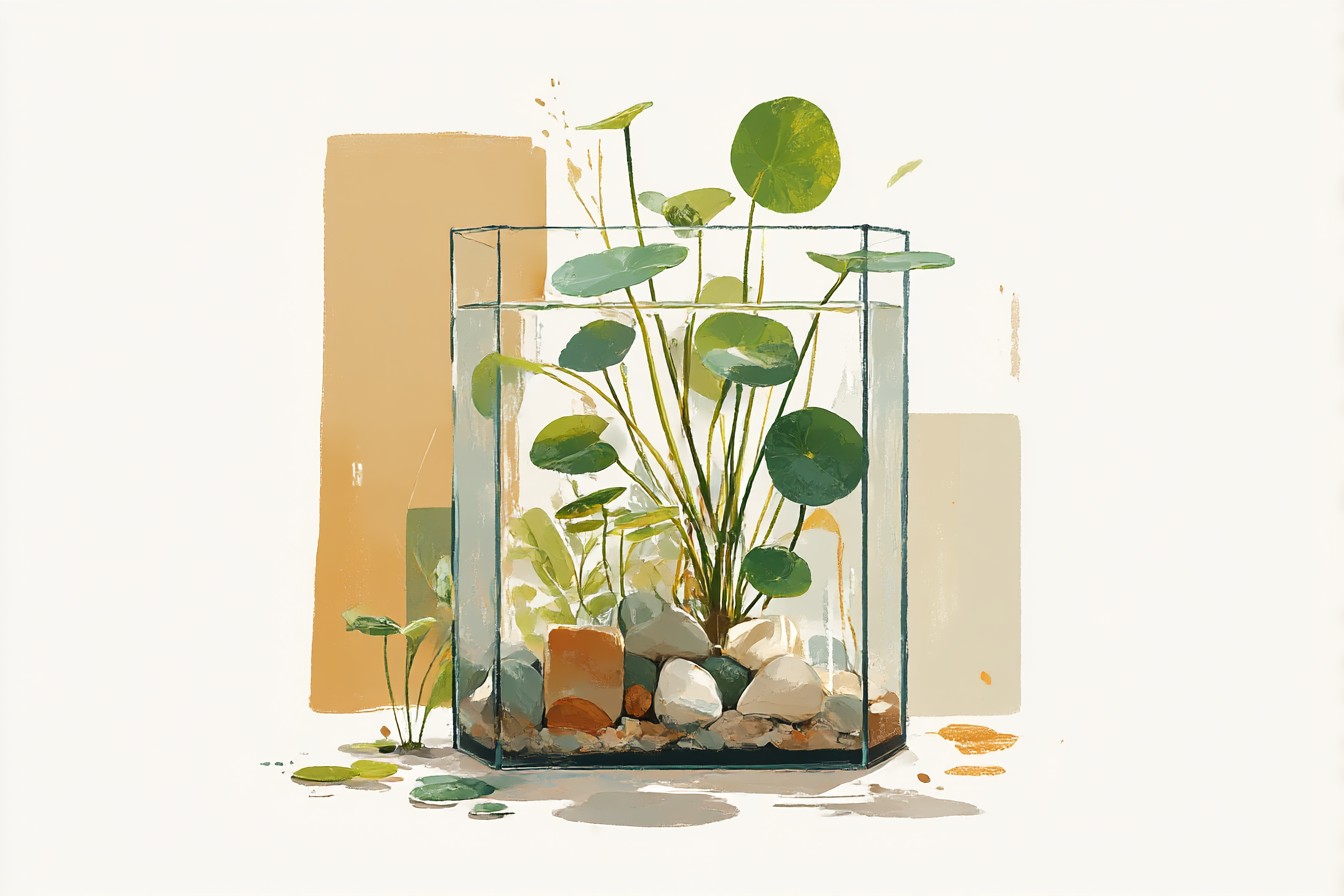
# How to Plant Lotus Seeds in an Aquarium and What to Expect There’s something almost mythical about growing lotus from seed in an aquarium. You start with what looks like a small, hard brown pebble, and if you do everything right, you end up with massive circular leaves floating on the surface and, eventually, those famous pink or white blooms. The reality is more complex than the romantic image suggests, but it’s absolutely doable if you understand what you’re getting into.
The main challenge isn’t the technical difficulty. It’s managing expectations about space, time, and what actually happens in the confines of a glass box. Lotus plants are designed for large ponds, not aquariums.
They want to spread, they grow fast when conditions are right, and they’ll quickly outgrow anything smaller than a substantial tank. But there are ways to work with their nature rather than against it, and the results can be genuinely spectacular.
Most people who try this either give up during the long germination phase or get overwhelmed when the plant takes off faster than they expected.
Understanding both the biological requirements and the practical limitations upfront makes the difference between a successful lotus setup and a frustrating mess that ends up being pulled out after a few months. ## The Science Behind Lotus Germination and Growth **Dormancy Breaking and Scarification** Lotus seeds have evolved to survive decades, sometimes centuries, in dried mud before germinating. The seed coat is incredibly hard and impermeable to water. This dormancy mechanism ensures the plant only grows when conditions are genuinely favourable, but it means you need to manually break that protective barrier through scarification.
The scarification process works by creating small openings in the seed coat that allow water to penetrate and trigger the biochemical changes that start germination. Research shows that proper scarification followed by controlled soaking can achieve germination rates of 85-95% when water temperature is maintained at 25-30°C (Alibaba Spice Basics). Without scarification, germination rates drop dramatically and timing becomes unpredictable. **Temperature Requirements Throughout Growth** Lotus is fundamentally a warm-climate plant, and temperature affects every stage of development.
During germination, maintaining water temperature between 70-85°F (21-29°C) is critical (TheGardenFixes). Once established, the plant prefers consistent temperatures around 75-87°F (Kenaq Gardens). This presents immediate challenges in UK homes where room temperatures fluctuate seasonally and most aquariums run cooler than lotus prefers.
The plant won’t die at lower temperatures, but growth slows significantly, leaves become smaller, and flowering becomes unlikely. You’re essentially working against the plant’s evolutionary programming. **Light and Photosynthesis Demands** Lotus requires intense, sustained lighting to support its rapid growth and large leaf production. The minimum requirement is at least 6 hours of direct light per day (Kenaq Gardens Light), but this is genuinely the minimum.
In natural pond environments, lotus receives 8-12 hours of intense sunlight, which most aquarium lighting systems simply can’t match. The large floating leaves are designed to capture maximum light energy, but they also create substantial shading for anything below them. This creates a feedback loop in aquarium setups where the lotus blocks light from reaching other plants, gradually taking over the entire light budget for itself. ## Germination and Early Growth Process **Seed Preparation and Scarification** Start by selecting fresh, viable seeds.
Lotus seeds should feel heavy for their size and show no obvious cracks or holes. Using a file, sandpaper, or nail clippers, carefully scarify one end of the seed. You only need to break through the outer shell, not damage the internal structure.
Work slowly and cheque your progress frequently. The goal is to create a small opening about 2-3mm across. If you file too aggressively, you risk damaging the embryo inside.
Some people prefer the nail clipper method because it gives more control, though it requires stronger hands. Either way, wear safety glasses and work over a towel to catch any pieces that might fly off. **Soaking and Water Management** Once scarified, soak the seeds in warm water for 24-48 hours (Alibaba Spice Basics). Use a clear glass or plastic container so you can monitor progress easily.
The water should be changed daily to prevent bacterial growth and maintain oxygen levels (TheGardenFixes Water). During this phase, viable seeds will begin to swell and soften. You might see small white or green shoots emerging from the scarified end within the first week.
Seeds that remain hard and unchanged after 48 hours of soaking are likely not viable and should be discarded. Temperature control during soaking is crucial. Use an aquarium heater in the soaking container if necessary to maintain 21-29°C consistently.
Room temperature water in UK homes during winter often isn’t warm enough to trigger reliable germination. **Sprouting Timeline and Transplanting** Germination timing varies considerably, ranging from a few weeks to several months depending on seed age, scarification quality, and temperature consistency (ShunCy Timeline). However, once sprouting begins, development accelerates quickly. Sprouts can emerge within a week and are ready for transplanting when they reach 1-2 inches long (TheGardenFixes Sprouts).
At this stage, you’ll see both a shoot heading upward and root development beginning. Some sources suggest waiting until sprouts reach 4-6 inches with visible tuber development (Homes and Gardens), but this depends on your tank size and setup.
Mistake #1: Rushing the germination process. Many people get impatient after two weeks and assume their seeds aren’t viable. Lotus germination is inherently variable, and viable seeds can take 6-8 weeks to show signs of sprouting.
Changing methods or giving up too early wastes time and seeds that might have eventually germinated.
Mistake #2: Inadequate scarification. Being too gentle with scarification leads to poor germination rates or extremely slow sprouting. The seed coat needs to be genuinely breached, not just scratched. If you can’t see through to lighter coloured material beneath the dark outer shell, you haven’t gone deep enough.
## Container and Planting Requirements **Size and Space Planning** The recommended starting container is at least 12 inches deep and 24 inches wide (Kenaq Gardens Pot), which immediately eliminates most standard aquarium setups.
These dimensions reflect the plant’s natural growth pattern and root system requirements. Lotus develops thick, tuberous roots that spread horizontally and need substantial soil depth to anchor properly. In aquarium contexts, this means you’re looking at tanks of at least 200 litres, and preferably larger.
Smaller tanks can work for the initial growing phase, but you’ll need to plan for transplanting or accept that you’re growing a lotus as a temporary display rather than a permanent feature. **Substrate and Rooting Medium** Lotus grows best in heavy, clay-rich soil rather than standard aquarium substrates. The plant needs substantial nutrient reserves and physical anchoring that sand or gravel can’t provide. Create a planting medium using heavy garden soil mixed with clay and a small amount of aged compost.
Avoid potting compost or soils with added fertilizers, which can cause water quality problems in closed aquarium systems. The soil layer should be at least 6-8 inches deep, covered with a thin layer of gravel to prevent the soil from clouding the water when the plant moves. Place the sprouted seed about 2 inches into the soil with the shoot pointing upward.
You Might Also Like
The root system will develop from the same point as the shoot, spreading both down and horizontally through the soil layer. **Integration with Existing Tank Systems** Adding lotus to an established aquarium creates several system-wide changes that need planning. The large soil mass will affect water chemistry, potentially releasing nutrients that fuel algae growth during the initial establishment period. The massive leaves will significantly reduce light penetration to lower levels of the tank.
Most existing fish and plant communities will need adjustment. Bottom-dwelling fish may be affected by reduced light levels. Plants that depend on higher light levels will struggle once the lotus leaves spread across the surface.
Consider this a fundamental change to your tank ecosystem rather than just adding another plant.
Mistake #3: Underestimating soil requirements. Using standard aquarium gravel or sand as a growing medium results in poor root development and weak plants that can’t support the large leaves lotus wants to produce. The plant needs genuine soil with clay content to thrive, which means accepting some water cloudiness during initial establishment.
## Managing Growth and Long-term Care **Leaf Development and Surface Coverage** Once established, lotus leaf development accelerates rapidly. The first leaves may be small and submerged, but subsequent leaves grow larger and rise toward the surface.
Mature leaves can reach 30-60cm in diameter and will completely cover the water surface in smaller tanks. This creates a management challenge that most aquarium guides don’t address honestly. Do you want lotus leaves covering your entire tank surface?
Because that’s what the plant wants to do. Trimming leaves is possible but requires understanding the plant’s growth pattern and energy storage in the root system. **Flowering and Reproductive Cycle** Lotus flowering in aquarium conditions is possible but demanding. The plant needs intense light, warm temperatures, and substantial root development before it will produce flowers.
Even under ideal conditions, flowering may take 2-3 years from seed germination. The flowers themselves are spectacular but short-lived, typically lasting 3-4 days. The energy required for flower production is enormous, and the plant may produce fewer or smaller leaves during flowering periods. **Winter Management and Dormancy** Lotus naturally enters dormancy during cooler months, with leaves dying back and energy being stored in the root tubers.
In heated aquariums, this dormancy cycle may be disrupted, leading to continuous but weakened growth. Some growers deliberately allow dormancy by reducing temperature and light during winter months, then increasing both to restart growth in spring. This more closely matches the plant’s natural cycle but requires careful planning to avoid affecting other tank inhabitants. ## Research Foundation and Growth Expectations Studies of lotus cultivation consistently show that temperature and light are the primary limiting factors for successful growth.
The narrow temperature window of 21-29°C for germination reflects the plant’s evolutionary adaptation to warm, shallow water environments where temperature fluctuations are minimal. Research into container lotus growing demonstrates that pot size directly correlates with plant size and flowering potential. Containers smaller than the recommended 24-inch width produce smaller leaves and rarely achieve flowering, while larger containers support more vigorous growth but require proportionally more space and soil.
The germination success rates of 85-95% achieved through proper scarification and temperature control represent optimal laboratory conditions. Home aquarium conditions typically achieve lower success rates due to temperature fluctuations, water quality variations, and less precise timing of each step. ## Application Across Different Tank Types **Large Display Tanks (300+ Litres):** Lotus can work as a centerpiece plant with substantial soil planting area and high-intensity lighting. Plan for the lotus to dominate the upper portion of the tank and select fish and other plants that thrive in filtered light conditions. **Pond-Style Aquariums:** Shallow, wide tanks with soil substrates provide the closest aquarium equivalent to natural lotus habitat.
Focus on warmth, intense lighting, and allowing space for leaf spread rather than trying to control growth. **Nano Tanks (Under 100 Litres):** Lotus seeds can be germinated and grown temporarily, but transplanting becomes necessary within 3-6 months. Consider this a propagation setup rather than permanent growing environment. **Seasonal Displays:** Growing lotus in aquariums during warm months, then moving to outdoor ponds during summer provides the best of both worlds but requires careful acclimatisation and timing.
Mistake #4: Ignoring seasonal growth patterns. Trying to maintain constant growth year-round by keeping temperatures and lighting artificially high can exhaust the plant’s energy reserves and lead to gradually weakening growth over multiple seasons. Allowing natural dormancy periods often results in stronger spring growth.
Mistake #5: Inadequate planning for success. Many people start growing lotus without considering what happens when the plant actually thrives.
A successfully growing lotus will quickly outgrow most aquarium setups and require either larger accommodation or regular division of the root system.
## Benefits of Aquarium Lotus Growing **Educational and Aesthetic Value** Growing lotus from seed provides an unmatched view of plant development that’s impossible to observe in outdoor pond settings. Watching the progression from scarified seed to floating leaves offers genuine insight into plant biology and growth processes. The visual impact of mature lotus leaves in an aquarium setting is genuinely spectacular.
The large, perfectly circular leaves create a unique aesthetic that’s completely different from typical aquarium plants. **Water Quality and Ecosystem Effects** Established lotus plants can contribute to water stability through nutrient uptake, though the initial soil disturbance may temporarily destabilise water parameters. The large leaf surface area provides substantial oxygen exchange, particularly beneficial in heavily stocked tanks. **Seasonal Interest and Long-term Project Value** Lotus growing provides multi-year interest as plants develop from seeds to flowering specimens. The seasonal dormancy and regrowth cycle adds natural rhythm to aquarium management that many hobbyists find satisfying. **Propagation and Sharing Opportunities** Successfully grown lotus plants produce seeds that can be shared with other aquarists.
The tubers can also be divided to create new plants, providing material for additional tanks or trading with other hobbyists. ## Step-by-Step Implementation Guide **Phase 1: Seed Preparation and Germination (Weeks 1-8)** Begin with quality seed selection and proper scarification using files or nail clippers.
Set up germination containers with temperature control maintaining 21-29°C consistently. Change water daily and monitor for sprouting, which can take anywhere from one week to several months. **Budget Breakdown:** * Lotus seeds: £5-15 for 5-10 seeds * Aquarium heater for germination: £15-25 * Scarification tools: £5-10 **Total Budget: £25-50** **Phase 2: Tank Preparation and Planting (Weeks 6-12)** Prepare substantial soil planting areas using clay-rich garden soil.
Install high-intensity lighting capable of providing 6+ hours of intense illumination daily. Plan for temperature control maintaining 24-29°C in the main tank. **Budget Breakdown:** * Heavy clay soil and amendments: £10-20 * Upgraded lighting system: £50-150 * Additional heating capacity: £20-40 * Planting containers: £15-30 **Total Budget: £95-240** **Phase 3: Growth Management and System Integration (Months 3-12)** Monitor rapid leaf development and plan for surface coverage management. Adjust other tank inhabitants to accommodate reduced light penetration.
Implement feeding and maintenance schedules appropriate for large plant biomass. **Budget Breakdown:** * Specialised plant fertilizers: £15-25 * Additional tank volume/upgrade: £100-500 * Modified filtration for soil substrate: £30-80 **Total Budget: £145-605** **Phase 4: Long-term Management and Reproduction (Year 2+)** Plan for flowering support if desired, including increased lighting and nutrition. Manage dormancy cycles and seasonal growth patterns. Develop propagation systems for seed collection and tuber division. **Budget Breakdown:** * Seasonal lighting adjustments: £20-50 * Additional tanks for propagation: £50-200 * Specialised flowering nutrients: £10-25 **Total Budget: £80-275** The total investment for a complete lotus growing setup ranges from £345 to £1170, depending on tank size and equipment quality chosen.
This reflects the reality that successfully growing lotus requires substantial space and specialised equipment rather than simple addition to existing setups. Growing lotus from seed in aquariums combines the satisfaction of propagation with the challenge of working within spatial and environmental constraints. Success depends more on realistic planning and proper execution of each phase than on expensive equipment or perfect conditions.
The key is understanding what you’re committing to before you start filing that first seed coat.


