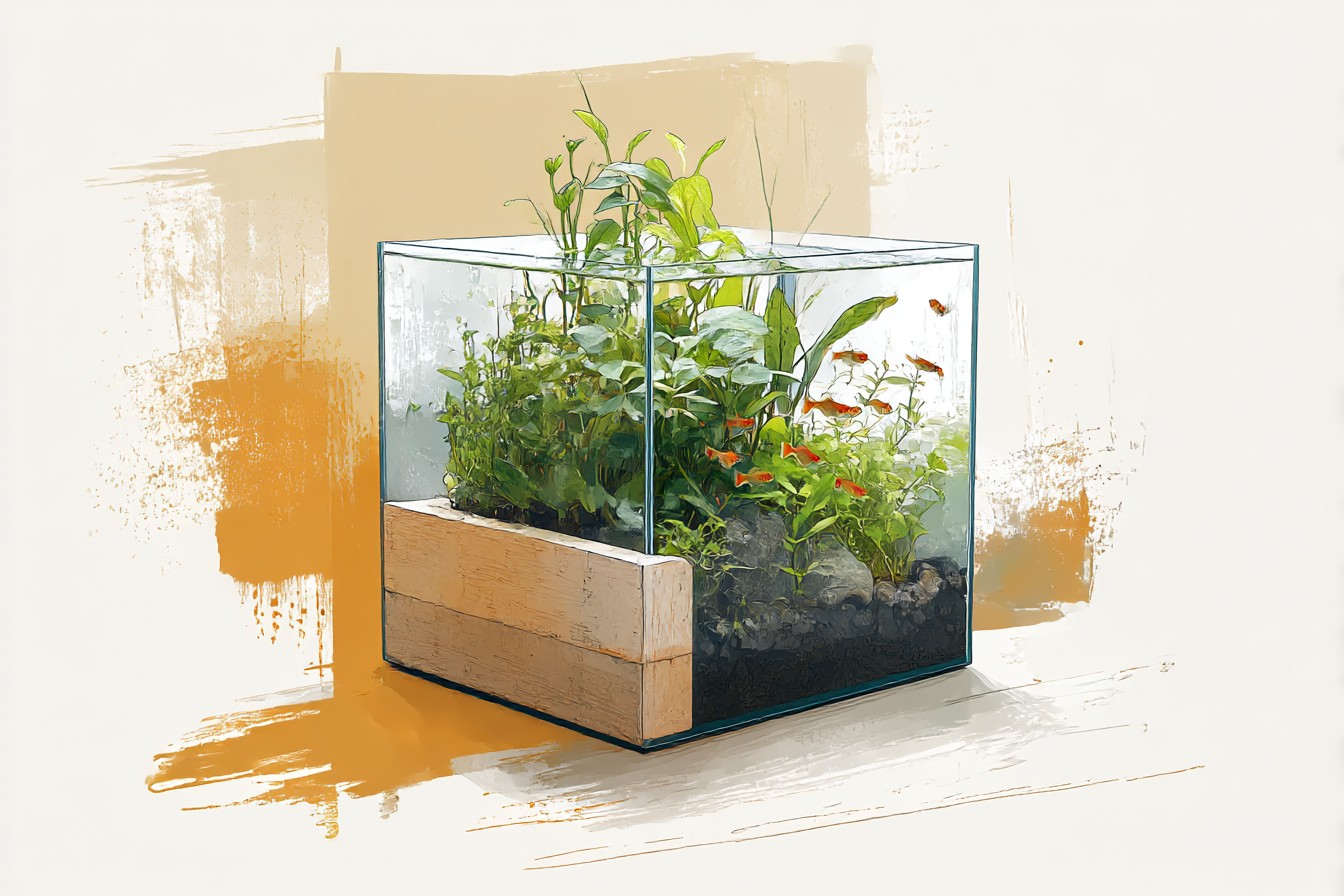
# Guppy Planted Aquarium and the Low Maintenance Setup That Runs Itself Setting up a planted guppy tank that practically maintains itself sounds too good to be true, but it’s genuinely achievable with the right approach. The secret lies in understanding that guppies and certain plants create a natural partnership that stabilises water chemistry, reduces maintenance, and provides the perfect environment for both fish and plants to thrive. When you match hardy plants with guppies’ natural preferences, you end up with a system that does most of the work for you.
The key is choosing plants that thrive in the same conditions guppies prefer and understanding how they work together to create stable water parameters. Guppies are incredibly adaptable fish, but they perform best when their environment provides natural buffering, oxygenation, and biological filtration that the right plants deliver automatically. This isn’t about cramming expensive CO2 systems or high-tech lighting into a tank.
It’s about creating a balanced ecosystem that maintains itself through natural processes. If you’re looking at the broader picture of planted tank fundamentals, our [complete planted aquarium guide](/) covers the core principles that make any planted setup successful. ## The Natural Chemistry That Makes This Work The biological partnership between guppies and plants creates a self-regulating system based on nutrient cycling and pH buffering.
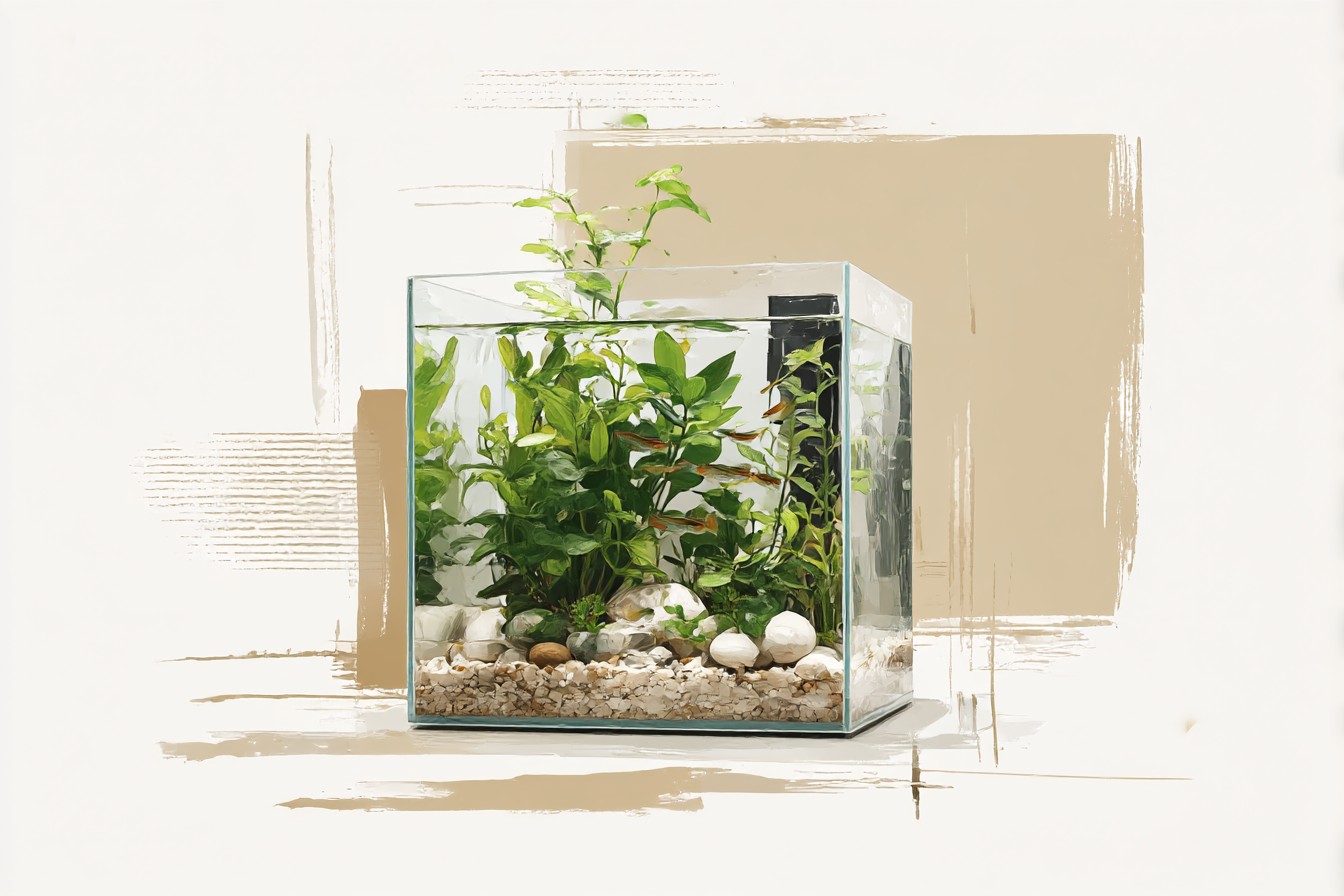
Understanding this foundation helps you choose the right components and avoid the common mistakes that turn low-maintenance tanks into problem tanks. **Nitrogen Processing Through Plant Uptake**: Guppies produce ammonia through their waste and respiration, which converts to nitrite and then nitrate through bacterial action.
Plants absorb these nitrogen compounds directly, particularly ammonia and nitrite, before they can accumulate to harmful levels. Fast-growing plants like hornwort can process significant amounts of fish waste, reducing the biological load on your filter and maintaining stable water parameters without constant intervention (My Home Aquarium). **pH Stabilisation Through Photosynthesis**: During daylight hours, plants consume CO2 through photosynthesis, which naturally raises pH. At night, plants respire and release CO2, lowering pH slightly.
In a balanced system with appropriate plant mass, these fluctuations create a stable pH range that suits both guppies and most aquarium plants. Guppies tolerate pH levels from 7.0 to 8.0, which overlaps perfectly with the range most hardy aquarium plants maintain naturally (Fishkeepers Handbook). **Oxygen Production During Active Growth**: Healthy plants produce oxygen as a byproduct of photosynthesis, supplementing mechanical aeration and creating the well-oxygenated environment guppies need for optimal health and breeding behaviour. This biological oxygenation works continuously during daylight hours and reduces dependency on air pumps or powerheads (Betta Care Fish Guide). **Temperature Compatibility**: Most aquarium plants flourish at temperatures between 72°F and 82°F, which matches the tropical community temperature guidance of 76°F to 82°F that guppies require (The Aquarium Expert) (The Aquarium Expert).
This temperature overlap means you can maintain optimal conditions for both without compromise. ## Building the Self-Maintaining Plant Selection The foundation of a low-maintenance planted guppy tank lies in choosing plants that thrive without intervention while providing maximum benefit to water quality and fish behaviour. These plants need to tolerate the pH range guppies prefer, grow reliably under moderate lighting, and process nutrients efficiently. **Fast-Growing Stem Plants for Nutrient Control**: Hygrophila polysperma serves as an excellent nutrient processor because it grows rapidly and absorbs significant amounts of nitrogen compounds from fish waste (Glass Box Diaries). Plant several stems along the back and sides of your tank, leaving space between groups for water circulation.
Trim weekly during the establishment phase, then every two to three weeks once the tank matures. The cuttings can be replanted to increase coverage or removed to prevent overcrowding. Anacharis works similarly as a water quality improver, processing nutrients while providing dense cover that guppies use for security and breeding (My Home Aquarium).
Float some stems at the surface and anchor others in the substrate. The floating portions will develop extensive root systems that act as additional biological filtration. **Surface Coverage with Floating Plants**: Floating plants provide breeding cover for guppy fry while removing nutrients directly from the water column (Aquarium Fish Source). Hornwort works particularly well because it’s virtually indestructible and grows in any light conditions (My Home Aquarium).
Let it float freely or loosely anchor it near the surface. It will develop into dense mats that provide perfect fry protection while processing nutrients continuously. Water sprite and Amazon frogbit create broader leaf coverage at the surface, diffusing light for plants below while providing additional nutrient uptake.
Maintain about 30-40% surface coverage for optimal light penetration to lower plants. **Substrate Plants for Long-Term Stability**: Cryptocoryne species adapt to the varied parameters that guppies tolerate, making them ideal for set-and-forget planted tanks (Glass Box Diaries). Plant Cryptocoryne wendtii or C. lucens in the foreground and middle areas of your tank. These plants establish slowly but become virtually maintenance-free once settled, requiring only occasional removal of dead leaves.
Java fern and Anubias species attach to driftwood or rocks rather than rooting in substrate, making them perfect for tanks with gravel or bare bottoms. They process nutrients through their leaves and require minimal care beyond occasional cleaning of algae from older leaves. **Plant Density and Placement Strategy**: Aim for approximately 60-70% plant coverage when viewed from above, with heavy emphasis on fast-growing species during the first three months. Place the fastest-growing plants where they’ll have access to the most light, typically in the upper third of the water column.
Dense planting initially helps establish biological stability quickly, then you can thin as the system matures. ## Budget Breakdown by Implementation Phase Setting up a self-maintaining planted guppy tank works best when approached in phases, allowing you to spread costs while building biological stability gradually. **Phase 1: Foundation Setup (Weeks 1-2)** – 60-120 litre tank with basic filtration: £80-150 – Aquarium-safe gravel or sand substrate: £15-25 – Basic LED lighting (full spectrum): £40-80 – Adjustable heater rated for tank volume: £20-35 – Water conditioner and liquid plant fertiliser: £15-20 Initial plant stock: – 5-6 stems hygrophila polysperma: £12-18 – 3-4 stems anacharis (elodea): £8-12 – Small portion hornwort: £8-12 – 2-3 cryptocoryne wendtii: £15-20 **Phase 1 Budget: £213-372** This foundation establishes the biological processes that make the system self-maintaining. Run the tank fishless for 4-6 weeks to allow plants to establish and biological filtration to develop. **Phase 2: Fish Introduction and System Balancing (Weeks 3-8)** – 6-8 adult guppies (breeding trio plus extras): £18-30 – Additional floating plants (water sprite or frogbit): £10-15 – Backup bacterial supplement for stability: £8-12 **Phase 2 Budget: £36-57** Introduce fish gradually and monitor water parameters closely during the first month. The established plants should handle the bioload immediately, but watch for any parameter spikes. **Phase 3: Optimisation and Expansion (Weeks 9-16)** – Additional cryptocoryne varieties: £20-30 – Java fern or anubias on driftwood: £25-40 – Upgraded lighting if plant growth is slow: £60-100 (optional) – Quality liquid fertiliser for long-term maintenance: £15-25 **Phase 3 Budget: £60-195** **Total System Cost: £309-624** depending on tank size and options chosen.
The wide range reflects whether you choose budget options that work perfectly well or premium equipment that might last longer but isn’t necessary for success. ## Common Mistakes That Destroy the Self-Maintaining Balance
Mistake #1: Overfeeding disrupts the nutrient balance. Even hardy plants can’t process unlimited nutrients, and guppies will eat almost anything you offer. Overfeeding leads to algae blooms that smother plants and create maintenance problems that defeat the purpose of a low-maintenance setup. Feed only what guppies can consume in 2-3 minutes once daily, and skip one day per week entirely.
Mistake #2: Insufficient plant mass during startup. A few token plants won’t create the biological stability needed for self-maintenance.
You need enough plant mass to process the fish waste from day one. Start with more plants than you think you need and thin later rather than trying to build up slowly while fish waste accumulates.
You Might Also Like
Mistake #3: Choosing high-maintenance plants for a low-maintenance system. Carpeting plants, red plants, and species requiring CO2 injection completely contradict the self-maintaining approach. Stick to genuinely hardy species that thrive in moderate conditions rather than trying to grow showcase plants in a utility setup.
Mistake #4: Inadequate surface coverage. Without floating plants or surface coverage, you miss a major opportunity for nutrient processing and fry survival.
Surface plants are often the most effective part of a self-maintaining system because they have direct access to light and dissolved nutrients.
Mistake #5: Impatience with plant establishment. Crypts take 6-8 weeks to settle properly, and stem plants need 4-6 weeks to develop strong root systems. Constantly moving or replanting disrupts the biological processes that create stability. Plant once, then leave everything alone for at least two months.
Mistake #6: Neglecting water parameter monitoring during establishment. Even self-maintaining systems need monitoring during the first 8-12 weeks while biological processes stabilise.
Test ammonia, nitrite, and nitrate weekly during this period to catch any imbalances before they become problems.
## Research Foundation for Plant and Fish Compatibility The evidence supporting planted guppy tanks as naturally stable systems comes from multiple sources documenting both the biological processes involved and practical outcomes from established tanks. Studies of nitrogen uptake in aquatic plants show that fast-growing species like those recommended here can process significant amounts of fish waste when given adequate light and basic nutrients. The pH buffering effect of photosynthesis and respiration creates natural stability within the range both guppies and these plants prefer.
Temperature requirements overlap completely, allowing optimal conditions for both without compromise. Field observations of guppy behaviour in planted versus unplanted tanks consistently show improved breeding success, reduced stress indicators, and better overall health when plants provide cover and water quality benefits. The oxygenation and shelter that plants provide address key environmental needs that improve long-term fish welfare.
The specific plant species recommended have documented tolerance for the pH range guppies prefer, combined with reliable growth under moderate lighting conditions that make high-tech equipment unnecessary for success. ## Broader Applications Across Tank Types **Nano Tanks (20-40 litres)**: Use primarily floating plants and one or two small cryptocoryne specimens. The smaller water volume makes plant-based stability even more important, but also means fewer fish and correspondingly less biological load to process. **Community Tanks with Other Species**: The same principles work with peaceful community fish that share similar parameter requirements. Avoid aggressive species that will damage plants or fish with significantly different temperature or pH needs. **Breeding-Focused Setups**: Increase floating plant coverage to 50-60% of surface area and add more fine-leaved plants like cabomba or myriophyllum for fry hiding places.
The enhanced plant coverage supports higher fish density during breeding periods. **Seasonal Setups**: In unheated spare rooms, choose cold-tolerant plants like elodea and maintain temperature stability with larger water volume rather than relying heavily on heaters. ## Benefits of the Self-Maintaining Approach **Reduced Weekly Maintenance Time**: Once established, these tanks require only 15-20 minutes weekly for basic maintenance compared to 45-60 minutes for traditional setups. Plant pruning every 2-3 weeks replaces frequent filter cleaning and water testing. **Natural Water Quality Management**: Healthy plant growth maintains parameters within acceptable ranges automatically, reducing the need for constant water changes and parameter adjustment. Most established planted guppy tanks maintain stable conditions with 25% water changes every 10-14 days. **Enhanced Fish Health and Breeding Success**: The oxygenation, cover, and stable water chemistry that plants provide create optimal conditions for guppy health and reproduction.
Well-planted tanks typically show higher survival rates for both adults and fry compared to unplanted alternatives. **Long-Term Cost Savings**: After initial setup costs, plant-based biological stability reduces ongoing expenses for water treatments, frequent filter media replacement, and fish health problems. The system becomes cheaper to maintain over time rather than more expensive. **Educational Value**: Watching the natural processes that maintain tank stability provides genuine insight into aquatic ecosystems and biological relationships that pure fish-keeping doesn’t offer. **Aesthetic Improvement Over Time**: Unlike hardscape-only tanks that look static, planted tanks develop and change as plants mature, creating visual interest that improves rather than deteriorates with age. ## Step-by-Step Implementation Timeline **Step 1: Tank Preparation and Plant Installation (Week 1)** Set up filtration, heating, and lighting systems. Plant all substrate plants and add floating plants.
Fill slowly to avoid disturbing newly planted specimens.
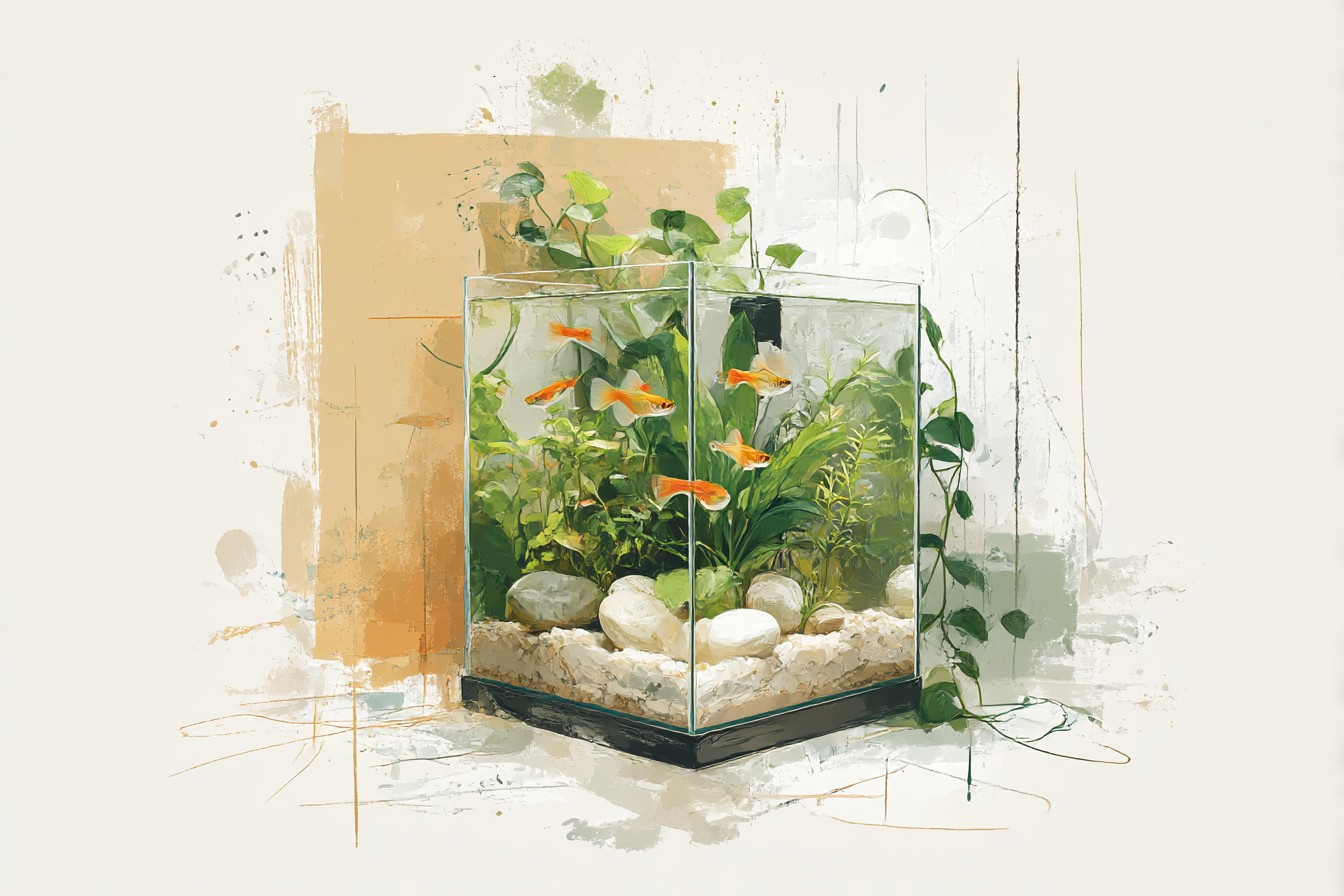
Start lighting schedule at 6-8 hours daily. **What to watch for**: Plants may show initial shock with some leaf dropping, particularly crypts. This is normal during the first 2-3 weeks. **Budget Breakdown:** * Tank and basic equipment: £140-260 * Initial plant selection: £40-65 * Substrate and essentials: £30-45 **Step 1 Budget: £210-370** **Step 2: Biological Establishment (Weeks 2-6)** Run tank without fish while plants establish root systems and begin active growth.
Add liquid fertiliser weekly according to manufacturer’s instructions. Monitor plant development and trim any dying leaves. **What to watch for**: New growth on stem plants within 7-10 days indicates successful establishment. Floating plants should show active growth and root development. **Budget Breakdown:** * Fertilisers and supplements: £15-25 **Step 2 Budget: £15-25** **Step 3: Fish Introduction (Week 7-8)** Introduce guppies gradually, starting with 2-3 specimens and adding 2-3 more each week until reaching target population.
Begin regular feeding schedule and monitor water parameters closely. **What to watch for**: No ammonia or nitrite spikes if plant mass is adequate. Guppies should show active behaviour and good colour within first week. **Budget Breakdown:** * Guppy breeding group: £18-30 * Water testing kit: £15-25 **Step 3 Budget: £33-55** **Step 4: System Optimisation (Weeks 9-16)** Add remaining plant species and make final adjustments to lighting schedule and fertilisation routine. Establish regular maintenance schedule of weekly feeding cheques and biweekly water changes. **What to watch for**: Stable plant growth rates, no algae problems, consistent fish behaviour, and steady water parameters without intervention. **Budget Breakdown:** * Additional plants and improvements: £40-75 **Step 4 Budget: £40-75** **Step 5: Long-Term Maintenance Mode (Month 4 onwards)** Reduce monitoring frequency to monthly parameter cheques.
Maintain pruning schedule every 2-3 weeks and continue 25% water changes every 10-14 days. The system should now run with minimal intervention. **What to watch for**: Consistent plant health, stable fish population through successful breeding, and water parameters that remain stable between maintenance sessions. **Budget Breakdown:** * Ongoing fertiliser and basic supplies: £10-15 monthly **Total System Budget: £308-540** depending on equipment choices and tank size. The range reflects practical options from basic setups that work perfectly well to premium components that offer convenience rather than necessity.
The self-maintaining nature means ongoing costs remain minimal once the system stabilises, making this approach both practical and economical for long-term success.


