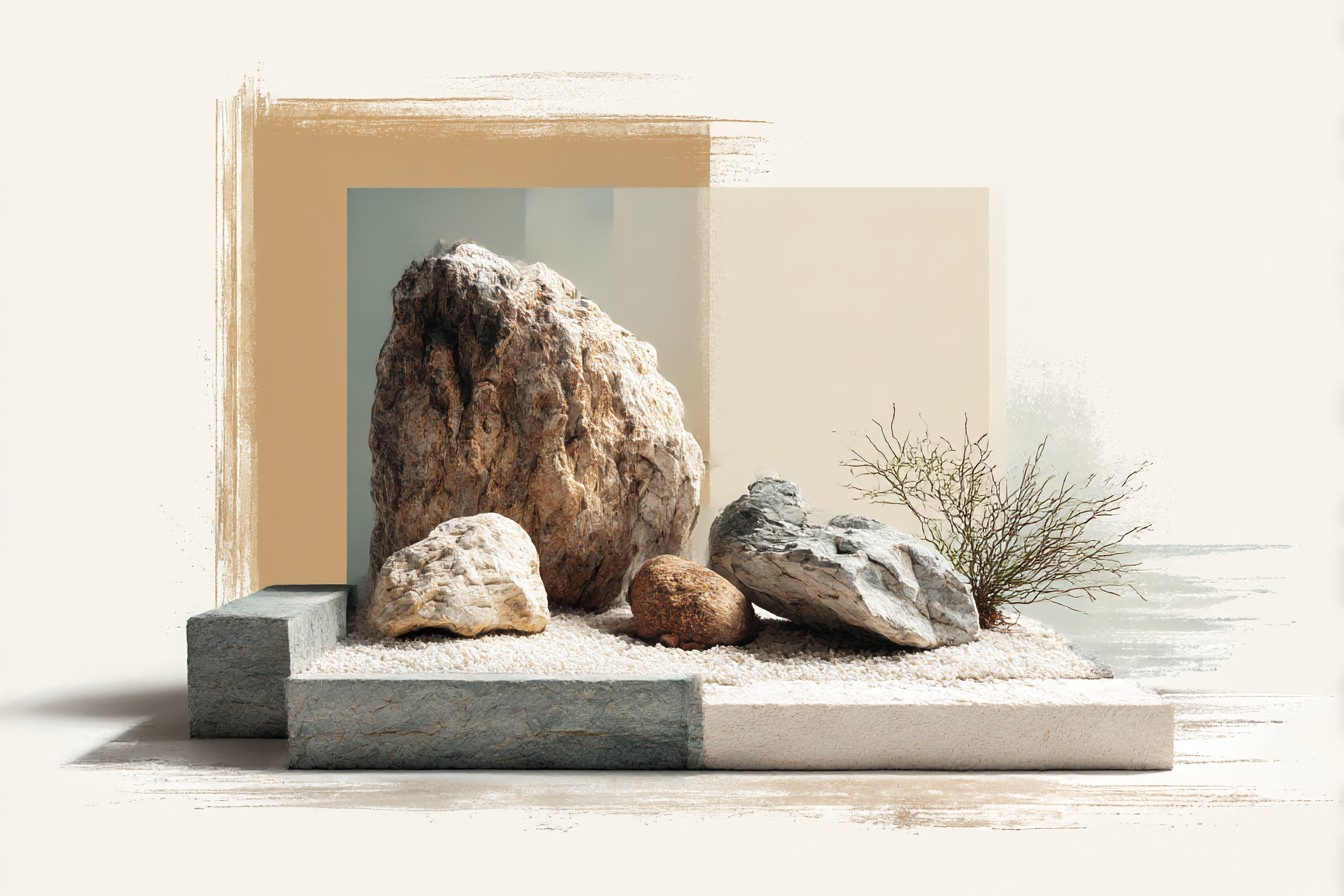
# Seiryu Stone Hardscape and Building an Iwagumi Layout Step by Step Building your first Iwagumi layout feels like trying to paint with three brushstrokes and making it look effortless. The style appears deceptively simple – just stones, substrate, and usually a single plant species creating an open, minimalist landscape. But getting those stones positioned so they look natural rather than randomly dumped requires understanding both the aesthetic principles and the practical challenges that come with working with Seiryu stone specifically.
Seiryu stone has become the go-to choice for Iwagumi builds, and for good reasons. The dramatic white calcite veins running through the dark grey limestone create natural focal points (Aquarium Gardens). But this Japanese stone comes with water chemistry implications you need to plan for before you start building.
Since Seiryu stone is limestone based and may raise KH and GH (Aquarium Co Op), your plant choices and livestock need to match what your water parameters will become, not what they start as. The appeal of Iwagumi isn’t just aesthetic.
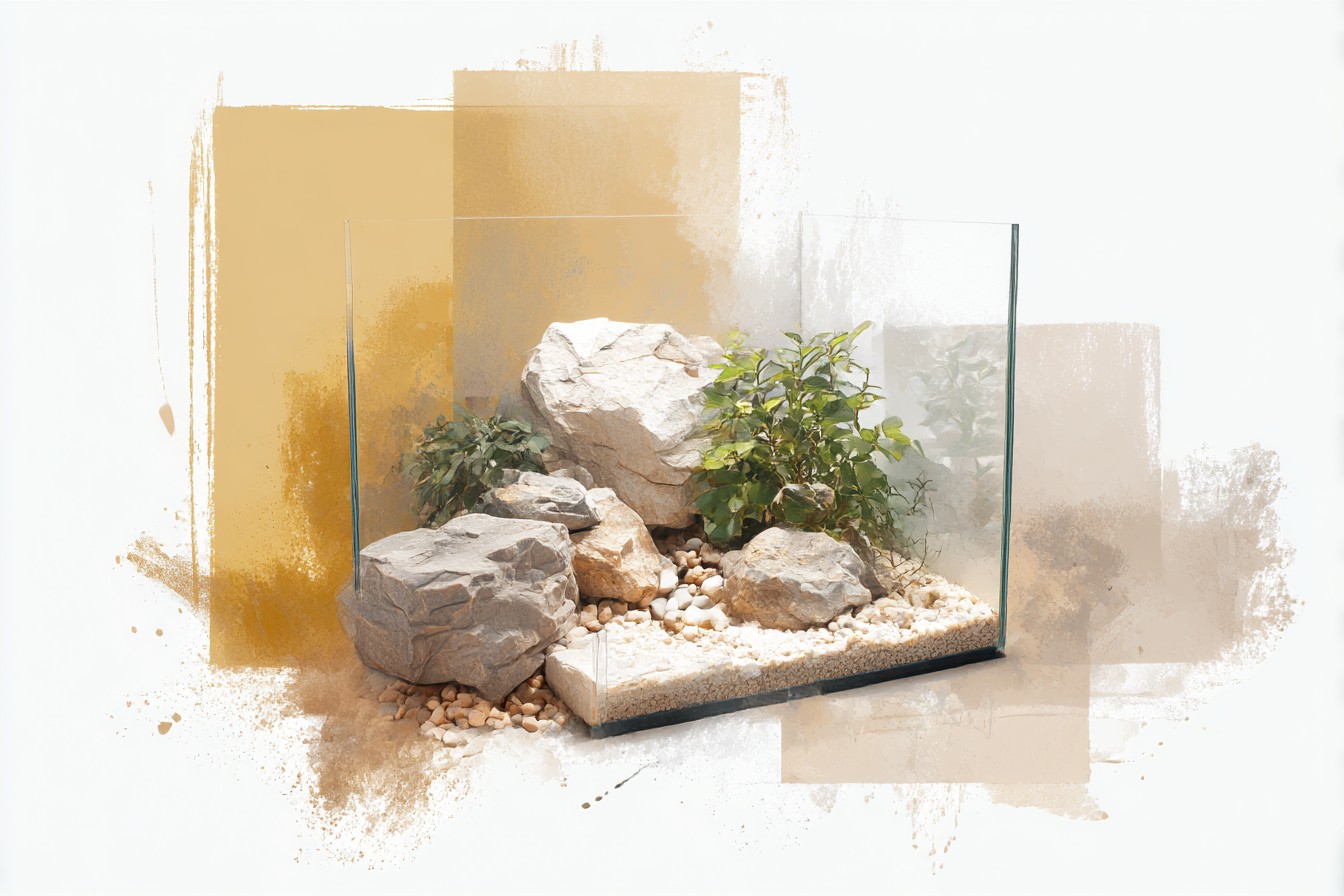
Done properly, these layouts create incredibly stable planted tanks.
The emphasis on simplicity and open space (Practical Fishkeeping) means fewer variables to manage and cleaner maintenance routines. But the apparent simplicity is what makes it challenging. When you can’t hide mistakes behind dense planting, every stone placement decision matters. ## The Science Behind Seiryu Stone and Water Chemistry **Limestone Composition and Buffering Effects** Seiryu stone originates from Japan (Aquascape Supply) and consists primarily of limestone with distinctive mineral veining.
The calcium carbonate content acts as a natural buffer, slowly dissolving and affecting your tank’s carbonate hardness. In practical terms, KH increase from Seiryu can measure 1 to 2 degrees in soft water tanks (UKAPS). This buffering effect stabilises pH over time, which sounds beneficial until you realise it might stabilise at a level your plants don’t prefer.
Most carpeting plants used in Iwagumi layouts prefer slightly acidic to neutral conditions. The limestone gradually pushes pH upward, potentially into alkaline territory where nutrient uptake becomes less efficient. **Planning for Hardness Changes** The degree of hardness increase depends on your starting water parameters and the surface area of stone in contact with water. A tank using 8kg of Seiryu stone in soft Scottish water might see more dramatic shifts than the same amount in already hard London tap water.
The process isn’t instant – changes occur gradually over weeks and months as the stone slowly dissolves. For planted tank purposes, this presents a specific challenge. Most carpeting plants that work well in Iwagumi layouts prefer soft to moderately hard water.
If your local water is already moderately hard and you add significant amounts of Seiryu stone, you might push beyond the optimal range for plant growth. **Biological Implications** The mineral content released from Seiryu stone includes calcium and magnesium, both essential plant nutrients. However, excessive hardness can interfere with the uptake of other nutrients like iron and potassium. This creates a situation where your plants have abundant calcium but potentially struggle with micronutrients, leading to deficiency symptoms that can be puzzling to diagnose. ## Iwagumi Design Principles and Stone Selection **The Triangle Rule and Odd Numbers** Traditional Iwagumi layout uses odd number of stones typically three or five (Aquascaping Love).
This isn’t arbitrary – odd numbers create visual tension and prevent the symmetrical, artificial appearance that even numbers tend to produce. The classic three-stone arrangement uses one dominant stone with two supporting stones of different sizes. The master stone called Oyaishi anchors the composition (ADA Global).
This should be your most interesting piece – the one with the best shape, most dramatic veining, or most appealing proportions. It’s positioned off-centre, typically following the rule of thirds borrowed from photography and painting. **Grain Direction and Natural Flow** Stone grain direction should align for natural look (Green Aqua). This detail separates amateur hardscapes from convincing ones.
In nature, geological processes create consistent grain patterns across rock formations. Your stones should appear as if they’re part of the same original formation, broken apart by natural forces. When selecting stones, look for pieces where the grain lines could logically connect.
The white calcite veins in Seiryu stone make this easier to visualise – imagine how the veining would flow if the stones were still connected. Align these patterns and your hardscape immediately looks more natural. **Size Relationships and Proportions** The secondary stones should be roughly one-third to two-thirds the height of the master stone. Avoid making them too similar in size, which creates competition for attention, or too small, which makes them look scattered rather than purposeful.
The goal is to create a hierarchy where each stone has a clear role in the composition. ## Building Your Iwagumi: Phase-by-Phase Implementation **Phase 1: Stone Selection and Testing (Week 1)** Start by selecting more stones than you think you’ll need. For a three-stone layout, choose at least six potential stones. This gives you flexibility to test different combinations and find the most compelling arrangement.
Test water chemistry impact before committing to your selection. Fill a bucket with your tap water, add the stones you’re considering, and monitor KH and pH over several days. This preview shows you what to expect in your tank and helps you adjust plant and livestock plans accordingly.
Sort stones by size and grain pattern. Look for the most dramatic piece for your master stone – this might be the largest, but not necessarily. Sometimes a medium-sized stone with exceptional veining or an interesting shape makes a better focal point than a larger but less characterful piece.
Budget considerations: Expect to spend £40-80 on stones for a 60-litre tank. Buy from a shop where you can hand-select pieces rather than ordering online. The visual assessment of grain patterns and proportions is crucial and impossible to do from photographs. **Phase 2: Hardscape Construction (Week 2)** Stone placement before substrate prevents shifting (The Spruce Pets).
Place your stones directly on the tank bottom, then build substrate around them. This creates stability and prevents the stones from toppling as substrate settles or when you’re planting. Position the master stone first, roughly one-third of the way across the tank from either side.
Angle it slightly – perfectly upright stones look artificial. The top should point slightly toward the centre of the tank, creating visual flow inward rather than directing attention toward the edges. Add secondary stones one at a time, stepping back to assess the composition after each placement.
The second stone typically sits closer to the opposite side but forward or backward from the master stone’s position. The third stone fills space and creates balance but shouldn’t compete for attention. Test stability by gently pushing each stone.
They should feel solidly planted, not wobbling or shifting. If a stone feels unstable, remove some substrate from underneath and adjust its position until it sits securely. **Phase 3: Substrate and Initial Setup (Week 3)** Build substrate depth gradually, working around the stones rather than dumping it in bulk. Aim for 3-4cm depth at the front, sloping to 6-7cm at the back.
This creates depth perception and provides adequate rooting space for plants. Slope the substrate away from the stones slightly. This prevents debris accumulation around the hardscape and makes maintenance easier.
The stones should appear to emerge naturally from the substrate, not sit on top of it like ornaments. Fill the tank slowly to avoid disturbing your carefully arranged substrate. Use a plate or bowl to deflect the water stream and prevent erosion.
Fill to about two-thirds capacity initially – you’ll top up after planting. Install filtration and heating systems. For Iwagumi layouts, external filtration works better than internal filters that disrupt the clean lines.
You Might Also Like
Position the filter inlet and outlet to create gentle circulation without creating strong currents that disturb carpeting plants. **Phase 4: Plant Selection and Establishment (Weeks 4-6)** Iwagumi layouts often use carpeting plants like Hemianthus callitrichoides (Buce Plant). However, given Seiryu stone’s tendency to raise hardness, consider alternative species that tolerate harder water better. Glossostigma elatinoides handles moderate hardness better than HC Cuba and creates a similar carpet effect.
Eleocharis pusilla (dwarf hairgrass) works well in harder water and adds textural interest. Monte Carlo (Micranthemum tweediei) provides middle ground – easier than HC Cuba but still achieving the clean carpet look. Plant in small portions spaced 2-3cm apart.
Dense planting looks impressive initially but often leads to die-off as lower portions don’t receive adequate light. Sparse initial planting that fills in naturally creates better long-term results. Maintain high light levels and consistent CO2 if using injection.
Without CO2, stick to easier carpeting plants and accept slower growth rates. The increased hardness from Seiryu stone can make nutrient uptake less efficient, so consider liquid fertilisers designed for hard water conditions. **Phase 5: Maturation and Fine-tuning (Weeks 8-16)** Monitor water parameters weekly as the stone’s buffering effects establish. You might need to adjust fertiliser dosing as hardness stabilises at new levels.
Plants may show initial stress as they adapt to changing conditions, then recover as they establish. Trim carpeting plants regularly to maintain the clean, open aesthetic that defines Iwagumi. Use sharp, curved scissors and trim in sections to avoid scalping entire areas.
Removed plant material can be replanted in sparse areas to encourage even coverage. Watch for algae issues, particularly on the stones themselves. The white veining in Seiryu stone can become discoloured by algae growth, spoiling the visual impact.
Regular cleaning with an algae scraper maintains the dramatic contrast that makes this stone attractive. Fine-tune lighting schedules based on plant response. Carpeting plants need consistent light to maintain compact growth, but excessive light encourages algae.
Start with 6-8 hours daily and adjust based on plant health and algae presence. ## Common Mistakes in Iwagumi Construction
Mistake #1: Ignoring water chemistry implications. Many builders focus entirely on aesthetics and ignore how Seiryu stone will affect their water parameters. The result is often struggling plants and confused troubleshooting when the issue is simply that your chosen plants don’t suit the water chemistry your stones have created.
Mistake #2: Symmetrical stone placement. Placing stones at regular intervals or creating mirror-image arrangements immediately signals artificial construction. Natural rock formations show irregular spacing and varying relationships between stones.
Even spacing kills the illusion of natural landscape.
Mistake #3: Mismatched grain patterns. Using stones with dramatically different veining patterns or grain directions makes the hardscape look like a random collection rather than a natural formation. The stones should appear geologically related, as if they originated from the same formation.
Mistake #4: Inadequate stone stability. Placing stones on top of substrate rather than embedding them properly leads to shifting over time. Stones that move even slightly disrupt the carefully planned composition and can damage plant roots or create gaps where debris accumulates.
Mistake #5: Wrong plant choices for hardscape size. Massive stones overwhelm small carpeting plants, while tiny stones get lost in aggressive plant growth.
The scale relationship between hardscape and plants needs to work both at initial planting and after the plants mature.
Mistake #6: Impatience with plant establishment. Trying to achieve full carpet coverage immediately by planting densely usually backfires. Lower plant portions die from inadequate light, creating gaps and algae problems. Sparse initial planting that fills in naturally works better long-term.
## Research Support Multiple studies on aquascaping techniques consistently demonstrate that stone-based hardscapes provide superior structural stability compared to wood-based designs.
The mineral content of limestone-based stones like Seiryu creates measurable buffering effects that can be predicted and planned for. Research on plant growth in varying water hardness conditions shows that species selection must match anticipated water chemistry rather than initial conditions. Tank stability studies indicate that minimalist aquascapes with proper hardscape foundation require less intervention and show more consistent parameters over time compared to complex planted systems. ## Broader Applications Across Tank Types **Nano Tanks (20-40 litres):** Use single master stone with minimal supporting hardscape.
Scale becomes critical – choose stones proportionate to tank size rather than trying to recreate full-sized Iwagumi in miniature space. **Large Display Tanks (200+ litres):** Five or seven stone arrangements work better than three-stone layouts. Increased scale allows for more complex stone relationships while maintaining Iwagumi principles. **High-Tech vs Low-Tech Systems:** CO2 injection allows use of demanding carpeting plants but requires careful balance with increased hardness from stone buffering.
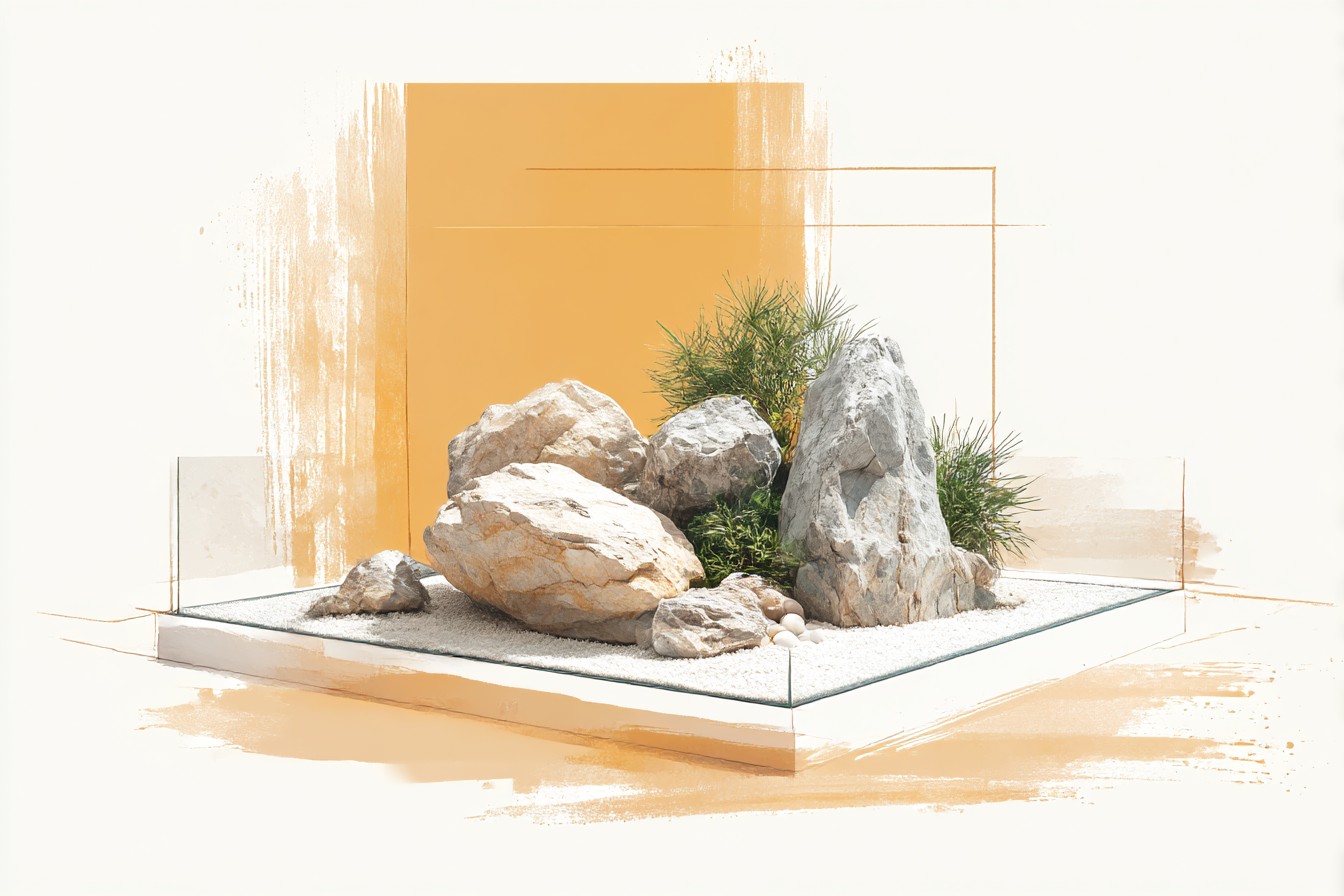
Low-tech approaches need hardier plant species but often prove more stable long-term. **Community vs Species-Specific Tanks:** Fish selection must account for altered water chemistry.
Many commonly recommended Iwagumi fish prefer soft, acidic water that conflicts with Seiryu stone’s buffering effects. ## Benefits Summary **Visual Impact and Simplicity:** Clean, minimalist aesthetic creates focal point that works in any room setting. The dramatic contrast between dark stone and white veining provides visual interest without overwhelming smaller spaces. **Maintenance Efficiency:** Open layout allows easy access for cleaning and trimming. Fewer plant species means simplified fertiliser and care routines.
Stone hardscape requires minimal ongoing maintenance once established. **Water Stability:** Natural buffering from limestone content creates stable pH over time. Reduced parameter fluctuations benefit both plants and fish health. Established Iwagumi tanks typically require less intervention than complex planted systems. **Skill Development:** Building successful Iwagumi teaches fundamental design principles applicable to other aquascaping styles.
Understanding stone placement, proportion, and plant-hardscape relationships builds foundation for more complex layouts later. **Long-term Value:** Quality stones last indefinitely and can be reused in future builds. Well-established carpet plants can be divided and replanted, effectively providing free plants for years. Initial investment in good stones pays dividends across multiple tank iterations. **Flexibility for Upgrades:** Simple base layout accommodates equipment upgrades or plant changes without complete reconstruction.
Easy to modify plant species as experience and preferences develop. ## Step-by-Step Implementation Guide **Step 1: Planning and Selection (Week 1)** – Research local water parameters and calculate expected changes with Seiryu stone – Select 6-8 potential stones for 3-stone layout, testing combinations – Choose plants suitable for anticipated final water chemistry – Plan equipment placement to maintain clean aesthetic lines **Budget Breakdown:** * Seiryu stone (4-6kg): £40-70 * Carpeting plants: £25-40 * Quality substrate: £20-30 **Total Budget: £85-140** **Step 2: Hardscape Construction (Week 2)** – Place stones directly on tank bottom before adding substrate – Build substrate slopes around stones for stability and visual depth – Test stone stability and adjust positions as needed – Install filtration and heating systems **Budget Breakdown:** * Additional substrate if needed: £10-15 * Filter media and equipment: £30-50 **Step 3: Initial Plant Setup (Weeks 3-4)** – Plant carpet species in small portions with adequate spacing – Establish lighting schedule appropriate for chosen plants – Begin fertiliser routine adapted for harder water conditions – Monitor plant establishment and adjust care as needed **Budget Breakdown:** * Fertilisers: £15-25 * Additional plants if needed: £10-20 **Step 4: Maturation and Optimization (Weeks 6-16)** – Weekly parameter monitoring as stone buffering establishes – Regular carpet trimming to maintain clean appearance – Fine-tune lighting and fertiliser based on plant response – Address any algae issues promptly, particularly on stone surfaces **Budget Breakdown:** * Maintenance supplies: £10-15 * Water testing reagents: £15-20 **Total Project Budget: £165-285** The investment front-loads toward quality stones and proper substrate, with ongoing costs remaining minimal. A well-built Iwagumi provides years of enjoyment with relatively simple maintenance requirements once established.


