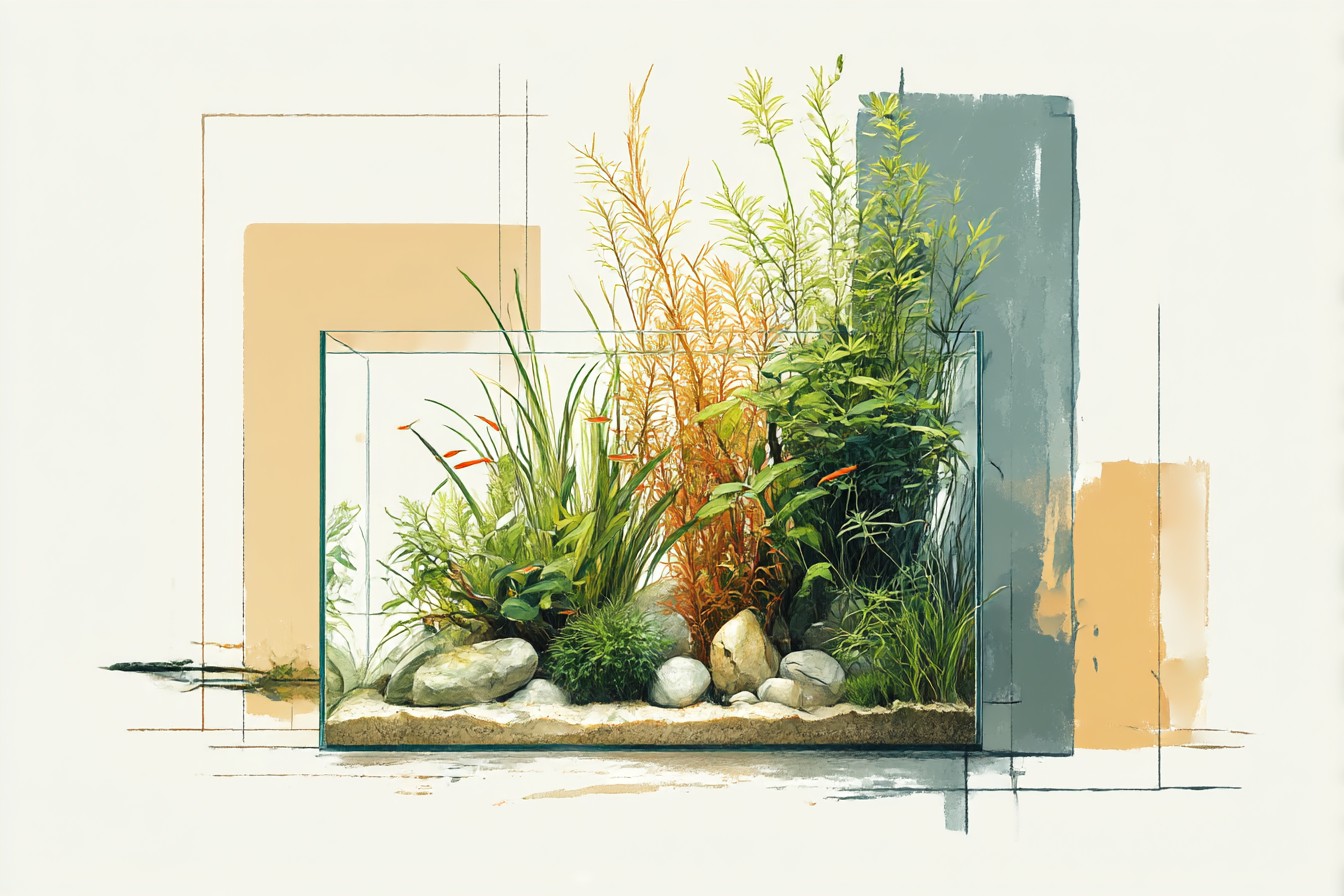
# Planted Aquarium Trimming and When to Cut Back vs Let Things Fill In Getting your first proper planted tank growing well is genuinely exciting. You’ve got the light working, the CO2 dialled in, and suddenly everything’s taking off. Your rotala’s reaching the surface, the hygrophila’s spreading across the back, and that little patch of carpet plant is finally showing signs of life.
Then comes the question every planted tank keeper faces: when do you reach for the scissors, and when do you let things develop? The timing matters more than you might expect. Cut too early and you’ll stunt development just as plants hit their stride.
Leave it too late and you’ll be dealing with shading issues, algae outbreaks, and a tank that looks more like an overgrown pond than the aquascape you had in mind. After three years of making both mistakes repeatedly, I’ve learned that trimming decisions shape how your tank develops over months, not just how it looks next week.
The decision isn’t just about aesthetics either.
Poor trimming timing affects plant health, water chemistry, and even fish behaviour. Plants that get too dense create dead zones where water doesn’t circulate properly. Stems that reach the surface start shading everything below them.
And once algae gets established in poorly maintained areas, you’re looking at weeks of work to get things back under control. ## The Science Behind Plant Growth and Recovery **Growth Patterns and Energy Distribution** Plants allocate energy differently depending on their growth stage and available resources. When stems are young and establishing, most energy goes into root development and initial leaf production. Once established, they shift into rapid vertical growth, particularly under higher light conditions (Aquascaping Academy).
This is when trimming decisions become critical. The key is understanding that plants don’t just grow upward. They’re constantly making decisions about where to put their energy based on light availability, nutrient levels, and competition from neighbouring plants.
When you trim a stem plant just above a node, you’re forcing it to redirect energy from vertical growth into lateral branching (Aquarium Life HQ). This creates bushier growth but temporarily slows upward development. **Recovery Time and Stress Response** Research on aquatic plant responses to pruning shows that limiting trimming to about one third of each plant significantly reduces shock and recovery time (Aquarium Life HQ). This isn’t arbitrary.
Plants need enough leaf surface area to maintain photosynthesis while they’re redirecting energy to new growth points. The recovery process varies enormously between species. Fast growing plants like hornwort, rotala, and hygrophila typically bounce back from heavy trimming within days under good conditions (Marcus Fish Tanks).
Slower growing species like anubias or cryptocoryne can take weeks to show new growth after even minor trimming. **Light and Nutrient Impact on Growth Rates** Higher light and nutrient levels accelerate growth rates significantly, which directly affects trimming frequency (My Aquarium Info). This creates a feedback loop that catches many people off guard. You set up CO2 injection and increase lighting to get better plant growth, then find yourself trimming twice as often as you expected.
In high tech setups, fast growing stem plants might need attention every one to two weeks (Aquifarm), while the same species in a low tech tank might go a month between trims. Understanding your tank’s growth rate helps predict when trimming decisions need to be made, rather than reacting after problems develop. ## Strategic Trimming for Long-Term Development **Timing for Stem Plants** Fast growing stem plants like rotala, hygrophila, and hornwort typically need trimming every one to two weeks in well-lit, CO2-injected tanks (Aquascaping Academy). But timing the first significant trim is crucial for long-term development.
When stems are first planted, they need time to establish root systems and adapt to your tank’s conditions. This usually takes three to four weeks. During this establishment phase, resist the urge to trim unless you’re removing obviously dying material.
The plants are putting energy into settling in, and premature trimming forces them to divide that energy between recovery and establishment. Once established, regular trimming every one to two weeks keeps stems bushy and prevents them reaching the surface too quickly. The technique matters here.
Cut just above a node to encourage new growth from that point (Aquarium Life HQ). Use clean, sharp scissors to avoid crushing stems, which can introduce bacterial problems (Aquarium Life HQ). For tanks where you want a more natural, wild look, you can extend trimming intervals to three to four weeks.
This creates longer stems with more variation in height, but requires careful monitoring to prevent shading issues in the lower portions of the tank. **Slow Growing Species Management** Species like anubias, cryptocoryne, and java fern operate on completely different timescales. These might only need a single leaf removed every few months (Aquifarm). The key with slow growers is patience and minimal intervention.
For anubias, the main maintenance involves removing yellowing or damaged leaves at the base of the stem. Don’t trim healthy leaves just because they look large compared to newer growth. Each leaf represents months of energy investment, and unnecessary removal slows overall development significantly.
Cryptocoryne species are particularly sensitive to disturbance. Once established, they may not need any trimming for six months or more. When you do need to remove leaves, do it gradually over several weeks rather than all at once to avoid triggering crypt melt. **Carpet Plant Development** Carpet plants like monte carlo, glossostigma, or dwarf baby tears require a different approach entirely.
During establishment, which takes eight to twelve weeks, avoid trimming altogether unless removing dead portions. The plants need to develop runners and fill in bare patches. Once established, carpets benefit from light trimming every four to six weeks.
This involves removing the tallest growth to maintain even height and encourage denser development. The timing here is about preventing any sections from growing tall enough to shade surrounding areas. ## When to Let Plants Fill In **Recognising Development Phases** The first eight to twelve weeks after planting or rescaping represent the critical development phase. During this time, plants are establishing root systems, adapting to your specific water chemistry, and beginning to show their natural growth patterns.
Premature trimming during this phase often sets back development by weeks. Signs that plants are ready for regular trimming include steady upward growth, new shoots appearing at the base of stems, and healthy leaf colour throughout the plant. You’ll also notice faster growth rates as root systems become established and the plants begin efficiently processing the nutrients you’re providing.
For newly planted tanks, resist trimming until you see clear evidence that plants have moved beyond survival mode into active growth. This usually means waiting until week six to eight for the first significant trim, even if some stems are reaching halfway to the surface. **Building Plant Mass for Stability** A common mistake is trimming too aggressively in the first few months, which prevents plants from building the biomass needed for long-term tank stability. Plants are your primary biological filter, processing ammonia, nitrites, and excess nutrients that would otherwise fuel algae growth.
During the fill-in phase, plants should be allowed to develop substantial root systems and leaf mass. This usually means letting stem plants reach about two-thirds of the way to the surface before the first major trim. For background plants, this might mean eight to ten inches of growth in a standard tank.
The plant mass also helps suppress algae by competing for nutrients and producing allelopathic compounds that inhibit algae growth. Tanks with well-established plant biomass rarely develop serious algae problems, even with fairly high lighting levels. **Seasonal Considerations** Growth rates fluctuate seasonally, even in indoor tanks. During autumn and winter, when ambient light levels are lower and room temperatures tend to be cooler, plant growth often slows significantly.
This is when letting plants fill in becomes particularly important. From October through February, I typically extend trimming intervals by about 50%. Plants that might need weekly attention in summer often go two to three weeks between trims during winter months.
You Might Also Like
This isn’t just about slower growth – it’s about giving plants time to build energy reserves during lower light periods. Spring brings accelerated growth as ambient light levels increase and room temperatures rise. This is when you’ll need to return to more frequent trimming schedules and be more aggressive about maintaining shape and preventing overcrowding. ## Common Trimming Mistakes That Set Back Development
Mistake #1: Trimming too early after planting. Many people see a few inches of growth and immediately reach for the scissors.
Plants need 6-8 weeks to establish properly, and early trimming forces them to split energy between recovery and root development. This typically adds 2-3 weeks to the establishment process and can trigger algae blooms as plants struggle to process available nutrients effectively.
Mistake #2: Removing more than one-third of plant material. Heavy trimming beyond the recommended one-third limit shocks plants and can trigger weeks of poor growth. I’ve seen entire carpets of monte carlo turn brown and melt after aggressive trimming sessions.
Always err on the side of lighter, more frequent trims rather than dramatic cutting sessions.
Mistake #3: Using blunt or dirty tools. Crushing plant stems with dull scissors creates entry points for bacteria and fungi. This often leads to stem rot that travels down into the root system, potentially killing established plants. Sharp aquascaping scissors cost £15-20 but pay for themselves by preventing plant losses that can cost significantly more to replace.
Mistake #4: Ignoring growth rate changes. Plants grow faster in summer, slower in winter, and respond dramatically to changes in lighting or CO2.
Maintaining the same trimming schedule year-round almost always results in either overgrowth problems or stunted development. Monitor your tanks weekly and adjust trimming frequency based on actual growth rates, not calendar schedules.
Mistake #5: Trimming all species on the same schedule. Fast growing stem plants need attention every 1-2 weeks while slow growing species like anubias might only need leaf removal every few months. Treating all plants the same way typically results in either overworked slow growers or overgrown fast species that start shading out lower plants and creating algae problems.
Mistake #6: Not removing dead or yellowing material. Leaving dying plant matter in the tank provides nutrients for algae and bacteria while contributing nothing to the biological filtration.
Remove yellowing leaves during regular trims to maintain plant health and water quality, but don’t remove leaves just because they’re older or larger than you’d prefer.
## Research Support Multiple studies on aquatic plant maintenance confirm that trimming frequency depends heavily on species growth rates and environmental conditions. Fast growing plants in high tech environments require maintenance every one to two weeks, while slower species operate on monthly or seasonal schedules (My Aquarium Info). The evidence strongly supports limiting trimming to one-third of plant material to minimise shock and recovery time (Aquarium Life HQ).
This guideline applies across different species and tank setups, suggesting it reflects fundamental plant physiology rather than species-specific responses. Research also confirms that proper trimming technique, including cutting above nodes and using sharp tools, significantly improves recovery outcomes (Aquarium Life HQ). These factors matter more for long-term plant health than many aquascapers realise. ## Application Across Different Tank Types **High Tech CO2 Injected Systems:** Expect weekly to bi-weekly trimming for most stem species.
Monitor growth rates closely and be prepared to increase frequency during peak growing seasons. **Medium Light Setups:** Monthly trimming for fast growers, seasonal maintenance for slow species. Watch for changes in growth patterns as light and temperature fluctuate seasonally. **Low Tech Natural Tanks:** Quarterly major maintenance for most species, with spot removal of dead material as needed. These tanks develop more slowly but require less intervention once established. **Nano Tanks:** More frequent light trimming prevents single overgrown plants from dominating limited space.
Weekly monitoring with bi-weekly light trimming typically works well. **Breeding Tanks:** Minimal trimming to avoid disturbing fish behaviour, but remove dying material promptly to maintain water quality for sensitive fry. ## Benefits of Proper Trimming Timing **Sustained Plant Health** develops when trimming schedules match natural growth patterns. Plants maintain robust growth rates and resist algae competition more effectively when they’re not constantly recovering from poorly timed cuts. **Improved Water Stability** occurs as established plant biomass provides consistent biological filtration. Tanks with well-managed plants show more stable parameters and require fewer water changes over time. **Natural Aquascape Development** happens when plants are allowed to establish fully before being shaped through regular maintenance.
This creates more realistic and sustainable layouts that improve over months rather than declining after initial setup. **Reduced Maintenance Pressure** emerges as you learn to work with natural growth patterns rather than fighting them. Proper timing means each trimming session accomplishes more with less stress on both plants and aquascaper. **Long-term Cost Savings** add up as established plants require less replacement and supplementation. Tanks with properly managed trimming schedules typically need fewer plant purchases and additives over time. **Better Fish Environment** develops as stable plant growth creates consistent hiding places, territory boundaries, and water chemistry.
Fish behaviour often improves markedly in tanks with well-established plant communities. ## Step-by-Step Implementation Guide **Phase 1: Establishment Period (Weeks 1-8)** Focus entirely on plant establishment without trimming intervention. Monitor for dying material and remove only obviously dead or rotting leaves and stems. Test water parameters weekly and adjust lighting or CO2 based on plant response rather than growth rate.
Watch for signs of successful establishment: new growth at stem tips, runners developing from carpet plants, and healthy leaf colour throughout the tank. Resist trimming even if some plants reach halfway to the surface. **Budget Breakdown:** * Quality aquascaping scissors: £15-20 * Plant tweezers for dead leaf removal: £8-12 **Total Budget: £25-35** **Phase 2: First Trimming (Weeks 8-12)** Begin light trimming of established plants, removing no more than one-quarter of material in the first session.
Focus on creating basic shape while allowing continued development.
Remove any yellowing or damaged material during trimming sessions (Aquarium Life HQ). Cut stem plants just above nodes to encourage branching. Allow 7-10 days between first and second trimming to monitor plant response.
Adjust frequency based on actual regrowth rates rather than predetermined schedules. **Budget Breakdown:** * No additional equipment needed **Total Budget: £0** **Phase 3: Regular Maintenance (Months 3-6)** Establish species-specific trimming schedules based on observed growth rates. Fast growing stems every 1-2 weeks, slower species monthly or as needed (My Aquarium Info). Monitor seasonal changes in growth patterns and adjust accordingly.
Watch for signs that trimming frequency needs adjustment: algae developing in shaded areas suggests more frequent trimming, while slow recovery from trimming suggests extending intervals between sessions. **Budget Breakdown:** * Replacement plant material: £10-15 monthly **Total Budget: £10-15 monthly** **Phase 4: Long-term Optimization (6+ Months)** Fine-tune trimming schedules based on seasonal patterns, tank maturity, and aesthetic goals. Develop plant propagation skills to maintain variety without constantly buying new specimens. Consider gradually increasing lighting or nutrients if growth rates are consistently slower than desired. **Budget Breakdown:** * Occasional plant additions: £5-10 monthly * Equipment upgrades as needed: £20-50 annually **Total Budget: £25-110 annually** The key to successful planted tank trimming lies in understanding that timing matters more than technique.
Plants develop in predictable patterns, and working with these patterns rather than against them creates tanks that improve over time rather than requiring constant intervention. Whether you’re aiming for a precise aquascape or a natural jungle look, the principles remain the same: establish first, then shape through patient, regular maintenance.


