# Cuba Pearl and the Tiniest Carpet Plant That Demands Perfect Conditions I spent £40 on what looked like a handful of grass clippings and promptly watched them dissolve over three weeks. That was my introduction to Hemianthus callitrichoides ‘Cuba’, better known as HC Cuba or Cuba Pearl, and it taught me more about my tank’s limitations than any test kit ever could. Two years and several failed attempts later, I finally have a proper carpet.
The learning curve was brutal, but I understand now why this plant has earned its reputation as both the ultimate carpeting achievement and the bane of budget aquascapers everywhere. | Care Level | Lighting Needs | CO2 Required | Growth Rate | Max Size | Our Rating | |————|—————-|————–|————-|———-|————| | Expert | High | Essential | Moderate | 3cm (Practical Fishkeeping) | 8.5/10 | ## The Plant That Changed Aquascaping Cuba Pearl didn’t exist in the hobby until relatively recently. Found growing emersed along riverbanks in Cuba, it was introduced to aquascaping through the work of Takashi Amano and his team at ADA. When they successfully cultivated it submersed in the early 2000s, it revolutionised what was possible for foreground carpets.
Before HC Cuba, aquascapers relied on larger plants like Glossostigma elatinoides or Echinodorus tenellus for ground cover. These worked, but they couldn’t achieve the ultra-fine, moss-like carpet that HC Cuba made possible.
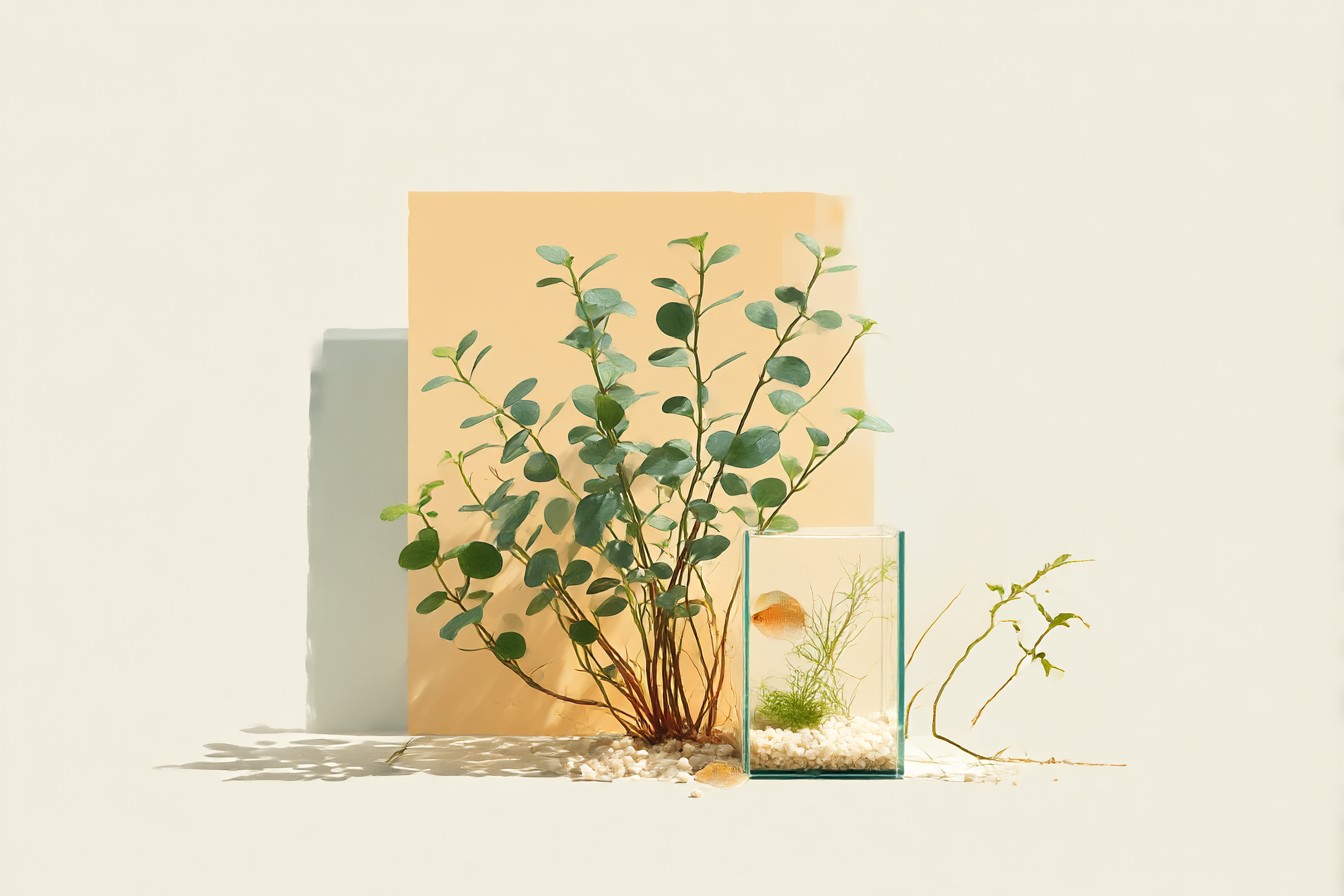
The plant’s leaves are genuinely tiny – each one barely a few millimetres across – creating a texture that looks more like underwater grass than traditional aquatic plants.
The scientific name Hemianthus callitrichoides places it in a small genus of delicate aquatic plants (AquariumLesson). In its natural habitat, it grows partially submerged in soft, slightly acidic water with good flow and bright tropical sunlight. Recreating those conditions in a glass box proved to be the challenge that would make or break many aquascaping ambitions.
What made this plant special wasn’t just its size, but what it enabled aesthetically. Suddenly you could create scale in ways that weren’t possible before. A 60cm tank could suggest the feeling of a vast meadow.
Rock formations could look genuinely mountainous when carpeted with something this fine. It became the foundation of the Nature Aquarium style that dominated competitive aquascaping through the 2000s and beyond. ## What Makes It Special The first thing you notice about Cuba Pearl isn’t how small it is – it’s how different it behaves from every other plant you’ve likely grown. Most aquatic plants will give you some kind of growth even under marginal conditions.
They might not thrive, but they’ll survive, maybe even spread a bit. HC Cuba doesn’t do survival. It does perfect conditions or it dissolves.
Each individual plant consists of tiny oval leaves attached to creeping stems that spread horizontally across the substrate. Under proper conditions – and I mean genuinely proper, not “close enough” – those stems will send out runners in all directions, eventually forming the dense mat that makes this plant famous. The leaves stay incredibly small, maxing out at around 3cm in height (Practical Fishkeeping), which creates that fine carpet texture that’s impossible to achieve with anything else.
But here’s what the care sheets don’t tell you: HC Cuba isn’t just demanding about nutrients and CO2, it’s demanding about consistency. I learned this the hard way during my third attempt. I had everything dialled in – CO2 at 30mg/L, daily EI dosing, 8 hours of high light from a Chihiros A-Series.
The carpet was finally spreading after two months of careful attention. Then I went away for a long weekend and asked my flatmate to top up the CO2. He forgot.
When I came back, entire sections had gone transparent and started floating to the surface. The plant needs CO2 levels that would stress most fish – 20-40mg/L according to most sources (AquariumLesson). But what matters more than the absolute level is that it never fluctuates.
A drop-checker turning blue for even a day can trigger melting that takes weeks to recover from. This isn’t a plant you can grow with liquid carbon or Excel. It wants the real thing, consistently delivered.
The lighting requirements are equally specific. Not just high light, but the right spectrum delivered consistently. I’m running a Chihiros A1201 over my 60cm tank – that’s roughly 80 PAR at substrate level.
Anything less and the carpet starts to stretch upward, losing that tight, compact growth habit that makes it worth growing in the first place. The moment your lighting drops below what the plant considers adequate, it starts reaching for the surface rather than spreading across the bottom. Temperature tolerance is broader than you might expect – anywhere from 18-28°C works (Practical Fishkeeping) – but again, consistency matters more than the absolute number.
I keep mine at 24°C year-round rather than letting it fluctuate with room temperature. What’s fascinating is how the plant responds to trimming. Unlike stem plants that you can hack back with scissors, HC Cuba needs gentle, frequent maintenance.
I trim mine every two weeks with aquascaping scissors, taking just the top millimetre or two. The plant responds by sending out more runners, gradually thickening the carpet. Skip this maintenance and it starts growing upward instead of outward, eventually looking more like underwater wheat than a carpet.
The substrate choice matters enormously. I’ve tried growing HC Cuba in everything from plain gravel to expensive ADA Amazonia. It only properly succeeded in nutrient-rich, fine-grained substrates that allow the tiny roots to establish properly.
You Might Also Like
The plant draws heavily from root feeding, so liquid fertilisation alone isn’t enough. You need something like Tropica Plant Growth Substrate or ADA Amazonia underneath, with a fine sand cap to prevent the nutrients from leaching too quickly. ## The Honest Assessment Let me be completely clear: this plant will probably frustrate you. I’ve watched more people give up on HC Cuba than successfully grow it, and I understand why.
The margin for error is practically nonexistent, and the cost of failure is genuinely expensive. First, there’s the initial investment. A decent amount of HC Cuba to start a carpet in even a 40cm tank will cost £30-50, assuming you can find it locally.
Add in the CO2 system you’ll need (budget £150+ for something reliable), the high-output lighting (£80+ for a decent LED), and the substrate requirements, and you’re looking at several hundred pounds before you’ve added a single fish. The plant is notoriously difficult to establish. Even under perfect conditions, expect a 4-6 week period where it looks terrible.
During this establishment phase, older leaves often melt away while new growth adapts to submersed conditions. Many people panic during this stage and either overdose fertilisers or give up entirely. I nearly did both during my second attempt.
It’s also incredibly sensitive to algae competition. Any imbalance between light, CO2, and nutrients invites algae that can smother a developing carpet faster than you can remove it. I’ve lost entire sections to thread algae because I increased my lighting period by 30 minutes without adjusting CO2 accordingly.
Once algae establishes in an HC Cuba carpet, removing it without damaging the plant is nearly impossible. The plant doesn’t respond well to fish that disturb substrate. Corydoras, kuhli loaches, or any bottom-dwellers that like to root around will constantly uproot sections of developing carpet.
I learned this when I added six bronze corys to my HC tank and watched three months of growth get systematically destroyed over a weekend. Water parameter sensitivity extends beyond just CO2. The pH needs to stay between 5-7 (AquariumLesson), and the plant genuinely struggles in hard water.
If your tap water comes out at pH 8+ with significant mineral content, you’ll need to address that before attempting HC Cuba, adding another layer of complexity to an already demanding setup. ## Legacy and Influence HC Cuba fundamentally changed what aquascapers thought was possible in terms of scale and detail. Before its introduction, foreground plants were limited to options that, while effective, couldn’t create the ultra-fine texture this plant made achievable. Looking at aquascaping competitions from the early 2000s versus today, you can trace a clear line of influence from HC Cuba’s introduction to the increasingly detailed, miniaturised landscapes that now dominate the scene.
The plant became synonymous with the Nature Aquarium movement that Takashi Amano pioneered. Nearly every iconic ADA tank layout from the mid-2000s featured HC Cuba carpets, establishing it as the gold standard for serious aquascaping. This association with high-end, competition-level scaping has persisted, making HC Cuba something of a status symbol within the hobby.
Its influence extended beyond just aesthetics. The demands of successfully growing HC Cuba pushed hobbyists toward better CO2 systems, more sophisticated lighting, and precise nutrient management. Many of the techniques now considered standard in planted tank keeping developed directly from the requirements of maintaining healthy HC Cuba carpets.
The plant also highlighted the gap between entry-level and advanced planted tank keeping in ways that previous plants hadn’t. You could keep a decent planted tank with lower light and no CO2, but HC Cuba demanded significant investment in equipment and technique. This created a clear progression path for hobbyists wanting to advance their skills, but also established barriers that kept serious aquascaping exclusive to those with adequate budgets and dedication. ## The Verdict HC Cuba remains the finest carpeting plant available to aquascapers, but it’s earned that distinction through sheer difficulty as much as beauty.
If you have the budget, equipment, and patience to meet its demands, nothing else creates the same visual impact. A properly established HC Cuba carpet transforms a tank completely, creating scale and texture that elevates the entire composition.
But be realistic about what you’re taking on.
This isn’t a plant for your first serious planted tank, and it’s definitely not suitable for low-tech setups. I’d recommend getting comfortable with less demanding carpeting plants like Monte Carlo or even Glossostigma before attempting HC Cuba. The techniques you’ll learn with easier plants translate directly to HC Cuba success, but the reverse isn’t necessarily true.
If you’re determined to try it, start small. Buy enough to carpet maybe a third of your intended area and see if you can keep it alive and spreading for three months. If that works, expand gradually rather than trying to carpet the entire tank at once.
And budget for multiple attempts – I know very few people who succeeded with HC Cuba on their first try. See where this placed in our full ranking of carpeting plants. This is ultimately a plant for aquascapers who’ve decided that good enough isn’t good enough, who want the absolute finest carpet possible regardless of the difficulty involved.
If that describes you, and you have the setup to support it, HC Cuba will reward your efforts with something genuinely special. Just don’t expect it to be easy.


