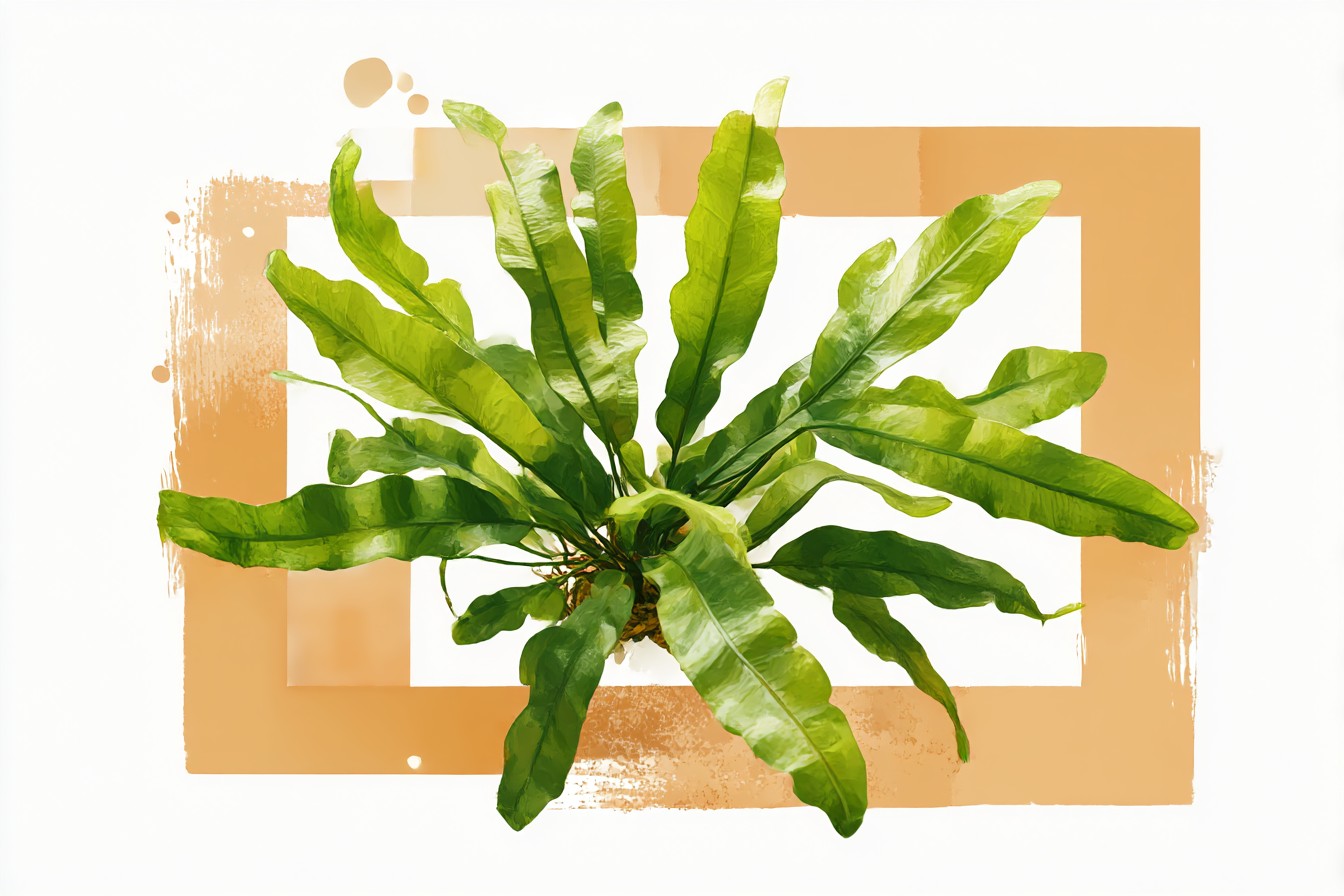
I’ve bought this plant six times over the years. Killed it four of those times by doing exactly what you’d expect anyone would do with an aquatic plant: planting it in the substrate like a normal person. The first time, I figured I’d got a dud.
The second time, I blamed the lighting. By the third time, I was convinced the hobby shop was selling me diseased plants. It took an embarrassing conversation with another hobbyist at a local aquarium society meeting to discover I was essentially murdering Java fern through sheer ignorance of what it actually is.
Turns out Java fern (Microsorum pteropus from the Polypodiaceae family) (Castle Dawn Aquatics) isn’t actually what most people think when they picture an aquarium plant. It’s an epiphyte – which means it lives attached to other surfaces rather than rooted in soil (Buce Plant).
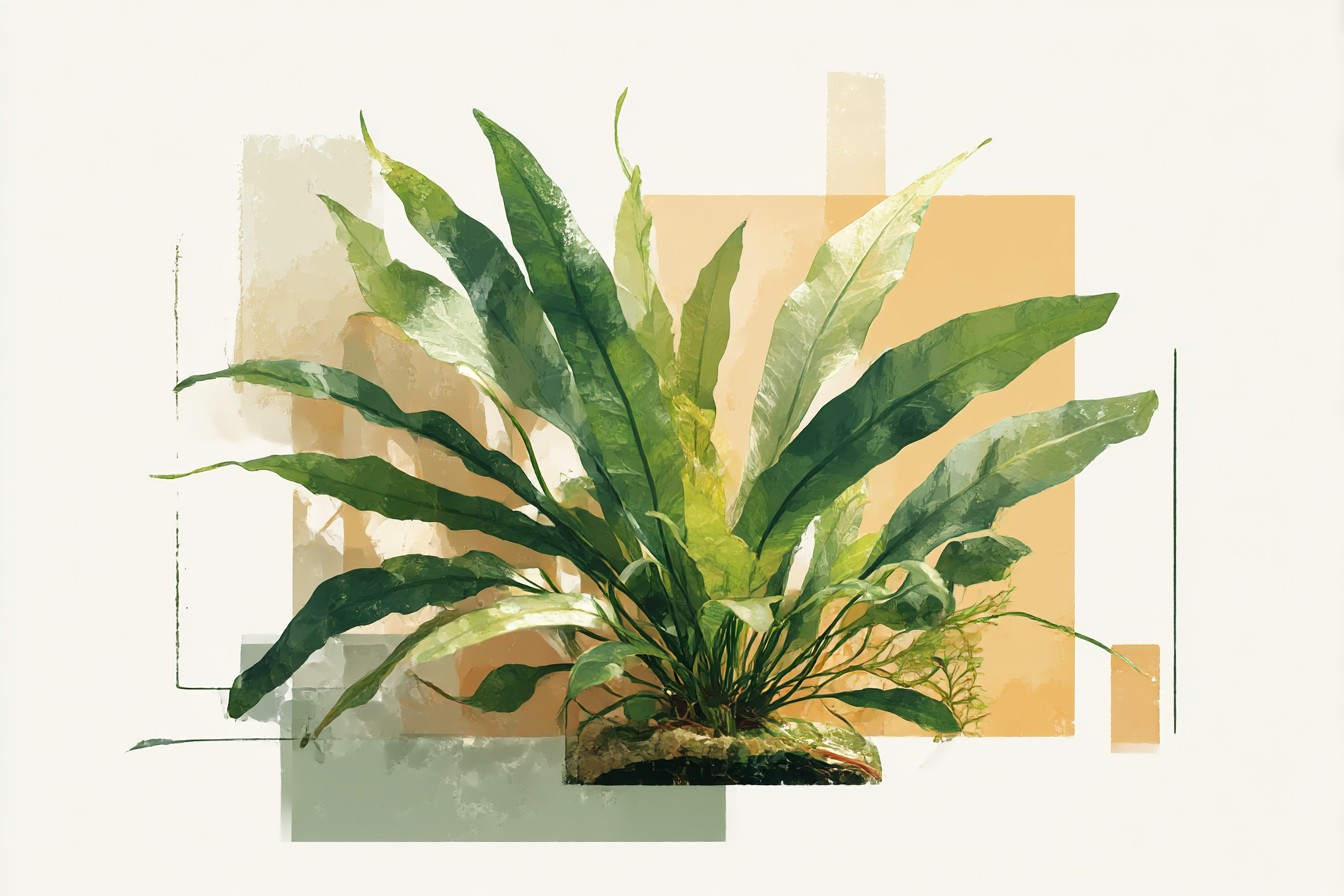
Bury that rhizome in substrate and you’ve basically signed its death warrant.
The rhizome will rot and die if buried in substrate (Aquarium Co-Op), which is exactly what I kept doing until someone finally explained the obvious. Now I’ve got Java fern thriving in every tank I own. It’s become my go-to plant for filling awkward spaces, covering equipment, and creating natural-looking backgrounds without any of the fuss that comes with CO2-dependent plants.
This is what I wish someone had told me the first time I walked out of a shop with a handful of these tucked into a small plastic bag. | Care Level | Lighting Needs | CO2 Required | Growth Rate | Max Size | Our Rating | |————|—————-|————–|————-|———-|————| | Beginner | Low to Medium | No | Slow | 30cm | 9/10 | ## Where This Started and Why It Matters Java fern was first described by Dutch-German botanist Karl Ludwig Blume in 1833 (Modest Fish), making it one of the earlier documented aquatic plants in the hobby. It’s native to Southeast Asia, including Thailand, Malaysia, and Indonesia (Aquatikus), where it grows naturally attached to rocks and fallen trees in streams and rivers rather than rooted in muddy bottoms. The plant belongs to a family of 56 genera and around 1200 species (Aquatikus), most of which are terrestrial ferns.
Java fern is unusual in that it’s genuinely aquatic, thriving completely submerged in a way that most ferns simply can’t manage. This adaptation to underwater life is part of what makes it so resilient in home aquariums. What’s made Java fern a cornerstone plant in the hobby isn’t just its hardiness – though that’s certainly part of it.
It’s the fact that it solves a specific problem that many aquascapers face: how to add greenery to surfaces where you can’t plant anything in substrate. Driftwood, rock formations, filter intakes, even the back glass of a tank can all be colonised by Java fern in a way that looks natural and unforced. The plant entered the aquarium trade relatively early and has remained popular precisely because it doesn’t demand the kind of precision that scares newcomers away from planted tanks.
You don’t need perfect lighting, CO2 injection, or expensive substrates. You just need to understand what it actually is and work with that rather than against it. ## What Makes Java Fern Different The key to understanding Java fern is grasping that it’s fundamentally different from the rooted plants most people picture when they think of aquarium vegetation. As an epiphyte that attaches to rocks and driftwood rather than rooting in soil (Buce Plant), it has evolved to extract nutrients directly from the water column rather than through root systems in substrate.
This difference shows up immediately when you watch how the plant behaves in a tank. While stem plants and rosettes put energy into root development and substrate exploration, Java fern focuses entirely on leaf production and surface attachment. The rhizome – that thick, green stem running along the base – contains everything the plant needs for nutrient storage and new growth.
Damage or bury that rhizome and you’ve eliminated the plant’s core functionality. The reproduction method is equally distinctive. Java fern reproduces through apomixis by cloning itself via plantlets on leaves (Modest Fish), which means you’ll eventually see tiny daughter plants developing directly on the surface of mature leaves.
These aren’t flowers or seeds – they’re complete genetic copies that will detach naturally once they’ve developed their own root systems. I’ve watched single plants turn into colonies of twenty or thirty individuals over the course of a year through this process alone. What this means practically is that Java fern gives you something most aquatic plants don’t: genuine low-maintenance propagation.
You don’t need to learn trimming techniques or worry about replanting cuttings. You just wait for the plantlets to develop and either let them spread naturally or move them to new locations when they’re ready. It’s plant multiplication for people who can’t be bothered with complicated breeding programmes.
The visual effect in a tank is distinctive too. Java fern doesn’t create the formal, manicured look you get with carefully trimmed stem plants. Instead, it produces something that looks genuinely wild – irregular leaf shapes, natural curves, and the kind of asymmetrical growth that mimics what you’d actually see in a stream or river.
The plant develops different textures and forms depending on lighting conditions and water flow, but it always maintains that untamed, organic appearance. There are multiple varieties including Trident, Needle Leaf, and Windelov (Aquarium Co-Op), each with distinct leaf shapes and growth patterns. The standard variety has broad, lance-shaped leaves.
Trident develops three-pronged leaf tips that create interesting silhouettes. Needle Leaf produces narrow, almost grass-like foliage that works well for creating depth. Windelov has finely divided leaf edges that add texture without overwhelming smaller tanks.
All of them share the same care requirements and attachment method, so you can mix varieties without complicating your maintenance routine. ## The Attachment Challenge and Why It’s Actually Simple The biggest hurdle most people face with Java fern isn’t keeping it alive – it’s figuring out how to attach it properly without killing it in the process. The standard approach that works reliably is surprisingly straightforward, though it goes against every instinct you have about planting aquatic vegetation. The rhizome needs to remain completely exposed to water flow.
This means identifying the thick, horizontal stem at the base of the plant and ensuring none of it gets buried under substrate or wedged too tightly into crevices. The plant will develop its own attachment structures over time – small, hair-like roots that seek out surfaces to grip onto. Your job is just to hold it in place long enough for this natural process to happen.
I use superglue gel for most attachments now. A small dab held for about thirty seconds (Glass Aqua) is enough to secure the rhizome to driftwood or rock without covering too much of the plant tissue. The gel cures underwater and becomes chemically inert, so it won’t affect water chemistry or harm fish.
The key is using just enough to create initial contact – the plant will do the rest of the attachment work itself. Cotton thread works too, though it requires more patience. Wind it loosely around the rhizome and the attachment point, then wait for the thread to decompose naturally while the plant establishes its hold.
You Might Also Like
This takes longer but gives you more control over positioning and doesn’t require any chemicals in the tank. What doesn’t work is trying to wedge the plant into tight spaces or using wire ties that cut into the rhizome. Java fern needs some water movement around its base to prevent rot, and anything that restricts flow or damages the stem will cause problems eventually.
I learned this through multiple dead plants before accepting that gentle attachment methods work better than forceful ones. The plant will signal successful attachment by producing new growth and developing those characteristic small roots that seek out surface irregularities. Once you see fresh leaves emerging and the rhizome looking plump and healthy, you know the attachment has worked.
This process typically takes two to three weeks in my experience, though it can happen faster in tanks with good flow and stable conditions. ## What Can Go Wrong and How to Avoid It The most common problem with Java fern is also the most preventable: rhizome rot from improper planting. Since the rhizome will rot and die if buried in substrate (Aquarium Co-Op), any attempt to treat it like a rooted plant will end badly. I killed more Java ferns this way than I care to admit, and each time I convinced myself I was just unlucky with plant quality.
The second issue is mistaking natural reproductive processes for disease. Those black spots on leaves are often spores or developing plantlets, not damage (Buce Plant). When I first saw these appearing on my plants, I assumed something was seriously wrong and started removing affected leaves.
In reality, I was removing the plant’s attempt to reproduce and expand. The black spots are completely normal and indicate a healthy, mature plant ready to produce offspring. Poor water conditions can cause genuine problems, though Java fern is remarkably tolerant compared to most aquatic plants.
The recommended pH range is between 5.5 and 7.0 with hardness from 0 to 30 dGH (Castle Dawn Aquatics), which covers most home aquarium setups without requiring adjustment. I’ve kept it successfully in everything from soft rainwater to moderately hard tap water without seeing any stress symptoms. Lighting issues are usually about too much rather than too little.
Java fern doesn’t require CO2 injection or special substrate (2Hr Aquarist) and actually prefers moderate lighting conditions. Under high-intensity lights, the leaves can develop brown patches or algae growth becomes problematic. I’ve found it does best under the same lighting that works for low-light fish species rather than the intense illumination that stem plants demand.
The slow growth rate can be frustrating if you’re expecting quick results. Java fern isn’t going to transform your tank overnight or provide the instant gratification that faster-growing plants offer. What it does provide is steady, reliable development that doesn’t require constant intervention.
Once established, it grows consistently without the boom-and-bust cycles that affect many aquatic plants. ## Why It Deserves Its Reputation Java fern has earned its place as a fundamental plant in freshwater aquascaping because it solves real problems that hobbyists actually face. It provides greenery in locations where traditional planting isn’t possible. It thrives under conditions that would stress or kill more demanding species.
And it reproduces reliably without requiring advanced techniques or perfect timing. The plant’s tolerance for different water conditions and lighting levels makes it genuinely accessible to beginners who don’t want to invest in CO2 systems or high-end lighting before they’re sure they enjoy the hobby. At the same time, experienced aquascapers value it for its ability to create natural-looking attachments on hardscape elements and its consistency in mixed-species tanks.
The visual contribution is subtle but significant. Java fern doesn’t dominate a tank the way some larger plants do, but it fills spaces and creates depth in ways that look effortless. The irregular leaf shapes and natural growth patterns complement both modern minimalist scapes and more traditional community tank setups without looking forced or artificial.
From a maintenance perspective, it’s genuinely low-effort once you understand the basic requirements. No trimming schedules, no fertiliser regimens, no worry about lighting timers or CO2 levels. The plant grows at its own pace and stays within reasonable size limits without intervention.
For someone managing multiple small tanks on a budget, this predictability is genuinely valuable. ## The Verdict Java fern is one of those plants that looks almost boringly reliable until you try keeping more demanding species and realise what you were taking for granted. It won’t give you the dramatic red colours or rapid growth that make for impressive social media posts, but it will sit quietly in your tank doing exactly what you need it to do for years without causing problems. If you’re new to planted tanks, this is probably where you should start.
Not because it’s somehow inferior to more advanced plants, but because it will teach you what healthy aquatic plant growth actually looks like without punishing you for the inevitable mistakes everyone makes while learning. Once you’ve got Java fern thriving, you understand enough about plant care to tackle more challenging species with realistic expectations.
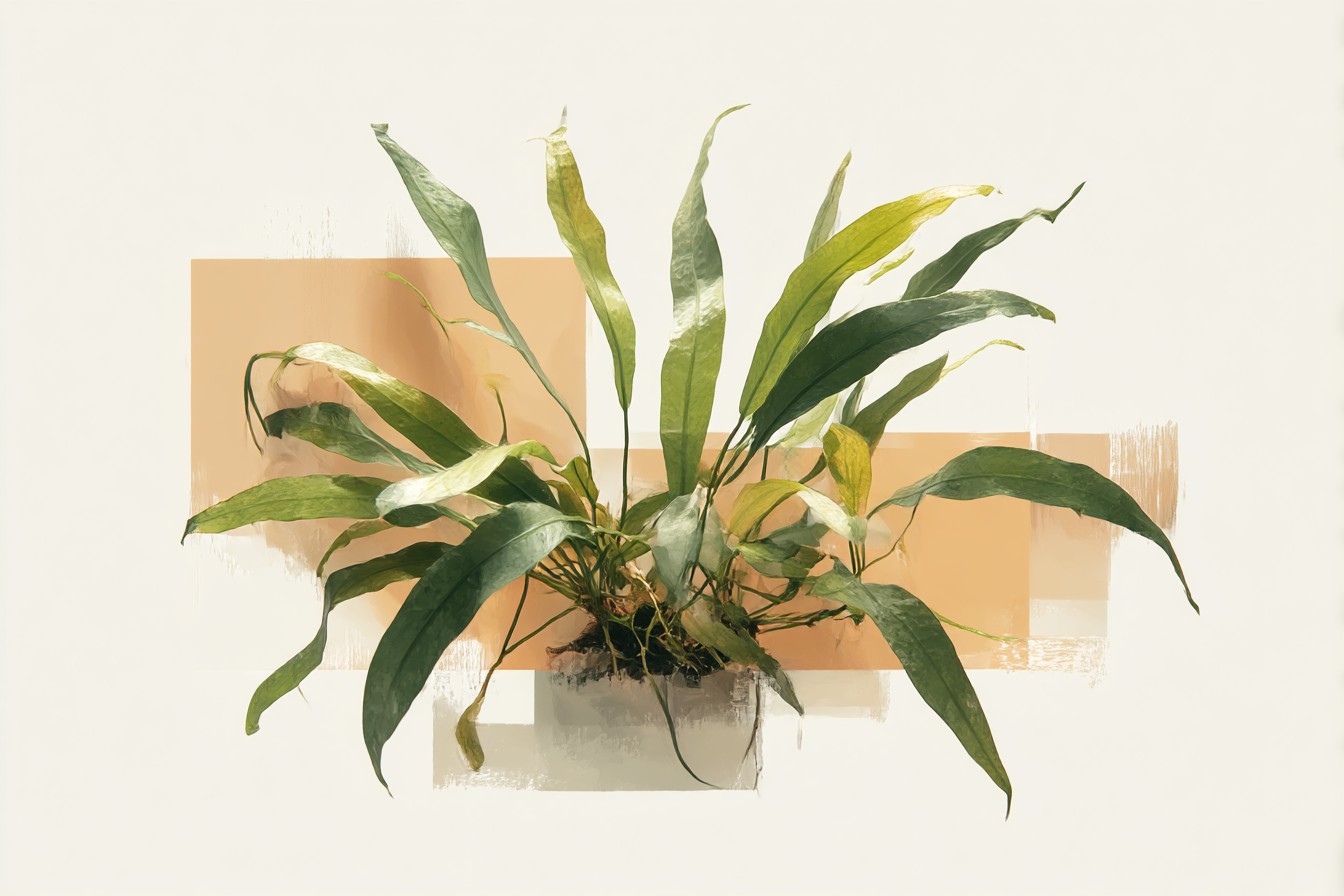
For budget setups, it’s almost essential.
The plant propagates itself, tolerates cheap lighting, and doesn’t require expensive substrates or CO2 systems. I’ve built entire planted tanks around Java fern varieties and a few other low-light species for under fifty pounds total, including the plants. The results weren’t competition-worthy, but they were genuinely attractive and completely sustainable.
The attachment requirement isn’t actually a limitation once you get used to it. It’s a feature that lets you create plantings in places where substrate-rooted plants simply won’t work. Need to soften the outline of a large piece of driftwood?
Want to create a natural backdrop without replanting constantly? Java fern will do both jobs reliably and stay where you put it. Just don’t bury that rhizome.
Trust me on this one. See where this placed in our full ranking of beginner aquatic plants.



[…] m²/s | 40-80 µmol m²/s | 80-200 µmol m²/s | 6-8 hours daily | | **Common Plants** | Anubias, Java Fern | Cryptocorynes, Swords | Red plants, carpets | Most species | | **CO2 Requirement** | None | […]