
# Eleocharis Mini vs Regular Hairgrass and Which One You Actually Want I planted my first hairgrass about eight months after I started keeping tanks properly. Regular Eleocharis acicularis from a bloke at the aquarium society who said it was foolproof. Six weeks later I had what looked like a green hayfield that needed cutting every fortnight.
That’s when I learned that “foolproof” in this hobby often means “it’ll grow, but maybe not how you expected.” The Mini variety came later, after I’d spent eighteen months wrestling with the regular stuff and finally admitted I needed something that stayed shorter without constant trimming. Turns out there’s more difference between these two than just height, and choosing the wrong one will teach you patience you didn’t know you needed. | **Feature** | **Regular Hairgrass** | **Mini Hairgrass** | |————-|———————-|——————-| | **Max Height** | Up to 15 cm | 3-5 cm | | **Growth Rate** | Slow to moderate | Very slow | | **Light Needs** | Low-medium | Medium | | **CO2 Required** | Optional | 6-14 mg/L | | **Our Rating** | 7/10 | 8/10 | ## The Backstory: Same Plant, Different Ambitions Both varieties are forms of Eleocharis acicularis, commonly known as needle spike rush or hair grass (Aqua-Fish.net). The regular form has been in the hobby for decades as a reliable carpeting plant, described as slow-growing but dependable (Aqua-Fish.net).
It’ll tolerate a wide pH range from 5 to 8 and temperatures between 22 and 28°C (Seahorse Aquariums). The Mini variety is a more recent development, bred specifically to stay compact.
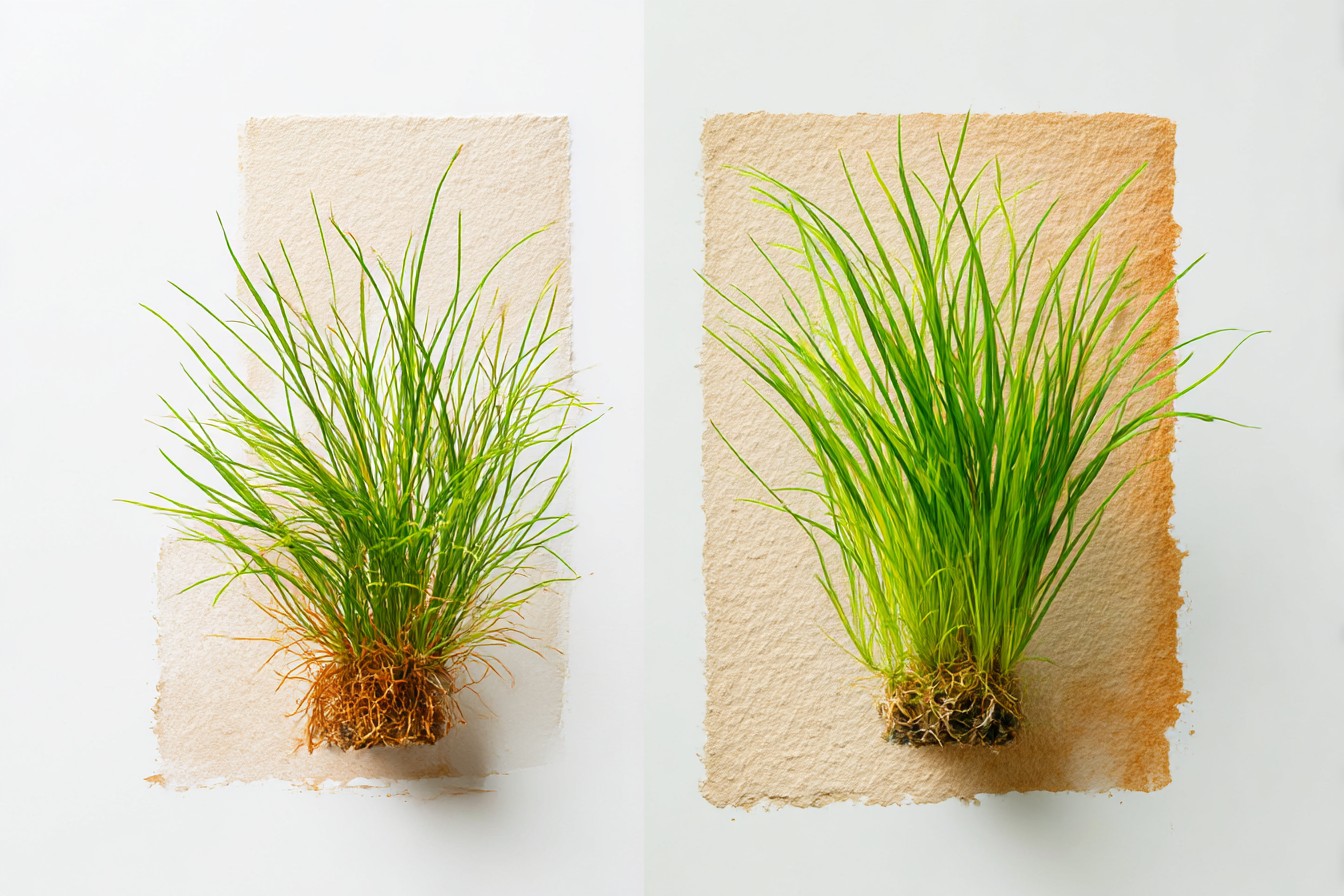
Where regular hairgrass can reach heights up to 15 cm (Seahorse Aquariums), the Mini keeps its leaf height between 3 and 5 cm (Tropica).
That might not sound like much difference on paper, but in a 40-litre tank it’s the difference between a carpet that stays where you put it and one that takes over half the visual space. The Mini is noted as staying lower-growing than even the common Eleocharis parvula (Finest Aquatics), which puts it firmly in the category of plants that won’t accidentally become the main feature of your scape unless you want them to. ## What Makes Each One Special Regular hairgrass earned its reputation as the reliable choice. Plant it in virtually any substrate with decent light and it’ll spread slowly but surely into a proper carpet.
The individual blades grow tall enough to sway gently in the current, creating movement that catches the light differently throughout the day. In a larger tank, this creates depth and draws the eye without overwhelming the hardscape. I’ve run it successfully in everything from basic aquarium gravel to expensive planted tank substrate.
It’s not fussy about nutrients, though it responds well to root tabs if you’re running a low-tech setup. The spreading happens through runners, so you’ll see new shoots appearing a few centimetres away from the parent plant rather than the clumping growth you get with some other carpeting plants. Mini hairgrass operates on different principles entirely.
The compact growth means it creates what I can only describe as a living carpet texture rather than a grass meadow effect. Each blade stays between 3 and 5 cm (Swell UK), creating dense coverage that looks manicured without actually needing much maintenance. But here’s where it gets more demanding.
The Mini variety wants CO2 injection, with recommended levels between 6 and 14 mg/L (Swell UK). It also needs medium lighting at around 0.5W per litre (Swell UK). Skip either of these and you’ll get patchy growth that looks more like bald spots than a carpet.
The Mini spreads more slowly than regular hairgrass, but when it does establish properly, the coverage is incredibly dense. Individual plants merge together so completely that you can’t tell where one ends and another begins. This creates a smooth, continuous surface that works brilliantly as a foreground element in a properly planned scape.
In terms of visual impact, regular hairgrass brings movement and a naturalistic feel. The longer blades create layers and texture that change as fish swim through them. Mini hairgrass brings precision and a sense of controlled space.
It’s the difference between a wildflower meadow and a carefully maintained lawn. ## The Honest Assessment Regular hairgrass has one significant problem: it doesn’t know when to stop. Left alone, it’ll grow to its full 15 cm height, which can overwhelm smaller tanks completely. I learned this the hard way when what started as a neat foreground carpet turned into a forest that hid half my hardscape.
You Might Also Like
Trimming helps, but you need to stay on top of it every two to three weeks once it’s established. The spreading can also become aggressive in nutrient-rich setups. I’ve had runners appear in the middle of other plant arrangements, requiring constant weeding to keep it where I wanted it.
In a heavily fertilised tank, regular hairgrass can become more maintenance than it’s worth. Mini hairgrass has different weaknesses. The CO2 requirement isn’t optional if you want decent results.
I tried growing it in a low-tech tank thinking the compact size might mean lower demands. Wrong. After three months I had sparse, yellowing patches that looked worse than no carpet at all.
The lighting requirements also matter more than with regular hairgrass. Medium light means proper PAR levels, not just a standard LED that came with your tank. Without adequate light, the Mini grows even more slowly than usual and the coverage stays patchy for months.
Cost is another factor. Mini hairgrass typically costs twice what you’d pay for regular hairgrass, and because it grows more slowly, you need more pots to get the same initial coverage. For a 60-litre tank, you’re looking at six to eight pots of Mini compared to three or four of regular, and the individual pots cost more to begin with. ## Legacy and Influence Regular Eleocharis acicularis has been the gateway carpeting plant for thousands of hobbyists over the past couple of decades.
It’s forgiving enough that people succeed with it on their first attempt, which builds confidence for trying more challenging plants later. The visual appeal of a proper grass carpet has influenced countless aquascapes, particularly in the Dutch and nature aquarium styles. The Mini variety represents the hobby’s move towards more controlled, precision aquascaping.
It’s part of a trend towards plants that do exactly what you want them to do and nothing more.
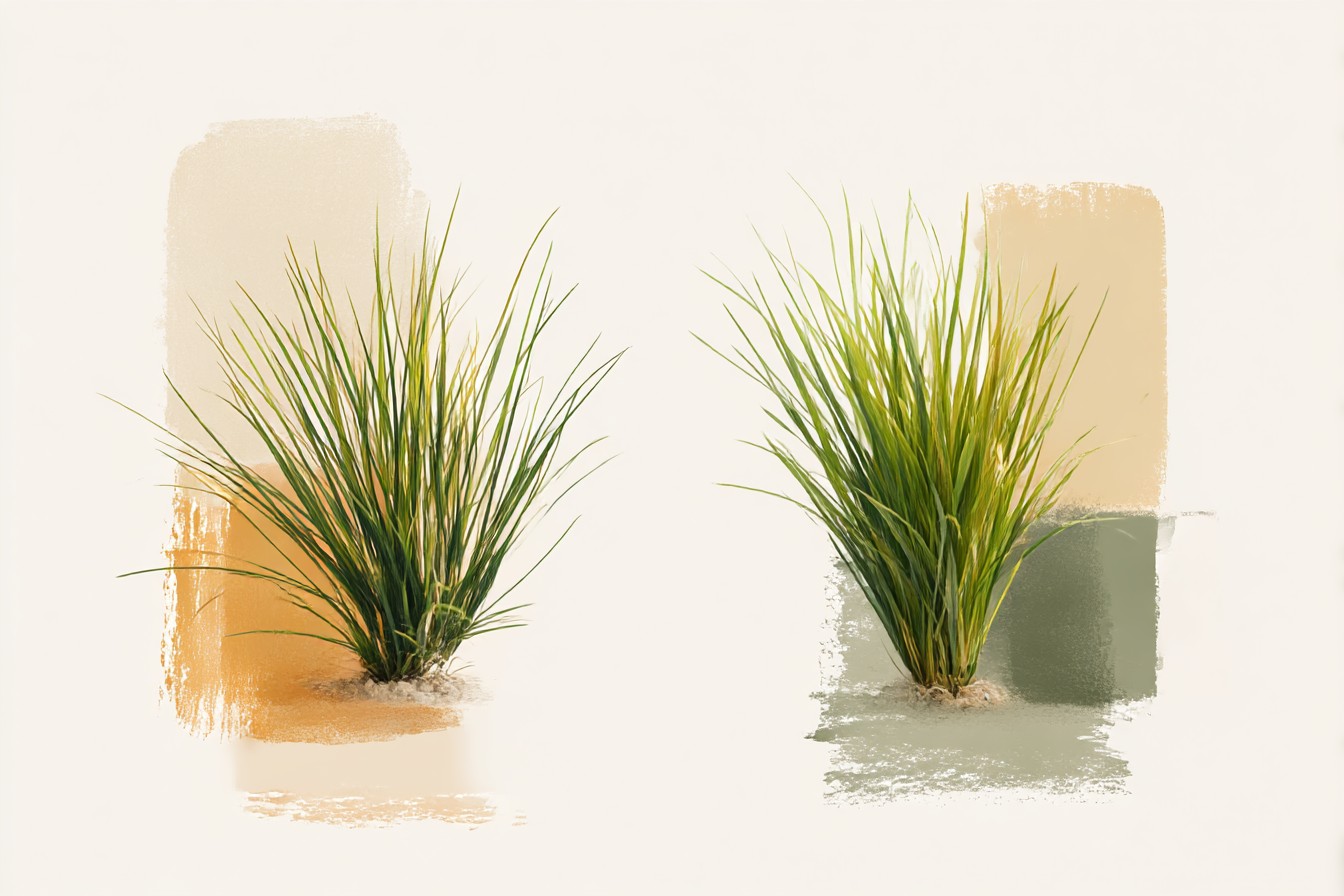
This appeals to aquascapers who want every element of their design to stay exactly where they place it. Both varieties have influenced the availability of other compact carpeting plants.
Manufacturers have taken note of the demand for plants that provide the visual impact of a carpet without the maintenance overhead of constant trimming. ## The Verdict Choose regular hairgrass if you want a reliable carpeting plant that’ll establish in almost any tank with decent light. It’s particularly good for larger setups where the taller growth looks proportional and you don’t mind occasional trimming. Perfect for a first attempt at carpeting plants or for tanks where you want natural movement and texture.
Go with Mini hairgrass if you’re running a high-tech setup with CO2 injection and proper lighting, and you want precise control over your carpet height. It’s ideal for smaller tanks where every centimetre of vertical space matters, or for aquascapes where you need the carpet to stay exactly as planned without ongoing intervention. The honest truth is that most people would be happier with regular hairgrass despite its trimming requirements.
It’s more forgiving, costs less to establish, and works in a wider range of setups. The Mini is genuinely better in specific circumstances, but those circumstances require more investment in equipment and technique than many people realise when they’re choosing between the two. See where both varieties placed in our full ranking of carpeting plants.


