
# Echinodorus Red Flame and the Sword Plant That Gives You Red Without the Effort I picked up my first Echinodorus Red Flame because I was tired of watching red plants fade to muddy brown in my low-tech setups. The kids had been asking why our tank looked so green when they’d seen these gorgeous red-leafed aquascapes online, and honestly, I was wondering the same thing. Most red plants demand CO2 injection, intense lighting, and the sort of precise dosing regime that doesn’t mesh well with school runs and client deadlines.
This sword plant was supposed to be different. Two years later, it’s anchoring three of my tanks and still throwing out those deep burgundy leaves that made me buy it in the first place. The Red Flame isn’t just another Echinodorus cultivar churned out by commercial breeders.
It’s a deliberate piece of plant breeding that solved a real problem in the hobby: how to get reliable red colouration without turning your living room into a laboratory. For anyone who wants the visual impact of red plants but can’t commit to high-tech maintenance, this is probably the most forgiving option you’ll find. ## Quick Reference Table | Care Level | Lighting Needs | CO2 Required | Growth Rate | Max Size | Our Rating | |————|—————-|————–|————-|———-|————| | Easy-Moderate | Medium-High | Optional | Slow-Medium | 30cm | 8.5/10 | ## The Breeding Story Behind Red Flame The Red Flame exists because Hans Barth sen. spotted something special in the 1990s (Aquasabi).
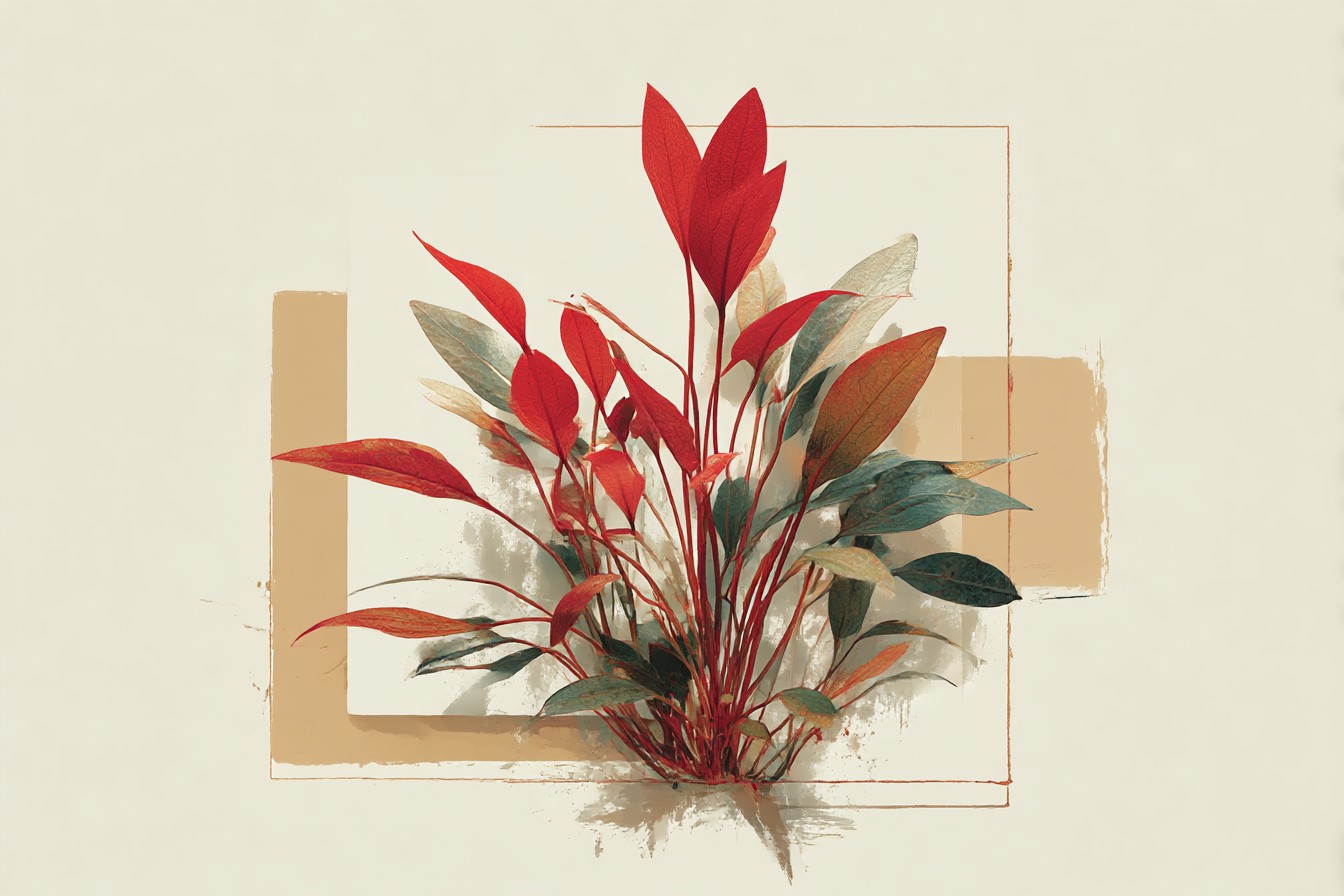
Barth was one of those plant breeders who understood that hobby aquarists needed varieties that looked stunning but didn’t require professional-level care.
He selected this particular cultivar from what was likely a batch of hybrid sword plants, focusing on specimens that held their red colouration under moderate conditions rather than losing it the moment lighting dropped below laboratory standards. What makes the breeding history interesting is the timing. The 1990s were when planted tanks were becoming accessible to regular hobbyists rather than just specialists with unlimited budgets and engineering degrees.
CO2 injection was still expensive and complicated. LED lighting didn’t exist. Most people were working with basic fluorescent tubes and hoping for the best.
Barth’s selection work created plants that thrived in those conditions rather than just surviving them. The Red Flame represents a particular approach to plant breeding: prioritising reliability over perfection. It’s not the reddest sword plant ever created.
It’s not the most compact or the fastest growing. What it is, is predictable. Give it decent light and reasonable water conditions, and it’ll reward you with the sort of deep burgundy foliage that transforms a tank’s visual balance.
This breeding philosophy matters because it addresses something the hobby struggles with constantly: the gap between what looks possible in magazines and what actually works in your living room. Most red plants are selected for maximum colour intensity under optimal conditions. The Red Flame was selected for consistent colour under good but not perfect conditions.
That difference changes everything about how it performs in real tanks. ## What Makes Red Flame Special in a Tank The most obvious thing about Red Flame is how it handles colour. Most red plants give you a choice: provide everything they want and get stunning colour, or autumn short and watch them turn green within weeks. Red Flame operates differently.
It maintains its burgundy tones across a much wider range of conditions, which means it looks intentional rather than stressed even when your lighting isn’t quite right or you’ve missed a few fertiliser doses. The leaf structure contributes significantly to its visual impact. Each leaf blade reaches roughly 20 cm long and 10 cm wide with stalks around 10 cm (Aquasabi), creating substantial presence without overwhelming smaller tanks.
The leaves emerge with deep red-burgundy colouration that intensifies under good lighting but doesn’t disappear under moderate conditions. This is what sets it apart from most red plants: the colour is built into the cultivar rather than just being a response to stress or specific lighting wavelengths. Growth habit makes it work well as either a centrepiece or background plant.
At roughly 30 cm maximum height (Aquasabi), it fits comfortably in standard aquarium dimensions without requiring constant trimming. Unlike stem plants that need regular cutting to maintain shape, sword plants like Red Flame establish a natural form and hold it. This makes them ideal for aquascapers who want impact without high maintenance.
The root system deserves mention because it affects both placement and tank health. Like most Echinodorus species, Red Flame develops substantial roots that anchor it securely and help process nutrients from the substrate. This makes it excellent for newer setups where biological filtration is still establishing.
The plant actively contributes to water stability rather than just consuming resources. What really makes it special is how it interacts with light. Most red plants need intense, full-spectrum lighting to maintain colour.
Red Flame responds well to moderate to high lighting (Aqualand Pets Plus) but doesn’t punish you for running slightly lower intensity. The difference between optimal and adequate lighting isn’t the difference between red and green leaves, it’s the difference between deep burgundy and lighter reddish-brown. Both look intentional in a scape.
The plant’s response to fertilisation is equally forgiving. Heavy feeding produces larger, more intensely coloured leaves, but moderate fertilisation still maintains healthy growth and decent colour. This matters enormously for hobbyists who don’t want to dose precisely calculated amounts of micronutrients twice weekly.
You Might Also Like
You can feed it well when you remember and adequately when you’re busy, and it adapts rather than sulking. ## The Honest Assessment Red Flame isn’t perfect, and pretending it is would be dishonest. The most significant limitation is growth speed. This isn’t a plant that transforms your aquascape in six weeks.
New leaves emerge slowly, and it can take months to reach full size from a small specimen. If you’re the sort of aquascaper who wants rapid results, this will test your patience. The lighting requirements, while more forgiving than most red plants, still lean toward the higher end of moderate.
You can’t run it successfully under basic LED strips or single T8 tubes. It needs proper aquarium lighting with decent PAR values. For people hoping to add red accents to truly low-tech setups, this probably isn’t the solution.
Size management can become an issue in smaller tanks. While 30 cm isn’t massive by sword plant standards, it’s substantial enough to dominate tanks under 80 litres. The individual leaves are broad enough that a mature specimen can create significant visual weight.
In nano tanks, it becomes the entire focal point whether you want that or not. The temperature range of 22-28°C (Aqualand Pets Plus) works for most tropical setups but rules it out for cooler water tanks. Unlike some plants that tolerate temperature swings gracefully, Red Flame becomes noticeably less vigorous outside its preferred range.
Water chemistry tolerance is generally good, handling pH from 6.5-7.5 and hardness from 4-15 dGH (Aqualand Pets Plus), but extremely soft water can cause slower growth and less intense colouration. If you’re running RO water without sufficient remineralisation, you might find it underwhelming. The price point reflects its status as a specialty cultivar.
You’ll pay significantly more for Red Flame than for common sword plant varieties. For hobbyists on tight budgets, that premium might be hard to justify, especially when you factor in the lighting requirements. Availability can be patchy.
Not every aquatic shop stocks it, and online availability varies seasonally. When you do find it, the quality of specimens can vary considerably between suppliers. Some arrive as robust, well-established plants, others as barely-rooted cuttings that take months to recover. ## Legacy and Influence The Red Flame’s impact on the hobby extends beyond its individual merits.
It demonstrated that plant breeding could focus on reliability rather than just maximum visual impact under perfect conditions. This approach influenced how subsequent red cultivars were developed and selected. Before Red Flame and similar cultivars, adding red to planted tanks was largely the domain of high-tech enthusiasts.
The plant helped bridge the gap between basic green planted tanks and the sort of polychromatic aquascapes that were previously only achievable with CO2 injection and professional-grade lighting. It didn’t eliminate the technical requirements for optimal results, but it made decent results achievable with good rather than perfect conditions. The success of Red Flame also highlighted the importance of substrate nutrition for sword plants.
Many hobbyists discovered that Echinodorus species needed richer substrates than they’d been providing, leading to broader adoption of nutrient-rich aquasoils and root tabs. This shift improved success rates not just with Red Flame but with planted tanks generally. Its popularity influenced aquascaping aesthetics, making red accent plants more common in community tank builds.
Before reliable red cultivars like this, most aquascapes followed predominantly green colour schemes.
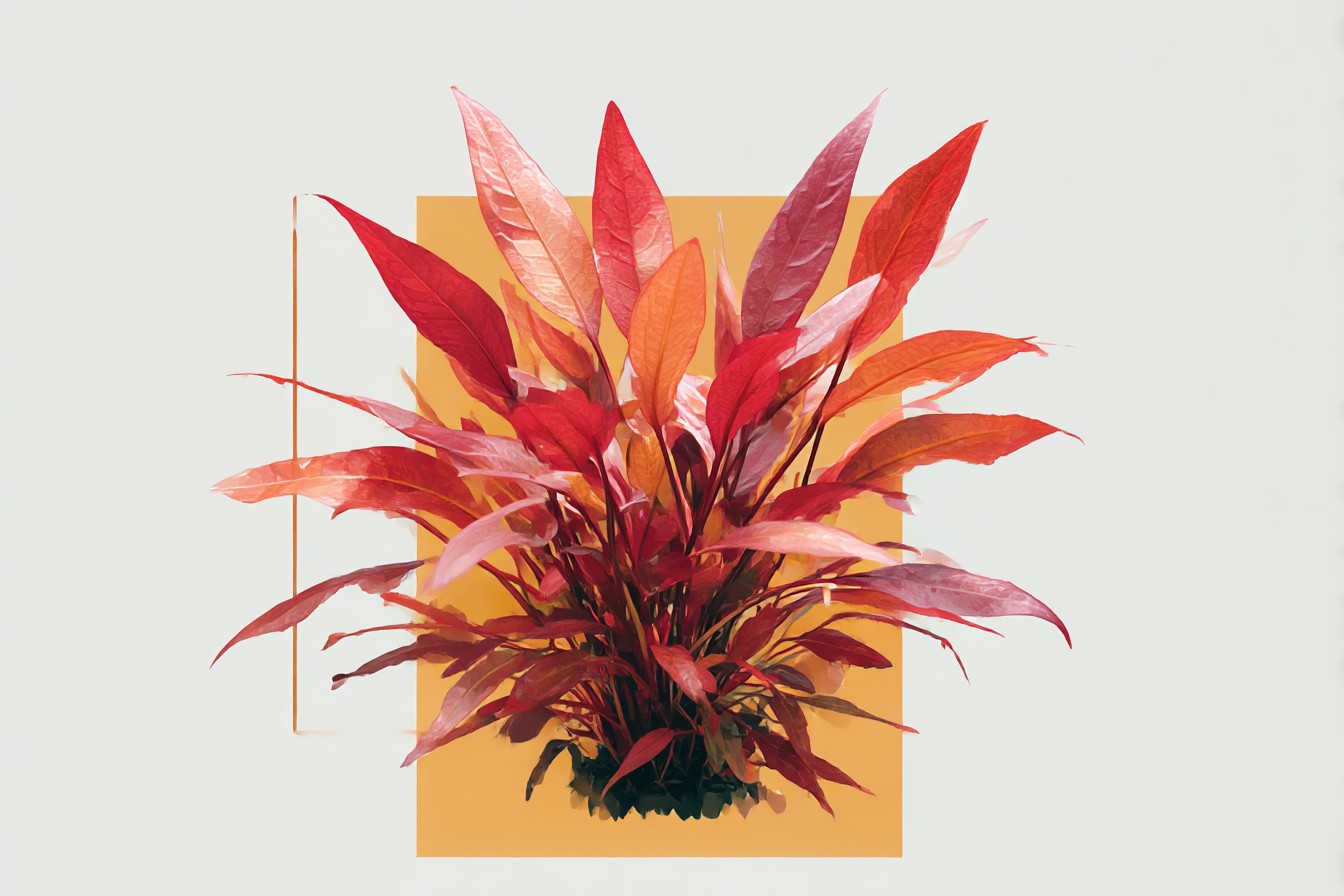
Red Flame made it practical to introduce burgundy focal points without committing to high-tech maintenance regimes. ## The Verdict Red Flame succeeds at exactly what it was bred for: providing reliable red colouration without the technical demands that make most red plants impractical for average hobbyists. It’s not the easiest plant in the world, but it’s probably the easiest way to get genuine red leaves that stay red in a moderately well-lit tank.
If you’re running a planted tank with decent lighting and want to add some visual depth beyond endless shades of green, this is likely your best option. The colour is distinctive enough to serve as a focal point, the growth habit is manageable, and the care requirements autumn into that sweet spot between completely foolproof and impossibly demanding. It’s not right for nano tanks where the mature size becomes overwhelming, and it’s not the choice for truly low-tech setups where lighting budgets are minimal.
But for the large middle ground of hobbyists with good lighting who want something more interesting than another green sword plant, Red Flame delivers exactly what it promises. Two years of growing it has convinced me that the premium price is justified by the results. When everything else in a tank is looking a bit samey, those burgundy leaves provide exactly the visual anchor point the composition needs.
See where this placed in our full ranking of aquascaping plants. The kids still ask me to explain why some plants are red and others are green, and Red Flame gives me a practical example rather than just theoretical answers. That alone makes it worth keeping.



[…] complete guide explains the water chemistry requirements. ## 7. Rotala Blood Red **Stem Plant | […]