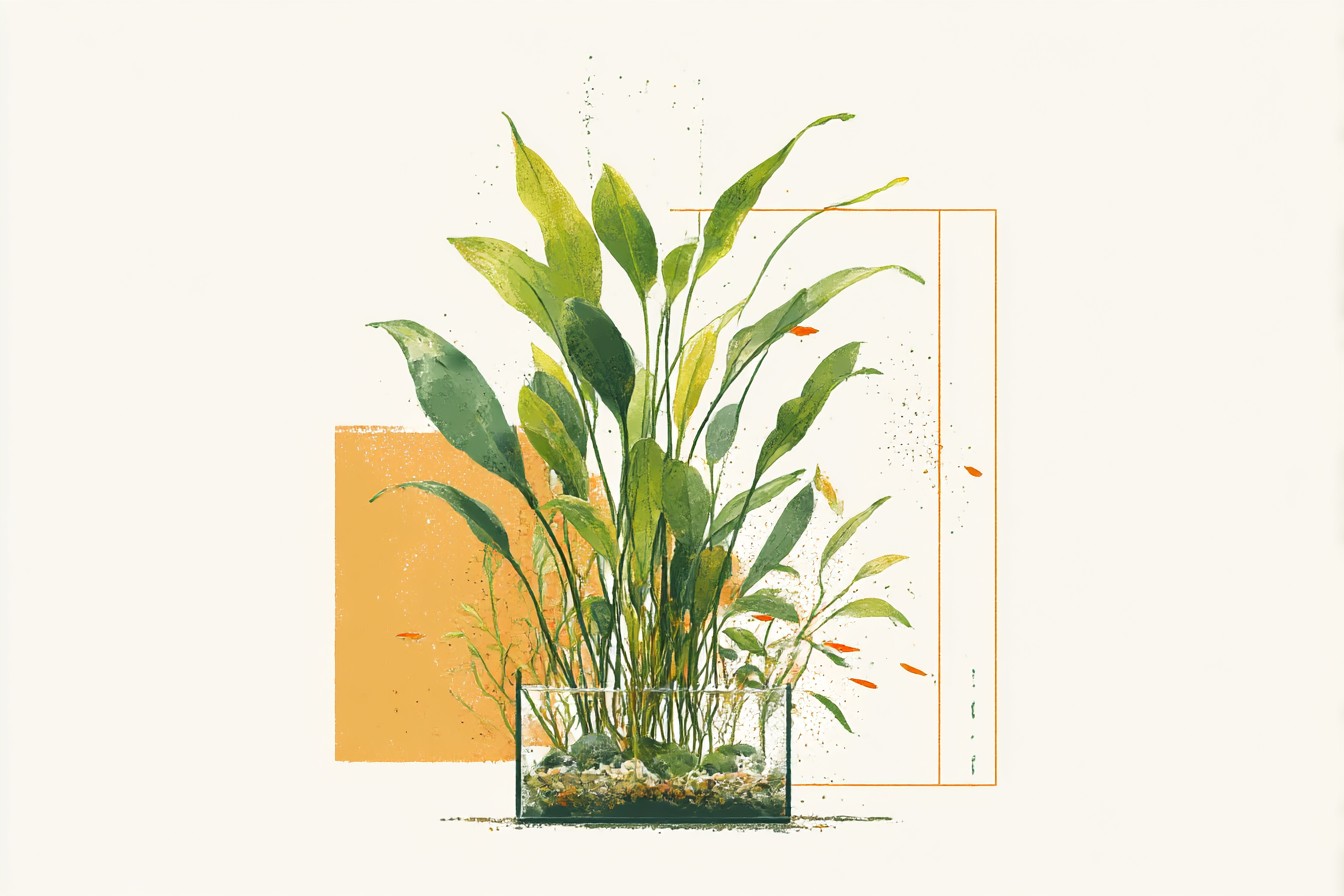
# Vallisneria and the Background Plant That Does All the Work While You Learn I planted my first bunch of vallisneria because it was cheap, looked green, and the shop assistant said it was bulletproof. Two years later, half my tanks have descendants of that original bunch doing exactly what background plants should do: creating a proper backdrop, producing oxygen, and generally making everything else look more intentional. The kids love watching new runners pop up in random spots around the tank.
I love that it handles my occasionally chaotic maintenance schedule without sulking. Sometimes the best plant choices are the obvious ones. Vallisneria gets written off as boring because it works so well.
It’s the plant equivalent of a reliable family car. Not flashy, but it starts every time and gets the job done while you focus on more complicated things.
Which is exactly what most of us need when we’re still figuring out water chemistry, CO2, and why our carefully planned aquascape keeps developing mysterious brown patches. **Quick Reference Table** | Care Level | Lighting Needs | CO2 Required | Growth Rate | Max Size | Our Rating | |————|—————-|————–|————-|———-|————| | Beginner | Low-Medium | No | Fast | 200cm | 9/10 | ## The Plant That’s Been There Since the Beginning Vallisneria has proper aquarium pedigree.
The genus was first described by Carl Linnaeus in 1753 (Aquarium Breeder), making it one of the earliest plants used in the aquarium hobby (Tropical Fish Hobbyist). While today’s aquascaping world chases rare plants with complicated Latin names and precise nutrient requirements, vallisneria just keeps growing in tanks across every continent where people keep fish. The plant is native to tropical and subtropical regions across multiple continents (Fishkeeping World), which explains its adaptability.
Evolution spent millennia teaching it to handle different water conditions, seasonal changes, and varying nutrient levels. That translates directly to aquarium success for people who don’t want to spend their weekends adjusting water parameters. There’s something satisfying about using a plant that aquarists were growing successfully before anyone had heard of CO2 injection or specialised plant fertilisers.
The hobby has added layers of complexity over the decades, but vallisneria proves that good aquascaping can still happen with straightforward approaches and reliable plants. When your seven-year-old asks why some plants need special lights and others don’t, vallisneria becomes the perfect demonstration of how nature designed some things to just work. The species has spread through the hobby by doing what it does in nature – reproducing prolifically and adapting to whatever conditions it finds.
Every successful planted tank eventually needs reliable background plants, and vallisneria has been filling that role longer than most other options have existed in cultivation. ## What Makes It the Perfect Background Worker Vallisneria succeeds because it understands its job and does it consistently. It creates vertical lines that make tanks look taller, provides dense growth that hides equipment and creates territories for fish, and produces oxygen steadily throughout the photoperiod. Most importantly, it does all of this without requiring constant attention or perfect conditions.
The growth pattern is what makes it genuinely useful rather than just attractive. It spreads rapidly through horizontal runners beneath the substrate (AquariumStoreDepot), which means one bunch gradually becomes a background wall. Giant varieties can grow up to 200cm with a growth rate of 1cm per day (Aqua Fish Net), so you can actually watch it filling in the space.
The kids find this fascinating. I find it reassuring because I can see the tank improving week by week without me doing much beyond occasional trimming. The water parameter tolerance is what makes it genuinely beginner-friendly.
It thrives between 20 to 28C with pH 6.0 to 8.5 (Aquaterra Obsession), which covers almost any reasonable aquarium setup. It does not require CO2 injection to grow well (AquariumStoreDepot), which eliminates the whole complex world of petrol bottles, diffusers, and drop checkers. You can literally plant it in a tank with basic fluorescent lighting and standard tap water, then watch it establish itself while you learn about everything else.
What’s particularly clever about vallisneria is how it handles fish compatibility. Its unpalatable flavour means most plant eating fish avoid it (Fishkeeping World), so you don’t need to worry about goldfish or cichlids destroying months of growth in an afternoon. This matters more than plant guides usually mention.
Half the planted tank disasters I see happen because someone puts beautiful, delicate foreground plants in with fish that view them as salad. The reproduction method adds another layer of reliability. As a dioecious plant producing separate male and female flowers (Tropical Fish Hobbyist), it can reproduce both sexually and vegetatively.
The runner system means you get new plants whether or not you have both male and female specimens in the tank. Sexual reproduction creates genetic diversity that helps the population adapt to your specific tank conditions over time. It’s like having a plant that learns to thrive in your setup. ## The Honest Reality Cheque Vallisneria isn’t perfect, and pretending otherwise would be doing nobody any favours.
The main issue is that its success can become a problem. It’s considered invasive and banned in some countries like New Zealand (Build Your Aquarium) because it outcompetes native plants when it escapes into natural waterways. This tells you exactly what it will do in your tank if you don’t manage it properly.
You Might Also Like
The growth rate that makes it so satisfying to watch can quickly become overwhelming. That 1cm per day adds up, and giant varieties will absolutely take over a tank if you let them. I learned this the hard way in a 120-litre where I planted three small bunches and ended up with a solid wall of vallisneria six months later.
Beautiful from a certain angle, but it completely dominated the visual balance and shaded out the foreground plants I’d spent considerably more money on. The runner system, while great for propagation, makes it difficult to contain once established. You can trim the leaves, but stopping the spread requires digging into the substrate to remove runners, which disrupts everything else in that area.
This isn’t a plant you can easily relocate once it’s decided where it wants to live. There are also some technical requirements that sellers don’t always mention clearly. The crown must remain above substrate or the plant will rot (Guppy Life), which seems obvious but catches new aquascapers who bury it too deep.
It’s a heavy root feeder that benefits from iron rich substrate and root tabs (Build Your Aquarium), so while it doesn’t need CO2, it does need proper nutrition at the root level. In nutrient-poor substrates, it will grow slowly and look pale, which defeats the purpose of using it for reliable background coverage. The leaves can also collect debris and require regular cleaning in tanks with messy fish or high organic loads.
Those long, flowing leaves look elegant when clean but show every bit of detritus when maintenance gets behind schedule. Not a major issue, but worth knowing before you commit to it as your primary background plant. ## Legacy and Influence in Modern Aquascaping Vallisneria has shaped how we think about planted tank design in ways that aren’t always obvious. It established the background-midground-foreground principle that most aquascaping styles still follow.
By providing reliable vertical structure, it taught aquarists that plant placement affects visual depth and flow in predictable ways. Modern Dutch-style arrangements and nature aquariums both rely on these principles, even when using more exotic plants. The plant also influenced breeding programmes for both fish and plants.
Fish breeders discovered that vallisneria provides excellent spawning sites and fry cover while being robust enough to handle breeding tank maintenance schedules. Plant breeders have developed dozens of cultivated varieties with different growth patterns, leaf widths, and colours, all building on the reliable genetics of wild vallisneria. In terms of market impact, vallisneria proved that aquarium plants could be mass-produced and shipped reliably, which helped build the modern aquatic plant trade.
Its success encouraged commercial growers to expand into other species, gradually building the variety we see in shops today. It’s still one of the most commonly available plants worldwide, and its low price point makes planted tanks accessible to people who wouldn’t otherwise be able to afford them. The plant has also influenced maintenance practices across the hobby.
The trimming techniques developed for managing vallisneria growth translated directly to other fast-growing species.
The fertilisation schedules that work for heavy root feeders like vallisneria became templates for feeding other demanding plants. ## The Verdict Vallisneria earns its reputation as the ultimate background plant for people learning the hobby. It provides immediate visual impact, teaches proper maintenance habits, and creates the structural foundation that makes everything else in the tank look more intentional.
The fact that it does this reliably in basic setups makes it genuinely valuable rather than just easy. Is it the most exciting plant in the aquascaping world? Absolutely not.
But excitement isn’t what you need when you’re still figuring out why your pH keeps swinging or why half your other plants melted after a water change. What you need is something that works consistently while you learn, then provides a solid foundation for more ambitious projects later. The key is using it strategically rather than just bunging it in and hoping for the best.
Plan for its growth, give it proper root nutrition, and trim it regularly to maintain the shape you want. Used this way, it becomes the reliable backbone that lets you experiment with more challenging plants in the foreground and midground. If you’re running your first proper planted tank, or if you’ve had mixed results with other background plants, vallisneria is probably the safest bet for creating the green backdrop that makes everything else look professional.
It’s not the most glamorous choice, but it’s the one that will still be thriving when you’re ready to tackle your next aquascaping challenge.


