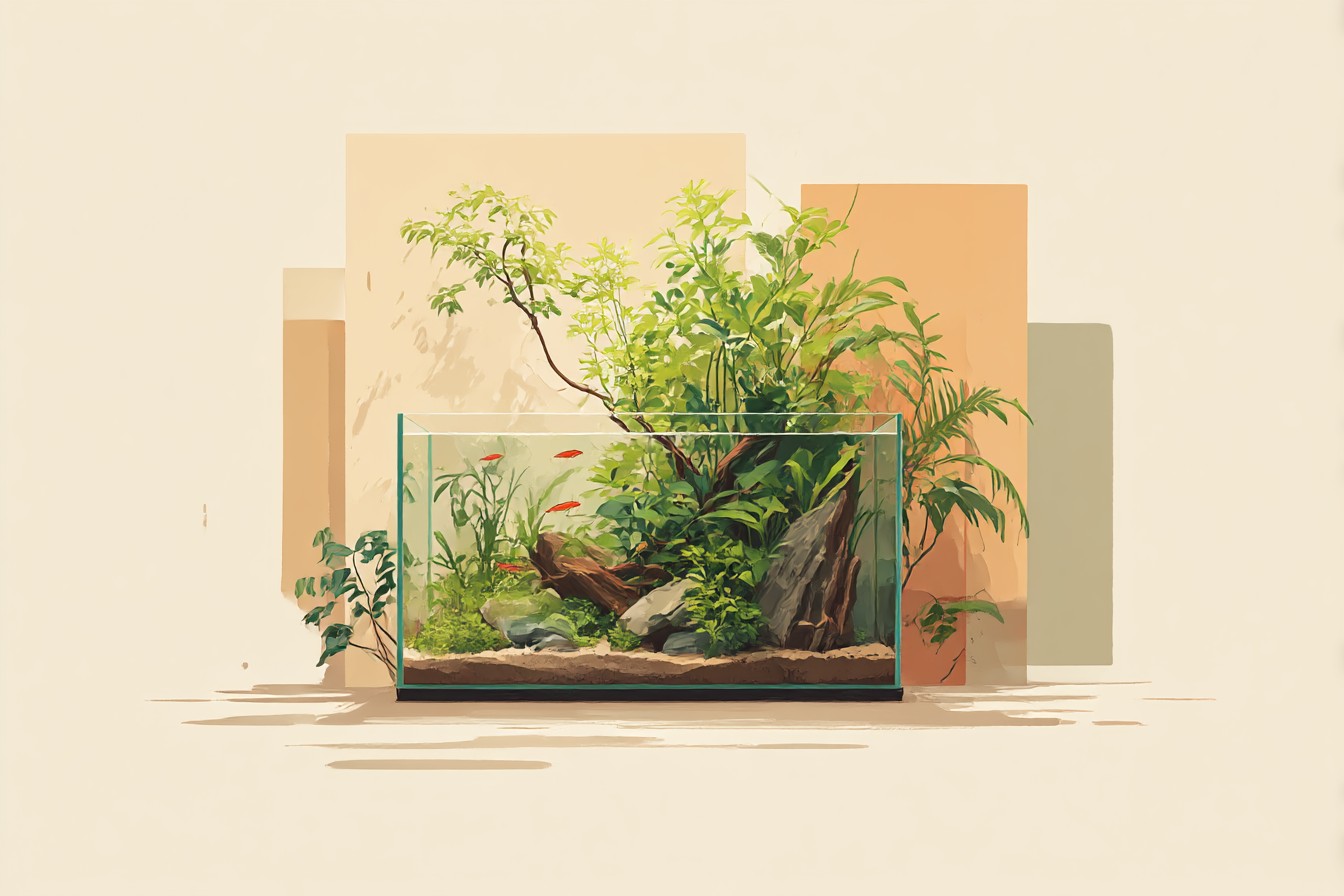
# How to Create a Planted Aquarium Using Only Low Tech Equipment The most expensive planted tank builds get all the attention online, but some of the most beautiful and stable aquariums I’ve seen ran without a single piece of high tech equipment. No CO2 injection, no expensive lighting systems, no automated dosing pumps. Just thoughtful plant selection, proper lighting duration, and basic liquid fertiliser.
The results speak for themselves: healthy plants, clear water, and fish that actually thrive rather than just survive. After spending more money than I care to admit on my first few tank attempts, I learned that success in planted aquariums comes down to understanding a few fundamental principles rather than buying the most expensive kit. A low tech planted aquarium setup requires no CO2 injection (DBC Aquatics) and focuses instead on creating stable conditions that suit the plants you’re actually keeping.
This approach works particularly well for beginners because it’s forgiving, affordable, and teaches you to observe what’s actually happening in your tank rather than relying on gadgets to solve problems. The key difference is patience.
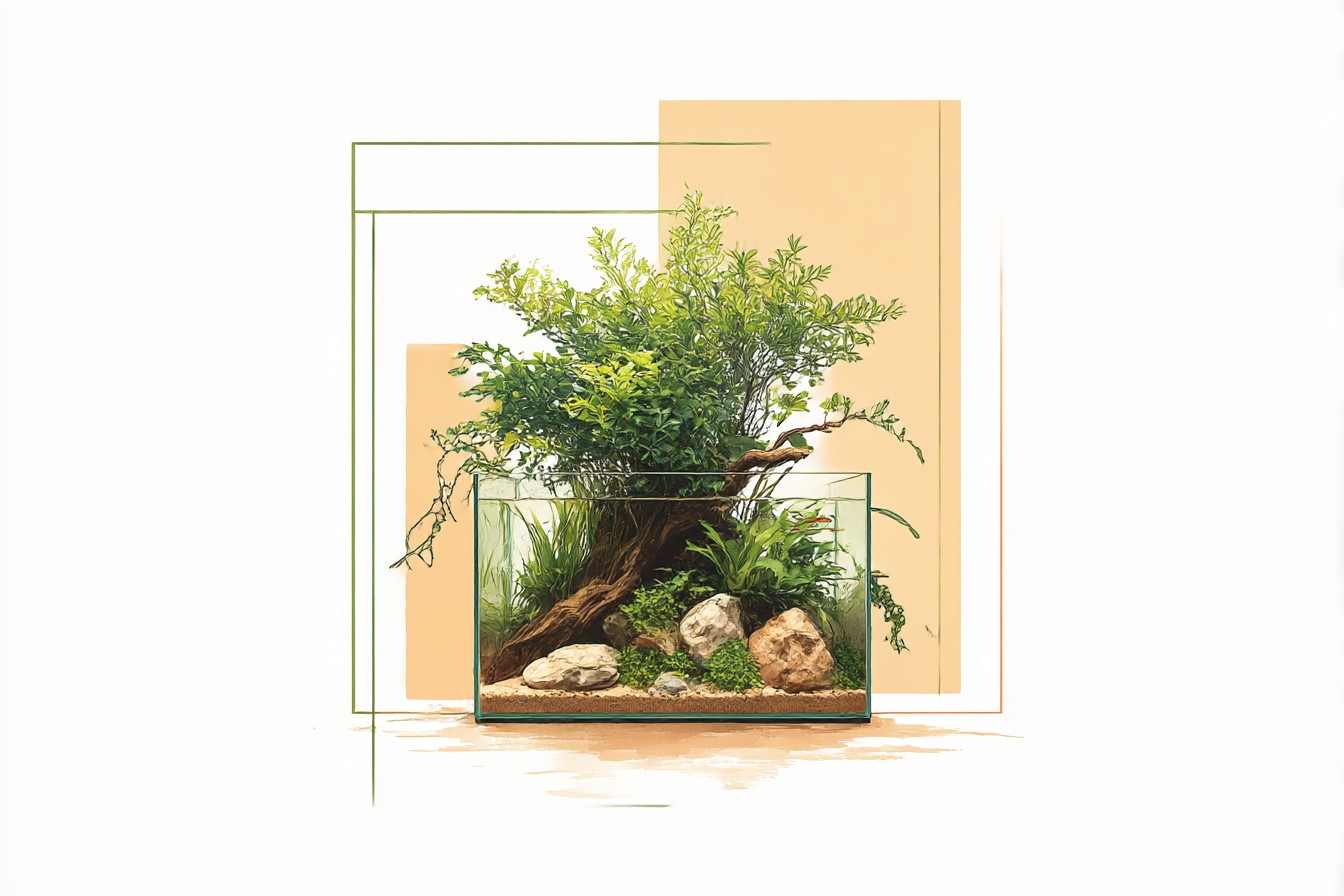
High tech setups promise faster growth and more demanding plants, but they also require precise balancing and constant attention.
Low tech planted tanks develop more slowly, but once established, they’re remarkably stable and require minimal intervention beyond weekly water changes and occasional fertiliser dosing. ## The Science Behind Low Tech Success Understanding why low tech planted tanks work requires looking at how aquatic plants actually function when you’re not pumping extra CO2 into the water. Plants need three primary inputs: light, nutrients, and carbon. In a low tech setup, you’re working with naturally occurring CO2 levels, which means your plant selection and growth expectations need to match what’s actually available. **Carbon Limitation and Plant Selection**: Without injected CO2, atmospheric CO2 dissolved at the water surface becomes your primary carbon source.
This limits which plants will thrive, but it doesn’t limit your options as much as you might think. Most traditional aquarium plants evolved in environments without excess CO2, and many actually prefer stable, lower levels over the fluctuating high concentrations that CO2 injection can create. **Light and Nutrient Balance**: The relationship between light intensity and nutrient availability becomes more forgiving in low tech setups. When plants aren’t being pushed to maximum growth rates by excess CO2, they can better utilise available nutrients without creating the imbalances that lead to algae blooms.
This is why many experienced aquascapers actually prefer low tech methods for long term stability. **Biological Stability**: Low tech systems rely more heavily on biological processes. Your filter bacteria, the plants themselves, and even beneficial bacteria in the substrate all contribute to water stability. Research shows that established low tech planted tanks often have more stable water parameters over time compared to high tech systems that depend on precise equipment function (2Hr Aquarist).
The evidence consistently shows that six key strategies underpin successful low tech planted aquarium management (2Hr Aquarist): appropriate lighting duration, proper plant selection, adequate but not excessive nutrients, patience during establishment, regular maintenance, and realistic stocking levels. Each of these elements supports the others, creating a system that’s genuinely stable rather than just temporarily balanced. ## Lighting: Getting the Fundamentals Right Lighting is where most low tech setups succeed or fail, and it’s nothing to do with how much you spend. The key is providing the right amount of light for the right duration, matched to the plants you’re actually keeping. **Light Intensity Requirements**: For low tech planted tanks, you want lighting that provides 20-40 µmol m² s⁻¹ PAR (Photosynthetically Active Radiation) (The Aquarium Expert).
This covers most traditional aquarium plants without pushing them beyond what they can manage with natural CO2 levels. Most standard LED aquarium lights autumn into this range when used at 75-80% intensity. **Photoperiod Management**: Start with 6-8 hours daily (Aquascaping Academy) and adjust based on plant response. I learned this the hard way after running 12-hour photoperiods in my early tanks and spending months battling green water.
Plants in low tech setups can’t process unlimited light, so more isn’t better. **Timing and Consistency**: Use a timer. Plants respond to consistent lighting schedules, and manual switching leads to irregular photoperiods that stress plants and encourage algae. I run my lights from 2pm to 10pm, which lets me enjoy the tank in the evening while avoiding the algae issues that can come from very early morning starts when CO2 levels are naturally lower. **Troubleshooting Light Issues**: If you see algae developing, reduce light intensity by 10-20% rather than duration (Aquifarm).
Most LED units allow intensity adjustment, and this fine tuning often solves problems that beginners assume require equipment upgrades. Green spot algae usually means too much light intensity. Hair algae often indicates too long a photoperiod.
Budget wise, expect £40-80 for a decent LED light suitable for a 60-90cm tank. Brands like Fluval, Aquael, and even some Chinese units work perfectly well. The expensive stuff often has features you don’t need in a low tech setup. ## Substrate Strategy for Plant Success Substrate choice matters more in low tech setups because you’re relying on the substrate to provide nutrients over months rather than supplementing heavily with liquid fertilisers and root tabs. **Layered Approach**: The standard recommendation of 2-3 inches substrate depth (Institute for Environmental Research and Education) works, but the composition makes the difference.
A proper layered setup uses approximately 1 inch of nutrient rich base layer, 1 inch of transition material, and 1 inch of cap substrate (Fish Keepers Guide). **Base Layer Options**: For the nutrient foundation, soil based substrates like Tropica Plant Growth Substrate or ADA Aqua Soil work well but cost £25-35 for a 9 litre bag. A budget alternative that actually works involves mixing standard compost (not the stuff with added fertiliser) with clay cat litter at roughly 2:1 ratio. Screen both materials first to remove large pieces.
This costs about £8 total and provides similar long term nutrient release. **Middle and Cap Layers**: Sand or fine gravel works for the middle layer, helping prevent the base layer from mixing upward during planting. The cap layer should be standard aquarium gravel, grain size 2-4mm. This prevents substrate from clouding the water while allowing plant roots to reach the nutrient layer below. **Planting Considerations**: Plant root feeders like Cryptocoryne, Echinodorus, and Vallisneria directly into the substrate system.
Column feeders like most stem plants and floating plants get their nutrients primarily from the water column, so substrate composition affects them less. Plan your plant layout accordingly. The total substrate cost for a 120 litre tank runs £15-25 using budget materials, or £60-90 using commercial planted tank substrates.
Both approaches work, but the commercial options are more consistent and easier to work with. ## Plant Selection for Low Tech Success Choosing plants that actually suit low tech conditions makes the difference between a thriving planted tank and months of frustration watching expensive plants slowly deteriorate. **Proven Low Tech Species**: Anubias varieties, Java Fern, Cryptocoryne species, Vallisneria, and most moss species thrive in low tech conditions. These plants evolved in environments with variable or limited CO2, so they’re adapted to work with what’s naturally available. Amazon Sword plants, despite their reputation as demanding, actually do very well in low tech setups with good substrate. **Stem Plant Success**: Many stem plants work in low tech tanks, but growth rates are slower and pruning requirements are more manageable.
Hygrophila, Ludwigia, and Rotala species adapt well to lower CO2 environments. The key is accepting that growth will be steady rather than explosive, and that’s often an advantage for maintenance. **Plants to Avoid Initially**: Skip the carpet plants that require high CO2 like Hemianthus callitrichoides or Glossostigma elatinoides until you’re experienced with low tech methods. These plants can work in low tech setups, but they require very specific conditions that are easier to manage once you understand how your particular tank behaves. **Planting Density**: Start with fewer plants than you think you need.
Low tech tanks benefit from allowing plants time to establish before adding competition for resources. I typically plant at about 60% of my intended final density, then add more plants as the initial ones establish and begin showing good growth. **Quarantine and Preparation**: Always quarantine new plants for a week in a separate container to cheque for snails and diseases. Rinse plants thoroughly and trim any obviously damaged or dying material before planting.
This prevents introducing problems that can destabilise a developing low tech system. ## Fertilisation Without Overdoing It Low tech planted tanks need nutrients, but the approach differs significantly from high tech systems that use daily dosing and precise measurements. **Weekly Liquid Fertilisation**: Most low tech tanks do well with weekly liquid fertiliser doses. Easy Green standard dosing is 1 pump per 10 gallons weekly (Aquarium Co-Op), while Tropica Premium Nutrition recommends 6 ml per 50 litres weekly (Tropica). Start with half the recommended dose and increase if plants show signs of nutrient deficiency. **Understanding Plant Signals**: Yellowing older leaves often indicates nitrogen deficiency.
Poor red colouration in naturally red plants suggests insufficient iron or trace elements. Pale new growth typically means general nutrient deficiency. Black, dissolving leaves usually indicate either too much fertiliser or poor water circulation around the plants. **Root Feeding Supplements**: Plants like Cryptocoryne and Amazon Swords benefit from occasional root tabs, especially in inert substrates.
Use commercially available root tabs or make simple versions using Osmocote pellets wrapped in clay. Place these near heavy root feeders every 3-4 months. **The EI Method Adapted**: The Estimative Index method targets weekly levels of 20-30 ppm nitrate and 3-5 ppm phosphate (Barr Report), but these levels are designed for high tech, high growth rate systems. In low tech setups, aim for roughly half these targets to avoid overwhelming plants that are growing more slowly.
Monthly fertiliser costs typically run £3-6 for a 120 litre tank using commercial liquid fertilisers. Making your own fertiliser solutions can reduce this to under £1 monthly, but requires more knowledge of plant nutrition chemistry. ## Common Low Tech Mistakes That Kill Plants
You Might Also Like
Mistake #1: Starting with too much light. New aquascapers assume more light equals better plant growth and run 10-12 hour photoperiods from day one. This overwhelms plants that haven’t established root systems yet and creates perfect conditions for algae blooms that can take months to resolve.
Start with 6 hours daily and increase gradually only after plants show healthy growth.
Mistake #2: Impatience with plant establishment. Low tech tanks develop slowly, and many beginners panic when plants don’t show obvious growth within the first month. Plants are establishing root systems and adapting to water conditions during this time. Changing fertiliser doses, lighting schedules, or adding more plants during this period usually makes things worse, not better.
Mistake #3: Mixing high tech plants with low tech conditions. Buying plants that require CO2 injection and expecting them to thrive in a low tech setup leads to disappointment and wasted money.
Research plant requirements before purchasing, or stick to plants specifically recommended for low tech setups until you gain experience.
Mistake #4: Over fertilising to compensate for slow growth. When plants grow slowly, the temptation is to increase fertiliser doses to speed things up. In low tech tanks, this usually leads to algae problems rather than faster plant growth. Plants can only use nutrients at the rate they can photosynthesize, and excess nutrients feed algae instead.
Mistake #5: Inadequate water circulation. Low tech setups still need good water movement to distribute nutrients and prevent dead spots where debris accumulates.
Poor circulation leads to uneven plant growth and areas where algae develops. Ensure your filter creates gentle current that reaches all areas of the tank.
Mistake #6: Ignoring water parameters during cycling. Even low tech tanks need proper cycling before adding sensitive plants. High ammonia or nitrite levels during the cycling process will kill or severely stress plants, especially fine leaved species.
Test water parameters weekly during the first two months and don’t add demanding plants until ammonia and nitrite read zero consistently.
## Research Support The scientific literature consistently supports low tech approaches for aquarium stability and plant health. Studies on aquatic plant nutrition show that many species perform better under moderate rather than maximum growth conditions, with improved resistance to disease and environmental stress. Research on aquarium ecosystems demonstrates that biological stability increases as systems mature, with established low tech tanks showing more consistent water parameters than high tech systems dependent on precise equipment function.
Long term studies comparing different aquascaping methods show that low tech approaches have higher success rates for beginners and lower equipment failure rates overall. The reduced complexity allows aquascapers to focus on understanding plant and fish behaviour rather than managing complex equipment interactions. ## Broader Application Across Different Tank Types The low tech principles adapt well to various tank sizes and purposes, though implementation details change based on specific requirements. **Nano Tanks (20-40 litres):** Reduce lighting duration to 5-6 hours and use even lower fertiliser doses. Small volumes are more sensitive to parameter swings, so changes must be more gradual. **Community Tanks with Fish:** Fish waste provides additional nutrients, so reduce fertiliser dosing accordingly.
Stock levels should remain moderate as heavy bioloads can overwhelm plant nutrient uptake capacity. **Species-Specific Biotopes:** Many natural habitats have low CO2 levels, making low tech methods ideal for authentic biotope aquascaping. Research the specific water parameters and plant species from your chosen region. **Breeding Tanks:** Low tech methods work well for breeding setups where stable conditions matter more than rapid plant growth. Dense planting provides fry hiding spots without the parameter swings that CO2 injection can create. **Quarantine Systems:** Simple low tech planted quarantine tanks help maintain water quality during fish isolation periods without complex equipment that might fail when you need reliability most. ## Benefits of Low Tech Planted Aquariums **Lower Operating Costs**: Monthly running costs typically stay under £10 including electricity, fertiliser, and replacement filter media.
No CO2 cylinder refills, no expensive specialised equipment to replace when it fails. **Greater System Stability**: Established low tech tanks maintain stable water parameters for weeks without intervention. Biological processes buffer against sudden changes that can crash high tech systems when equipment fails. **Easier Maintenance**: Weekly water changes and monthly filter cleaning cover most maintenance requirements. No daily CO2 level monitoring, no precise fertiliser calculations, no equipment calibration schedules. **Better Learning Environment**: Low tech setups teach you to observe plant and fish behaviour rather than relying on gadgets.
This knowledge transfers to any aquarium type and helps you identify problems before they become serious. **Realistic Time Commitment**: Most low tech tanks require 30-45 minutes weekly maintenance once established. High tech systems often demand daily attention and frequent adjustments that many people can’t maintain long term. **Lower Stress for Fish**: Stable water parameters and gradual changes create less stressful environments for fish. Many species show better colours and more natural behaviour in well established low tech planted tanks. ## Step-by-Step Implementation Guide **Step 1: Foundation Setup (Week 1)** Purchase and prepare your substrate layers, install basic filtration, and fill the tank.
Add dechlorinated water slowly to avoid disturbing the substrate. Install your LED lighting on a timer set to 6 hours daily. Begin fishless cycling using ammonia source. **Budget Breakdown:** * Tank and stand: £80-150 * LED lighting: £40-80 * Filter and heater: £40-70 * Substrate materials: £15-25 * Basic test kit: £15-20 **Total Budget: £190-345** **Step 2: Plant Introduction (Weeks 2-3)** Add hardy plants like Anubias, Java Fern, and Cryptocoryne species once ammonia begins converting to nitrite.
Plant lightly, covering about 60% of your planned final planting density.
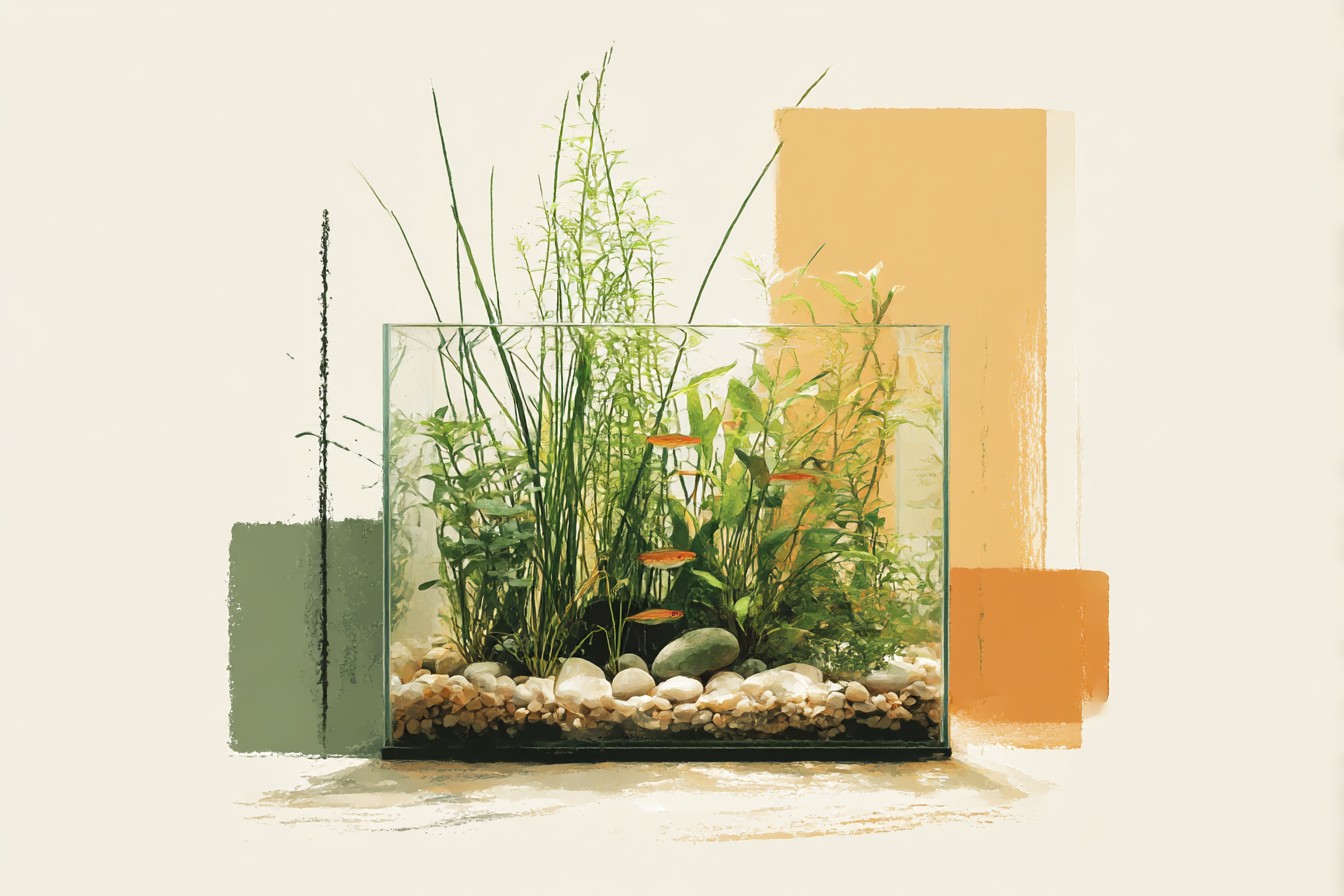
Begin weekly liquid fertiliser dosing at half manufacturer recommendations. **Budget Addition:** * Initial plants: £30-50 * Liquid fertiliser: £12-18 **Step 3: System Maturation (Weeks 4-8)** Monitor water parameters weekly, watching for zero ammonia and nitrite readings. Add remaining plants gradually as initial ones show signs of new growth.
Increase photoperiod to 7 hours if plants are growing well with no algae issues. **Budget Addition:** * Additional plants: £20-40 * Root tabs if needed: £8-12 **Step 4: Fish Introduction (Weeks 6-10)** Add fish gradually once the tank shows consistently zero ammonia and nitrite for two consecutive weeks. Start with hardy species appropriate for your water parameters. Monitor fish behaviour and plant growth, adjusting fertiliser doses if plants show nutrient deficiency signs. **Budget Addition:** * Initial fish stock: £25-60 * Fish food: £8-15 **Step 5: Long Term Optimization (Months 3-6)** Fine tune lighting duration and fertiliser dosing based on plant performance.
Add final plant species and fish once the system proves stable. Establish regular maintenance routine of weekly water changes and monthly filter cleaning. The total investment typically ranges £300-550 depending on tank size and plant selection.
Most of this cost is upfront, with monthly running costs under £10 once established. This compares favourably to high tech setups that often cost £600-1000 initially and require higher ongoing expenses for CO2 refills and specialised equipment maintenance. Success in low tech planted aquariums comes down to patience, observation, and working with natural processes rather than trying to override them.
The results may develop more slowly than high tech alternatives, but they’re often more beautiful and definitely more sustainable over the long term.


