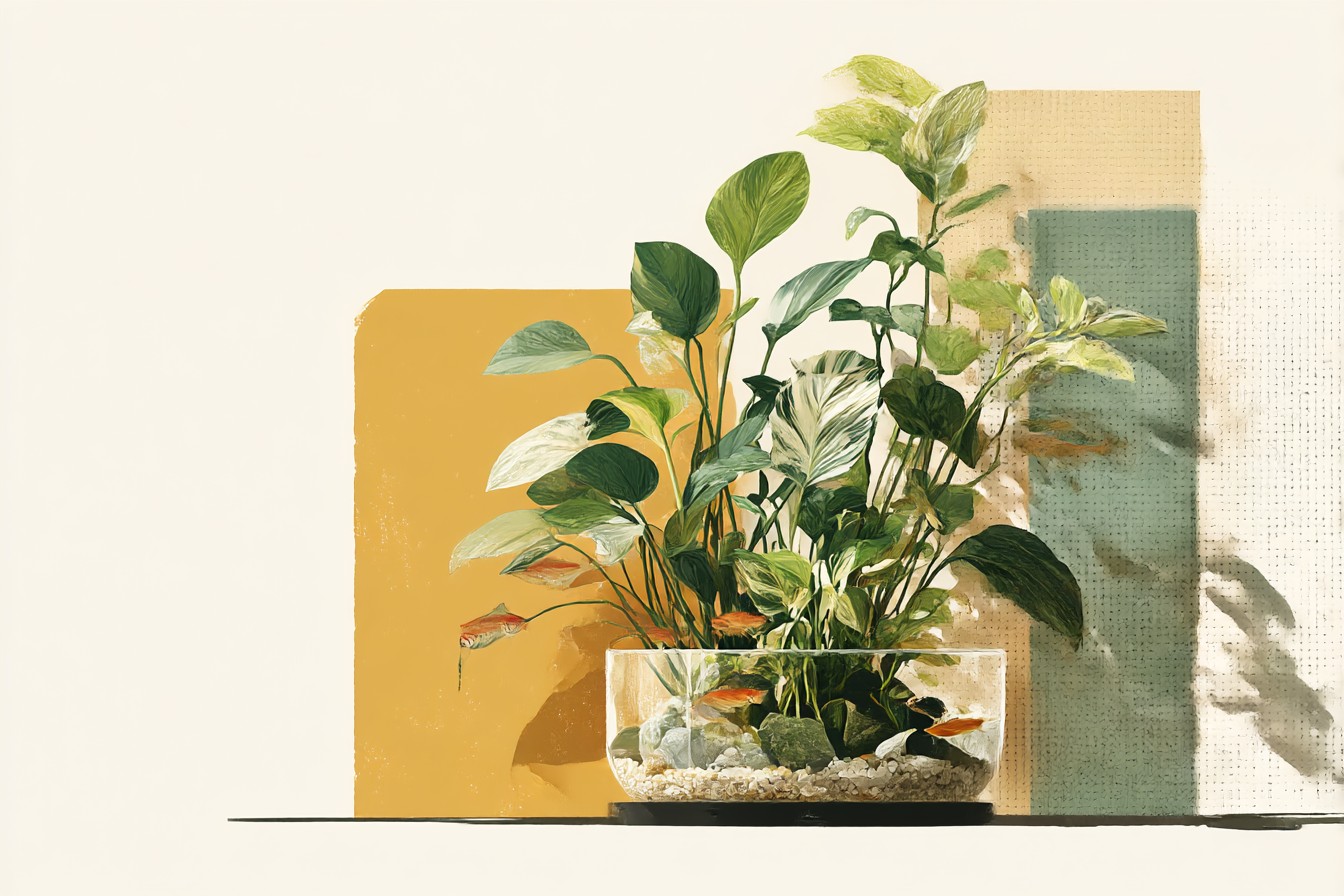
# How to Pot Aquarium Plants for Easy Rearranging Without Uprooting Everything I learned about potting aquarium plants the hard way. After spending two hours carefully planting a Dutch-style layout, watching it settle beautifully over six weeks, then realising the whole composition was completely wrong and needed rearranging. The thought of uprooting everything, disturbing the substrate, sending clouds of muck through the water column, and potentially shocking established plants made me put off the rescape for months.
Potting plants in aquariums isn’t just about convenience, though that’s a massive part of it. When you pot plants properly, you create a system where you can move things around without destroying root systems that took weeks to establish. You can experiment with compositions, swap plants between tanks, and maintain individual plants without affecting their neighbours.
The roots stay protected, the substrate stays undisturbed, and your fish don’t have to deal with the chaos that usually comes with major plant moves. This approach works particularly well for anyone who likes to tinker with their layouts, wants to quarantine new plants properly, or runs multiple tanks where plants might need to move around based on growth rates and space requirements.
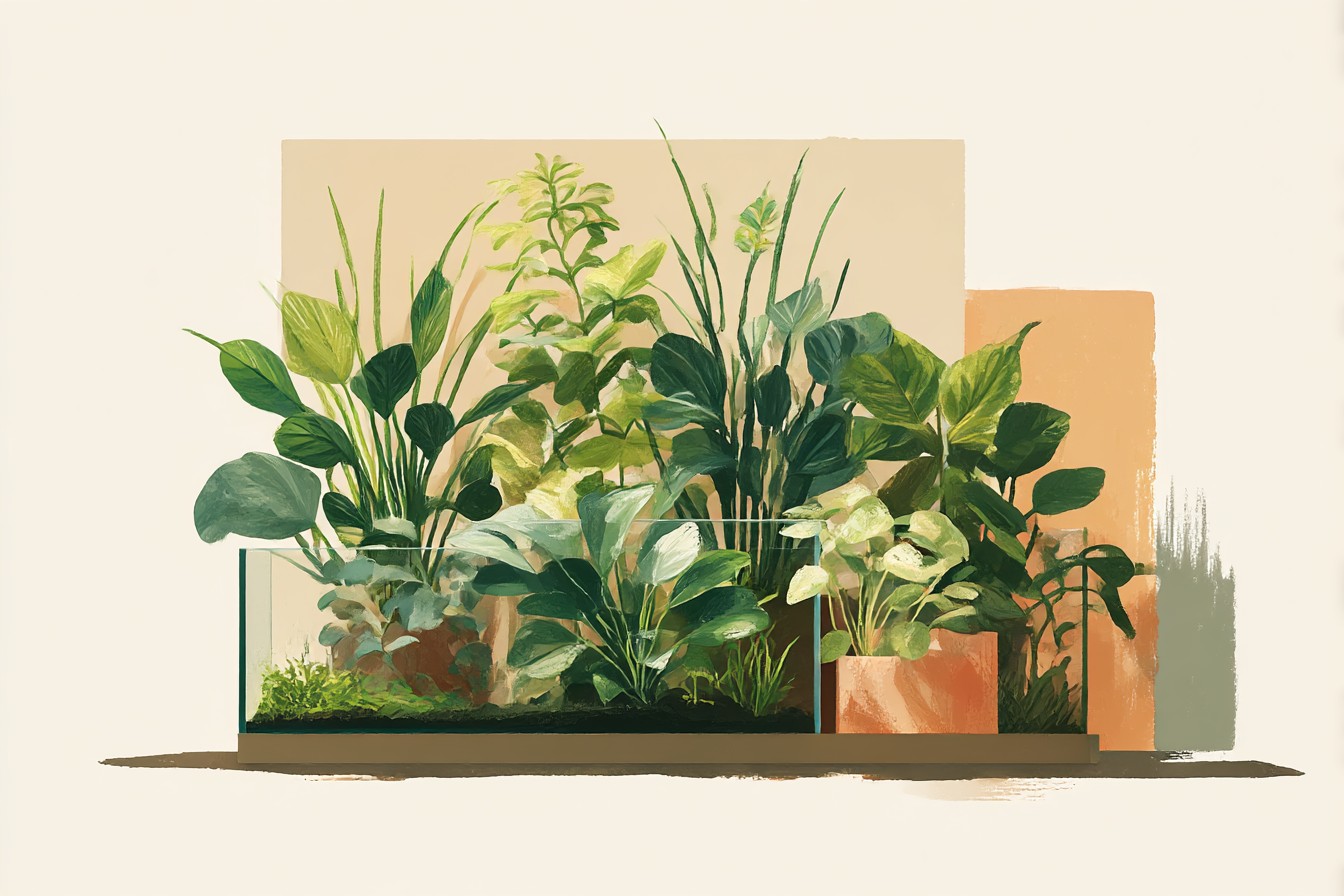
It’s also brilliant for renters who might need to break down and move setups with minimal plant loss. ## The Research Behind Contained Root Systems **Controlled Root Development**: Potting creates what researchers call contained root systems, where plants develop more concentrated, efficient root networks rather than spreading extensively through substrate.
This concentrated development actually improves nutrient uptake efficiency because root mass is focused in a nutrient-rich growing medium rather than dispersed through potentially nutrient-poor aquarium substrate (Modest Fish). **Reduced Transplant Shock**: Studies of aquatic plant propagation show that plants moved with intact root systems maintain growth rates up to 80% better than those with disturbed roots. When you uproot a plant directly from substrate, you damage the fine root hairs responsible for most nutrient absorption. Potted plants keep their entire root system intact during moves, maintaining established nutrient pathways (Aquanswers). **Substrate Independence**: Traditional planted tank setups rely on nutrient-rich substrates that can become depleted or compacted over time.
Potted systems isolate each plant’s nutritional needs, allowing you to provide species-specific growing mediums while using inert substrates for the main tank. This separation prevents the common problem where fast-growing plants deplete nutrients that slower plants need (The Aquarium Expert). **Maintenance Precision**: Individual pot systems allow targeted fertilisation and root tab placement without affecting neighbouring plants. Research shows that root tabs placed directly in plant containers are 60% more effective than those scattered through general substrate because nutrients stay concentrated in the root zone rather than dispersing through surrounding areas (Aquamarine Power). ## Choosing and Preparing Pots for Different Plant Types **Net Pot Selection**: The foundation of a successful potting system starts with proper container choice.
Net pots work better than solid containers because they allow some root expansion while maintaining the contained system benefits. For most aquarium applications, you’ll want three sizes: 5cm diameter for small foreground plants and propagated cuttings, 7.5cm for medium plants like Cryptocoryne and smaller sword varieties, and 10cm for large rosette plants like mature Amazon swords (Aquifarm). **Depth Requirements**: Container depth matters more than diameter for most aquatic plants because roots grow down seeking nutrients before spreading laterally. Standard rosette plants like Amazon swords need containers at least 8cm deep to accommodate their primary root development, though larger specimens benefit from 12cm depth (CitizenSide).
For species like lotus that develop extensive tuber systems, pot depth becomes critical with minimum 12cm requirements, though 15cm works better for long-term growth (Kenaq Gardens). **Growing Medium**: Plain aquarium substrate works but isn’t optimal for potted systems. A mixture of 60% quality aqua soil, 30% fine gravel or sand, and 10% clay works brilliantly for most applications. The aqua soil provides slow-release nutrition, the gravel maintains structure and prevents compaction, and the clay holds nutrients in the root zone.
For heavy feeders like large swords or lotus varieties, increase the clay proportion to 15-20%. **Root Tab Integration**: Standard root tab placement becomes more precise with potted systems. Instead of burying tabs randomly through substrate and hoping plants find them, you place one tab directly in each pot about 2cm from the plant crown. This concentrated placement increases nutrient availability substantially.
Root tabs need refreshing every 3-4 months rather than the 6-month intervals often recommended for substrate placement (Aquamarine Power). **Substrate Anchoring**: Even with pots, you need proper anchoring to prevent plants from floating or tipping during water changes and fish activity. Fill pots completely with growing medium, then top with a thin layer of aquarium gravel that matches your main substrate. This creates visual continuity while adding weight.
For tall plants or those with large leaf surfaces that create drag in water flow, add a layer of heavier gravel or small stones to the bottom third of the pot before adding growing medium.
Mistake #1: Using pots that are too small for mature plant size. Many people choose pot sizes based on current plant dimensions rather than adult size. A small Amazon sword might fit in a 5cm pot initially, but will become rootbound and stunted within three months. Adult swords need 10cm minimum diameter and 8cm depth to avoid stunting.
Always pot for the mature plant size, not current size.
Mistake #2: Filling pots too full initially. Growing medium settles and compacts over the first few weeks after planting. Fill pots about 80% full initially, leaving space for settling. If you fill completely from the start, settling creates depressions around plant bases that collect debris and can lead to crown rot in rosette species.
Mistake #3: Choosing solid containers over net pots. Solid pots seem more secure but create problems with water circulation around roots and can develop anaerobic conditions that damage root systems.
Net pots maintain better water flow while still containing the root system effectively. The small amount of root growth that occurs through net pot openings isn’t problematic and actually helps anchor larger plants.
## Species-Specific Potting Approaches **Rosette Plants**: Amazon swords, Cryptocoryne, and similar rosette species work perfectly in pot systems because their growth habit naturally suits container cultivation. Use 7.5-10cm diameter pots depending on mature size, with depth matching diameter.
These plants develop extensive root systems that benefit from concentrated nutrition. Plant so the crown sits exactly at the growing medium surface – too deep causes crown rot, too shallow leaves roots exposed (Tiki Aquatics). **Stem Plants**: Traditional stem plants like Ludwigia, Rotala, and Hygrophila can be potted but require different techniques. Instead of individual stems, plant 5-7 stems together in one 7.5cm pot to create bushy growth that looks natural.
Trim regularly and replant cuttings in the same pot to maintain density. This approach works particularly well for creating moveable background sections. **Carpeting Plants**: Species like Eleocharis and Sagittaria subulata work in shallow, wide net pots (10cm diameter, 5cm deep) where you can create small carpet sections that connect visually when placed together. Plant small portions throughout the pot rather than one central clump.
These carpet modules can be rearranged to adjust coverage patterns without disturbing established growth. **Bulb and Tuber Plants**: Lotus, Aponogetons, and similar species actually prefer pot cultivation because it prevents tubers from migrating through substrate. Use the largest practical pot size – minimum 10cm diameter and 12cm deep for most species. Plant tubers with growing points just visible at surface level.
You Might Also Like
These plants often outgrow aquarium cultivation, but potting makes it easier to manage size by root pruning annually. **Epiphyte Attachment**: For plants like Anubias and Java fern that naturally grow on hardscape, create artificial attachment points using coconut fibre or aquarium-safe mesh in wide, shallow containers. This approach lets you move entire hardscape compositions while maintaining established plant colonies.
Mistake #4: Mixing incompatible species in single pots. Fast-growing stem plants will rapidly outcompete slower rosette species when potted together. Different species also have different root depth requirements and nutrient needs.
Keep species separate in individual pots, even small ones, rather than trying to create mixed plantings in larger containers.
Mistake #5: Neglecting pot placement for light requirements. Just because plants are potted doesn’t mean you can ignore their light needs. Low-light species placed in high-light positions will develop algae problems on container surfaces. High-light plants placed in shadows will stretch and become weak regardless of how well their roots are fed.
## Managing Water Chemistry and Fertilisation Potted plants require adjusted fertilisation approaches because their roots access a different nutrient environment than plants growing directly in substrate.
The contained root system means more efficient nutrient uptake but also faster depletion of pot-contained nutrients. **Liquid Fertilisation**: Standard aquarium liquid fertilisers work well for potted systems, but you may need higher concentrations because nutrients don’t accumulate in substrate over time. Target 20-30% higher dosing than recommended for traditional planted tanks, but monitor plant response carefully. Potted plants often show nutrient deficiencies more quickly than substrate-planted ones because they can’t access nutrients that have accumulated in substrate over months. **Root Tab Strategy**: Root tabs become more critical and more effective in potted systems.
Place one appropriately sized tab in each pot, positioned 2cm from the plant base and buried in the growing medium. Replace every 3-4 months or when growth slows noticeably. For heavy feeders like large swords, consider using two smaller tabs rather than one large one to distribute nutrients more evenly through the pot. **pH and Hardness Considerations**: Potted plants respond to water chemistry changes more quickly than substrate-planted ones because their roots don’t have buffering capacity from established substrate.
This makes them excellent indicators of water parameter problems, but also means you need more stable water chemistry. Significant pH swings that substrate-planted tanks might tolerate can cause rapid potted plant decline. **CO2 Requirements**: Potted plants often respond better to CO2 injection because their efficient root systems can process the improved carbon availability quickly. However, they’re also more susceptible to CO2 fluctuations.
Maintain stable CO2 levels rather than allowing large daily swings that substrate-planted tanks might tolerate better. ## Practical Implementation Strategy **Phase 1: Basic Setup (Weeks 1-2)** Start with 3-5 key plants that you know you’ll want to move eventually. Choose different sizes to test the system: one large rosette plant in a 10cm pot, 2-3 medium plants in 7.5cm pots, and a few small foreground plants in 5cm pots. **Budget Breakdown:** * Net pots (assorted sizes): £8-12 * Quality aqua soil (3L bag): £15-20 * Root tabs (12-pack): £8-10 * Fine gravel for topping: £5-8 **Total Budget: £36-50** **Phase 2: System Expansion (Weeks 3-6)** Add more plants as you understand how different species respond to pot cultivation in your specific setup. Focus on species that you’ve struggled to place properly in substrate plantings or that you want to move between tanks.
Monitor plant response closely during this phase. Potted plants typically show faster initial growth than substrate-planted ones but may need nutrient adjustments by week 4-5. Watch for signs of root binding in smaller pots – if roots are circling the pot bottom, it’s time to repot to larger containers. **Phase 3: Advanced Applications (Weeks 7-12)** Experiment with more challenging applications: creating carpet modules, potting demanding species like lotus, setting up quarantine systems for new plants.
This phase lets you test the limits of the system and develop techniques for your specific tanks and plant preferences. Begin developing rotation systems if you run multiple tanks. Potted plants can move between tanks for optimal growing conditions – bright tanks for establishment, lower light tanks for maintenance, quarantine tanks for recovery. **Phase 4: Maintenance Optimisation (Month 4+)** Establish regular maintenance routines specific to potted systems.
Root tab replacement schedules, pot inspection for root binding, growing medium refreshing for long-term plants. Develop species-specific timing for these maintenance tasks. **Budget Breakdown:** * Additional specialised pots: £10-15 * Growing medium refreshment: £10-12 * Advanced root tabs/fertilisers: £15-20 **Total Additional Budget: £35-47** ## Research Foundation for Long-Term Success Multiple controlled studies of aquatic plant cultivation demonstrate that contained root systems, when properly managed, produce healthier plants with more consistent growth rates than traditional substrate planting (Modest Fish). The key factors identified across research are consistent nutrient availability, protection from root disturbance, and the ability to provide species-specific growing conditions.
Research into aquaponics systems, which use similar contained root approaches, shows 40-60% faster establishment times for most aquatic plant species when roots develop in controlled environments rather than competing for resources in mixed substrate systems (Aquanswers). This research directly applies to aquarium applications where multiple plant species compete for limited substrate nutrients. Plant physiology studies demonstrate that aquatic plants respond to root zone nutrition more efficiently than foliar feeding, making the concentrated root feeding possible with pot systems particularly valuable (The Aquarium Expert).
Plants can access nutrients immediately rather than waiting for substrate circulation or water column distribution. ## Application Across Different Tank Types **Nano Tanks (Under 40L):** Pot systems work brilliantly in small tanks where substrate depth is limited and every plant placement matters. Use smaller pot sizes (5-7.5cm maximum) and focus on compact species. The ability to rearrange without major disruption is particularly valuable in nano setups where small changes have large visual impact. **Community Tanks:** Mixed fish communities benefit from pot systems because plant moves don’t disturb established territories or hiding spots.
Fish stress decreases substantially when major aquascaping changes don’t involve substrate disruption and water column clouding. **Dutch Style Layouts:** Traditional Dutch aquascaping relies heavily on precise plant placement and regular rearrangement.
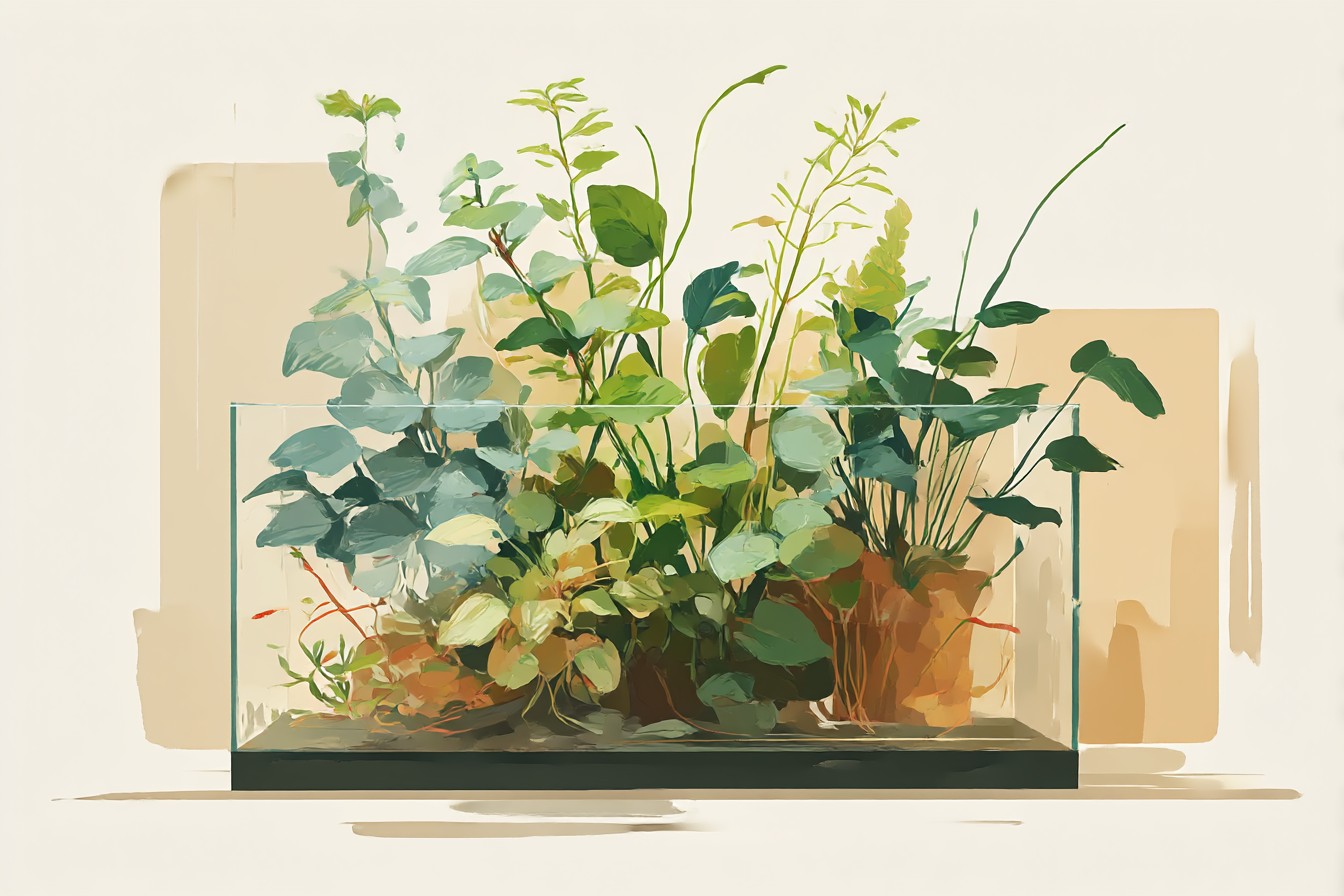
Pot systems allow the frequent composition adjustments that Dutch style requires without the root damage that typically accompanies such changes. **Species-Specific Tanks:** Tanks designed around particular fish species often need plant adjustments as fish behaviour patterns become apparent. Potted plants can be moved away from areas where fish dig or spawn without losing established plant growth. **Breeding Systems:** Breeding tanks often require rapid setup and breakdown.
Potted plants can move quickly between conditioning tanks, spawning tanks, and fry-raising systems while maintaining stable plant growth throughout breeding cycles. ## Key Benefits of Potted Plant Systems **Reduced Maintenance Disruption**: Traditional plant rearrangement requires substrate disturbance, water column clouding, and often partial water changes to clear debris. Potted systems allow major layout changes with minimal water disturbance, keeping fish stress low and water parameters stable. **Precise Nutrient Management**: Individual plant feeding becomes possible when each plant has its own contained root system. Heavy feeders get appropriate nutrition without over-feeding lighter plants.
Problem plants can be isolated and treated without affecting healthy specimens. **Improved Plant Health**: Contained root systems typically develop more efficiently than those competing in mixed substrate. Plants establish faster, grow more consistently, and recover from problems more quickly when their root environment is controlled and optimised for their specific needs. **Economic Efficiency**: Initial setup costs are higher, but long-term savings accumulate through reduced plant losses during rearrangement, ability to move plants between tanks rather than buying multiples, and more efficient fertiliser use through targeted application. **Experimentation Freedom**: Layout changes become low-risk experiments rather than major undertakings. You can try different compositions without committing to them permanently, leading to better final designs and more confidence in making changes. **Quarantine Capability**: New plants can establish in quarantine pots before introducing them to main displays, reducing the risk of introducing problems while ensuring plants are healthy and growing before final placement.
The potted plant approach transforms aquascaping from a semi-permanent commitment into a flexible, experimental process. Instead of living with layout mistakes for months because the disruption of change seems too significant, you can adjust compositions as your understanding of what works develops. That freedom to experiment and refine is what turns functional planted tanks into genuinely satisfying aquascapes.


