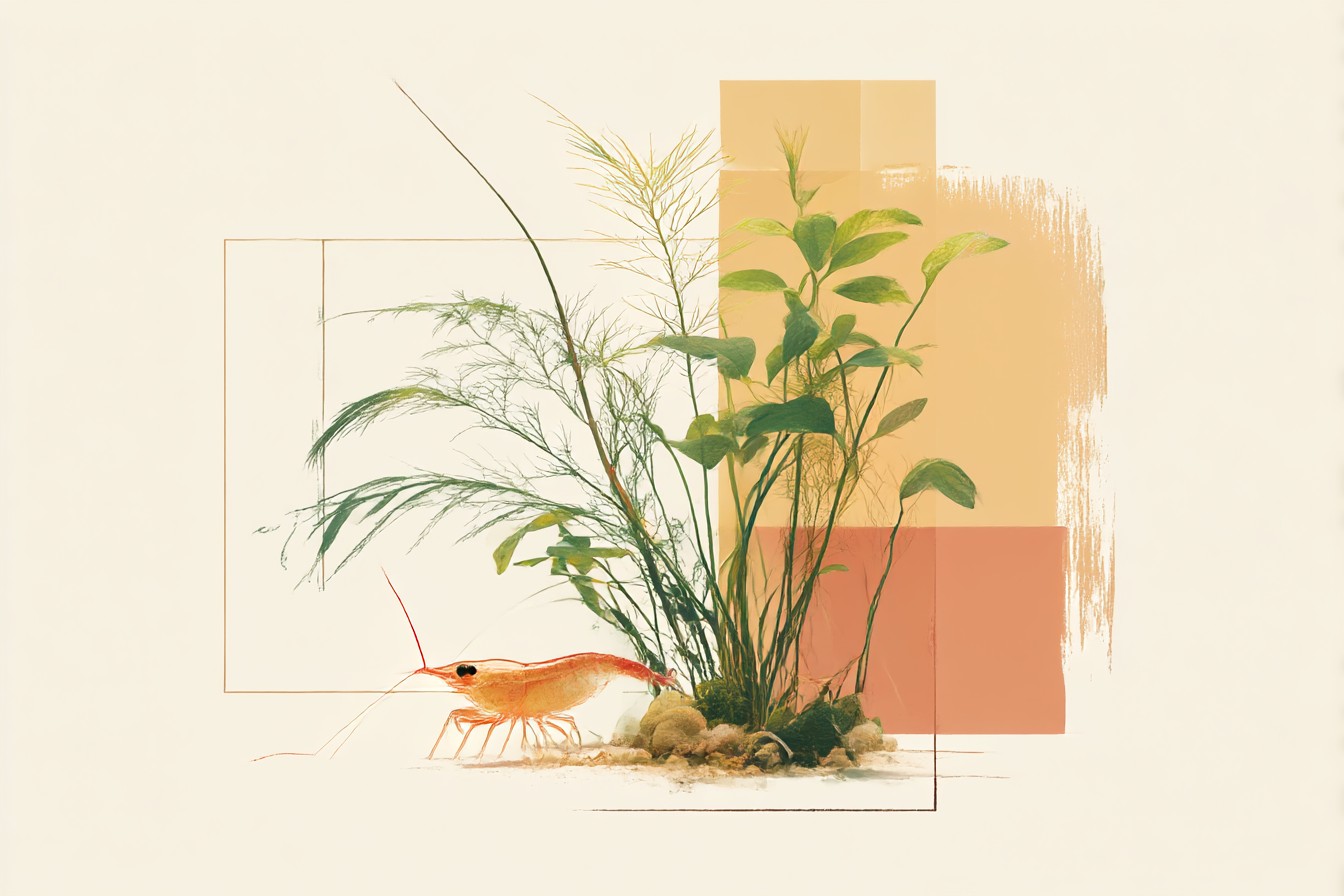
# Best Plants for a Shrimp Aquarium and Creating the Perfect Shrimpscape Building a proper shrimp tank isn’t just about getting the water parameters right and hoping for the best. The plants you choose will determine whether your shrimp actually thrive or just survive. After three years of running various nano setups in my small flat, I’ve learned that the right plant selection makes the difference between watching a few nervous shrimp hide behind the filter and having an active colony that breeds successfully and provides genuine entertainment.
The challenge with shrimp tanks is that everything happens on a smaller scale. Your cherry shrimp are sensitive to parameter swings that wouldn’t bother a betta. They need constant access to biofilm and microscopic food sources that plants either support or don’t.
And unlike fish, shrimp interact with every surface in the tank constantly. They’re climbing, grazing, hiding, moulting, and breeding throughout the plant structure.

Choose plants that support these behaviours and you get a stable, active system.
Choose badly and you’ll spend months troubleshooting problems that trace back to your initial plant selection. This goes deeper than just picking “beginner friendly” species from a list. You need to understand which plants actually function well together in the specific conditions shrimp require, which provide the surface area and shelter that support breeding, and how to arrange them to create a balanced ecosystem that stays stable without constant intervention. ## The Science Behind Shrimp-Plant Interactions **Biofilm Production and Surface Area** The relationship between plants and shrimp centres on biofilm.
This isn’t just algae growing on plant leaves. Biofilm is a complex community of bacteria, fungi, and microscopic organisms that forms on all submerged surfaces. For adult shrimp it’s supplemental food.
For baby shrimp, it’s their primary nutrition source (Aquifarm). Different plants provide vastly different amounts of biofilm-supporting surface area. Fine-leaved plants like Java moss create exponentially more surface area than broad-leaved species.
A small portion of Java moss might have hundreds of tiny branching surfaces where biofilm can establish. A single Anubias leaf provides one surface. For breeding colonies, this difference is critical. **Microhabitat Creation** Plants don’t just provide food surfaces.
They create the physical structure that shrimp need for natural behaviours. Cherry shrimp need hiding spots when they moult because they’re completely vulnerable for 12 to 24 hours while their new shell hardens. They need different zones for different activities.
Dense plant cover for nervous individuals, open areas for foraging, and specific textures for egg-carrying females. Plants also moderate water chemistry on a microscopic level. Dense plant growth creates areas with slightly different pH, oxygen levels, and nutrient concentrations.
This microhabitat diversity supports larger, more stable populations than uniform conditions across the tank. **Temperature and pH Requirements** The plants you choose need to thrive in the specific conditions shrimp require. Cherry shrimp (Neocaridina) do best between 20°C to 26°C (In Fish Tank) with pH between 6.5 to 7.5 (In Fish Tank). Water hardness should stay between 4 to 8 dGH (In Fish Tank).
Plants that need different conditions will either struggle or alter your water chemistry in ways that stress the shrimp. Many tropical plants commonly sold for aquariums prefer higher temperatures and softer water than shrimp populations maintain best. This creates a fundamental compatibility issue that causes long-term problems even if everything looks fine initially. ## Essential Plant Categories for Shrimp Tanks **Moss Species: The Foundation Layer** Java moss remains the single most important plant for shrimp breeding setups (H and K Aquatics).
It creates the highest surface area to volume ratio of any commonly available plant. Baby shrimp live in Java moss for their first weeks, grazing constantly on the biofilm that forms throughout its structure. Christmas moss works similarly but grows in more distinct triangular fronds.
It’s slightly more structured than Java moss, making it easier to control where it grows. Flame moss grows upward in distinctive flame-shaped patterns. It provides good coverage but less hiding space than the spreading varieties.
The key with mosses is attachment. They don’t root in substrate. Instead, tie them to wood, stone, or mesh.
I use cotton thread initially, which decomposes as the moss attaches naturally. Fishing line works but never breaks down and can eventually cut into hardscape materials. **Fine-Leaved Stem Plants** Cabomba and Limnophila sessiliflora provide vertical structure with extremely fine, feathery leaves. Each stem creates hundreds of tiny surfaces for biofilm.
Shrimp climb through these plants constantly, grazing and molting among the fine foliage. These plants need moderate light and regular trimming. In low light they’ll stretch and lose their compact, bushy growth pattern.
Weekly trimming of the tops maintains dense growth near the substrate where shrimp spend most of their time. Water sprite (Ceratopteris thalictroides) grows both as a floating plant and rooted in substrate. The submerged form has finely divided leaves that shrimp love.
It grows quickly, helping with water quality, but needs regular pruning to prevent it dominating the tank. **Broad-Leaved Species for Structure** Anubias species provide broad surfaces for biofilm but more importantly, they create distinct territories within the tank. Different shrimp will claim different Anubias leaves as feeding areas. The slow growth means they won’t need constant trimming like faster stem plants.
Anubias barteri var. nana stays compact enough for nano tanks. Anubias coffeefolia has distinctively textured leaves that accumulate biofilm particularly well. Both species attach to hardscape rather than planting in substrate, making them easy to position exactly where you want them.
Java ferns serve a similar structural role but with a completely different leaf texture. The rough surface holds biofilm well. Older leaves develop plantlets along their edges, creating additional complexity as they establish.
Java ferns prefer being attached to wood or stone rather than planted. **Ground Cover Options** Dwarf hairgrass (Eleocharis acicularis) creates carpet-like coverage that shrimp graze constantly. It needs moderate light and will spread slowly to form a continuous mat. In nano tanks, a small portion will eventually carpet the entire foreground if conditions are right.
Monte Carlo stays lower than hairgrass and forms denser mats with smaller leaves. It requires slightly higher light but creates excellent foraging areas for shrimp. Both species provide hiding spots for molting shrimp at substrate level.
Staurogyne repens grows as individual plants rather than spreading groundcover. It maintains its compact form in moderate light and creates small bushes that shrimp use for shelter. Less coverage than true carpeting plants but easier to control and position precisely. **Surface and Floating Elements** Red root floaters provide surface coverage that moderates lighting and creates security for shrimp below.
The dangling root systems create additional biofilm surfaces and hiding areas. Shrimp will climb the roots to graze near the surface. Amazon frogbit serves similar functions with larger leaves and more substantial root systems.
Both species reproduce quickly, so regular removal of excess plants is necessary to prevent complete surface coverage. Water lettuce grows larger than either and may overwhelm nano setups, but the extensive root systems provide exceptional biofilm growing surfaces. In larger shrimp tanks, the roots create maze-like structures that shrimp navigate constantly. ## Common Mistakes in Shrimp Tank Planting
Mistake #1: Choosing plants based on appearance alone. Plants that look dramatic in planted tank galleries often create poor conditions for shrimp.
You Might Also Like
Large Echinodorus species or tall Vallisneria might look impressive but they create too much shade and don’t provide the fine-scale structure shrimp need for foraging and breeding. Focus on function first, then arrange for visual appeal.
Mistake #2: Over-planting initially. Dense plant growth looks established immediately but creates maintenance nightmares as plants compete and die back. Start with 60-70% of your intended final plant mass.
Let plants establish and grow into the available space over 6-8 weeks rather than filling every gap immediately.
Mistake #3: Ignoring plant-specific requirements. Mixing plants that need different lighting, nutrients, or water conditions creates ongoing stability issues. High-light plants starve in low-light setups. Soft-water plants struggle in the harder water that cherry shrimp prefer.
Match all your plants to the same basic requirements rather than trying to create different zones for different species.
Mistake #4: Underestimating the importance of surface area. Choosing a few large plants over many small plants dramatically reduces the biofilm-growing surface available to your shrimp. A single large Amazon sword provides less functional feeding area than a collection of moss patches and fine-leaved stems, even if the sword takes up more visual space.
Mistake #5: Neglecting plant health maintenance. Dying plants release compounds that stress shrimp and destabilize water parameters. Remove yellowing leaves promptly.
Trim plants regularly to maintain healthy growth. Dead plant matter creates ammonia spikes that are particularly dangerous in the small water volumes typical of shrimp tanks.
Mistake #6: Placing plants without considering shrimp behaviour. Clustering all your plants in the back corner might look clean but leaves most of your tank unsuitable for shrimp activity. Distribute plants throughout the tank to create multiple territories and hiding spots.
Shrimp are more active and visible when they feel secure in all areas, not just one corner.
## Research Support Studies consistently demonstrate that plant selection directly affects shrimp population stability and breeding success. Research on biofilm development shows that fine-leaved and moss species generate significantly more bacterial surface area than broad-leaved alternatives (Shrimp Science). This directly correlates with higher survival rates for juvenile shrimp, which depend entirely on biofilm for nutrition during their first month of development.
Plant density research indicates that moderate coverage (60-80% of substrate area) supports larger shrimp populations than either sparse planting or complete coverage. Plants increase microhabitat diversity and surface area, which directly supports increased shrimp activity and foraging success (AquaFindr). However, excessive plant density reduces water circulation and creates dead zones where organic matter accumulates, leading to water quality issues that stress shrimp populations.
Temperature tolerance studies show that plant species selection significantly affects tank stability within the narrow temperature ranges shrimp require. Plants that struggle in the 70°F to 78°F range optimal for cherry shrimp (Aquifarm) create ongoing maintenance issues that destabilize the system over time. ## Application Across Different Shrimp Species **Caridina Species Tanks:** Crystal red shrimp and other Caridina species prefer softer, more acidic water than Neocaridina. Choose plants that thrive in pH 6.0-6.8 and very soft water.
Bucephalandra species work well, as do most moss varieties. Avoid plants that require harder water or buffer pH upward. **High-Grade Breeding Setups:** Expensive shrimp varieties benefit from simpler plant selections focused entirely on function. Java moss, a few Anubias, and carefully controlled lighting.
Visual complexity can wait until you’ve established stable breeding and good survival rates. **Mixed Community Tanks:** Tanks combining shrimp with small fish need plant arrangements that provide refuge areas where shrimp can retreat from fish attention. Dense moss areas and fine-leaved plant thickets become critical for coexistence. **Nano Tanks (Under 10 Gallons):** Small volumes require careful plant selection to avoid overwhelming the system. Three to four species maximum.
Focus on slow-growing species that won’t require weekly maintenance to keep them under control. **Larger Shrimp Tanks (20+ Gallons):** More space allows for greater plant diversity and more complex aquascaping. Include background plants for visual depth while maintaining the fine-leaved species that support the shrimp population’s functional needs. ## Key Benefits of Proper Plant Selection **Stable Water Chemistry:** Well-chosen plants act as biological buffers, absorbing excess nutrients before they cause parameter swings. This is particularly important in small tanks where changes happen rapidly.
Properly balanced plant selection can extend the time between water changes from twice weekly to once weekly without compromising shrimp health. **Natural Food Production:** The right plants continuously generate the biofilm and microscopic organisms that shrimp graze on throughout the day. A well-planted 20-litre tank can support a small shrimp colony with minimal supplemental feeding, reducing both cost and the risk of overfeeding that leads to water quality problems. **Breeding Support:** Dense, fine-leaved plant growth provides the hiding spots and surface area necessary for successful reproduction. Tanks with appropriate plant selection typically show 70-80% higher survival rates for juvenile shrimp compared to sparsely planted setups. **Reduced Maintenance Requirements:** Plants that match your shrimp’s requirements grow steadily without becoming overgrown or dying back unexpectedly.
This reduces the frequency of plant maintenance and the risk of parameter fluctuations from decaying plant matter. **Visual Appeal Over Time:** Plants chosen for function rather than immediate visual impact tend to look better long-term as they establish and grow into their intended roles. Rushed plant selections often require replacement within months as incompatible species fail or grow inappropriately. **Cost Effectiveness:** Choosing appropriate plants initially costs less than repeatedly replacing unsuitable species. Hardy plants that thrive in shrimp conditions typically cost £3-8 each but last for years with basic maintenance. ## Step-by-Step Implementation Guide **Step 1: Foundation Planning (Week 1)** Calculate your tank’s surface area and plan for 60-70% plant coverage initially.
Purchase hardscape materials (wood pieces £8-15, stones £5-10 per kg) and attachment materials (cotton thread, super glue gel). Order foundation plants: Java moss (£6-8), one Anubias species (£8-12), and one fine-leaved stem plant (£4-6 for a bunch). Budget Breakdown: * Hardscape materials: £15-25 * Foundation plants: £18-26 * Attachment supplies: £5-10 **Total Budget: £38-61** **Step 2: Moss Establishment (Weeks 2-4)** Attach moss to hardscape using cotton thread or thin super glue application.
Position pieces throughout the tank rather than clustering in one area. Plant stem species in substrate, leaving space for spreading. Monitor daily for the first week, checking that plants are staying attached and beginning to establish.
Look for new growth on moss (tiny bright green tips) and stem plants extending roots into substrate. Warning signs include moss detaching (usually insufficient initial attachment) or stem plants developing transparent areas (typically too much light initially). **Step 3: Structural Plants (Weeks 4-6)** Add Anubias or Java fern to hardscape for mid-level structure. Include one ground cover species in foreground areas.
Total plant coverage should now be around 50-60% of substrate area.
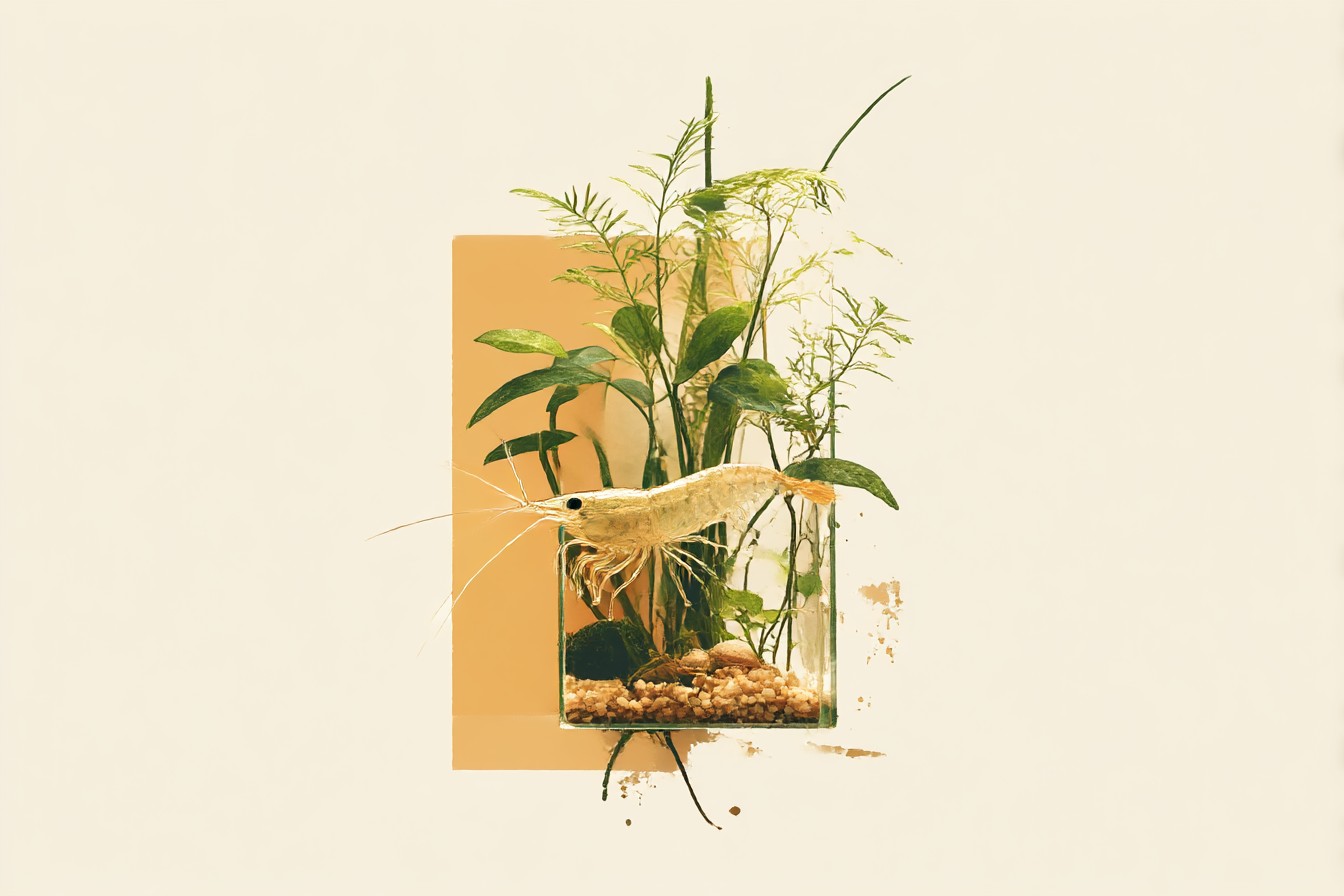
Begin introducing shrimp if tank has completed nitrogen cycle and plants show active growth. Budget Breakdown: * Additional structural plants: £12-18 * Ground cover: £8-12 * Initial shrimp population: £15-25 **Total Additional: £35-55** **Step 4: Fine-Tuning Coverage (Weeks 6-10)** Add final plants to reach 70% coverage.
Include floating plants if desired for surface coverage and additional biofilm surfaces. Observe shrimp behaviour to identify areas needing additional shelter or foraging surfaces. Trim plants as needed to maintain intended growth patterns.
Plant growth should be visible and consistent. Shrimp should be active throughout the tank, not clustered in one area. Biofilm development should be obvious on older plant surfaces, appearing as slight discoloration or fuzzy texture. **Step 5: Long-term Balance (Month 3+)** Establish regular maintenance routine: weekly plant trimming, monthly removal of excess growth, quarterly evaluation of plant health and placement.
Monitor shrimp population growth and breeding activity as indicators of successful plant selection and arrangement. Budget Breakdown: * Floating plants: £6-10 * Additional small plants for gaps: £10-15 * Long-term maintenance supplies: £8-12 **Total Additional: £24-37** Your complete setup investment will range from £97-153, creating a functioning ecosystem that supports active breeding colonies and provides years of stability with appropriate maintenance. The key is building gradually, letting each stage establish before adding complexity, and choosing every plant based on how it supports shrimp behaviour rather than just visual appeal.


