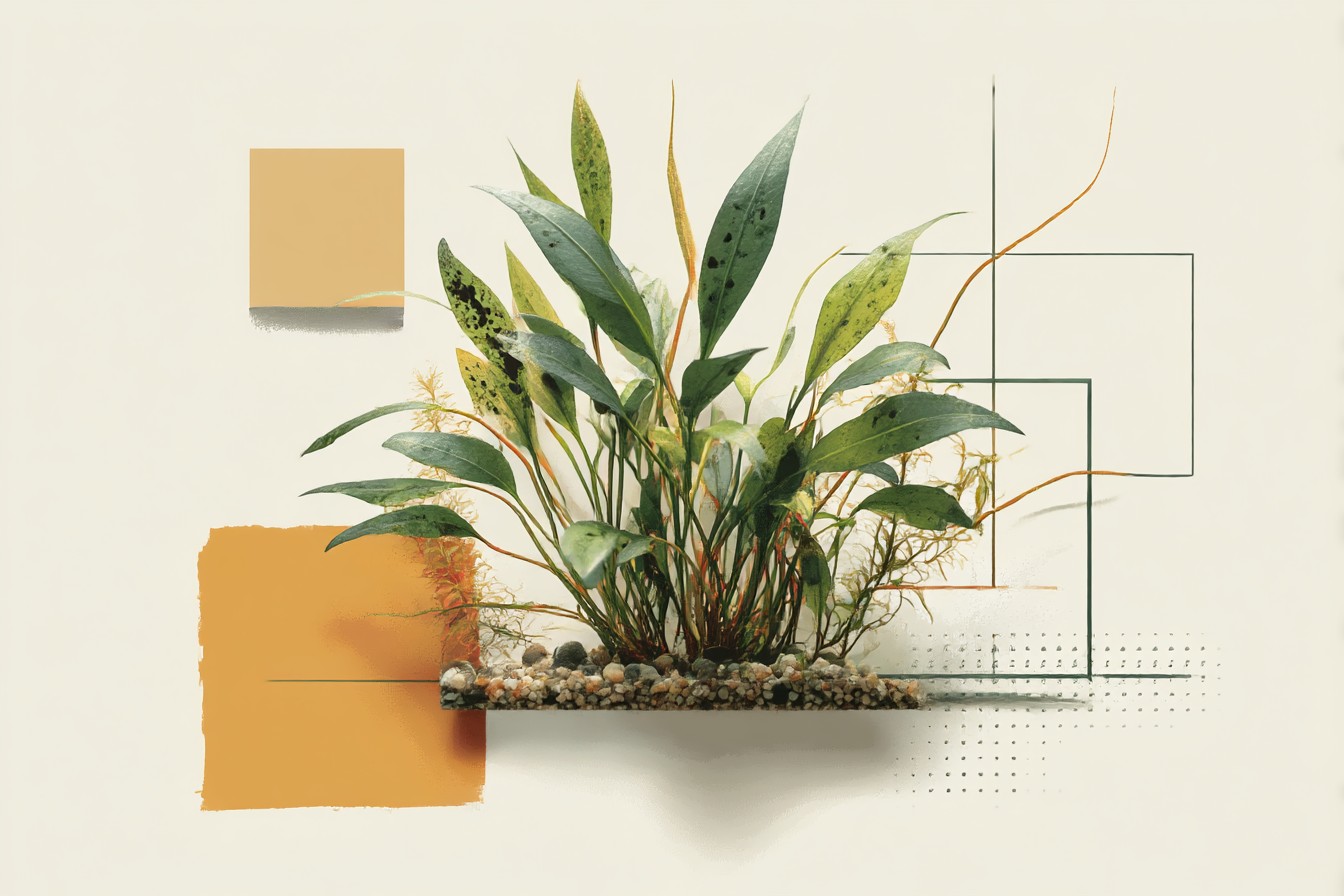
# Black Spots on Aquarium Plants and How to Identify Black Beard Algae You’re looking at your carefully curated planted tank and there it is—dark, fuzzy growths clinging to your Java fern leaves like unwelcome guests. These black spots might look insignificant at first, but they’re often the early warning sign of black beard algae, one of the most persistent problems planted tank keepers face. Left unchecked, what starts as a few innocuous spots can transform your aquascape into a tangled mess of dark, stringy growth that smothers plants and ruins months of careful work.
I learned this the hard way in my first serious planted setup. What I initially dismissed as harmless dark spots on a few older leaves gradually spread until entire plants looked like they’d been draped in black thread. By the time I understood what I was dealing with, I’d lost two expensive Cryptocoryne specimens and spent weeks battling an infestation that could have been stopped early with proper identification and intervention.
Understanding black beard algae matters because it’s fundamentally different from other algae types. While green algae often indicates simple imbalances that respond to basic adjustments, black beard algae signals deeper stability issues in your tank’s ecosystem.

The good news is that once you know how to identify it early and understand what drives its growth, it becomes entirely manageable—even in small flat setups with budget constraints. ## The Science Behind Black Beard Algae Growth **Classification and Biology**: Black beard algae isn’t actually an algae in the traditional sense.
It’s a red algae (Rhodophyta), specifically *Audouinella* species, which explains why it often appears red when it dies (FishLab). This distinction matters because red algae respond differently to treatments and environmental changes than the green algae most aquarists are familiar with. **Growth Conditions**: The fundamental driver of black beard algae growth is the balance triangle of light, CO2, and nutrients (PlantedBox). When these three elements aren’t properly balanced, plants can’t efficiently utilise available resources, leaving excess nutrients that feed algae growth.
Unlike some algae that thrive on high nutrients alone, black beard algae specifically exploits instability—fluctuating CO2 levels, inconsistent lighting schedules, or nutrient deficiencies that stress plants. **Growth Pattern**: Black beard algae starts as small fuzz spots that can become thick bushy growth if untreated (FishLab). This progressive growth pattern means early intervention is crucial. In my nano shrimp tanks, I’ve observed that the algae tends to establish first on slow-growing plants like Java fern and Anubias, particularly on older leaves with slower metabolisms that can’t compete effectively for available nutrients. **Environmental Triggers**: Research consistently shows that unstable conditions, rather than specific parameter ranges, trigger black beard algae outbreaks.
Tanks with consistent parameters—even if not “perfect”—rarely develop significant infestations, while tanks with fluctuating conditions almost inevitably do. ## Identifying Black Beard Algae: Visual and Physical Characteristics **Colour Variations**: One of the most confusing aspects of identifying black beard algae is that it’s not always black. The algae can range in colour from dark green to grey to deep black (FishLab). In my experience, newly established colonies often appear dark green or greyish, darkening to black as they mature.
This colour variation means you can’t rely on colour alone for identification. **Texture and Attachment**: The definitive identifying characteristic is texture. Black beard algae forms short, branching filaments that create a fuzzy or brush-like appearance. Unlike hair algae, which forms long, flowing strands, black beard algae creates dense, stubby growths that feel rough to the touch.
The algae attaches firmly to surfaces—you can’t simply brush it off like some other algae types. **Preferred Locations**: Black beard algae shows distinct preferences for attachment sites. It most commonly appears on: – Slow-growing plant leaves, particularly older specimens – Hard surfaces like driftwood, rocks, and filter equipment – Areas with higher water flow, particularly near filter outlets – Plants with waxy or smooth leaf surfaces like Anubias and Java fern In my small flat setups, I consistently see it appear first on the edges of Java fern leaves near my small circulation pump, confirming its preference for flowing water and slower-growing plant tissue. **Growth Stages**: Early identification is crucial because the growth pattern is predictable. Stage one shows small, dark spots or patches that might be mistaken for plant deficiencies or other issues.
Stage two develops the characteristic fuzzy texture as filaments branch and multiply. Stage three creates dense, thick mats that can completely cover plant surfaces and seriously impact plant health. ## Primary Treatment and Prevention Strategies **Hydrogen Peroxide Spot Treatment**: For localized infestations, hydrogen peroxide provides effective spot treatment. The safe starting dose is 1 mL per 10 gallons for general tank treatment (The Aquarium Expert), with a maximum safe dose of 1.5 mL of 3% hydrogen peroxide per gallon for more aggressive treatment (Aquifarm).
For spot treatment, dilute the peroxide and apply directly to affected areas using a syringe (IERE). I use this method regularly in my nano tanks where removing plants for treatment isn’t practical. Turn off the circulation pump, use a small syringe to apply diluted peroxide directly to the affected areas, wait five minutes, then turn the pump back on.
The algae typically turns red within 24 hours—the telltale sign that the treatment is working. **Lighting Management**: Proper lighting control forms the foundation of prevention. Start with 6-8 hours of lighting daily (Aquarium Co-Op) and maintain absolute consistency in your lighting schedule. I use basic timer plugs from the hardware shop—they cost under £5 and eliminate the lighting fluctuations that contribute to algae outbreaks. **CO2 and Nutrient Stabilization**: The most critical factor is maintaining stable CO2 levels rather than achieving specific targets.
If you’re not using injected CO2, ensure your tank isn’t overstocked and maintain consistent surface agitation. For low-tech setups like mine, I rely on regular small water changes—10% twice weekly—to maintain stable nutrient levels without the complexity of dosing systems. **Plant Competition**: Healthy, fast-growing plants are your best defence. Even in budget setups, prioritise plants that grow quickly and compete effectively for nutrients.
In my nano tanks, I maintain at least 30% plant coverage with species like Hygrophila, Rotala, or even floating plants like water lettuce to outcompete algae for available nutrients. | Treatment Method | Cost Range (£) | Effectiveness | Time to See Results | Best Used For | |——————|—————-|—————|———————|—————| | Hydrogen peroxide spot treatment | £2-5 | High for localized spots | 24-48 hours | Early infestations, specific plants | | Lighting adjustment | £5-15 (timer) | High for prevention | 2-3 weeks | All tank types, prevention focused | | Increased water changes | £0 (just time) | Medium-high | 1-2 weeks | Budget option, general stability | | Plant additions | £10-30 | High for long-term control | 4-6 weeks | All setups, sustainable solution | ## Common Treatment Mistakes
Mistake #1: Relying only on chemical treatments. Many aquarists grab algaecides or overdose hydrogen peroxide thinking they can kill their way out of the problem. Chemical fixes alone do not solve underlying instability and imbalance (2Hr Aquarist). You might clear existing algae, but without addressing root causes, it returns within weeks, often worse than before.
Mistake #2: Dramatic lighting changes. Seeing algae and immediately cutting lighting to 4 hours daily or switching to completely different spectrum bulbs creates more instability.
Plants need time to adjust to changes, and dramatic shifts often stress plants more than algae, making the problem worse.
You Might Also Like
Mistake #3: Removing all affected plants. While it’s tempting to strip out heavily affected specimens, removing too much plant mass at once eliminates your natural algae competition and can cause ammonia spikes from decaying root systems. Remove the worst affected leaves, not entire plants, unless they’re beyond saving.
Mistake #4: Inconsistent treatment schedules. Starting spot treatments, doing them for three days, stopping for a week, then starting again creates exactly the kind of instability that feeds algae growth. Whatever treatment protocol you choose, maintain it consistently for at least three weeks before evaluating effectiveness.
Mistake #5: Ignoring water flow patterns. Black beard algae loves areas with good water movement, but many aquarists focus only on nutrients and lighting.
If you don’t address the flow patterns that concentrate nutrients in certain areas, treatments often fail because you haven’t changed the conditions that allow the algae to thrive.
Mistake #6: Expecting immediate results. Algae problems develop over weeks or months, but people expect solutions in days. Even effective treatments need 2-3 weeks to show clear results, and full control often takes 6-8 weeks of consistent management.
## Research-Based Evidence for Treatment Effectiveness Multiple studies confirm that addressing root causes proves more effective than reactive treatments alone. The recurring theme in aquaculture research is that stable environments resist algae establishment, while unstable conditions promote it regardless of absolute parameter values.
Hydrogen peroxide’s effectiveness stems from its oxidation mechanism, which damages algae cell walls more readily than plant tissue when used at proper concentrations. Field observations from thousands of aquarists confirm that spot treatments work best when combined with environmental management rather than used as standalone solutions. The lighting research is particularly relevant for flat-dwellers with limited natural light.
Studies consistently show that consistent photoperiods, even at moderate intensities, outperform high-intensity lighting with irregular schedules for preventing algae while maintaining plant health. ## Application Across Different Tank Types **Nano Tanks (10-20 litres)**: Focus on plant density and consistent water changes. Small volumes amplify fluctuations, so 10% water changes twice weekly work better than larger weekly changes. Use floating plants or carpeting species to maximise plant coverage in limited space. **Low-Tech Community Tanks (100-200 litres)**: Emphasise plant diversity and natural competition.
Fast-growing stem plants like Hygrophila and Rotala outcompete algae effectively without CO2 injection. Maintain 8-hour photoperiods with timer controls. **High-Tech CO2 Setups**: Stabilize CO2 delivery with quality regulators and maintain consistent injection schedules. Monitor pH swings to ensure CO2 levels remain stable throughout the lighting period. **Shrimp Breeding Tanks**: Lower bioloads mean less nutrient availability for algae, but also less plant nutrition.
Use root tabs for slow-growing plants and maintain stable water parameters to avoid stressing breeding populations. **Quarantine Systems**: Prevent introduction by treating new plants with diluted hydrogen peroxide before adding to main tanks. Simple preventive measures in quarantine save weeks of treatment in established systems. ## Key Benefits of Proper Black Beard Algae Management **Long-Term Tank Stability**: Properly managed tanks develop natural resistance to algae outbreaks. Once you establish stable conditions, maintenance becomes significantly easier, requiring only routine care rather than constant problem-solving.
This stability typically develops within 8-12 weeks of implementing consistent management practices. **Plant Health and Growth**: Plants in algae-free environments show dramatically improved growth rates and coloration. Without competing for nutrients and light, established plants focus energy on healthy development rather than survival, often showing visible improvement within 3-4 weeks. **Reduced Maintenance Time**: While initial treatment requires attention and consistency, properly managed tanks actually need less long-term maintenance. Instead of spending time fighting algae outbreaks, you’ll spend time on enjoyable activities like pruning healthy growth and planning new plantings. **Financial Benefits**: Prevention costs significantly less than treatment.
A basic timer and consistent water change routine cost under £20 and prevent problems that might require plant replacement, chemical treatments, or equipment upgrades worth hundreds of pounds. **Aquascaping Flexibility**: Tanks without persistent algae problems give you freedom to experiment with new plants, adjust layouts, and try different species without worrying about creating conditions that trigger outbreaks. **Livestock Health**: Stable planted environments benefit fish and invertebrates through better water quality and reduced stress. Many fish species show improved coloration and breeding behaviour in well-managed planted tanks. ## Step-by-Step Implementation Guide **Phase 1: Assessment and Immediate Stabilization (Week 1-2)** Start by documenting current conditions. Test water parameters, measure actual lighting duration, and photograph affected areas for progress tracking.
Implement basic stability measures immediately: install a timer for consistent lighting at 7 hours daily, begin 10% water changes twice weekly, and remove the most heavily affected plant material.

Watch for reduction in new algae growth and note any colour changes in existing patches. The goal isn’t elimination yet—it’s stopping further spread while you establish stable conditions. **Budget Breakdown:** * Basic plug timer: £5-8 * Test kit (if needed): £15-25 * Hydrogen peroxide 3%: £2-3 **Phase 1 Total: £22-36** **Phase 2: Targeted Treatment and Plant Competition (Week 3-6)** Begin hydrogen peroxide spot treatments using 1mL per 10 litres for general dosing or localized application for specific spots.
Add fast-growing plants to increase nutrient competition—even budget options like Hygrophila or floating plants make significant differences. Monitor for algae die-back (turning red or dissolving) and improved plant growth. Existing black beard algae should start changing colour within the first week of treatment, and you should see noticeably less new growth by week four. **Budget Breakdown:** * Plant additions: £15-30 * Hydrogen peroxide ongoing: £2-3 * Possible equipment adjustment: £10-20 **Phase 2 Total: £27-53** **Phase 3: Long-Term Prevention and Optimization (Week 7-12)** Focus shifts to preventing recurrence through environmental optimization.
Fine-tune lighting duration based on plant response—you might increase to 8 hours if plants show good growth without algae return. Establish maintenance routines that maintain stability: consistent water changes, regular parameter monitoring, and prompt removal of decaying plant matter. Success indicators include no new black beard algae growth, healthy plant development, and stable water parameters requiring minimal intervention. **Budget Breakdown:** * Maintenance supplies: £5-10 monthly * Optional upgrades based on results: £20-50 * Additional plants if expanding: £10-30 **Phase 3 Total: £35-90** **Total Implementation Budget: £84-179** The investment pays for itself quickly when you consider the cost of replacing dead plants or buying expensive algaecides that treat symptoms rather than causes.
More importantly, you’ll have gained the knowledge and systems to prevent future outbreaks, making this a one-time learning investment rather than an ongoing battle. Success with black beard algae comes down to understanding that it’s a stability issue, not just an algae problem. Focus on creating consistent conditions rather than perfect parameters, and you’ll find that prevention becomes straightforward and sustainable, even in budget setups where every pound matters.


