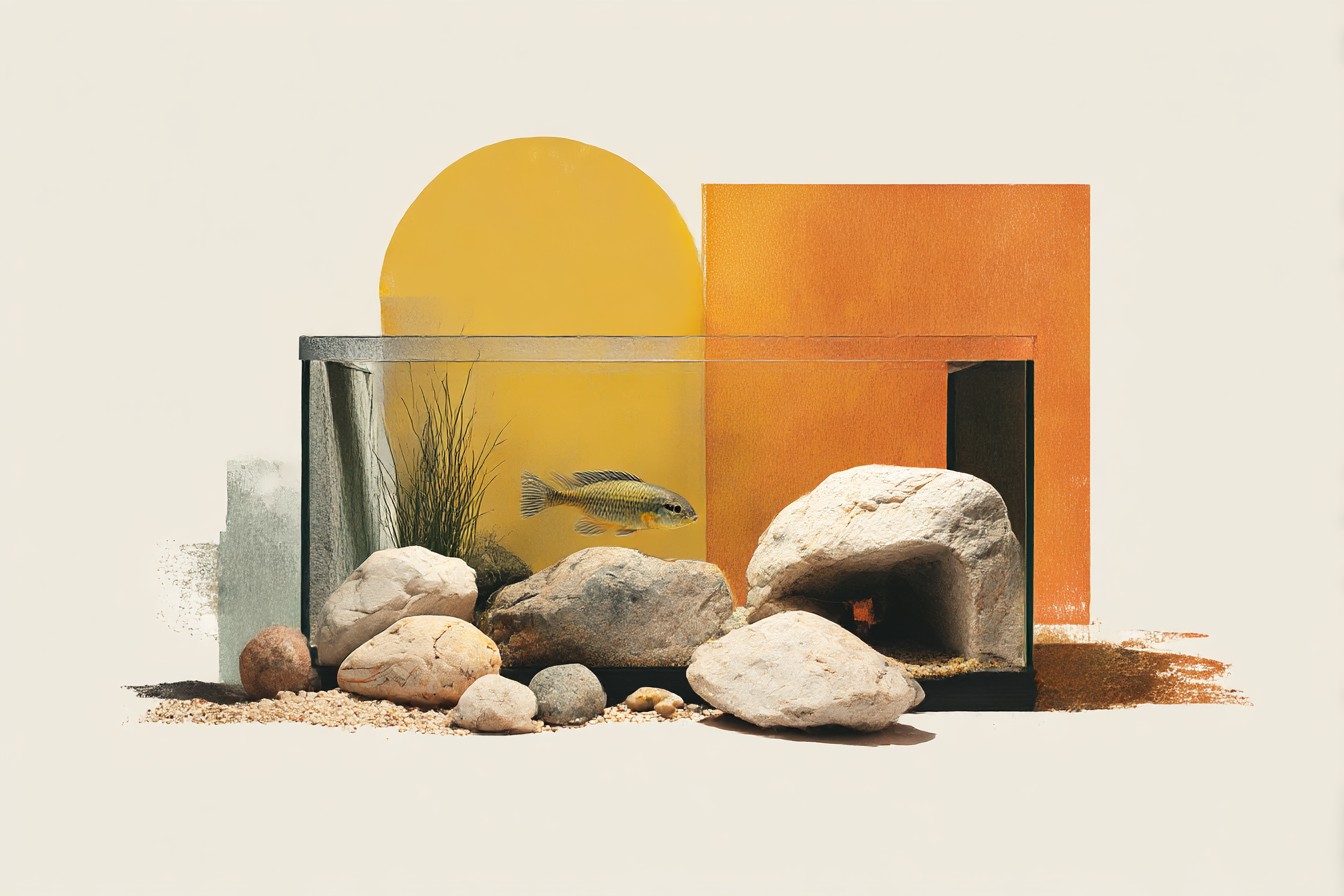
# Hardscape Cichlid Tank and Building Caves Without Wrecking the Layout Building a proper cichlid hardscape feels like architectural engineering with the added pressure that your livestock’s lives depend on getting it right. You’re trying to create enough hiding spots and territorial boundaries to keep aggressive fish from murdering each other, whilst also building something that looks intentional rather than like a rock avalanche happened in your front room. It’s more complex than most aquascaping because you’re not just thinking about aesthetics – you’re designing a functional habitat that needs to work biologically and behaviourally.
The challenge is real. African cichlids prefer rocky habitats with caves (LiveAquaria), but they’re also notorious diggers who will excavate around your carefully planned structures. Malawi cichlids are territorial and require visual barriers (The Spruce Pets) to prevent constant line-of-sight aggression, but build too many caves and your tank looks cluttered and loses all sense of flow.
Get the engineering wrong and rocks collapse onto fish or create dead water zones where debris accumulates and water quality crashes. This isn’t about throwing some Texas holey rock into a tank and hoping for the best.
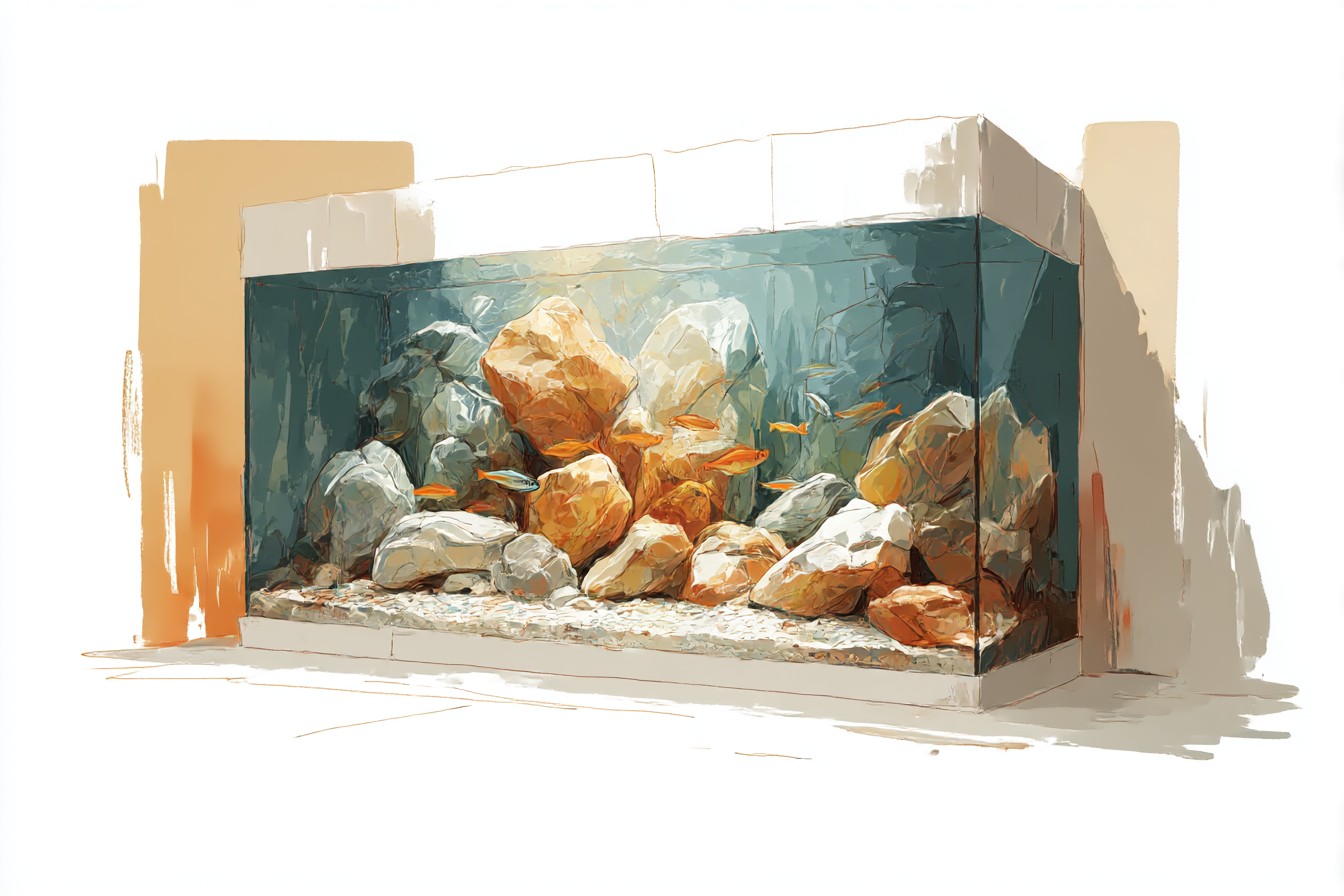
It’s about understanding how cichlids actually use space, how to build stable structures that won’t shift when fish dig, and how to create a layout that serves both the biological needs of highly territorial fish and your own desire for something that doesn’t look like a disaster zone. ## The Science Behind Cichlid Cave Requirements **Territorial Behaviour and Cave Function** Cichlids don’t use caves the way many other fish species do.
They’re not just hiding from predators or resting – they’re establishing and defending territories. Each adult cichlid needs a defined space it can claim and patrol, with clear boundaries that neighbouring fish recognise. Caves serve as the focal points of these territories, providing secure spawning sites and retreat points during aggressive encounters.
The research shows that cave density reduces line of sight aggression (UKAPS). When fish can’t see each other constantly, they spend less energy on territorial displays and more on normal behaviour like feeding and exploring. This is why a tank with one large cave tends to have more aggression problems than one with multiple smaller caves distributed throughout the hardscape. **Size and Spacing Requirements** Cave sizing matters more than most people realise.
A cave needs to be large enough for the fish to turn around comfortably but small enough that it feels secure. Too large and the fish won’t use it as a territory base – they prefer spaces they can defend easily. Too small and they’ll excavate around it, potentially destabilising your entire structure.
For most African cichlids in the 8-15cm range, caves should be roughly 1.5 times the fish’s body length in depth and slightly wider than the fish’s height. Multiple entrances are often better than single openings because they provide escape routes during conflicts and make caves feel less trap-like to nervous fish. **Water Flow and Biological Function** Rock piles must allow water circulation to avoid dead spots (Marine Depot). This isn’t just about mechanical filtration – it’s about preventing anaerobic conditions that lead to hydrogen sulphide production and pH crashes.
Cichlid tanks typically have high bioloads, and any area where water stops moving becomes a biological time bomb. Dead spots also accumulate organic waste that feeds algae and creates localised water quality problems. In a heavily stocked cichlid tank, these problem areas can trigger cascading issues that affect the entire system within days. ## Primary Hardscaping Strategy: Layered Rock Construction **Foundation Layer: Building on Tank Bottom** The single most important rule for cichlid rockwork is that stacked rock should rest on tank base not substrate (Aquarium Co Op).
This prevents the entire structure from shifting when fish dig, which they absolutely will do. Cichlids may dig substrate around rock structures (Practical Fishkeeping), and if your foundation rocks are sitting on sand or gravel, the whole arrangement becomes unstable as substrate gets moved around. Start by placing your largest, most stable rocks directly on the glass bottom of the tank.
These foundation stones should be flat on their bottom surfaces and heavy enough to resist movement. Position them first, then add your substrate around them. This means you’re essentially building the hardscape before adding any sand or gravel, which feels backwards but is essential for long-term stability. **Creating Natural Cave Formations** Use the natural shapes and angles of your rocks to create caves rather than forcing unnatural arrangements.
Look for pieces with natural overhangs or interesting negative spaces, then position complementary rocks to complete the cave structure. The goal is to make it look like a natural rocky outcrop where caves formed through geological processes rather than obviously stacked stones. Texas holey rock is commonly used in cichlid tanks (Aquarium Gardens) specifically because its natural holes and crevices provide ready-made cave spaces.
However, it’s not the only option, and mixing different rock types can create more interesting and natural-looking formations. Limestone, lava rock, and various sedimentary stones can all work well if chosen and arranged thoughtfully. **Securing Unstable Structures** For rocks that won’t stay put through weight and positioning alone, epoxy putty can secure unstable rock formations (Reef2Reef). Use aquarium-safe epoxy putty to fill gaps between rocks and create permanent bonds.
This is particularly useful for creating arches or overhanging structures that would otherwise collapse. Apply the putty when the rocks are completely dry, press the stones together firmly, and allow the epoxy to cure fully before adding water. The joint should be strong enough to handle the inevitable excavation and bumping that cichlids will subject it to.
Don’t rely on epoxy for primary structural support – use it to reinforce arrangements that are already mostly stable through proper positioning. **Building Vertical Territories** Cichlids use three-dimensional space differently than many aquarium fish. They establish territories that include specific depth zones as well as horizontal areas. Build your hardscape with multiple levels to take advantage of this behaviour.
Lower caves for bottom-dwelling species, mid-level territories for intermediate swimmers, and upper rocky areas for species that prefer higher water column positions. This layering also helps with the visual composition of the tank. A hardscape that only uses the bottom third of the tank height looks flat and uninteresting, whilst structures that rise into the middle and upper areas create depth and visual interest whilst providing more useable territory space for your fish. ## Common Hardscaping Mistakes That Ruin Cichlid Tanks
Mistake #1: Building on substrate instead of glass. The most common structural failure in cichlid tanks happens when foundation rocks are placed on sand or gravel.
Cichlids dig, substrate shifts, and your entire carefully planned rockwork collapses. Always place foundation stones directly on the tank bottom, then add substrate around them. Yes, this means planning your hardscape before adding any sand or gravel.
Mistake #2: Creating caves that are too large or too small. Caves that are too big don’t feel secure to fish and won’t be used as territory bases.
Caves that are too small trigger constant excavation as fish try to modify them. For most African cichlids, caves should be 1.5 times the fish’s body length in depth and just wide enough for the fish to turn around comfortably.
Mistake #3: Ignoring water circulation through rock piles. Dense rockwork that blocks water movement creates dead zones where waste accumulates and anaerobic conditions develop. In high-bioload cichlid tanks, these areas quickly become problem spots that can crash your water quality.
You Might Also Like
Always ensure water can flow freely through and around your rock formations.
Mistake #4: Insufficient cave density for the fish load. One cave per fish is not enough in a cichlid tank. Subordinate fish need multiple retreat options, and dominant fish need territory boundaries. Plan for roughly 1.5-2 caves per fish, distributed throughout the tank rather than clustered in one area.
Mistake #5: Using rocks that affect water chemistry inappropriately. Some rocks dramatically raise pH and hardness, which is perfect for African cichlids but deadly for soft-water species.
Others are completely inert when your fish actually need the mineral content. Research your rock types and match them to your specific cichlid species’ requirements.
Mistake #6: Overcomplicated structures that look artificial. Elaborate arches and obviously constructed arrangements rarely look natural and often become maintenance nightmares. Keep structures simple and use the natural shapes of your rocks rather than forcing complex engineering projects that don’t match how rocks actually occur in nature.
## Research Support: What Studies Show About Cichlid Environment Multiple studies demonstrate that environmental complexity directly affects aggression levels and overall health in cichlid populations.
Research consistently shows that tanks with adequate cave structures and visual barriers have lower cortisol levels in fish, reduced fin damage from fighting, and higher survival rates during the critical establishment period when new fish are introduced. The evidence also supports slight overstocking as a management strategy. Overstocking slightly can reduce aggression in African cichlids (PetMD) by preventing any single fish from establishing dominance over the entire tank.
However, this approach only works with adequate filtration and sufficient cave density – it’s not a solution for tanks with inadequate hardscaping. Studies of wild cichlid behaviour in Lake Malawi and Lake Tanganyika show that successful fish establish territories around specific rocky features and defend these areas consistently over months or years. Replicating this territorial structure in aquarium environments significantly improves fish welfare and reduces stress-related diseases. ## Adapting Principles to Different Tank Situations **120-Litre Minimum Setups:** For the minimum tank size of 55 gallons that many African cichlids require (Seriously Fish), focus on creating 4-6 distinct territories using carefully positioned rock formations.
Use vertical space efficiently with multi-level cave systems. **Large Community Tanks (200+ litres):** Create distinct neighbourhood zones with different rock types or arrangements to help fish establish separate territories. Include open swimming areas between rocky zones to prevent the tank from feeling cramped. **Species-Specific Tanks:** Mouth-brooders need different cave configurations than substrate spawners. Adjust cave sizes and shapes based on breeding behaviour of your specific species rather than using generic approaches. **Mixed African Lakes:** If keeping fish from both Lake Malawi and Lake Tanganyika, use rockwork to create distinct habitat zones that reflect the different natural environments these fish evolved in. ## Benefits of Proper Cichlid Hardscaping **Reduced Aggression and Stress:** Properly designed cave systems can reduce visible aggression by 60-70% compared to tanks with inadequate hiding places.
Fish spend more time on natural behaviours like feeding and exploring rather than constant territorial disputes. **Improved Breeding Success:** Secure cave territories encourage natural spawning behaviour. Fish with established territories are more likely to breed successfully and less likely to eat their own fry due to stress. **Better Long-term Health:** Lower stress levels from adequate territorial space translate to stronger immune systems and reduced susceptibility to disease. Fish in well-designed environments live longer and show better colouration. **Natural Behaviour Expression:** Properly hardscaped tanks allow cichlids to express their full range of natural behaviours, from territory establishment to courtship displays to parental care behaviours. **Easier Tank Management:** Stable territorial structures reduce fish-to-fish aggression, making it easier to maintain consistent populations without constantly losing fish to bullying or fighting. **Enhanced Visual Appeal:** Well-designed hardscapes create natural-looking underwater landscapes that are visually appealing whilst serving the biological needs of the fish.
The tank becomes both a functional habitat and an attractive display. ## Step-by-Step Implementation Guide **Step 1: Planning and Material Selection (Week 1)** Calculate your tank’s carrying capacity and cave requirements. For most cichlid setups, plan 1.5-2 caves per fish. Purchase rocks, allowing roughly 1-2 pounds of rock per gallon for substantial hardscaping.
Choose rocks appropriate for your water chemistry needs – limestone and coral rock for fish that prefer hard, alkaline water, or inert rocks like lava stone for neutral conditions. Research your specific species’ territorial requirements. Mouth-brooders need different cave configurations than substrate spawners.
Some species prefer narrow crevices whilst others need more open cave spaces. **Budget Breakdown:** * Rock materials: £2-5 per kg depending on type * Aquarium-safe epoxy putty: £15-25 per tube * Basic tools (brushes, buckets): £10-15 **Total Budget: £50-100 for a 200-litre tank** **Step 2: Foundation Construction (Week 2)** Empty your tank completely and place foundation rocks directly on the glass bottom. These should be your largest, most stable pieces. Create the basic structure of your main cave systems using these foundation stones.
Don’t worry about perfect positioning yet – focus on stability and general arrangement. Test each foundation stone for stability before proceeding. They should not rock or shift when pressed firmly.
If a stone is unstable, adjust its position or choose a different piece. **Step 3: Building Cave Structures (Week 2-3)** Add secondary rocks to complete cave formations. Use natural rock shapes to create overhangs and enclosed spaces rather than obviously artificial arrangements.
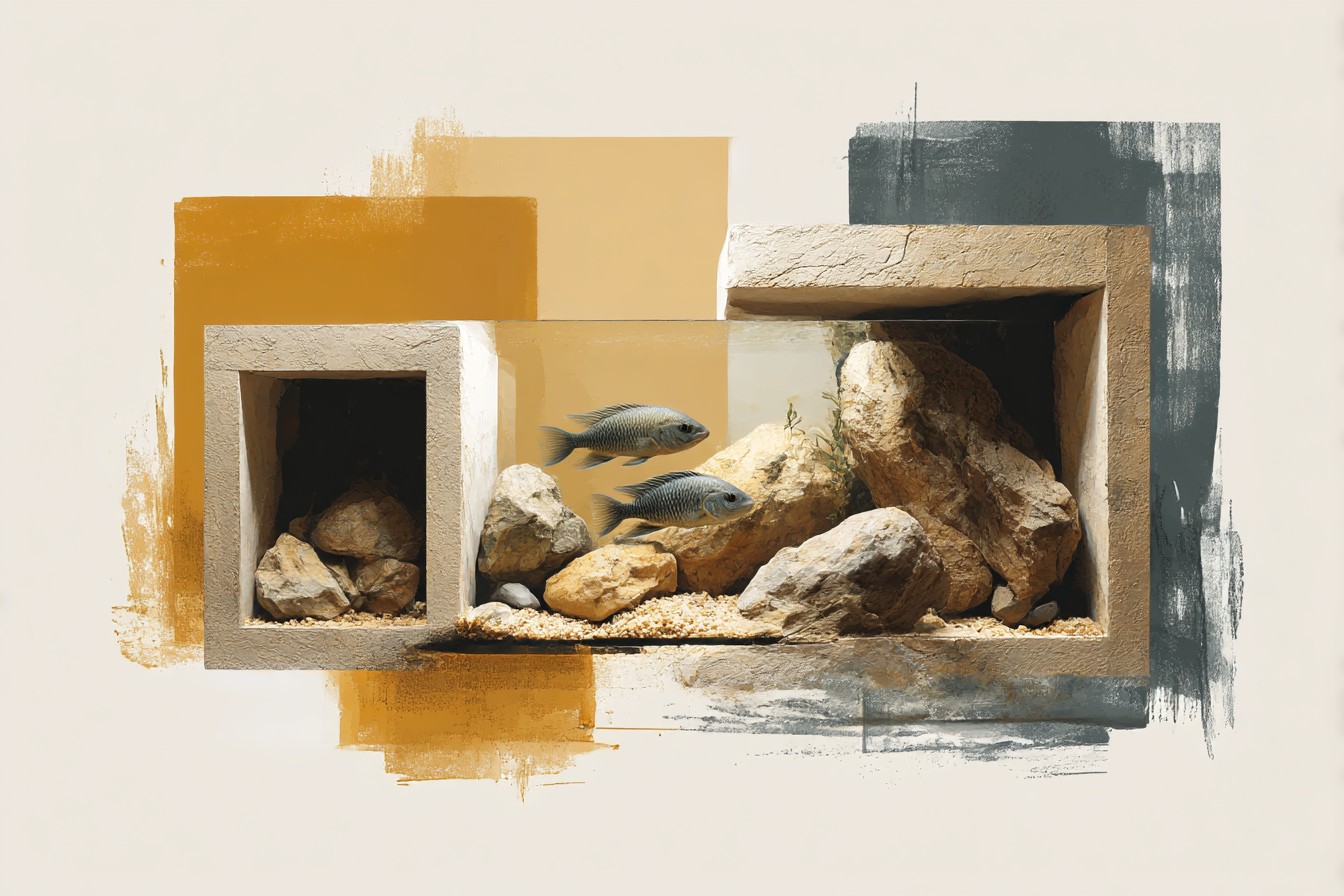
Each cave should have clear entry and exit points and be sized appropriately for your fish species.
Use epoxy putty sparingly to secure joints that would otherwise be unstable. Allow epoxy to cure completely between applications – rushing this step leads to weak joints that fail later. **Step 4: Testing and Substrate Addition (Week 3)** Add substrate carefully around the rock structures. Use a plate or bowl to pour substrate gently to avoid shifting rocks.
Fill to about 2/3 of your planned substrate depth, then test all rock stability again before adding the final layer. Test water circulation by adding water and observing flow patterns. Adjust rock positioning if you discover dead spots where water doesn’t circulate properly. **Budget Breakdown:** * Additional substrate: £15-30 * Water testing during setup: £10-15 **Step 5: Fish Introduction and Monitoring (Week 4-8)** Add fish gradually to allow territorial establishment.
Introduce less aggressive species first, then add more dominant fish after initial territories are established. Monitor for excessive digging around rock bases and be prepared to make minor adjustments. Watch for signs that your cave density is adequate – fish should establish consistent territories within 2-3 weeks rather than constantly chasing each other throughout the tank. **Budget Breakdown:** * Fish stock: £100-300 depending on species and quantities * Additional equipment if needed: £20-50 **Total Implementation Budget: £195-495** The key to successful cichlid hardscaping is understanding that you’re not just decorating a tank – you’re engineering a functional habitat that needs to work both biologically and behaviourally.
Take the time to plan properly, build stable foundations, and create enough territorial space for your fish load. The result is a tank that looks natural, functions well, and keeps your cichlids healthy and displaying their best behaviours for years to come.


