For the longest time I tried to figure out why my first colony of cherry shrimp wasn’t growing. The water parameters were perfect, the tank was fully cycled, and I was feeding them just as I thought they should be. Well… sort of.
What I had failed to understand was that shrimp mostly feed on biofilm (Shrimp Keepers Forum), and my brand new glass tank with four smooth river rocks just wasn’t providing enough. Learning this changed my whole perspective on shrimp tank hardscaping. Rather than picking pieces that looked good with my driftwood and plant selection, I learned to look at the rocks and wood from my shrimp’s perspective.
The hardscape in a shrimp tank isn’t there for beauty. It forms the foundation of the entire food web in your tank.
Get it right and you have dozens of little grazers happily picking throughout the day.
Get it wrong and you’ll find yourself constantly supplementing with expensive pellet and veggie foods while your colony stagnates. So what makes a hardscape successful or not? It comes down to texture and surface area.
Shrimp feast on layers of beneficial bacteria and algae that forms on any submerged surface. These microscopic life forms need space to colonise. Smooth surfaces like glass and polished rocks may look pretty in your display tank but they don’t have anywhere near the grazing potential of rough porous materials.
## How Biofilm Forms on Hardscape **Microbial Colonisation Patterns** Time is one of the biggest factors in how much your shrimp actually eat off of their hardscape.
Within hours of placing any object in your tank you’ll start to see microbial life colonising its surface. But it takes weeks for those complex multi layered structures we see covered in green biofilm to develop. As bacteria first adhere to surfaces they create conditions that allow other microorganisms to feed and reproduce on top of them.
It’s a layered process where each wave of colonisers attracts and feeds the next. Surface texture along with water flow and nutrient availability both play a role in this growth. Compared to smooth river rocks porous lava rock has ten times the area(Green Aqua) for bacteria to colonise because every microscopic groove and cavity provide places for microbes to take hold without being washed away.
This is why a small piece of pumice stone you throw into your tank will appear covered in thick layers of green algae and bacteria in a matter of weeks. A sleek-looking polished stone from the river bed may take months. **Surface Area Mathematics** Remember that hardscape isn’t decoration in your shrimp tank, it’s the meal ticket for your colony. A smooth sided 10cm cube of rock may only have around 600 square centimetres of total surface area on its exterior.
That same volume of porous rock could provide hundreds if not thousands more when you account for every microscopic crevice. Which means more grazing zones (Buce Plant) for microorganisms translates directly to more food for your shrimp. This is important than most people realise.
A perfectly healthy colony of say cherry shrimp could contain upwards of 50 adults living in a 40 litre tank. Each of those shrimp is going to spend several hours a day grazing if enough food is available. Without adequate surface area for biofilm to develop you end up with too many shrimp competing for food and your breeding rate will plummet.
I’ve had tanks where adding a single piece of appropriately chosen driftwood doubled the number of shrimp I could visibly see throughout the day within weeks. **Water Parameters Matter** Of course water parameters have an effect on biofilm formation as well. Rocks like limestone that are high in carbonates will slowly raise both pH and KH over time. That’s fine for Neocaridina shrimp who like hard alkaline water but not so much if you’re keeping Caridina who prefer softer acids conditions.
Wood varies too, with some species being naturally acidic and others neutral. Oak and beech leaves will leach tannins into your tank lowering the pH gradually. That can benefit shrimp like bee shrimp that require soft water with GH remaining below 6 degrees (Seriously Fish).
Biofilm doesn’t just feed your shrimp however, it helps buffer your water parameters as well. Beneficial bacteria have a tremendous capacity to absorb both nutrients and contaminants. Once established colonies of microbes actually protect your tank against sudden parameter swings.
This is part of the reason why Neocaridina shrimp do best in stable environments with mature hardscape/scapes(The Spruce Pets). Water parameters effect both the starting point and where your tank will end up once biofilms have matured. ## The Best Materials for Promoting Biofilm Growth **Driftwood: Species and Selection** Driftwood has to be close to the best thing you can add to a shrimp tank when it comes to promoting biofilm growth. Driftwood creates microbial layers (Practical Fishkeeping) with all the microtexture the shrimp in your tank need to thrive.
Branches and knots in the wood fibre provide microscopic spaces bacteria can colonise. Plus all the organic detritus leaching out of the wood itself becomes a food source for microbes. Not all driftwood is equal when it comes to growing biofilm though.
Certain types of wood like cholla wood algae love (Aquarium Co Op) are faster at producing good grazing material than others. That’s because of how quickly they break down. Cholla wood will literally be covered in visible biofilm in less than two weeks if you keep it in a mature tank.
A month and every bit of surface area you can see plus a lot you can’t will be covered in beneficial bacteria. That being said cholla wood isn’t the most cost effective option at around £8 per piece even for cheap looking pieces you find at the LFS. Other durable options like Manzanita and spider wood create biofilm nearly as fast without falling apart after a few months in your tank.
Expect to pay at least twice as much but these will last for years. **Rocks: Lava and Beyond** If driftwood is king then lava rock is the queen. Prices are low at around £2-4 per kg and it’s some of the most porous material you can find for shrimp tanks. Don’t let the bleak grey colour fool you either.
Lava rock develops biofilm just as quickly as any other material once placed in your aquarium. In fact small pieces will visibly show signs of bacterial and algal growth in just days. Its rough textured surface and maze like internals are a dream come true for grazing shrimp.
I prefer it to seiryu stone which is functionally the same but twice as expensive. Both are fantastic for Neocaridina shrimp. If you’re keeping Caridina shrimp or species like bee shrimp that prefer softer water go with slate or granite instead.
Either of these aqua-scaping rocks works just as well as limestone based stones do for biofilm production but without the KH spike. Dragon stone is a relative newcomer to shrimp keeping but deserves mention. It looks fantastic, has great porosity, and produces biofilm at the same rate as lava rock.
That being said it is expensive costing between £15-30 per kg and often difficult to find depending where you live. **Leaf litter: Don’t Forget the L** Speaking of bee shrimp and things that like softer water, leaf litter is one of the single best ways to provide both food and hiding spaces for shrimp. Leaf litter food shrimp naturally (PetMD) because when those leaves break down they form many of the same microscopic landscapes bacteria love to colonise. Oak leaves are the standard go-to for most people, and you can get them for free if you live where there’s plenty of oak trees.
Problem is they take FOREVER to break down otherwise. Indian almond leaves on the other hand cost about a quid each but are ready to use right out of the bag. Either will be completely covered in visible biofilm in your tank within a week of adding them, and provides all the food several shrimp will need for days.
Buy too few and your shrimp spend more time looking for food then actually eating. My rule of thumb is 2-3 leaves per month for a mature tank stocked with 40-50 adult shrimp. ## Common Hardscape Selection Mistakes
Mistake #1: Using only smooth materials. Smooth clean surfaces look pretty but don’t provide the grazing surface area your shrimp need. Glass pebbles and polished rocks are two of the worst offenders.
Even if they seem like they have plenty of texture under the microscope shrimp will avoid eating off them for weeks or months. The end result is hungry shrimp and low breeding rates no matter how good your water parameters might look.
Mistake #2: Over cleaning rocks and driftwood. One of the most overlooked steps in cycling a new tank is adding hardscape while it’s cycling. If you wash the rocks and driftwood in chlorinated tap water before adding them you’re killing half the bacteria that would have given you a head start on biofilm production.
You Might Also Like
Just rinse rocks to remove loose soil before adding them. The slimy look you’ll see on “dirty” aquarium rocks is a perfectly healthy biofilm beginning to form.
Mistake #3: Too little hardscape for your colony size. One chunk of driftwood is never going to be enough for half a dozen adults. A good rule of thumb is 1kg of usable surface area per 20-30 adults if you’re keeping Neocaridina shrimp.
Caridina shrimp are smaller but harder to breed so you’ll want even more porus surface per shrimp. Think of it this way too many shrimp means they have to compete for food and available hiding spots which leads to less breeding.
Mistake #4: Fighting Your Water Parameters Want your tank to slowly turn into a lake over time? Use limestone rocks with your Caridina shrimp.
Like them really soft? Throw some acidic woods in your Neocaridina tank and watch the pH plunge. Pick hardscape that matches the water parameters you want to keep shrimp happy or you’ll spend all your time trying to correct swings rather than enjoying your colony.
Mistake #5: Adding Hardscape After Fish/Shrimp While adding hardscape to an already cycled tank won’t hurt your fish or shrimp it will set back biofilm production and impact water parameters.
Newly added driftwood/swords/corals are going to pull nutrients from the water column as they cycle. Add them before you stock or at least during the cycling process so you’re not gambling with expensive shrimp.
Mistake #6: Ignoring Flow Around Hardscape Sunken woods that offer shrimp tons of surface area are great, but if your filter is blasting water directly against it you’re not going to get much biofilm growth. Likewise pointing all your rockwork so water only flows through gaps but never touches any surfaces won’t do you any good either.
Position your filter output(s) so water flows over and around hardscape. No stagnant areas or areas of high flow. Sponge filters are great for shrimp tanks because they provide flow without hurting shrimp.
## Scientific Research Supporting Hardscape Feeding Researchers once assumed that staple commercial foods were nutritionally complete enough for shrimp and crayfish.
We now know that isn’t true and the bulk of a healthy colony’s diet does indeed come from biofilm. As one of the largest constituents of that biofilm multiple peer reviewed studies have demonstrated that shrimp and crayfish get more than enough proteins, carbohydrates, and essential amino acids from natural foods alone. Protein digestion is more efficient in shrimp that graze on biofilms then from processed pellets leaving less waste to deal with.
Perhaps most importantly research tracking wild populations of crayfish confirm that they spend more time grabbing food off of rocks and logs than they do picking at food particles suspended in the water column. There is still a lot we don’t know about what particular shrimp species eat in the wild. However when it comes to keeping them in aquariums the importance of proper hardscape selection cannot be overstated.
No other single factor I’ve found comes close to having as great an impact on your overall shrimp keeping success. ## Choosing the Right Hardscape for Species Types While Neocaridina are hardy and somewhat forgiving you still need to watch water parameters when planning a shrimp tank. Bee shrimp, crystal reds, and other Caridina shrimp kept outside their preferred parameters have a far higher failure rate. Sticking with inert rocks will let you avoid worrying about accidental pH swings.
Driftwood needs to be chosen carefully too as some releases tannins that can affect sensitive shrimp species. Of course Sulawesi shrimp are another story entirely. They live in hard alkaline water and will rapidly lose coloration or die if kept in soft acidic water.
Just as you would stock appropriately for your fry’s safety and tank size you need to build your shrimp tank habitat with the proper species in mind. ## Benefits of Feeding off Hardscape **Large colony sizes with high breeding volume. ** Once established properly maintained tanks favour grazing over scavenging. Superfoods might sound like a good idea but your shrimp will spend more time looking for food then eating if all you have to offer is supplemental feed. Antibacterial properties of biofilms can **reduce diseases outbreaks. ** Many of the beneficial bacteria that colonise surfaces in your shrimp tank are the same bacteria that will outcompete pathogens.
Providing plenty of good real food helps to keep potentially harmful microbes from filling that niche. **Holds lower concentrations of nutrients. ** Like a garden bed extra surface area holds biomass. More grazing space for shrimp equals more microorganisms feeding on and consuming excess nutrients. This won’t replace water changes but you may find yourself doing them less often.
All the things I love about shrimp keeping. Natural behaviours have a way of fading into the background when you’re missing something as simple as proper hardscape. **Watching your shrimp scurry about grazing on algae and bacteria is infinitely more rewarding then watching them hide all day because they’re either starving or being eaten. ** When I first switched over to predominantly biofilm/veggie feeding with my own tanks I was shocked at how active my shrimp became just from changing how I approached hardscape. ## Building your Successful Shrimp Hardscape **Step 1: Planning (1 Week)** Decide what shrimp you want to keep and start researching which hardscape materials will work best with their water parameters. Place any orders you need for rocks, wood or specialty leaves early as these can sometimes take time to source locally.
Budget £30-60 for a standard 60 litre shrimp tank depending on the materials you pick. Do a few test dips to see what your baseline water parameters are. Buy a decent test kit that measures GH, KH, and pH as these are crucial to matching with shrimp species as well as keeping up with any changes that occur over time. **Estimated Budget:** * Water test kit: £15-25 * Rocks, driftwood, leaves: £20-40 * Substrate (optional): £15-30 **Step 2: Cycling (Weeks 2-6)** Add your hardscape while you setup your tank not after.
Hiding places and food will grow with your biofilm during the cycle. Don’t forget to plan where your filter will go so you create proper flow patterns around hardscape. Stagnant areas and dead spots will collect detritus while flipping all your rocks clean defeats the purpose.
Tip: : Shrimp tanks benefit greatly from sponge filters(LiveAquaria) attached to something like an air stone. This lets you manage flow rates without worrying about hurting shrimp that might crawl into the output pipe. **Step 3: Establishing Biofilm (Weeks 7-9)** Once you’ve got ammonia and nitrites consistently at 0ppm its time to grow some biofilm. Add a few leaves to your shrimp tank and wait.
In my experience you should see discernible biofilm growth on porous surfaces within a few days of your cycle ending. If using Indian almond leaves or prepared oak you can add them now. Patience is a virtue they don’t teach you in school.
Just because your cycle is complete doesn’t mean its time to add shrimp. More often then not I’d recommend waiting another month after cycle completion. This gives biofilms a chance to truly establish and gives you time to find quality shrimp from trusted breeders. **Estimated Budget:** * Leaf litter: £10-15 * Rocks/DAdditions to your hardscape: £10-20 **Step 4: Adding Shrimp (Weeks 10-12)** Stock your tank slowly.
Rather than getting the full adult number of shrimp you want right out the gate start small and let your population grow. Not only does this prevent over competition when your biofilm is still maturing its easier to identify stressful behaviour in a smaller colony.
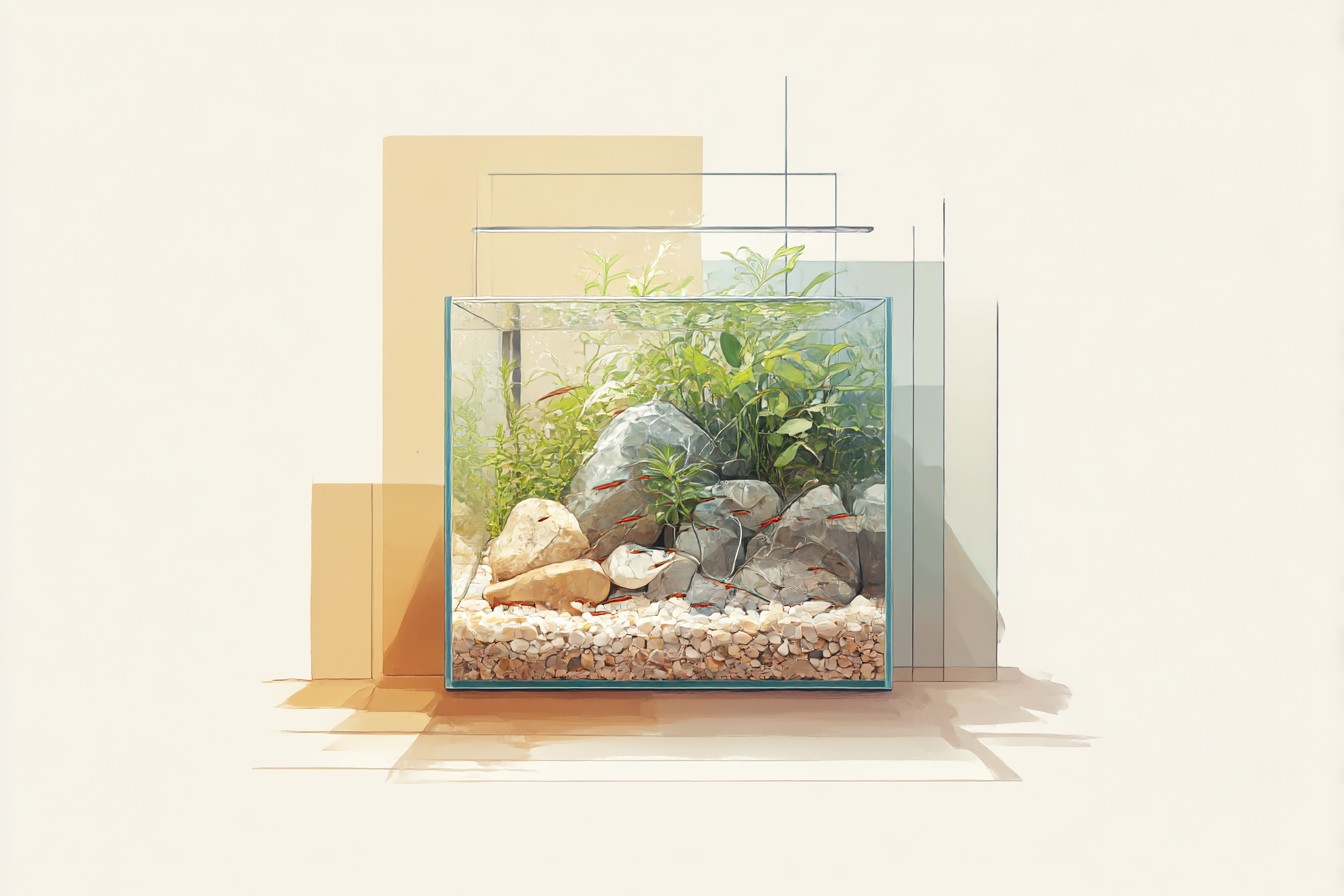
A handful of shrimp not eating could mean its hungry time.
30 shrimp not eating is just sad. If your shrimp are busily grazing on any available surface that you can’t see anymore its a good sign your tank is providing enough food. Feel free to supplement your shrimp diet but you should still see them spending more time grazing then hiding. **Step 5: Expansion (Month 4+)** By now you’ve learned how your shrimp behave and can move things around to suit your needs.
Don’t be afraid to add more hardscape later if you notice heavy grazing in certain areas of the tank. Conversely you can always take stuff out if its just collecting dust. Hopefully your colony has grown by now and you’re looking to add more shrimp or breed your first shipment.
Biofilm driven systems tend to support much larger colonies then most people realise. You may find yourself grabbing more rocks and driftwood off your local koi fish store shelf then you originally planned. **Estimated Budget:** * Shrimp: £30-60 * Supplemental shrimp foods: £10-15 * More rocks/driftwood: £15-30 **Total: £55-105** Yes it costs more up front to build your tank around hardscape feeding. But you spend less on shrimp foods each month, enjoy much higher rates of survival, and won’t spend every waking moment worrying about dead spots or cleaning algae covered rocks.
Once established properly planned and executed biofilm-centric diets become self sustaining. Pretty much the opposite of storing bags of shrimp pellet anywhere near where your tanks are kept.