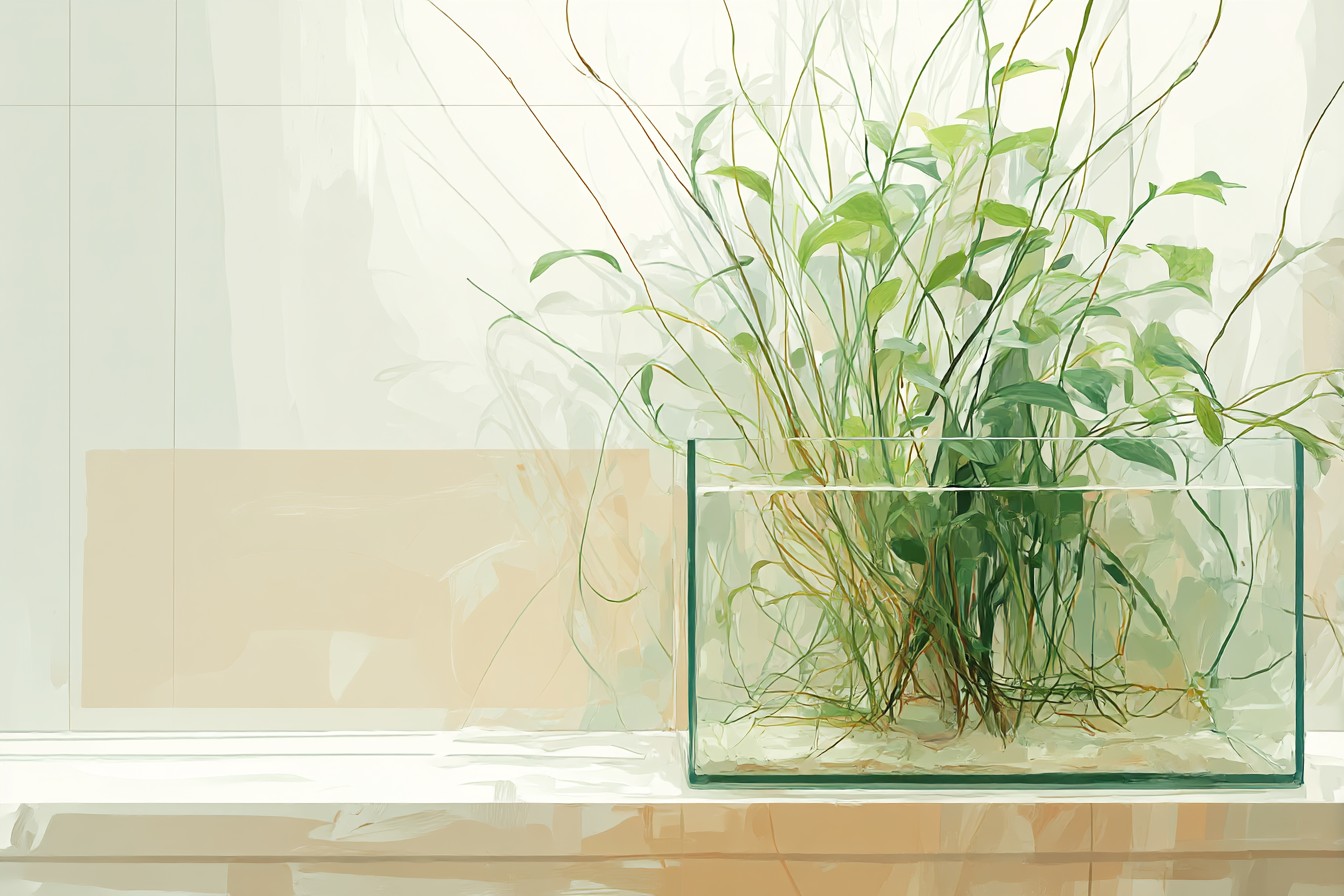
Keep mangroves! That’s right you vegetarians who inhale Marineland® vegetable slickcover™. I know mangroves seem intimidating, reserved for people with saltwater fishrooms and money to burn.
I thought so too until I picked up a little red mangrove propagule from my local reef shop. It was marked down to half price because it sat on the shelf for months collecting dust. Two lifetimes and $20 later I learned mangroves aren’t half as needy as we’re led to believe in the marine aquarium hobby.
Buy mangroves and don’t let anyone talk you out of it. Sure, most of the instructions you’ll find for keeping mangroves come from wildboardstyle reef enthusiasts who assume you have unlimited tank height and enjoy maxing out your electric bill every month.
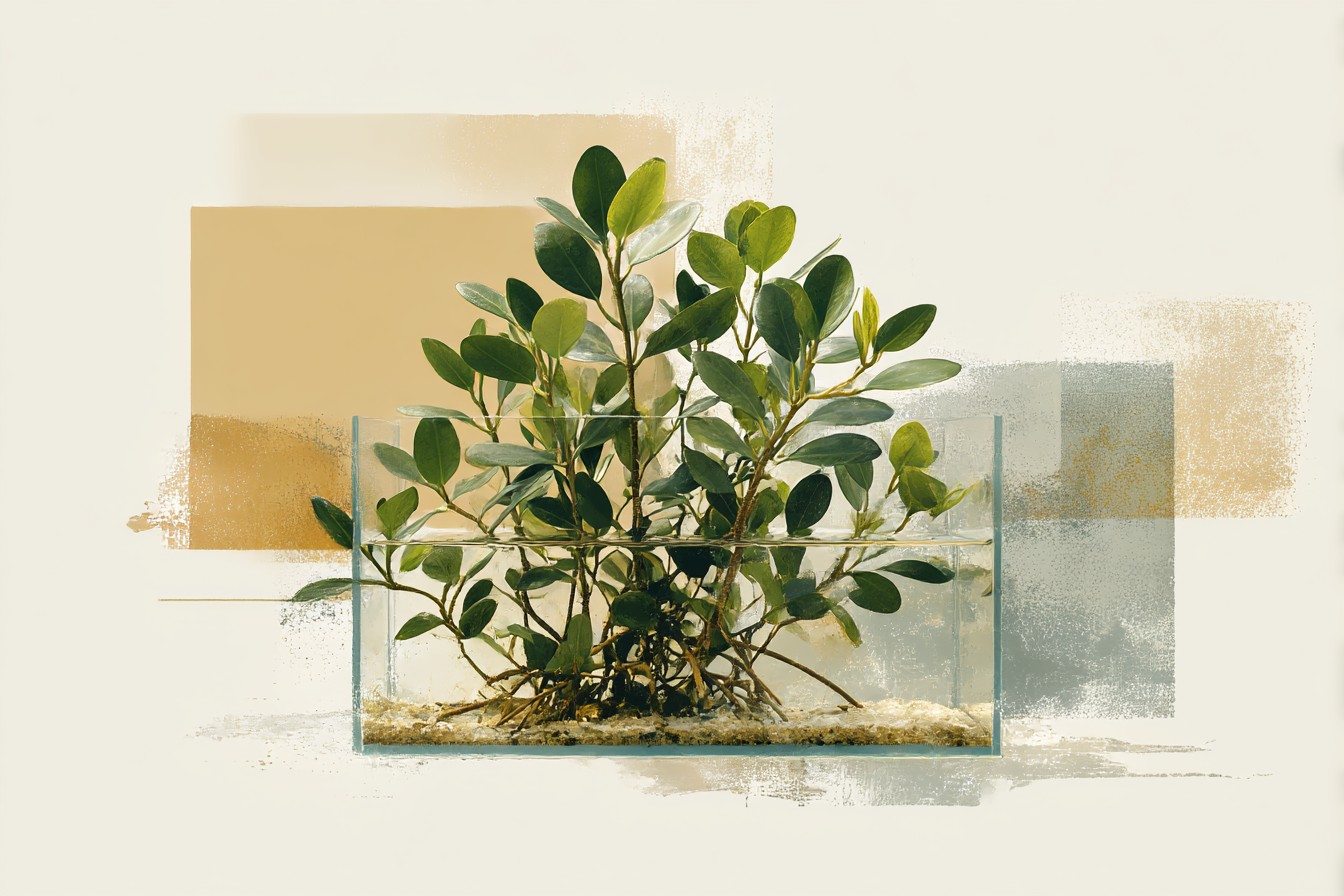
It doesn’t have to be like that.
Below are a bunch of instructions on how to keep mangroves in nano to near-commercial scales on a budget. ## How Mangrove Systems Work **Nutrient Uptake** Let’s start with the basics. Mangroves grow in coastal intertidal zones that experience daily fluctuations in salinity, tidal changes, nutrients from nearby land runoff, and nutrients delivered from the ocean itself. The key here is their relationship with nitrogen.
Researchers have found mangrove swamps display fast cycling at consistently low levels of dissolved nitrogen (MDPI.) For our purposes this means mangroves grow efficiently at pulling nutrients from the water column. They don’t just soak them up when levels hit crisis point. Instead they convert nitrates, phosphates, and trace organics floating around into plant mass and root system growth as long as there’s available resources.
Bonus! This isn’t quite true for all planted aquarium tanks but most aquatics export far less nutrients than they import. Mangroves store excess nutrients as they grow. **Root Mass** Most nutrient uptake occurs via mangrove roots.
Unlike greenery above the substrate, these trees store the majority of their nutrient uptake potential in an intricate root system that grows both above and below the root zone. When serving as biological filtration these roots provide surface area for bacteria colonies as well as direct nutrient absorption. The major benefit here is exactly that.
More roots equals more biological filtration capacity. Mangrove roots grow over time as the plant matures. A healthy mangrove will significantly increase your system’s ability to process waste within months, if not years of planting. **Salinity** Last but not least, mangroves are champs at handling swings in salinity.
Most aquarists assume mangroves can live in any old water conditions, but that’s only because they’re excellent at excreting salt built up during osmoregulation. Mangroves come equipped with salt glands that remove salt from their system and deposit it on leaves through crusting. Essentially they’re perfect for brackish setups, marine refugia (because who doesn’t love a refugium these days), or even certain freshwater applications… provided you add a bit of salt.
By salinity sweating all that extra salt build up mangroves can actually tolerate a wide range of salinities, far below what marine fish would ever accept. They just thrive with some salt present. ## Setting Up Brackish Mangrove Systems **Salinity Setup** Successful brackish water parameters are less “a little salt mixed with freshwater” and more precise salinity levels than you might think. Ideally, your average brackish aquarium should autumn between .005 and .015 specific gravity.
That translates to 7-20 parts per thousand salinity (Biology Insights). Or, if you prefer kilograms, 7-20 grams of salt per litre of water (MB Store UK). This range works great for mangroves as well.
My sweet spot for mangrove growth has been right around 1.008-1.012 specific gravity. Enough salt in the water to trigger their internal salt expulsion routines without requiring full marine upkeep. At these salinities you can even keep your mangroves company with some interesting brackish species like mollies, guppies, figure eight puffers, and assorted gobies.
Do yourself a favour and pick up some proper marine salt mix. I’m not talking aquarium salt either. I’m talking the full spectrum marine salt you’d use for saltwater aquariums.
Mangroves need a lot of the same trace elements as saltwater fish will crave if you keep them long enough. I like to keep cheap and easy with Instant Ocean but step up to Red Sea Salt for anything more intensive. You won’t use it up quick at brackish salinities.
A single 25kg bag can last months on a moderately stocked tank with regular water changes. **Tank Requirements** Height, not footprint is mangrove’s limiting factor. A 60 litre tall tank is much better than a 100 litre standard aquarium because you need room for mangroves to grow up as well as out. Plan to leave at least 30cm between the water line and the top of your tank.
Preferably more. Most mangroves maintained in aquarium conditions grow between 2-6″ per year (Save Mangroves). That height requirement will only get larger as time goes on.
Don’t feel you need hardcore marine aquarium lighting either. Sure, these specs work well and will give you awesome growth, but mangroves aren’t picky about it. I use T5HO fluorescents hung over my brackish mangrove setup and see good growth.
LEDs work great too, just look for something around the 6500K range with penetration that can reach your waterline. Budget about £60-£100 for a quality lighting kit on a 60 litre mangrove tank. Because mangroves serve as a biological filter you can get away with lighter filtration than traditional aquarium setups.
Prioritise circulation and biological media over specialised mechanical filtration. Mangroves like their water moving like the tides but not so much that it disturbs there roots. A decent canister filter or hang-on-back style filter rated for your aquarium size is plenty.
Add in extra biological media if you plan on keeping fish as well. **Substrate and Mangrove Placement** Finally, mangroves like to spread out. In the wild they typically take root in muddy sand flats or protected areas where their roots can easily penetrate deep. To recreate this effect you can use a deep sand bed in your aquarium but I’ve had great success with plain old aquarium gravel as well.
I just supplement with some root tabs or slow release fertilizer placed strategically near the mangrove root zone. Expect at least 5-7cm of substrate depth. Just remember mangroves take up room as they grow.
A propagule looks tiny in the store but will quickly establish into a sizable tree as months pass. Start with lower densities and add more later if your tank allows. I like a single mangrove for every 40-50 litres of aquarium space.
They look sparse when you first add them but come together quickly. Mangrove roots also expand both laterally and vertically, so try to avoid placing them directly in the centre of your aquarium. Corners and ends work best. ## Using Mangroves in Marine Refugiums Refugiums are wildly popular right now.
Combine them with mangroves and you’re solving two problems at once. Marine refugiums used with mangroves differ from your typical freshwater brackish system however. Instead of standalone applications you’ll usually find mangroves used to augment nutrient export with macroalgae, deep sand beds, and overstocked biofiltration.
Refugiums pull from the same water as your main aquarium through your sump system or have their own dedicated water circulation hooked into your display. Size your refugium to the bioload of your primary system. A good rule of thumb I’ve found is 20-25% of display tank volume dedicated to refugium.
So a 200 litre main display would pair nicely with a 40-50 litre refugium chamber. One major difference with refugium circulation is you don’t need to pump water in and out as aggressively as your display aquarium. Aim for refugium water turnover rates of 3-5x per hour.
Too much flow and you’ll disrupt crucial nutrient processing and settling zones. Too little and you’ll create stagnant dead spots. That doesn’t mean your refugium lights should be off though.
Many aquarists run their refugium lighting at opposite times of their main display. So if your tank lights come on for 10 hours a day, try running your refugium lights 10-12 hours overnight. Mangroves can easily handle running lights 20+ hours per day and it does wonders for smoothing out pH spikes in your system. ## 5 Things People Get Wrong with Mangrove Systems
1.
You Might Also Like
They need tons of space. Mangroves don’t care how wide you make your aquarium. Height is their restricting factor. Unless you plan on trimming your mangrove(s) regularly plan for at least 60cm of total height.
Bottom of substrate to light fixture. Preferably more.
2. They can live in full freshwater. Nope.
Mangroves can pull trace amounts of salts from freshwater but grow much faster once you add some salt to the equation. Sticking with that .005 to .015 specific gravity sweet spot is ideal. Faster growth, more nutrient uptake.
3.
No need to wipe down leaves. Salt build up is real and needs to be managed. Mangroves excrete salt through their leaves which results in a white powdery deposit that accumulates over time. Leave it on too long and your leaves can start to brown and die back. an easy daily maintenance task that makes a noticeable difference.
4.
I can fit 4 fish and 4 mangroves in my aquarium. Mangroves suck up nutrients as they grow. Planting too many in close quarters will limit availability to both your fish and plants. Start small with mangroves and add more as your aquarium allows.
5.
Mangroves don’t mind having no room to spread their roots. Again, mangroves you buy in the store won’t look like it but they grow. Plan for ample root space in addition to vertical clearance. Nothing limits mangrove potential faster than shallow substrate depth or cramped root zones.
## The Research Behind Mangrove Aquarium Systems Real scientific mangrove research is surprisingly hard to come by outside of coastal ecology papers.
That doesn’t mean it doesn’t exist, it’s just scattered across a lot of different disciplines. A recent paper studying propagule morphology across 35 mangrove species helped me understand potentialapplication in aquariums(Frontiers). Nutrient processing research cited above is the cornerstone of keeping mangroves in home aquarium systems.
Scientists have observed mangrove forests export nutrients consistently through mechanisms like slow cycling of dissolved nitrogen at low concentrations. Put simply, mangrove ecosystems don’t let their water quality degrade to completely unacceptable levels before expensive biological filtration kicks in. They continuously process nutrients on a micro level before they become macro problems.
Actual mangrove aquarium keeping references further corroborates the need for regular salt scrubbing. Two of the largest commercial marine aquarium suppliers in the United States provide direct instructions on mangrove care(LiveAquaria, ASAP Aquarium). If daily wiping of salt wasn’t needed to maintain healthy mangroves in aquarium systems you can bet these companies wouldn’t mention it. ## Mangroves for Other Setups Nano Brackish Systems – Single mangrove propgules in 20-40 litre tanks sprinkled with basic equipment builds.
Slow growth but its solid for nutrient export with minimal fish stock. Large Marine – Use mangroves to supplement refugiums on 100+ litre marine tanks. Pair with dedicated circulation and invert light schedules for optimum results.
Up your substrate game as you add more mangroves. Brackish Biotopes – Match your mangroves up with the right brackish fish species. Mollies, guppies, and figure eight puffers create great mini-estuary environments with mangroves serving as powerhouse nutrient filters.
High Nutrient Loads – If your tank is overly stocked and seems to run into weekly nutrient problems regardless of regular water changes try adding mangroves. Think of them as a supplemental biological filter that helps out your existing setup. ## Benefits of Mangrove Systems **Nutrient Export: ** One of the biggest advantages to mangroves is their ability to not just process nutrients, but permanently remove them from your system. As mangroves grow over 6-12 months you’ll actually get measurably cleaner water compared to a setup that simply converts waste into different forms.
Fewer nutrients means less algae pressure and more stable water parameters. **Stable pH: ** In addition to locking away nutrients your mangrove tank’s pH levels will start to stabilise as well. Fluctuations in pH will still happen but your ranges will get narrower over time. Brackish systems with established mangroves often show significantly less change than freshwater or marine setups without plants. **Less Maintenance: ** Sound counterintuitive to an article about planting mangroves?
Think about it. As the mangrove root system expands and matures it will gradually take on more of the biological filtering workload. 8-12 months after establishing your mangroves you may be able to reduce water changes while still keeping better water quality than more traditional systems. **Learn About Ecology: ** Mangroves are cool to watch grow if you let them.
Propygules start tiny but with enough time you’ll actually watch them emerge from the water as tiny trees. There’s something to be learned from watching a miniature ecosystem come together and function right in your living room. **Improved Long-Term Stability:** One happy benefit of #4. Established mangrove tanks simply don’t swing as wild on water parameters as conventional aquariums.
You’ll notice fewer changes to your water quality during routine maintenance or even minor equipment failures. **Unique Aesthetic: ** Last but not least, mangroves just look cool. Adding mangroves to your tank creates instant visual interest. Few aquarium plants offer the distinct above and below water appeal of mangrove roots and foliage. ## How to Setup Mangrove Systems: Step by Step Step 1: Initial Setup (Weeks 1-4) Setup your tank as normal with enough substrate depth to support your mangroves.
Mix up your brackish water, I recommend aiming for 1.008-1.010 specific gravity as a safe place to start with marine salt. Install your filtration and lighting but don’t turn it on yet. Cycle your tank using pure bacterial supplement or small portions of fish food.
Test ammonia and nitrite every other day until both components hit zero. Average Costs: Aquarium (60 litre tall kit) – £80-£120 Filter (basic canister) – £60-£90 Lighting (T5HO) – £70-£100 Marine Salt Mix (25kg) – £35-£45 Substrate/ Decor – £25-£40 TOTAL – £270-£395 Step 2: Adding Mangroves (Weeks 4-8) Your tank should be fully cycled at this point. Add your mangrove propagules and position them around the tank with enough space for growth.
Don’t bury the submerged roots but give them a gentle push in the substrate to keep them stable. You’ll want to start wiping excess salt from leaves once per day as soon as they grow above water.

Keep an eye on new root formation over the next few weeks.
Adjust location if required. Additional Costs: Mangrove Propagules – £15-£25 each Refractometer to measure salinity – £20-£35 Step 3: Waiting (Weeks 8-16) Obviously you’ll want to add some stock but don’t overwhelm your mangroves. Slowly introduce fish while keeping an eye on water parameters.
Mangroves will show growth upwards as well as growing roots below substrate level. Continue daily maintenance and weekly testing. Raise lights as your mangroves grow to keep proper distance from the water line.
Step 4: Maintenance (Months 4+) By now you’ve got things running smooth and can establish a consistent maintenance schedule. Water changes once a week,equipment cheques once a month, and mangrove love on the daily. Plan now for how you’ll manage height restrictions in the future.
Whether through pruning your mangroves or upgrading your setup somehow. Monitor your system stability and adjust stock or feedings as needed based on your mangroves ability to keep up with nutrient exports.