Go into any aquatics store today and you’ll find aquariums arranged as Japanese rock gardens or stacked mountain cliffs of stone. What you won’t find is tanks planted in the Dutch style. Originating from the Netherlands back in the 1930’s (Source), Dutch aquascaping took almost a hundred years to prove you don’t need rocks or driftwood to build an amazing underwater garden.
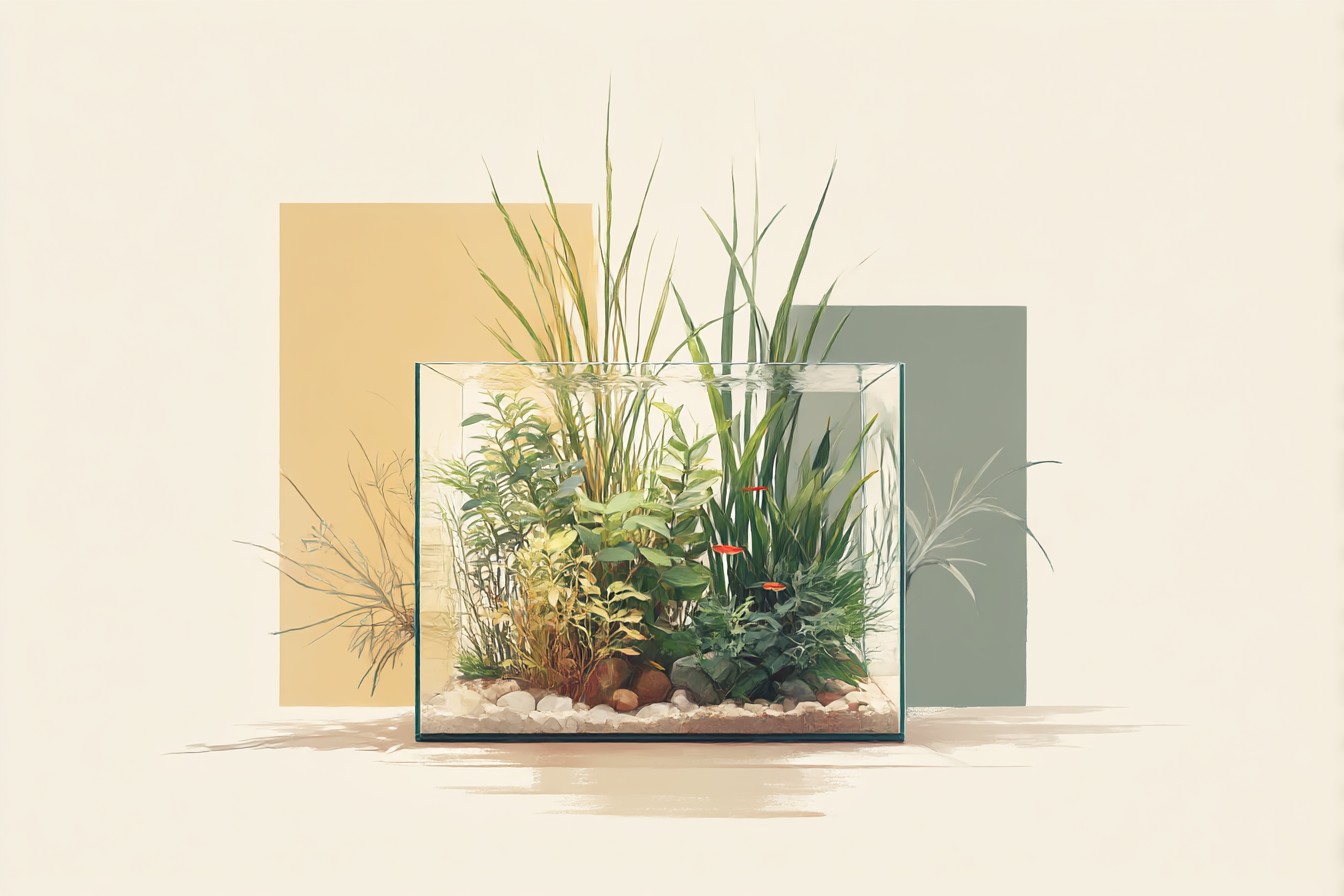
In Dutch aquascaping, the aquarium is treated as if it is an underwater flower garden. Plants are arranged to take centre stage with little to no hardscape. Dutch aquascaping produces structured and dramatic aquarium displays, built on careful plant selection and grouping, and maintained by weekly trimming.
As you can probably guess already Dutch aquascaping is all about creating an underwater equivalent of formal gardens or topiary. I’ve been keeping aquariums for years, and up until recently, the idea of trimming plants to maintain defined gaps between species sounded like a nightmare to me.
But the more I researched Dutch aquascaping, the more I started to realise there was something refreshing about a planted tank approach that wasn’t trying to mimic some video of a mountain stream I found on YouTube Nature Videos.
Dutch aquascaping is different. It requires far more maintenance than your typical modern planted tank, uses techniques not commonly discussed anymore, and once established the tanks don’t look like anything you see on Instagram these days. If that sounds intimidating or amazing to you depends on how much you love trimming plants and whether you find the idea of planting defined “plant streets” thrilling or terrifying.
The Plant Street Philosophy
Dutch aquascaping is a formal plant based aquascaping style.
Layouts are built on creating planned groupings and terracing of aquarium plants (Source). Instead of trying to recreate a natural landscape or scene, Dutch aquariums are proudly artificial floral displays that just happen to exist underwater. Plant Streets: Dutch aquascapers achieve their structured layouts by planting species in defined groups called streets. Each street is made up of just one species of plant.
Leaves of different species do not touch or overlap. Each street will run from the foreground of the aquarium all the way to the background. Repeated plant streets create both perspective and impact through symmetry. Layered Height: Another central aspect of Dutch aquascaping is adding depth through planting variation in height (Source).
Plants are chosen to slowly terrace the aquarium starting with carpeting foreground species, all the way up through mid-height species to tall background plants. Colour Theory: Because colour contrast between plants is an actual judging criteria (Source) in competitive Dutch layouts, colour placement and appearance are carefully considered. Red plants will be used to create accents against a bed of green plants. Orange and yellow species will be used to transition between the different colours.
Plants essentially become pots of paint that you are mixing on the substrate. 100% Plant Coverage: Dutch aquariums often strive for about 70 percent plant coverage (Source) with no gaps in foliage. This means there is no “aquascape” or hardscape decorations in the traditional sense (Source). Everything you see are carefully placed plants.
Even the substrate is there to support the garden, not act as decoration. The result are aquariums that look more like formal botanical gardens than a collection of river plants from South East Asia. The point of Dutch aquascaping is precision.
Dutch aquarium clubs were never trying to recreate a believable snippet of the Amazon rainforest or Angledool river. They set out to create a man-made underwater landscape that could only be possible in an aquarium.
Necessary Plants and Positioning
Like any good garden the plants you choose and how you position them is critical for Dutch aquascaping. This isn’t a hobby where you throw some random plants you bought at the LFS together and see what happens.
Dutch aquascaping uses particular plants for a reason. Picking the Right Plants: Because Dutch aquariums use so few species of plants in a given layout, each species serves an intentional role. Using the wrong species, or planting them incorrectly will destroy the entire effect aquascapers are going for. Abundance of Stem Plants: Dutch aquariums use A LOT of stem plants (Source). This isn’t an aesthetic choice, its because you need the height variation and plant density that stem plants provide to build up the layered look of Dutch aquariums.
Plants like Rotala, Ludwigia, Hygrophila and Alternanthera species are the most commonly used plants in Dutch layouts. Carpets over Bare Sand: Dutch aquascapers also never just plant plants in the foreground and leave open sand in the background like many people do in nature-style aquariums (Source). Dutch aquariums use carpet plants like Eleocharis, Glossostigma, or Hemianthus to fill in every square inch of open substrate before they transition into mid-height plants. Tall Background Plants: Adding height is accomplished by choosing tall background plants. Vallisneria, Cabomba and large Echinodorus species help frame the aquascape.
Different types of plant contribute different shapes and textures to keep interest high while maintaining that strict formal structure. Colour Placement: Finally red and orange plants like Alternanthera reinexii or red Ludwigia are almost always planted as accent streets amongst other green species. Red contrasts beautifully with green leaves, while orange Rotala help ease that transition. Think of how you would mix your paint colours before filling the tank. Maintaining Streets: Easy maintenance is possible in Dutch aquariums but you must plan your aquascape accordingly.
Plant streets should ideally be made up of plants that all grow at similar rates. This lets you cut entire streets down to the proper size at once, keeping those clear boundaries between species intact. If you mixed slow and fast growing plants in the same street you’ll quickly find yourself trying to maintain that structure during weekly maintenances.
Fast growers get cut back heavily while the slower species just get shaded out and lost in the layout.
Dutch Technical Requirements
Unfortunately this isn’t a beginner “just add fish” style of aquarium. Dutch aquascaping has a few techniques and requirements that differ from the modern low-tech planted tanks many people are used to today. CO2 & Fertilizers: CO2 injection and fertilization is a given with Dutch aquariums (Source). Plant density is high and the plants are going to require as much as you can give them to maintain that lush structure.
Dutch aquariums without a CO2 tank just aren’t feasible. Plant streets become indistinguishable from each other as growth rates drop and algae starts to pop up. Lights: With that many plants in the tank strong lights are needed to properly penetrate the aquarium. Enough litres of output so that your LEDs are pushing at least 60-80 PAR inches down to the substrate.
More if you can without causing issues. This is needed to support the red plants Dutch aquascapers use to create those beautiful colour accents. Substrate: Substrate choice also matters because of plant density. Commercial aquasoils are popular for Dutch aquariums but many aquascapers prefer to use soil-based substrates topped off with sand or aquarium gravel.
This helps ensure your substrate has long term nutrient storing capacity to support the plants. Softish Water: Dutch aquariums run soft to moderately soft water (GH 4-8) with pH in the neutral to slightly acidic range (6.5-7.0). Injecting CO2 into the aquarium typically buffers the water to 6.8-7.0 pH during the day. If your pH dips below that when you turn on the CO2 you have adequate CO2 levels. Circulation: Water movement is important in Dutch aquariums.
You don’t want pockets of dead spots in your aquarium where plants are laying on top of each other. CO2 also needs to make its way to the leaves so proper planning your water movement is important.
4 Dutch Setup Mistakes to Avoid
Mistake #1: Skimping on CO2. Dutch aquascapes need more CO2 than most aquarists want to provide. If you don’t run 25-30 ppm of CO2 during the day your plant streets will slowly lose definition as plants stop growing as quickly.
Algae free street boundaries are essential for Dutch aquascapes, without CO2 your layout will never truly fill in.
Mistake #2: Mixing growth rates. Don’t plant a slow growth species right next to a really fast growing species in the same street. You’ll soon find that trimming time becomes a nightmare. Fast growing plants takeover the street you planted while your slower species just can’t compete.
Plant streets won’t stay planted for long.
Mistake #3: Not planting dense enough. Related to number 2, Dutch aquascapes NEED to be planted densely from day one. Giving algae a place to grow while you wait for plants to mature just means you’ll be watching weeks, if not months of your aquascape come in. Plant it right or don’t plant at all.
Mistake #4: Skipping a week of trimming. Yes it seems trivial but your Dutch aquarium is counting on you to keep up with trimming.
You Might Also Like
If you miss a week your plant streets will start to blend together. Getting back to that structured look will take weeks of aggressive cutting.
Dutch Aquascaping Plant Study Support
The reason many Dutch methods work so well has actually been backed up by multiple scientific studies. Plant competition was discovered to be the reason why Dutch aquascapers never mixed species in the same planting area.
By sectioning off species into streets they were able to successfully maintain larger collections of plants in a high density setting. Plants were also discovered to severely compete for nutrients when planted in close proximity (Source). That is why Dutch aquascapers will go overboard on fertilizers and use rich substrates.
They know that all those plants are going to devour whatever they can get their roots on. These studies also helped confirm Dutch aquascapers insistence on CO2 injection. Carbon was shown to become the limiting nutrient in heavily planted aquariums that were already providing sufficient light and nutrients.
Small Dutch Setups
Dutch aquariums can be built small but there are limitations on what you can accomplish based on tank size. Larger Aquariums (200+ Litres): Ideally Dutch aquascapes should be built in tanks 120cm or longer.
This allows you enough space to create multiple plant streets that have room to develop and grow. Tanks should be 50cm or deeper as well. You need the depth to create foreground, mid-height and background layers of plants. Medium Size Tanks (100-200 Litres): Modified Dutch aquariums can be done in medium size community tanks.
By cutting back on the number of plant streets you can keep similar principles intact. Three to five defined planting groups can help you build something just as beautiful that requires less plant diversity. Smaller Tanks (<120 Litres): Dutch style can still be applied to small tanks, you just need to use miniature versions of the plants mentioned above. Using small species of Rotala, small leaf Ludwigia, and dwarf Alternanthera can help you mimic traditional Dutch planting setups on a smaller scale. Going Low-Tech: You can even convert Dutch aquariums to low tech by using slow growing plants that don’t require CO2.
Anubias, Java ferns and slower growing Cryptocoryne can help you achieve that structured planting look. Trade lush growth for low maintenance.
Dutch Benefits
Here are some benefits of keeping a Dutch aquarium: Instant Impact: Unlike nature style aquariums that can take months to look good Dutch aquariums look AMAZING from day one. If you plant enough plants and take the time to plan your aquascape you can have an instant algae free aquarium that pops. Easier Maintenance Routine: Knowing you have to trim every single plant in the aquarium each week actually makes maintenance pretty simple.
Every plant has a defined area to trim. No wandering around wondering where to cut back. Learn colour theory: Learning how to properly balance red, green, and accent plants will help you approach any planted aquarium with better colour theory understanding. Not every aquarium you keep is going to be Dutch but that doesn’t mean you can’t use these principles to improve. Better Plant Knowledge: Keeping a Dutch aquarium will make you a better planted tank keeper overall.
You’ll learn how to properly balance CO2, fertilizers, and get plants growing like mad. Skills you can transfer to any other type of aquarium you keep down the road. Structured Learning: Nature aquariums can be pretty subjective when it comes to improving and keeping up with the latest techniques. Dutch aquariums have defined techniques you can learn and improve on. Long-Term Stability: A well maintained Dutch aquarium is one of the most stable planted aquarium setups you can keep.
High plant mass and weekly maintenance will prevent most problems beginners run into and create a sustainable ecosystem that is easy to maintain.
Building a Dutch Aquarium Step by Step
Step 1: Planning & Setup (Weeks 1-2) Pick the right tank size. You want a tank that is long enough to allow multiple planting streets to have room to grow. 120cm or more is ideal.
You also want enough tank depth to create foreground, mid-level, and background planting areas. 50cm deep or more is preferred. Choose strong lighting that can push 60+ PAR inches down to the substrate.
LEDs are ideal for Dutch aquariums but must be powerful enough to support the plant density you’ll be cramming in. Get a pressurized CO2 system capable of 25-30 ppm of CO2 injection during the day. Dutch aquariums without enough CO2 just aren’t possible.
Unless you plan on using slow-growing low light plants you won’t be able to maintain that lush structure and plant streets will soon blend together. Pick out a nutrient rich substrate. Commercial aquasoils work great but many Dutch aquariums use actual soil based substrates topped off with sand or aquarium gravel.
Plan out your plant street layout on paper. Pick outforeground, mid-height, and background plants that have complementary growth heights and growth rates. Pick out your colour placement scheme. Budget CO2 system + regulator: £150-250 LED Lighting: £200-400 Substrate (for a 200 litre or larger tank): £80-120 Initial plant stock: £150-300 TOTAL: £580-1070 Step 2: Planting! (Week 3) Plant everything all at once.
Dutch aquariums don’t fill in slowly. You need to plant enough plants during the initial planting to achieve 70% plant coverage asap. Plant those stems tight.
Don’t leave a lot of space between individual plants in a street. Leave small gaps between plant streets when you plant. These gaps should nearly fill in on their own after a week or two of growth.
Once again DO NOT SKIP PLANTING DENSE ENOUGH. What to look for: You should see CO2 maintaining a pH of 6.8-7.0 during the day. Plants should show signs of new growth in a week or less. If plants start melting back after a week of establishment you need to fix whatever is causing it immediately. Step 3: Letting it Establish (Weeks 4-8) Weekly trimming should start as soon as your aquarium establishes.
Fast growing species can be trimmed back hard once a week to maintain your street definitions. Keep an eye on plant growth rates and adjust fertilization as needed. You want that lush growth but also want strong colour development from your plants.
Take care of algae issues as they occur. Dutch aquariums can not have algae. It is critical you get rid of algae sooner rather then later or your aquarium will never look established.
Increase CO2, improve circulation, decrease light hours. Do what you have to do. Budget Fertilizers: £15-25/month CO2 Refill: £20-30 / every 2-3 months Replacement plants: £30-50 if needed TOTAL MONTHLY COST: £45-75 Step 4: Tweaking (Weeks 9-16) By now you should have a good feel for how your plants are growing, where you can make improvements to plant selection, and what colour placements worked and what didn’t.
Make changes to plant streets by replacing lagging species with better alternatives.
By now you should have a good feel for your trimming schedule and can adjust how often you need to trim to maintain proportions. Fine tune your fertilization schedule and quantity you’re adding based on how your plants have reacted to your initial amounts. Step 5: Maintenance (Week 17+) Trimming is going to be the name of the game with Dutch aquariums. Every plant needs to be cut back on a weekly basis to maintain those perfect plant streets (Source).
Learning how and when to trim certain plants will help you maintain that lush growth without overloading your filters. Continuing monitoring plant health. Replace old plants before they start to die off and disrupt your layouts street structure.
Continue regular fertilization and CO2 injection to support the heavy biomass you have in your aquarium. Ongoing Costs: £45-75 monthly for fertilizer, and CO2. Done correctly Dutch aquascaping can change the way you look at planted aquariums forever. Its high maintenance, requires a fair investment of money into equipment you might not use on other tanks, and looks absolutely nothing like what most people think of when it comes to aquascaping these days.
If you love trimming plants and caring for plants on a micro scale than Dutch aquariums are for you. If getting to jump back and forth from your aquarium and spending hours trimming plant stems sounds like your idea of a bad time, maybe this hobby isn’t for you.