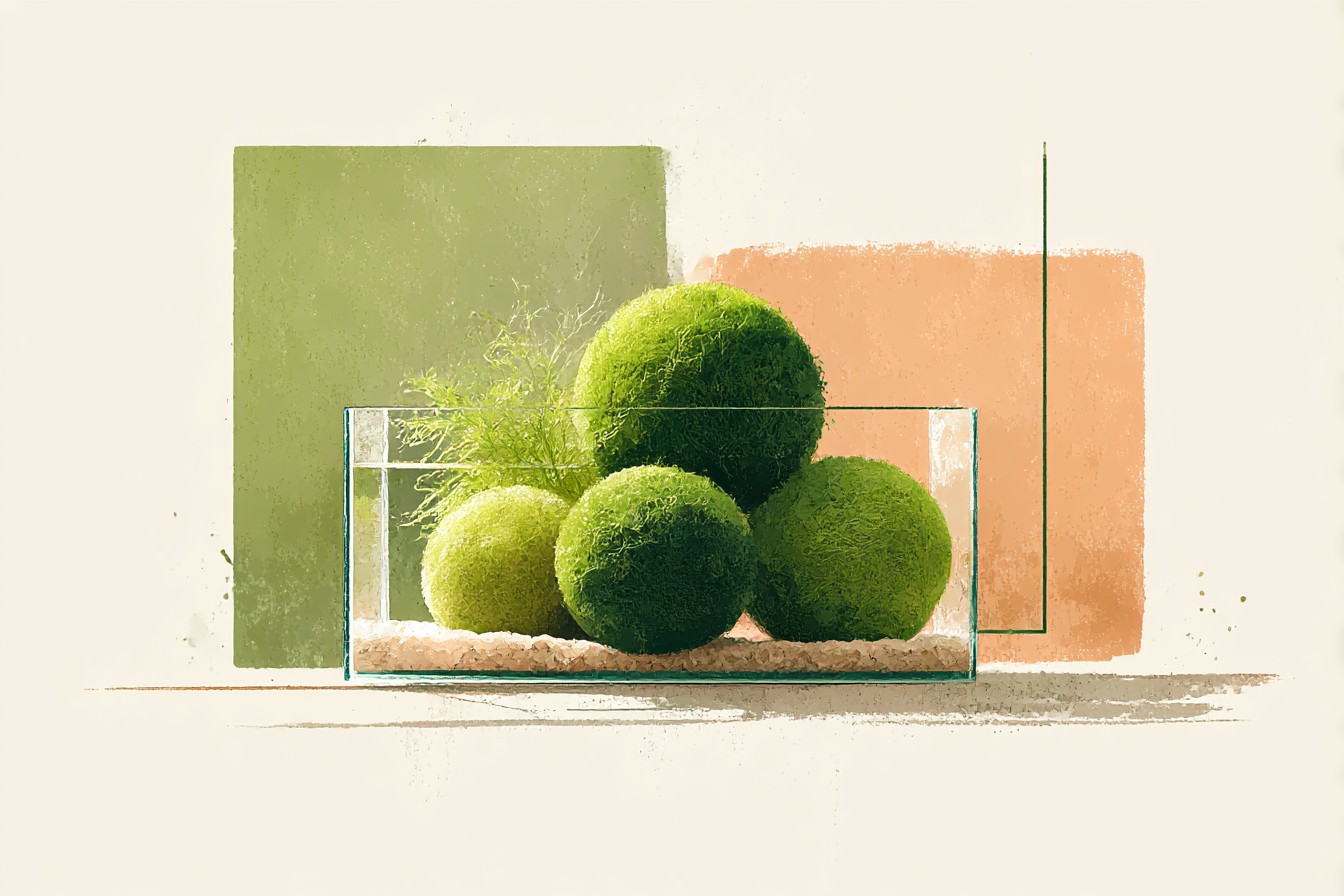
# Marimo Moss Balls and Whether They Actually Do Anything Useful in Your Tank I bought my first marimo moss ball because it was sitting there looking like a small green brain in a jar, and frankly I felt sorry for it. This was about three years ago at a local aquatics shop where I’d gone to get some filter media, and there it was in a tiny plastic cup with a handwritten price tag of £4.99. The shop assistant told me it was “basically indestructible” and “great for beginners,” which immediately made me suspicious because those are usually warning signs that something is either completely pointless or about to die spectacularly in my tank.
Three years on, that same moss ball is still rolling around my classroom tank, looking exactly as it did when I brought it home. My students have named it Gerald. Gerald has survived summer holidays without feeding, temperature swings when the heating broke, and being thoroughly investigated by a particularly curious betta who spent two weeks trying to work out if it was food, enemy, or furniture.
The fact that Gerald is still thriving has made me wonder whether these peculiar algae balls actually deserve their reputation, or if they’re just the aquatic equivalent of a pet rock. What I’ve learned is that marimo moss balls occupy a strange niche in the hobby.
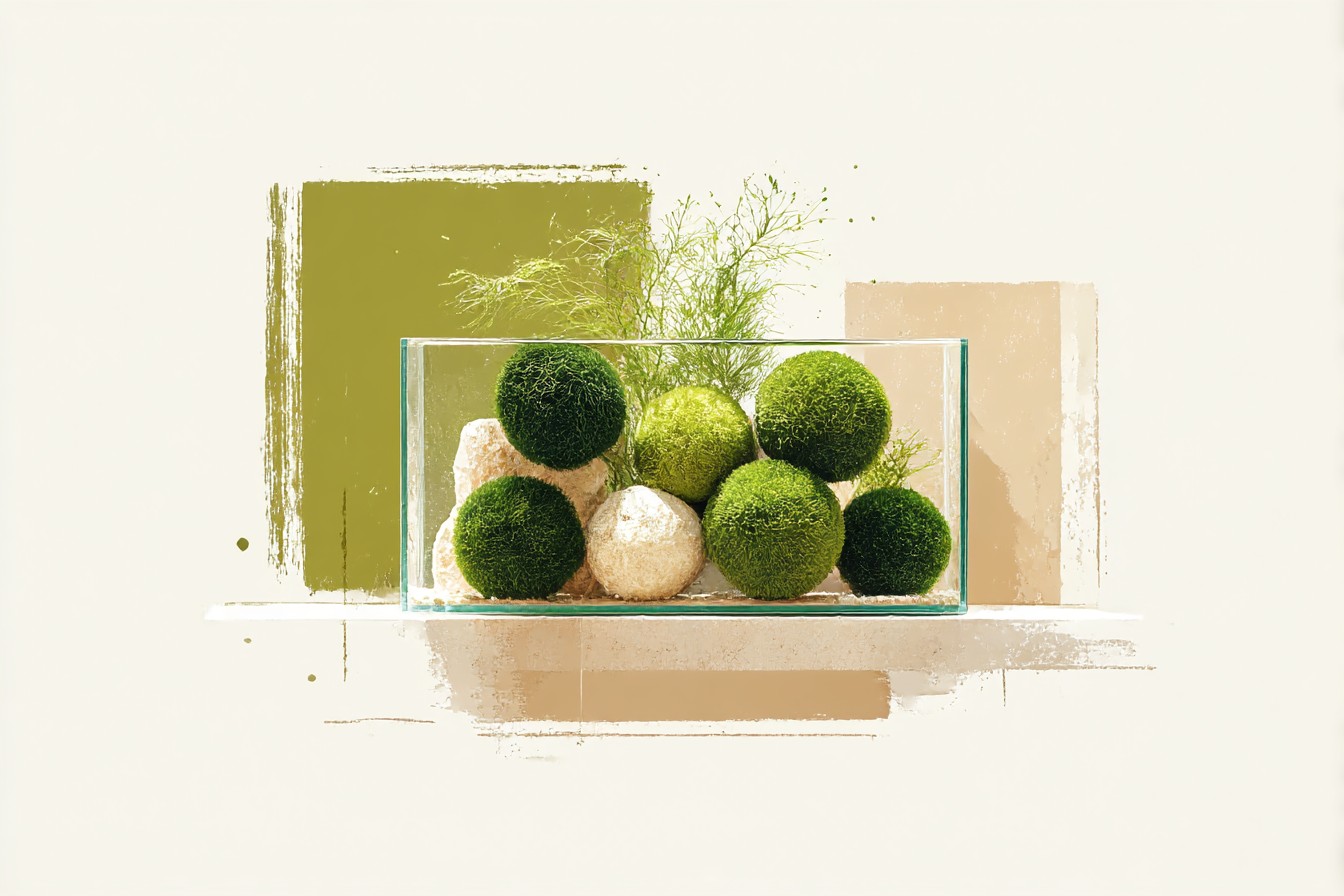
They’re not really moss, they’re not quite a plant in the traditional aquascaping sense, and their benefits are subtle enough that you might not notice them unless you’re paying attention.
But there’s something genuinely fascinating about these slow-growing, perfectly spherical bundles of algae that have made them surprisingly enduring in tanks worldwide. | Care Level | Lighting Needs | CO2 Required | Growth Rate | Max Size | Our Rating | |————|—————-|————–|————-|———-|————| | Beginner | Low to Medium | No | Extremely Slow | 30cm (wild) | 7/10 | ## What Exactly Are Marimo Moss Balls? The first thing to understand is that marimo moss balls aren’t moss at all. They’re actually a form of green algae called Aegagropila linnaei that grows in these distinctive spherical colonies.
The name “marimo” comes from Japanese, roughly translating to “bouncy water plant,” which is fairly accurate given that they do indeed bounce gently along the substrate when there’s enough current. In the wild, these algae balls are found in only a few places worldwide, with the most famous populations in Lake Akan in Japan, where they can grow to enormous sizes. The largest wild marimo balls can reach 20-30 cm in diameter (web-japan.org), taking decades to achieve those dimensions given their glacial growth rate of about 5 mm per year (Wikipedia).
Recent research has shown that the diameter of these ancient specimens grows approximately 9-12.6 mm per year (JST Science Portal), which means some of the largest ones in Lake Akan could be centuries old. The spherical shape isn’t just aesthetic either. It’s actually a result of the algae’s growth pattern and the gentle wave action in their natural habitat, which keeps them rolling and ensures all sides get equal light exposure.
In an aquarium, you won’t get that natural tumbling action unless you’ve got substantial flow, which is why many aquarium marimo balls gradually lose their perfect spherical shape and become more oval or irregular over time. The specimens sold in aquarium shops are typically much smaller, usually ranging from golf ball size down to ping pong ball dimensions. These are either harvested from wild populations, grown in cultivation facilities, or more commonly, formed by hand-rolling loose Aegagropila linnaei algae into balls and allowing them to naturally bond together over time. ## What Makes Them Special in a Tank Environment The appeal of marimo moss balls lies in their complete lack of drama.
In a hobby where plants can melt overnight, fish can mysteriously disappear, and equipment failures can crash entire systems, marimo balls just sit there doing their thing with remarkable consistency. They tolerate an impressively wide range of conditions, thriving in temperatures from 15-24°C (AquariumLesson), though they prefer cooler water around 20-25°C (Aquarium Nerd). Their pH tolerance is equally forgiving, handling anything from 6-8.5 (AquariumLesson), with an optimal range of 7.0-8.0 (AquariumBreeder).
They’ll adapt to both soft and hard water, tolerating hardness levels from 2-20 dGH (AquariumBreeder), which makes them suitable for virtually any community tank setup. What’s particularly interesting is how they interact with tank chemistry. Unlike traditional aquarium plants that can be sensitive to changes in CO2, lighting, or fertiliser levels, marimo balls are remarkably stable.
They don’t require CO2 injection, they won’t suddenly start melting if you change your fertilising routine, and they actually prefer lower light conditions, which makes them ideal for tanks where you’re trying to control algae growth on other plants. The slow growth rate that makes them seem almost static is actually one of their advantages. At roughly 5 mm per year (Aquarium Co-Op), they won’t suddenly outgrow your tank or need regular trimming.
In my classroom setup, Gerald has grown perhaps 2mm in three years, which is barely perceptible but reassuring in its consistency. They also serve as surprisingly effective biofilter media. The dense algae structure provides surface area for beneficial bacteria to colonise, and they do absorb nitrates from the water column, though not dramatically.
I’ve never seen a measurable impact on my water parameters from adding marimo balls, but in a well-established tank, every bit of biological filtration helps maintain stability. Perhaps most appealingly, fish seem to genuinely enjoy them. My betta used to rest against Gerald regularly, and I’ve watched shrimp pick over marimo balls methodically, grazing on the biofilm that builds up on the surface.
They’re completely safe for any fish species, won’t affect water chemistry negatively, and provide a natural-looking addition that doesn’t require any specific placement or hardscape integration. ## The Honest Assessment Here’s where I need to be realistic about what marimo moss balls actually do, versus what gets claimed about them online. The internet is full of articles declaring them “natural water purifiers” and “living filters,” which overstates their impact considerably. Yes, they absorb some nitrates and provide biological filtration surface area, but we’re talking about very modest contributions.
If your tank has water quality issues, a marimo ball isn’t going to solve them. Their aesthetic impact is also quite specific. They’re undeniably cute in a peculiar way, but they don’t provide the visual drama of stem plants, the structural interest of crypts, or the carpet effect of ground cover plants.
You Might Also Like
They’re essentially green spheres that sit on your substrate looking like exactly what they are: algae balls. Some people find this charming; others find it boring. The famous spherical shape that makes them distinctive is actually quite difficult to maintain in aquarium conditions.
Without the natural wave action they experience in wild lakes, most aquarium marimo balls gradually flatten on the bottom, becoming more dome-shaped or oval. You can rotate them manually during water changes, and many hobbyists do, but it’s another maintenance task to remember. I’ll admit I often forget to rotate Gerald, and he’s developed a distinctly flattened side as a result.
They’re also more expensive than they probably should be for what amounts to a ball of algae. Decent-sized specimens often cost £10-20 each, which seems steep when you consider that you could buy several proper aquatic plants for the same money. The high price is partly due to their slow growth rate making commercial production time-consuming, but it still makes them a luxury purchase rather than a practical addition for many hobbyists.
Temperature sensitivity can be an issue in tropical setups. While they’ll survive in warmer water, they definitely prefer cooler conditions, and I’ve noticed that Gerald looks less vibrant during summer months when my classroom tank runs a few degrees warmer. They won’t die in tropical temperatures, but they won’t thrive either.
Finally, there’s the authenticity question. Many marimo balls sold in shops are hand-formed rather than naturally grown, which means they’re essentially manufactured rather than cultivated. There’s nothing wrong with this functionally, but it does make their “natural wonder” marketing feel a bit hollow. ## Their Place in the Hobby Despite my criticisms, marimo moss balls have carved out a genuine niche in aquascaping and fishkeeping.
They’ve become particularly popular in nano tanks and minimalist setups where their simple form complements clean, uncluttered designs. They work especially well in tanks focused on hardscape rather than heavy planting, adding a touch of living green without competing for visual attention. In educational settings like my classroom, they’re genuinely valuable.
Students can observe them closely without worrying about damaging delicate plants, and their incredibly slow growth rate makes them ideal for long-term observation projects. We’ve been tracking Gerald’s development for two years now, measuring him monthly and recording any changes. The data is boring, which is exactly the point – sometimes consistency is more educational than drama.
They’ve also found a place in low-maintenance setups and office tanks where regular plant care might be challenging. A marimo ball can survive weeks of neglect, power outages, and irregular feeding schedules that would kill most aquatic plants. For people who want some living green in their tank but can’t commit to proper planted tank maintenance, they’re a reasonable compromise.
The rise of shrimp keeping has given marimo balls renewed relevance too. Cherry shrimp and other small invertebrates genuinely seem to enjoy grazing on them, and they provide hiding spots for young shrimp without the maintenance requirements of traditional plants.
In breeding setups where stability is crucial, their low-impact presence can be beneficial. ## The Verdict Marimo moss balls are exactly what they appear to be: simple, undemanding, slowly growing algae spheres that add a touch of green life to your tank without creating any fuss.
They won’t revolutionise your water quality, they won’t provide dramatic visual impact, and they definitely won’t grow into anything spectacular. But sometimes that’s exactly what you need. If you’re looking for an absolutely bulletproof addition to a low-maintenance setup, want something living that shrimp will appreciate, or just find their weird charm appealing, they’re worth the investment.
They’re particularly good for beginners who want to experience keeping something alive in their tank without the pressure of more demanding plants. Just don’t expect miracles. Gerald has been a pleasant, undemanding tank companion for three years now, but he’s never going to be the star of the show.
He’s more like the reliable supporting character who’s always there when you need him, quietly doing his modest job without complaint. In a hobby that can be frustrating and unpredictable, there’s genuine value in that kind of consistency. For what they cost, you could probably get more visual impact from traditional plants, but you’d also get more maintenance requirements and higher risk of failure.
Marimo moss balls occupy the sweet spot between “completely inert decoration” and “proper aquatic plant,” which makes them surprisingly useful for the right situations. See where this placed in our full plant ranking.


