
# Melting Aquarium Plants and Why New Plants Autumn Apart Before They Grow Back You’ve just spent twenty pounds on what looked like perfect aquarium plants. You carefully planted them in your tank, adjusted the lighting, and went to bed satisfied. Three days later, you wake up to what looks like a plant massacre.
Leaves are dissolving, stems are turning translucent, and your beautiful new additions appear to be dying before your eyes. Welcome to the melt. Plant melting is perhaps the most universally panic-inducing experience for new aquascapers, and it’s completely normal.
Understanding why it happens and what to do about it can save you money, prevent you from making the problem worse, and help you recognise when things are actually going according to plan. Most importantly, it can stop you from throwing out plants that are about to recover and thrive.
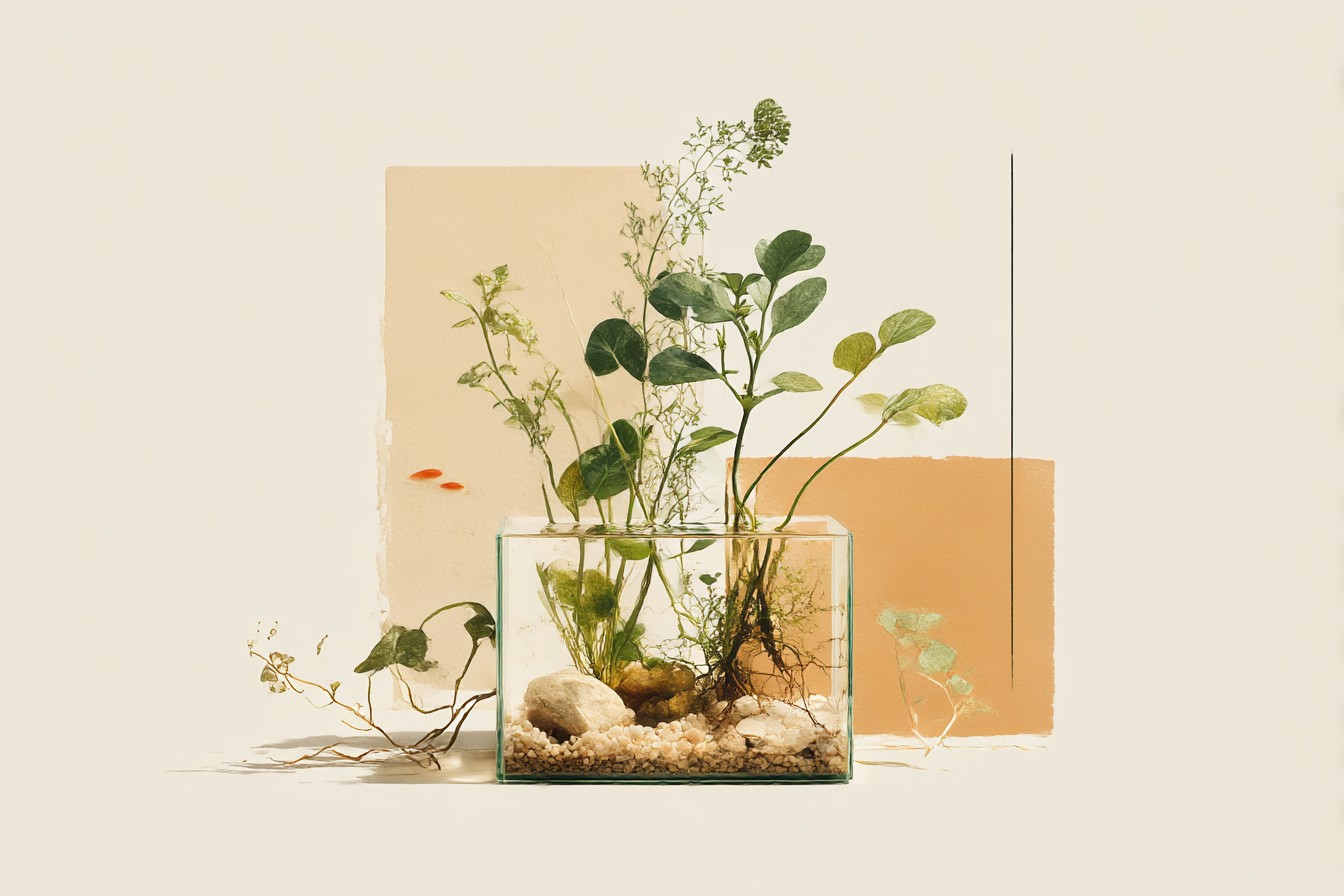
The key thing to understand is that plant melting isn’t plant death, though it certainly looks like it.
It’s a reconstruction process that virtually all aquarium plants go through when they transition from one growing environment to another. The new plant autumn apart phase can last from 1 to 4 weeks (Aquarium Tales), during which your plants are essentially rebuilding themselves from the ground up. ## The Science Behind Plant Melting Most aquarium plants you buy aren’t actually grown underwater. This is the crucial fact that explains the entire melting phenomenon.
Most plants are grown emersed and must rebuild leaves for submerged growth (Marcus Fish Tanks). Commercial plant farms grow their stock in humid greenhouse conditions with the roots in water and the leaves in air, because plants grow much faster this way. The leaves that develop in air have a completely different structure from leaves that develop underwater.
Emersed leaves have a waxy coating to prevent water loss, different cell wall thickness, and modified stomata for petrol exchange with air rather than dissolved gases in water. When you submerge these plants, these aerial leaves cannot function properly underwater and begin to break down. **Structural Differences**: Submerged leaves are typically thinner with more flexible cell walls to handle water movement. They have different vascular arrangements for nutrient uptake from water rather than air, and modified surfaces for efficient petrol exchange with dissolved CO2 and oxygen. **Chemical Adaptation**: The plant must also adjust its internal chemistry for a completely different environment.
Nutrient uptake patterns change, hormonal signalling shifts, and the entire photosynthetic process adapts to lower light levels and different spectral quality underwater. This switching process from emersed to submerged growth forms is well documented (Aquifarm), and it’s why virtually every plant goes through some degree of melting when first introduced to your tank. The plant isn’t sick or dying, it’s purposefully shedding its old leaves whilst developing new ones suited to its underwater environment. ## Why Your New Plants Look Like They’re Dying The melting process follows a predictable pattern, though the timing and severity varies between plant species and individual specimens.
Understanding this pattern helps you distinguish between normal adaptation melting and genuine plant problems. **Week One**: Older leaves begin to show signs of deterioration. This typically starts with the largest, oldest leaves first. You’ll notice yellowing, browning at the edges, or leaves becoming translucent.
Some leaves may develop holes or start to autumn apart when touched. **Weeks Two to Three**: The melting usually peaks during this period. Entire leaves may dissolve, stems can become soft and translucent, and your carefully planned aquascape may look like a disaster zone. This is actually when the plant is working hardest to establish its new root system and begin producing submerged growth. **Week Four and Beyond**: New growth emerges, usually from the growing tips or as entirely new shoots from the base.
These new leaves will look different from what you originally planted – often smaller, thinner, and better adapted to your specific tank conditions. The process is particularly dramatic with stem plants like Rotala, Ludwigia, and Bacopa, where entire sections of the plant may appear to melt away. Rosette plants like Amazon swords and Crypts often lose most of their original leaves but maintain their root crown, from which new growth eventually emerges. **Environmental Stress Factors**: Several tank conditions can make melting more severe or prolonged.
Dramatic changes in water parameters, insufficient lighting during the adaptation period, and nutrient deficiencies can all worsen the process. Plants moved from very different water conditions – different pH, hardness, or temperature – may experience more extensive melting. **Species Variations**: Some plants are notorious melters. Cryptocorynes are famous for ‘crypt melt’, where the entire plant appears to dissolve, leaving only roots.
Amazon swords commonly lose all their emersed leaves. Conversely, some hardy species like Java fern, Anubias, and most mosses rarely show significant melting because they’re usually sold already in their submerged form. ## Common Mistakes That Make Melting Worse
Mistake #1: Removing melting plants too early. The most expensive mistake is throwing out plants during their melt phase, thinking they’re dead. Plants can look completely destroyed but still recover from healthy roots or growing points.
Unless the roots are mushy and black, or there’s no sign of any healthy tissue after six weeks, the plant is probably just adapting.
Mistake #2: Changing conditions during the melt phase. Many people see melting and immediately start adjusting lighting, adding fertilisers, or changing water more frequently. This adds stress to plants that are already working hard to adapt. Stable conditions are more important than perfect conditions during this period.
Mistake #3: Expecting the same plant you bought. The new growth that emerges will often look quite different from what you originally planted.
New submerged leaves may be smaller, different colours, or different shapes. This is normal adaptation, not poor health.
Mistake #4: Insufficient patience with cryptocorynes. Crypts are particularly prone to extensive melting and can take 6-8 weeks to show new growth. Many aquascapers give up on them just before they would have recovered.
Once established, they’re among the most reliable plants you can grow.
You Might Also Like
Mistake #5: Overfeeding nutrients during melting. Adding extra fertiliser to ‘help’ melting plants often backfires by encouraging algae growth on the dissolving leaves. Maintain normal fertilisation schedules rather than increasing them.
## Supporting Plants Through the Transition The best approach during plant melting is stability over intensity. Rather than trying to optimise everything immediately, focus on consistent conditions that allow the plants to adapt without additional stress. **Lighting Management**: Maintain moderate, consistent lighting during the adaptation period.
A photoperiod baseline for planted tanks is often 6-8 hours (Aquascaping Academy), and this is particularly appropriate during the melting phase. For low light plants, target PAR 20-40 umol m2 s (The Aquarium Expert), which provides enough energy for photosynthesis without overwhelming stressed plants. Avoid the temptation to increase lighting thinking it will speed recovery.
Higher light levels during melting often lead to algae problems as decaying plant matter releases nutrients whilst new growth isn’t yet able to compete effectively. **CO2 Considerations**: If you’re running CO2 injection, maintain consistent levels rather than making adjustments during the melt phase. Turning CO2 on 1-2 hours before lights is recommended when using CO2 (Aquarium Co Op FAQ), ensuring plants have adequate CO2 available when photosynthesis begins. For tanks without CO2, stability over intensity as key (2Hr Aquarist Lowtech) becomes even more important.
Low tech setups rely on slower, steadier growth patterns that are less demanding during the stressful adaptation period. **Water Parameter Stability**: Maintain consistent temperature, pH, and water hardness. If your tap water parameters are significantly different from where the plants were grown, consider gradual acclimatisation rather than immediate full transition. However, once you’ve made the change, stick with it rather than trying to fine-tune. **Fertilisation During Melting**: Continue normal fertilisation schedules without increases.
For liquid fertilisers, something like Premium Nutrition dose is 6 ml per 50 L weekly (Tropica) provides adequate nutrition without excess. For substrate fertilisation, root tabs recommended replacement interval about every 3 months (Seachem) means you shouldn’t need to add extra during the typical melting period. ## Recognising Recovery Signs Understanding what healthy recovery looks like prevents you from making unnecessary changes or discarding plants that are actually improving. Recovery signs are often subtle at first but become increasingly obvious as the plant establishes. **New Growth Characteristics**: The first sign is usually new growth that looks different from the original plant.
New leaves are typically smaller, thinner, and often a brighter green than the emersed growth you started with. This new growth should appear firm and well-formed, not translucent or weak. **Root Development**: Established plants will show white, healthy root growth. In transparent tanks or when gently lifting plants for inspection, you should see new white or cream coloured roots emerging.
Avoid disturbing plants unnecessarily during this period, but occasional careful checking helps confirm the plant is establishing. **Growth Point Activity**: For stem plants, new shoots emerging from nodes along the stem indicate successful adaptation. For rosette plants, new leaves emerging from the crown show the plant has successfully established. These new leaves should show steady growth over several days to weeks. **Colour and Texture Changes**: Healthy new growth typically shows better colour definition and firmer texture than the melting original leaves.
Red plants may not show full colouration immediately but should display healthy green growth that will develop colour over time with proper lighting and nutrients. ## Research Support Multiple sources confirm that melting is a normal adaptation process rather than a plant health problem (Aquarium Co Op). The transition from emersed to submerged growth is a well-documented biological process that affects virtually all commercially grown aquarium plants. Research into plant adaptation shows that the cellular changes required for underwater growth take significant time and energy.
The plant must restructure its leaves, adjust its root system, and modify its internal chemistry. This process inevitably involves breaking down existing structures that aren’t suited to the new environment whilst building new ones that are. Studies of commercial aquarium plant production confirm that emersed cultivation is standard practise because it produces faster growth and higher yields for nurseries.
This means that regardless of where you buy your plants, they’ve almost certainly been grown in air and will need to adapt to underwater conditions. ## Broader Application The principles of supporting plants through adaptation stress apply across different tank types and setups, though the specifics vary with the intensity of the system. **Low Tech Tanks**: Longer adaptation periods are normal, sometimes extending to 6-8 weeks. Lower light and no CO2 means slower recovery but often more stable long-term growth once established. **High Tech CO2 Systems**: Faster adaptation but requires more careful monitoring of CO2 levels and lighting to prevent algae during the vulnerable melting period. New growth typically appears within 2-3 weeks. **Nano Tanks**: Smaller water volume means less stability during the melting phase.
More frequent small water changes help maintain stability without major parameter swings. **Breeding or Specialist Tanks**: Plants in tanks with specific pH or hardness requirements may need longer adaptation periods if the new conditions are very different from nursery conditions. **Paludarium Setups**: Plants transitioning from fully submerged to partially emersed may also experience adaptation stress, though usually less severe than the submerged transition. ## Benefits Summary Understanding and properly managing plant melting delivers several important advantages for your aquascaping success. **Cost Savings**: Recognising normal melting prevents throwing out plants that would recover, potentially saving twenty to fifty pounds per restocking session depending on your plant selection. **Better Long-Term Growth**: Plants that successfully adapt to your specific tank conditions typically grow better and more reliably than plants that are constantly stressed by unsuitable conditions or frequent changes. **Reduced Algae Problems**: Stable conditions during melting phases prevent the water quality fluctuations that often trigger algae blooms in new planted tanks. **Improved Plant Selection**: Experience with different species’ melting patterns helps you choose plants better suited to your tank conditions and maintenance schedule. **Tank Stability**: Patience during plant establishment contributes to overall system stability, reducing the need for major adjustments or interventions later. **Confidence Building**: Successfully managing your first major plant melting phase builds the experience and confidence needed for more advanced aquascaping projects. ## Step-by-Step Plant Establishment Guide Successfully establishing new plants requires a phased approach that accounts for the adaptation process whilst maintaining tank stability. **Phase 1: Initial Planting and Stabilisation (Week 1)** Plant new additions carefully, ensuring good substrate contact for root development. Maintain your existing lighting and fertilisation schedule without changes. Monitor but don’t adjust parameters unless they’re genuinely problematic for your fish.
Remove any obviously dead or rotting matter but leave yellowing or translucent leaves that aren’t actively decomposing. **Budget Breakdown:** * New plants: £15-40 depending on selection * Planting tools: £8-15 for tweezers and scissors * Water test kit: £15-25 if not already owned **Total Budget: £38-80** **Phase 2: Managing the Melt (Weeks 2-4)** Expect visible deterioration of original plant matter. Continue stable conditions and resist the urge to make adjustments. Remove only completely dissolved or actively rotting material that might affect water quality.
Watch for signs of new growth emerging from growing points or root systems.

Maintain normal water change schedule. **Phase 3: Supporting Recovery (Weeks 4-8)** New growth should become visible and increasingly robust. You can begin to optimise conditions gradually if needed, but avoid major changes.
Start planning for trimming and maintenance as plants establish. Consider adding additional plants to fill gaps where melting was more extensive than expected. **Budget Breakdown:** * Additional plants if needed: £10-20 * Basic liquid fertiliser: £8-12 * Root tabs for heavy root feeders: £6-10 **Total Budget: £24-42** **Phase 4: Long-Term Establishment (Weeks 8-12)** Plants should show consistent new growth adapted to your tank conditions. Begin regular trimming and maintenance schedules.
Assess which species have established successfully and which might need replacement with more suitable alternatives. Plan any major aquascaping adjustments for after this establishment period. This process requires patience, but the result is a planted tank with species genuinely suited to your specific conditions rather than plants in constant adaptation stress.
Your plants will grow more reliably, require less intervention, and provide better long-term stability for your aquascape. For anyone just getting started with planted tanks, our [complete beginner’s guide](hub-url) covers the fundamentals of setting up stable growing conditions that help plants through this crucial adaptation phase. The melting phase tests every aquascaper’s patience, but understanding it as a natural adaptation process rather than a crisis transforms it from a source of panic into a normal part of successful plant keeping.
Your plants aren’t dying, they’re rebuilding themselves for life in your tank.



[…] simply harvest your macros and be set until they grow back. Step by Step How to Setup Marine Plants When to buy your Marine Plants Phase 1: Purchase your […]