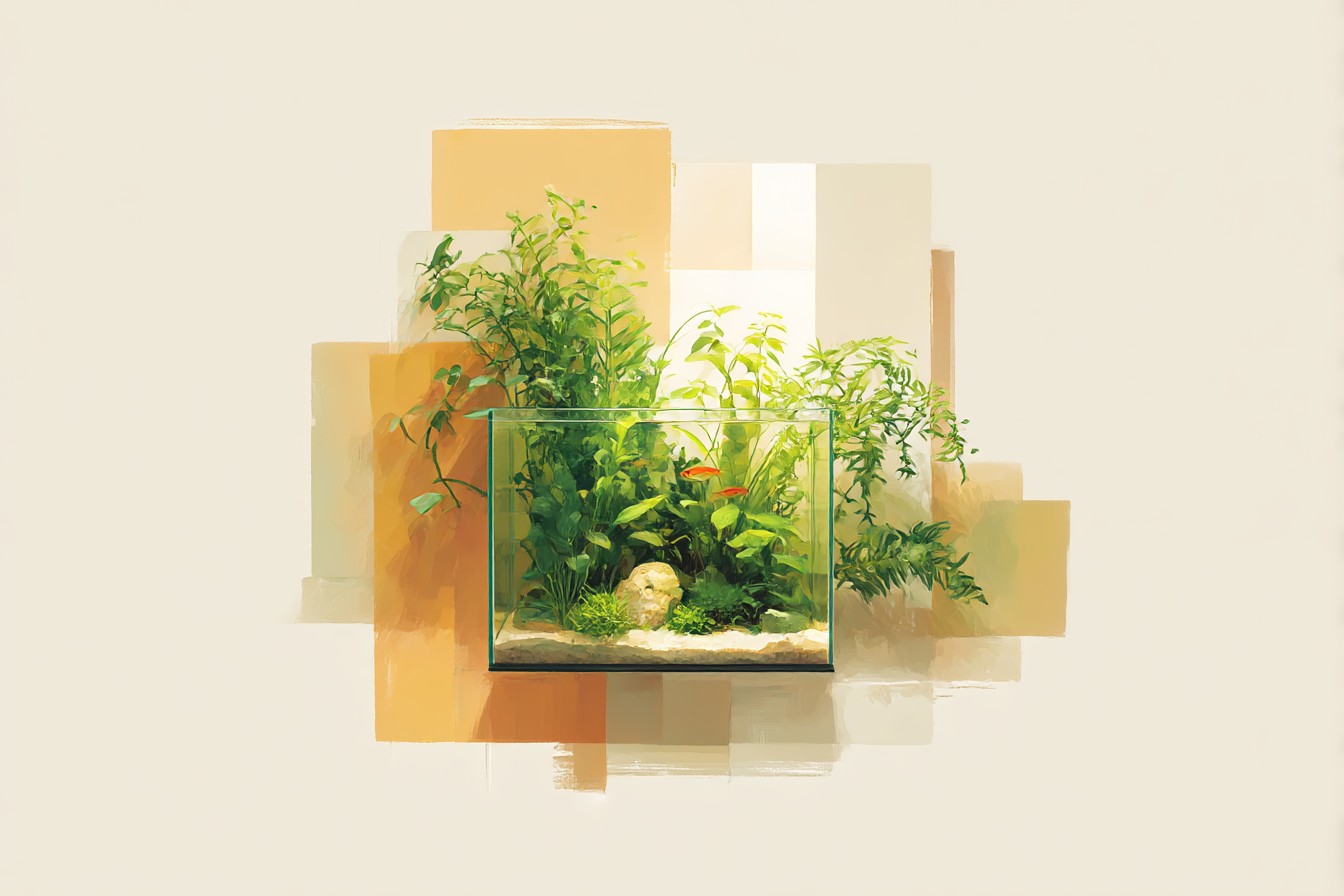
# The 30-Gallon Planted Tank: Finding Your Sweet Spot I bought my first 30-gallon tank because the 10-gallon nano was driving me mad and the 75-gallon seemed like something I’d need to explain to my wife for the next decade. Three years later, it’s still running in our living room, and I’ve built two more 30s since then. One for the kids’ bedroom, another in my home office where I can stare at it during video calls and pretend I’m thinking profound thoughts about client requirements.
The 30-gallon hits this middle ground that I didn’t realise I needed. Big enough that you can actually aquascape properly, small enough that a water change doesn’t take an hour and leave you soaked. Room for a proper school of tetras and some bottom dwellers, but you can still catch a fish with a net if you need to.
It’s the Goldilocks tank, really. Not too big, not too small, just right for most people who want something more ambitious than a betta bowl but aren’t ready to turn their front room into an aquatic warehouse.

This size taught me more about planted tanks than any amount of reading ever did.
You’ve got enough volume that small mistakes don’t crash the system overnight, but you’re still close enough to everything that you notice changes. When the CO2 runs out, you see it. When the lighting period needs adjusting, it’s obvious.
When that new plant you added starts melting, you spot it before it takes down the whole scape. | **Tank Volume** | **Dimensions (L×W×H)** | **Footprint** | **Weight (Filled)** | **Ideal for** | **Our Rating** | |—————–|————————|—————|——————-|—————|—————-| | 30 Gallon | 36″×18″×12″ | Moderate | 346 lbs | Intermediate aquascapers | 8.5/10 | ## The Numbers That Actually Matter The standard 30-gallon dimensions are 36 inches by 12 inches by 16 inches (The Aquarium Expert), but that’s the tall version that most people skip. What you want is the breeder footprint: 36 inches by 18 inches by 12 inches (Fish Tank Focus). That extra width and the lower height change everything about how you can scape it and what fish will be happy in it.
At 30 gallons, you’re looking at 113.56 litres (UnitConverters) of water, which sits in that useful range where biological processes start working for you rather than against you. The bioload is manageable even if you stock it properly. The water volume gives you time to react when something goes wrong.
But it’s not so much water that testing becomes a production or that heating costs start appearing on your energy bill. The weight is worth thinking about seriously. Empty, you’re looking at 48 pounds (Fish Tank Focus).
Filled with just water, that becomes 346.4 pounds (Fish Tank Focus), and that’s before you add substrate, hardscape, and equipment. Most domestic floors can handle this without reinforcement, but you want it near a load-bearing wall, not in the centre of a room with a dodgy Victorian timber frame underneath. ## Why This Size Works for Plant Growing The 36-inch length gives you room to create proper depth in your hardscape. You can build slopes that actually look like landscapes rather than tiny piles of gravel.
The 18-inch width means you can fit substantial pieces of driftwood without the tank looking cramped, and you can plant background species that have space to grow without immediately overwhelming everything else. But it’s the 12-inch height that makes the real difference for plants. Most LED fixtures designed for planted tanks work beautifully at this depth.
You get even light distribution without the shadowing issues that plague taller tanks, and you don’t need the high-end fixtures required to push adequate light down through 20 inches of water. I’m running a basic Nicrew ClassicLED on mine, and even the red plants colour up properly. The moderate depth also makes CO2 injection more predictable.
The petrol doesn’t have as far to travel to reach surface plants, and you don’t get the stratification problems that can develop in deeper tanks where the bottom plants get completely different CO2 levels than the ones near the surface. When you’re learning how to balance CO2, nutrients, and light, having fewer variables is genuinely helpful. For maintenance, the 18-inch width is perfect.
You can reach the back corners without getting your entire arm wet, but it’s wide enough that you can create proper foreground, midground, and background zones. I can trim the back row of plants while keeping my sleeves mostly dry, which might sound trivial until you’re doing weekly maintenance in work clothes because that’s the only time you’ve got. The volume gives you options for substrate layering that smaller tanks don’t really allow.
I’ve got about three inches of ADA Amazonia in mine, with some root tabs pushed down near the stem plants. That depth means the nutrients last months rather than weeks, and it gives root-feeding plants like cryptocorynes and sword plants room to actually establish proper root systems. ## Stocking Sweet Spot This is where 30 gallons really shines. You’ve got room for proper schools of smaller fish without the tank feeling empty, but you’re not committed to massive weekly water changes to keep everything healthy.
I’m running about 15 neon tetras, six corydoras, and three otocinclus, which gives me fish at all levels of the tank without pushing the bioload. The tetras actually school at this tank size rather than just hanging around near each other. In a 10-gallon, six neons look like they’re queuing for something.
In a 30-gallon, 15 of them move like a proper shoal, which is the whole point of keeping schooling fish in the first place. For bottom dwellers, the 18-inch width gives corydoras room to actually forage properly. They’re not just bumping into glass every few seconds.
You Might Also Like
I can watch them doing their natural behaviour, which was impossible in smaller tanks where they spent most of their time looking slightly stressed and confused. The moderate bioload means I can skip water changes for a week if life gets complicated without immediately seeing stressed fish or parameter swings. That buffer is worth more than I expected when I was setting up the tank.
Sometimes work explodes, sometimes kids get ill, sometimes you just can’t face dealing with aquarium maintenance for a few days. The 30-gallon gives you that flexibility without punishing the livestock. ## The Learning Curve Reality This tank size taught me that most aquascaping advice is written by people running much larger systems with much more expensive equipment. The “beginner friendly” plants that supposedly don’t need CO2?
Most of them look acceptable in a 30-gallon with good light and liquid carbon, but they don’t really thrive without proper CO2 injection. I learned to dose fertilisers properly with this tank because the volume is large enough that small mistakes don’t immediately crash everything, but small enough that you see the results of changes quickly. When I was underdosing nitrogen, the plants told me within a week.
When I overdid the phosphates, I got algae, but not so much that it took months to sort out. The lighting requirements became clear too. Most “planted tank” LED strips sold for this size are underpowered if you want to grow anything interesting.
You can keep anubias and java fern alive, but forget about red plants or carpeting species without upgrading to something with proper PAR output. CO2 injection is where this tank size really comes into its own for learning. A small cylinder lasts months, so you’re not constantly refilling equipment.
But you’ve got enough plant mass that you can see what proper CO2 levels actually do for growth rates and plant health. The improvement is dramatic enough to be obvious, which makes it worth the extra complexity. ## The Honest Drawbacks The main limitation is that you’re stuck with smaller fish species. No angels, no larger cichlids, no fish that need serious swimming space.
If you autumn in love with something that needs 50 gallons minimum, you’re looking at a bigger tank whether you planned for it or not. Heating can be slightly more challenging than smaller tanks because the 18-inch width means a single heater might not distribute heat evenly. I ended up using two smaller heaters rather than one larger one, which solved the problem but doubled the number of things that could fail.
The footprint also means you need a proper stand. The old “stick it on a chest of drawers” approach that works for 20-gallon longs doesn’t work here. The 36-inch length rules out most furniture, so you’re looking at buying or building something specifically for the tank.
Standard rectangles of this size usually include centre braced frames to reduce bowing (Aqueon), which can interfere with lighting placement and make trimming tall plants slightly more awkward. It’s not a major problem, but it’s something to plan around when you’re positioning equipment. ## Where It Fits in the Hobby The 30-gallon represents a sweet spot that manufacturers and retailers have recognised for decades. It’s described as offering a balance of manageability and space (The Aquarium Expert), which sounds like marketing speak but actually holds true in practise.
Most major manufacturers offer this size in the breeder footprint. Seapora lists their 30-gallon breeder as 36 by 18 by 12 inches (Pro Aquarium Store), and their 30-gallon wide uses the same dimensions (Elmers Aquarium Catalogue). The consistency suggests this footprint has proven popular enough to become a standard rather than a niche option.
In planted tank communities, 30-gallon builds show up regularly in forums and social media, usually as “step up” tanks from people who started with smaller systems.

It’s large enough that the results look properly impressive in photos, but not so large that the equipment costs become intimidating for hobbyists who are still learning what they actually need. The size also works well for breeding projects if you want to try your hand at raising fry.
Enough space for a pair of dwarf cichlids or a small group of killifish, but not so much water that maintaining breeding parameters becomes expensive or complicated. ## The Verdict Three years in, the 30-gallon breeder remains my go-to recommendation for anyone who’s kept a small tank successfully and wants to try proper aquascaping. It’s large enough that you can create something genuinely beautiful, but not so large that every mistake becomes expensive or time-consuming to fix. The footprint gives you room to learn composition properly.
The volume gives you stability while you’re figuring out fertilisation and CO2. The moderate lighting requirements mean you don’t need to spend hundreds on equipment before you know whether you’ll stick with the hobby. And if you do catch the bug properly, everything you learn in a 30-gallon scales up to larger systems without having to start from scratch.
If you’re keeping a 10-gallon nano and finding it frustrating, or if you’re looking at 55-gallon tanks and feeling slightly overwhelmed by the commitment, this is probably your tank. It’s not the most exciting size, but it might be the most useful one. See where this placed in our full planted tank size ranking.


