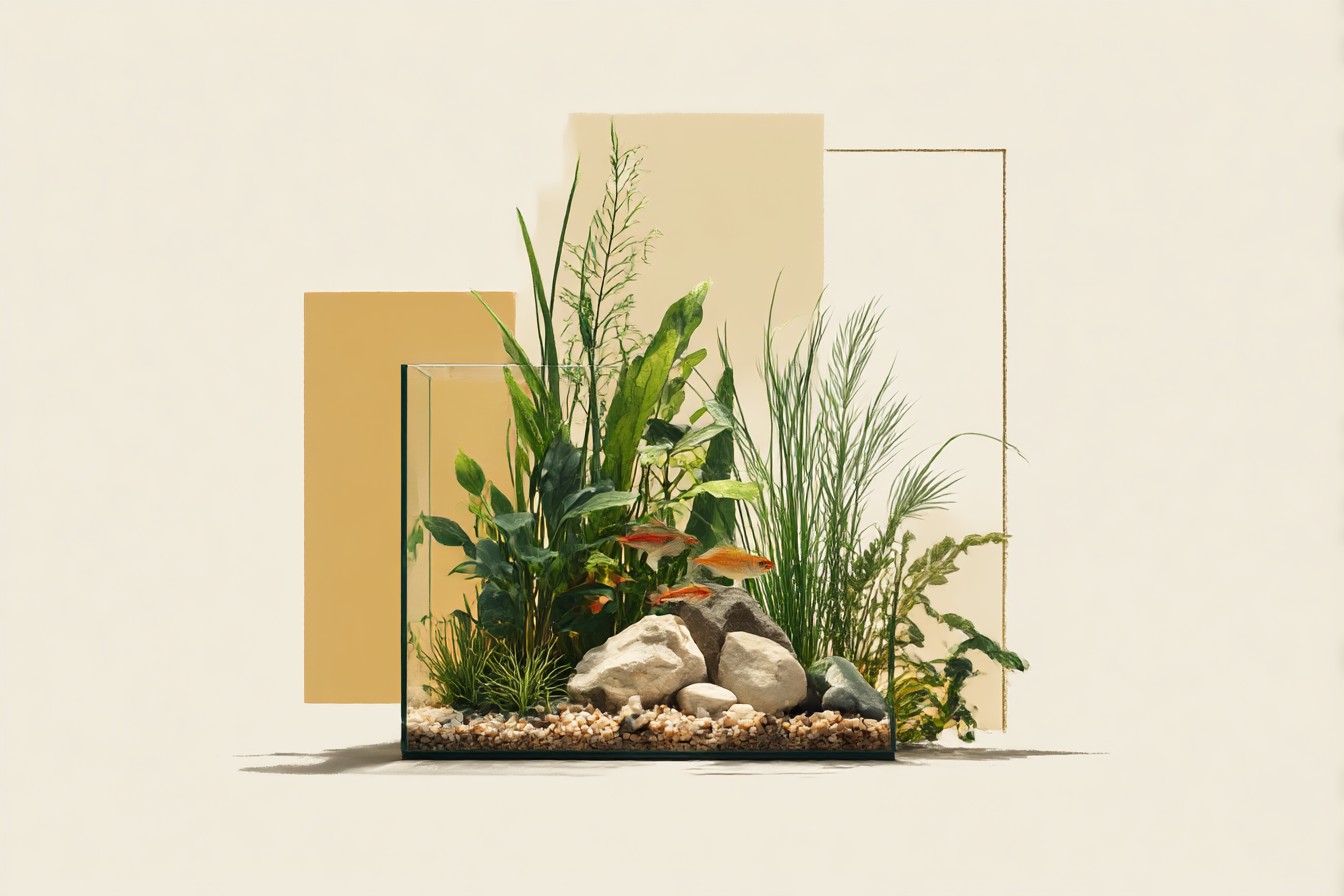
# CaribSea Eco Complete and the Substrate That Skips the Cycling Nightmare I’ll admit it straight up: I bought my first bag of CaribSea Eco Complete because the marketing claimed it would skip the cycling process entirely. Classic programmer thinking, really. If there’s a shortcut that actually works, why wouldn’t you take it?
But after spending three weeks debugging algae issues in my previous tank because I’d rushed the setup, I was also deeply sceptical. Nothing in this hobby is ever that simple. Turned out both instincts were partially right.
The substrate didn’t magically eliminate cycling, but it did something more interesting: it made the whole process predictable. When you’re working with a 30-litre tank in a rented room and can’t exactly afford to kill fish through trial and error, predictable matters more than miraculous.

Two years later, I’ve rebuilt that same tank four times with different hardscapes, and I keep coming back to Eco Complete.
Not because it’s perfect, but because I understand exactly what it does and doesn’t do. And in a hobby where half the information online seems designed to sell you something rather than actually help you succeed, that kind of clarity has real value. | Substrate Type | Grain Size | Depth Required | Rinsing Needed | Cycling Claims | Our Rating | |—|—|—|—|—|—| | CaribSea Eco Complete | Bi-modal (fine bottom/coarse top) | At least 3 inches | No | Reduces cycle time | 7.5/10 | ## What Exactly Is Eco Complete? CaribSea launched this substrate as a solution to one of planted aquascaping’s most frustrating problems: getting a tank established without losing fish or plants in the process.
The concept was straightforward enough. Take all-natural basaltic gravel (BRS Fresh), add beneficial bacteria and trace elements, package it wet to keep everything alive, and market it as ready to use without rinsing (BRS Fresh). The basaltic material comes from volcanic rock, which gives it a naturally porous structure that’s good for bacterial colonisation.
CaribSea’s processing creates a bi-modal grading that forms two layers: fine particles at the bottom and coarser material on top (Pro Aquarium Store). The theory is that this mimics natural riverbed conditions where finer sediments settle below coarser gravels. What makes it different from standard aquarium gravel is the bacterial inoculation and mineral content.
According to the manufacturer, it contains over 25 elements beyond the basic minerals (BRS Fresh), though they’re not particularly transparent about what those elements are or in what concentrations. The product has gone through a few branding changes over the years. Originally called Eco-Complete, then Eco-Planted, it’s now marketed simply as Eco Complete (BRS Fresh).
The formulation appears to have remained consistent through these changes, which is more than you can say for some aquascaping products that get reformulated every time they change the packaging. ## Why This Substrate Actually Works Here’s what I discovered after building multiple tanks with Eco Complete: it’s not magic, but it is engineered properly. The bacterial colonisation claim isn’t marketing nonsense. When you open a fresh bag, you can smell that it’s biologically active.
Not unpleasant, just earthy and alive in a way that sterile substrates aren’t. The bi-modal particle structure creates genuine advantages for plant growth. The fine particles at the bottom retain nutrients and provide stable anchoring for root systems.
The coarser top layer allows good water flow and prevents compaction that can create anaerobic pockets. I’ve pulled up plants after months of growth and found extensive root networks that clearly prefer this structure to uniform gravel. For cycling, it doesn’t eliminate the process, but it does make it more predictable.
The pre-seeded bacteria give you a head start on ammonia processing. In my experience, you’ll see nitrites within 3-4 days instead of the usual week to ten days with sterile substrates. The total cycle time drops from 4-6 weeks to about 3 weeks, assuming you’re not overloading the tank.
The mineral content provides a slow-release source of nutrients that plants can access through their roots. However, and this is important, UKAPS forum users have noted it contains no NPK macronutrients (UKAPS Forum). So you’re still going to need proper fertilisation for serious plant growth.
What it does provide is trace elements that can be harder to supply through liquid fertilisers. The recommended depth is at least 3 inches (Pro Aquarium Store), and I’ve found this is actually necessary to get the full benefit. In thinner layers, you don’t get the proper stratification that makes the substrate work as intended.
The rule of thumb is 1-2 pounds per gallon of aquarium water (Pro Aquarium Store), which means a 20-pound bag covers about 10-20 gallons depending on your desired depth. One aspect that surprised me is how well it maintains itself over time. Forum discussions note that beneficial bacteria will naturally colonise the substrate without aggressive vacuuming (FishForums.net).
This matches my observation that light maintenance actually works better than heavy cleaning with this substrate. Heavy vacuuming disrupts the bacterial colonies you want to maintain. ## The Real Limitations Let’s be honest about where Eco Complete falls short. First, the cost.
At £25-30 for a 20-pound bag (Tank Needs), it’s significantly more expensive than standard aquarium gravel. For larger tanks, this adds up quickly. The black colour, while attractive initially, shows detritus more readily than brown or natural substrates.
You Might Also Like
In a low-tech tank where you’re relying on slower biological processes to handle waste, this can make the tank look dirty even when the water chemistry is fine. Despite the marketing claims about no rinsing required, I’ve found that a light rinse actually improves initial water clarity. The substrate comes pre-moistened to keep bacteria alive, but there’s still enough dust to cloud the water for the first few days if you don’t rinse it.
Nothing severe, but worth knowing if you’re planning a quick setup. The bacterial inoculation, while real, isn’t a complete cycling solution. You still need to add an ammonia source to feed the bacteria and build up sufficient colonies to handle your intended fish load.
I learned this the hard way with my first tank when I assumed “ready to use” meant I could immediately add a full stock of fish. Plant rooting can be inconsistent in the first few weeks. Some species, particularly fine-rooted plants like Eleocharis or small Cryptocorynes, struggle to establish in the coarser surface layer.
I’ve had better success planting these species with a small amount of fine sand around the root zone before adding the Eco Complete. The trace element content, while beneficial, isn’t standardised or well-documented. You’re basically trusting CaribSea’s formulation without knowing exactly what you’re getting.
For someone who prefers to control nutrient inputs precisely, this lack of transparency is frustrating. ## Long-Term Performance and Maintenance After two years of running Eco Complete in various configurations, the long-term behaviour is probably its strongest selling point. The substrate remains biologically active without becoming anaerobic or developing the hydrogen sulphide smell that can plague other nutrient-rich substrates. Root development in established plants is excellent.
I’ve got Amazon swords that have been in the same substrate for over a year, and when I’ve carefully excavated around them for replanting, the root systems are extensive and healthy. The plants clearly benefit from whatever trace elements are available in the substrate. Algae management is where Eco Complete really shines in a mature tank.
The established bacterial populations help process organic waste efficiently, which reduces the nutrient spikes that often trigger algae blooms. This doesn’t eliminate algae entirely, but it makes problems more manageable and less sudden. Water parameter stability improves over time as the substrate matures.
I’ve noticed less pH drift and more consistent nutrient levels compared to inert substrates. The buffering capacity isn’t dramatic, but it’s noticeable if you’re monitoring parameters closely. However, the substrate does compact over time, particularly in high-flow areas.
After about 18 months, I noticed reduced plant growth in certain sections where the substrate had become too dense for proper root penetration. Gentle stirring during routine maintenance helps, but it’s something to monitor. ## Impact on the Hobby Eco Complete arrived at an interesting time in the planted aquarium hobby. The early 2000s saw increasing interest in planted tanks among mainstream aquarists, but the technical barriers were still significant.
Soil substrates required careful preparation, inert substrates needed extensive supplementation, and the cycling process remained a major source of fish losses. CaribSea’s approach of pre-seeding substrate with beneficial bacteria influenced how other manufacturers think about substrate preparation. While not revolutionary, it demonstrated that biological activity could be maintained during storage and shipping, which opened up possibilities for other products.
The success of Eco Complete also highlighted the market demand for substrates that balance plant nutrition with ease of use. This middle ground between simple gravel and complex soil systems has become a standard category, with multiple manufacturers now offering similar products. For beginning planted tank enthusiasts, Eco Complete represented a significant step down in complexity while maintaining reasonable plant growth potential.
This accessibility probably brought more people into planted aquascaping who might otherwise have been deterred by the technical requirements. ## The Verdict CaribSea Eco Complete delivers on most of its promises, just not in the way the marketing suggests.

It doesn’t eliminate cycling, but it makes the process more predictable and reduces the time required. It doesn’t provide complete plant nutrition, but it offers enough trace elements and root anchoring to support decent growth with proper fertilisation.
For someone starting their first planted tank, it’s a solid choice that reduces several common failure points. The bacterial head start matters more than you might think when you’re learning to balance fish loads and plant growth. The trace element content won’t make or break your plants, but it does provide a buffer against deficiencies that can be hard to diagnose in new setups.
At the price point, it’s not the most economical option for large tanks. But for smaller builds where the per-bag cost isn’t prohibitive, the convenience and reliability have genuine value. I keep coming back to it because I know exactly what to expect, and in a hobby where unpredictability often means dead fish or failed plants, that consistency is worth paying for.
If you’re building a low-tech planted tank and want substrate that won’t fight against you while you learn the basics, Eco Complete does the job well. Just don’t expect it to solve problems that proper technique and patience need to address. See where this placed in our complete substrate ranking.


