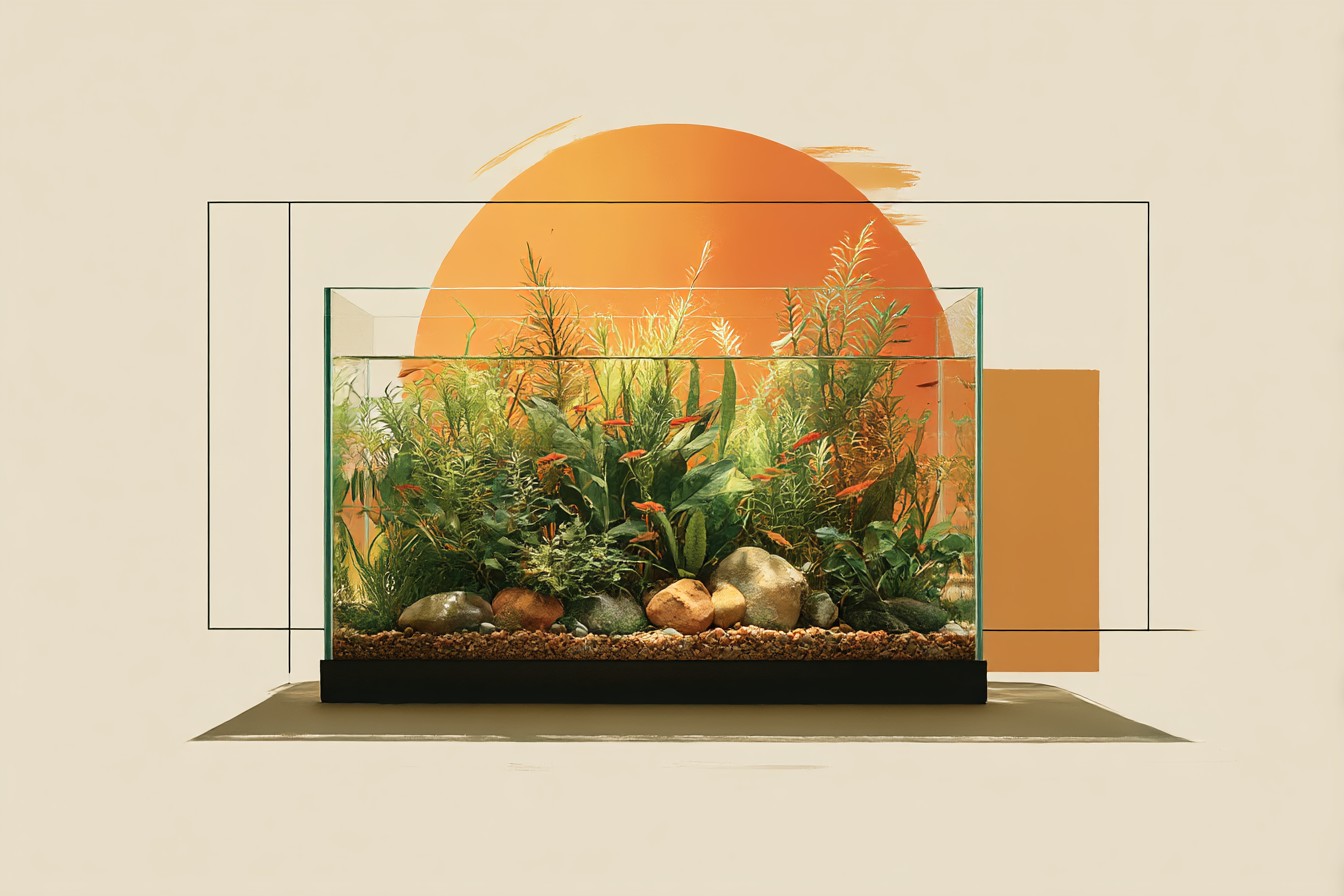
# The Ultimate Planted Aquarium Size Ranking: What the Crew Actually Recommends Right, so we finally sat down to hash this one out. Took us four sessions and Juan nearly walked out when Billy suggested putting the 125-gallon above the 20-long, but here it is: our definitive ranking of planted aquarium sizes. We’re only looking at tanks that are genuinely available in the UK without special ordering, and we’re talking about planted setups specifically, not cichlid systems or marine builds.
The debate got proper heated. Samuel kept pushing for larger tanks because of their stability, while Cynthia argued that most people live in flats and need something actually practical. Juan was all about the nano builds that can sit on a desk, and Bobby approached everything from the perspective of what works in a classroom setting.
Billy just wanted to talk about monster tanks the whole time. What we ended up with might surprise you.

The winner isn’t the biggest tank or the smallest.
It’s not the most Instagram-ready or the cheapest to set up. It’s the size that gives you the best balance of everything that matters: stability, scaping options, livestock choices, maintenance reality, and actually fitting into normal people’s homes. ## 1. 20 Gallon Long Planted Aquarium **Planted Tank | Perfect Balance**
**What makes it untouchable** This was the only tank we all agreed on immediately.
The 20-long hits every mark that matters. Those dimensions, 30 inches by 12 inches by 12 inches (Fish Tank Focus), give you the holy grail of aquascaping proportions. You’ve got room to create depth with proper foreground, midground, and background sections.
You can plant a proper carpet. You can fit a decent school of fish without them looking cramped. Cynthia was adamant about this one because it’s manageable.
At 222 pounds filled (Fish Tank Focus), most furniture can handle it without reinforcement. The 360 square inches of surface area means excellent petrol exchange for plant health, and that shallow 12-inch depth means your light penetrates properly to the substrate without needing massive wattage. Juan pointed out something crucial: this is where you learn proper aquascaping technique.
The proportions force you to think about composition and scale. Samuel agreed from a teaching perspective – every principle that applies to larger tanks works here first. **Does it still hold up?** The only limitation is livestock. You’re not keeping angelfish or larger cichlids, obviously.
But for planted community tanks with tetras, rasboras, small corydoras, and shrimp? Perfect. The maintenance is reasonable – you can reach every corner without fully submerging your arm, water changes don’t require a python system, and plant trimming doesn’t become a major production.
Our full guide to 20-gallon long planted tanks covers why this shape specifically works so well for aquascaping. ## 2. 10 Gallon Planted Aquarium **Planted Tank | Beginner Friendly**
**What makes it untouchable** This is where most people actually start, and there’s a reason for that. Billy argued hard for this position because it’s the sweet spot between “too small to be stable” and “too big to be manageable.” Those standard dimensions of 20 by 10 by 12 inches (MeasuringStuff) give you real scaping room while keeping the footprint reasonable.
At 110 pounds filled (Fish Tank Focus), almost any table or stand will support it. The water changes can be done with a bucket rather than a hose system. You can lift and move the tank if needed, which matters more than people think when you’re starting out and still figuring out placement.
Juan made a solid point about economics: this is large enough to support a proper ecosystem with beneficial bacteria, but small enough that mistakes don’t cost a fortune to fix. If you overdose fertiliser or have an algae outbreak, you’re not dumping 50 litres of water. **Does it still hold up?** The main weakness is stocking limitations. You’re looking at small fish only – ember tetras, chili rasboras, a single betta, some shrimp.
Samuel was quick to point out that beginners often want to stock like it’s twice the size, and that’s where problems start. The other issue is that 10 gallons can swing chemically faster than larger volumes, but it’s still stable enough for planted setups if you’re not overstocked. Our detailed 10-gallon guide goes into the specific fish and plants that actually work in this size. ## 3.
30 Gallon Planted Aquarium **Planted Tank | Serious Hobbyist**
**What makes it untouchable** Samuel championed this one as the “grown-up” planted tank. At 36 by 18 by 12 inches in the breeder configuration (Fish Tank Focus), you get serious aquascaping space with that lovely shallow depth that keeps plants happy. This is where you can do a proper large school of cardinal tetras, keep a group of angels, or really go mad with plant variety.
The breeder dimensions specifically make this work. That extra width and the shallow height mean excellent light penetration and maximum surface area for petrol exchange. Bobby pointed out that this size teaches you about larger system dynamics without the commitment of a true monster tank.
Cynthia was initially sceptical about the weight – 346 pounds filled (Fish Tank Focus) needs a proper stand and floor consideration. But she came round when we talked about the livestock options. This is where you can keep fish that actually show natural behaviours. **Does it still hold up?** The main barrier is space and cost.
You need a dedicated spot for this, and the initial setup cost jumps significantly. Lighting becomes more expensive, filtration needs to be taken seriously, and CO2 injection starts making real sense rather than being optional. But if you’ve got the room and budget, this is where planted tanks really shine.
Our complete 30-gallon guide covers the equipment considerations and stocking options that make this size special. ## 4. 20 Gallon High Planted Aquarium **Planted Tank | Versatile Choice**
**What makes it untouchable** This sparked a proper argument. The high version gets the same water volume as the long but in different proportions – 24 by 12 by 16 inches (The Aquarium Expert).
Samuel made the case that this works better for certain setups, particularly if you want to keep fish that use vertical space or create dramatic height in your hardscape. The taller profile fits better in some spaces where width is limited. Juan pointed out that for flat dwellers, sometimes tall and narrow works better than long and shallow.
The same 222-pound filled weight (Fish Tank Focus) as the long version, but different visual impact. Billy argued that the reduced surface area compared to the long version – 288 square inches versus 360 (Aqua Initium) – hurts petrol exchange and limits stocking slightly. **Does it still hold up?** The height creates lighting challenges. Getting good PAR down to a planted substrate in 16 inches of water requires better equipment than the 12-inch depth of the long version.
Plant selection becomes more critical because carpeting plants won’t get adequate light at the bottom without significant investment. The reduced surface area also limits stocking compared to the long. But for certain aesthetics and space constraints, it’s the right choice.
Our 20-gallon comparison guide breaks down when to choose high versus long. ## 5. 5 Gallon Planted Aquarium **Planted Tank | Nano Challenge**
**What makes it untouchable** Juan fought for this position because 5-gallon planted tanks, when done right, are genuinely impressive. Those dimensions of 16 by 8 by 10 inches (Fish Tank Focus) give you just enough space for proper aquascaping technique while staying truly nano.
At 62 pounds filled (Private Scuba), this can sit on almost any surface. The kit versions come in at just over 5 pounds (The Spruce Pets), making them genuinely portable. For students, renters, or people with minimal space, this opens up the hobby completely.
You Might Also Like
Samuel was initially resistant, arguing that beginners struggle with the stability issues. But Juan pointed out that 5 gallons is large enough to maintain beneficial bacteria and stable parameters if you stock appropriately and don’t overfeed. **Does it still hold up?** The challenges are real. Stocking is severely limited – a betta and some shrimp, maybe a handful of micro rasboras if you’re experienced.
Water parameter swings happen faster than larger tanks. Heating can be tricky with the small heater requirements. But for nano aquascaping or species-specific setups like shrimp breeding, this size has genuine advantages.
Plant growth is easier to manage, maintenance is quick, and the initial cost is minimal. Our 5-gallon planted guide covers what actually works at this scale. ## 6. Small Desktop Planted Aquarium (2.5 Gallon and Under) **Planted Tank | Ultra Nano**
**What makes it untouchable** These tiny systems, typically 2.5 gallons and under with dimensions around 12 by 6 by 8 inches (Fish Tank Focus), are where aquascaping meets art project.
Juan was passionate about these because they prove you can create something genuinely beautiful in almost no space. At 27 pounds filled (Fish Tank Focus), these sit comfortably on any desk or shelf. The maintenance requirements are minimal – filter cartridges every four weeks (The Spruce Pets) and water changes measured in cups rather than buckets.
Cynthia appreciated that these make planted tanks accessible to anyone with a bedside table and twenty pounds to spend. They’re perfect for learning plant propagation and basic aquascaping principles. **Does it still hold up?** Livestock is essentially shrimp only, maybe a single dwarf puffer if you’re very experienced. The systems are sensitive and require consistent attention.
Plant choice is critical because fast-growing species will outgrow the space in weeks. But as desktop art pieces that happen to be functional ecosystems, they’re genuinely impressive. Our desktop aquarium guide covers the specific techniques that make these work. ## 7.
29 Gallon Planted Aquarium **Planted Tank | Awkward Alternative**
**What makes it untouchable** Bobby defended this one because it’s what many people end up with, often as part of a kit or because it’s what the shop had in stock. The 29-gallon sits in an odd spot – larger than the manageable 20-gallon sizes but with less convenient dimensions than the 30-gallon options. It’s a real size that gets sold, particularly in starter kits, and people do make it work.
The volume gives you more stability than smaller tanks and more livestock options than the 20-gallon range. **Does it still hold up?** The proportions work against you. Most 29-gallon tanks are taller than they are wide, creating lighting challenges for planted setups without the benefits of the 30-gallon breeder’s increased footprint. You end up with similar costs to better-proportioned alternatives.
It’s not a terrible choice, but it’s not the optimal choice either. Our 29-gallon analysis explains when this size makes sense and when it doesn’t. ## 8. 40 Gallon Planted Aquarium **Planted Tank | Commitment Level**
**What makes it untouchable** Billy pushed for this higher in the ranking because the jump from 30 to 40 gallons opens up new possibilities.
You can keep larger fish, create more complex scapes, and the increased water volume provides excellent stability. The livestock options expand significantly. This is where you can keep a proper angelfish pair, larger tetras, or more ambitious community setups.
Plant growth becomes more forgiving with the increased water volume buffering changes. **Does it still hold up?** The cost and space requirements jump dramatically. You’re looking at serious money for proper lighting, filtration becomes a significant consideration, and the weight requires proper furniture or dedicated stands. The initial setup costs start competing with other major purchases.
Most people who want this size end up considering even larger tanks, making it an awkward middle ground. Our 40-gallon guide covers when this size makes sense in your progression. ## 9. 125 Gallon Planted Aquarium **Planted Tank | Monster Tank**
**What makes it untouchable** This is where Billy finally got his way.
The 125-gallon, typically 72 by 18 by 21 inches (Aquarium Nexus), is where planted aquariums become room-defining features. At 1,379 pounds filled (Fish Tank Focus), you’re talking about serious structural considerations. The livestock possibilities are genuinely exciting.
Large angels, substantial tetras schools, multiple species coexisting in something approaching natural densities. The plant growth potential is enormous, and the stability from that water volume means your parameters barely shift. **Does it still hold up?** The barriers are significant. The weight requires engineered flooring consideration in many homes.
The initial cost is substantial, the ongoing costs are serious, and the commitment level is total. If you want to move house, this complicates everything. But for those with the space, structural support, and budget, these systems create displays that are genuinely spectacular.
Our 125-gallon monster tank guide covers the reality of what owning one actually involves. ## 10. Japanese Planted Aquarium Styles **Aquascaping Style | Advanced Technique**
**What makes it untouchable** Cynthia argued that this shouldn’t be ranked with tank sizes, and she had a point. But the Japanese approach to planted aquariums has become so fundamental to modern aquascaping that ignoring it felt wrong.
The IAPLC competition received 1,533 entries from 77 countries in 2025 (IAPLC Official Site), showing how globally influential these techniques have become. The iwagumi approach, typically using odd numbers of stones with a minimum of three (TIAS Summit), has defined modern planted aquascaping since Takashi Amano popularised it. The golden ratio principles and minimalist plant selection – often just one to three species (Aquarium Lesson) – influence tanks at every size. **Does it still hold up?** The techniques remain the foundation of serious aquascaping, but they’re style approaches rather than tank specifications.
The principles work across different sizes, but mastering them requires significant experience and often specific equipment for proper implementation. Our Japanese aquascaping styles guide breaks down the specific techniques and how to apply them regardless of tank size. ## Almost Made the Cut **15-gallon tanks**: Bobby made a solid case for these, particularly the column-style versions that some manufacturers offer. The volume sits nicely between 10 and 20 gallons, but the availability is inconsistent and the dimensions often work against planted setups. **75-gallon tanks**: Samuel pushed hard for this as the “sensible large tank” that gives you most of the benefits of the 125-gallon without quite the same structural and cost considerations.
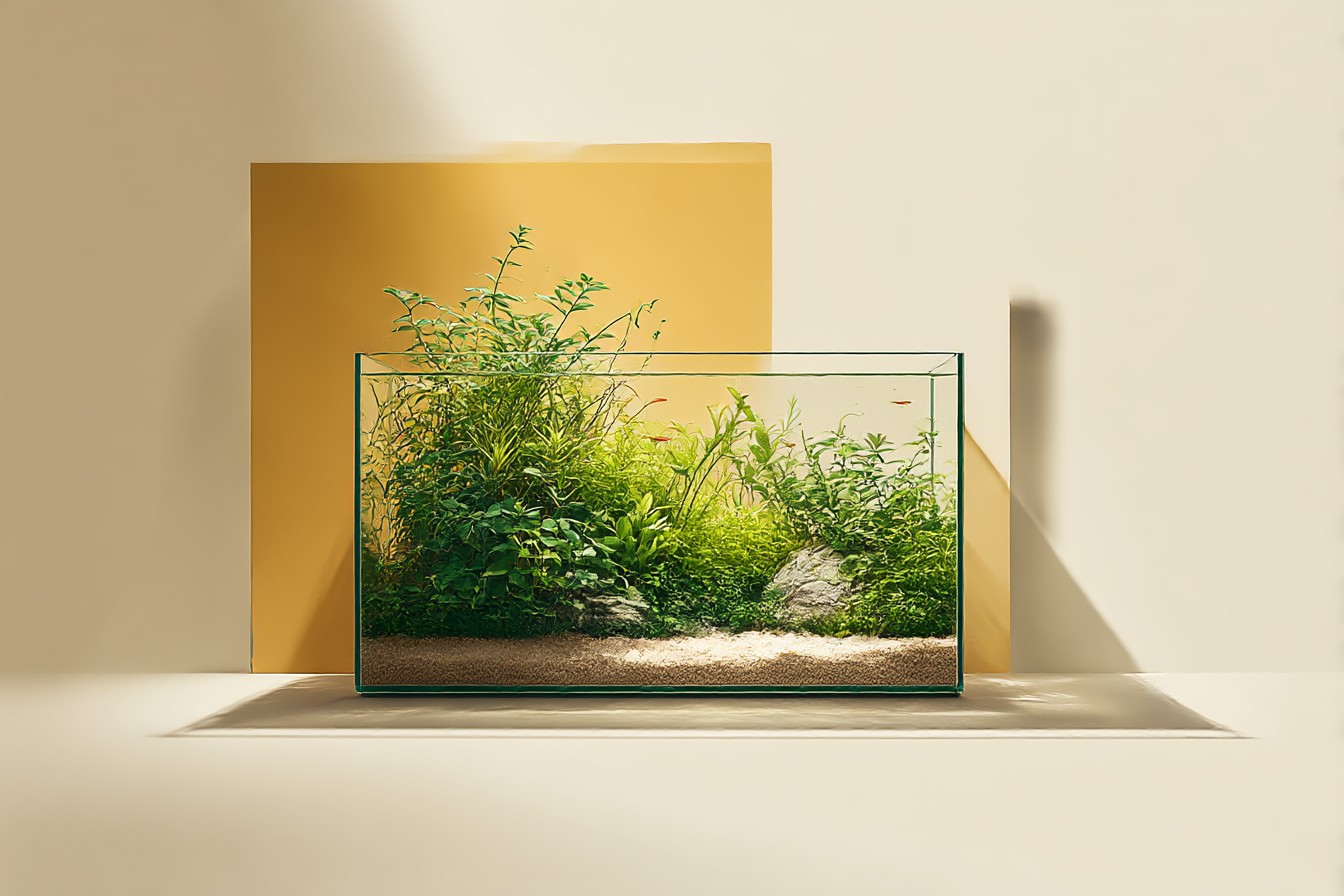
We came close on this one. **Rimless nano cubes**: Juan was passionate about these ultra-modern small tanks, typically 6 to 8 inches per side. They’re genuinely beautiful when done well, but the market is fragmented and the techniques required are quite specialised. **Long and shallow custom dimensions**: Billy wanted to include tanks built to specific ratios, particularly 48 by 24 by 12 inch builds.
The proportions are excellent, but custom sizing puts them out of reach for most hobbyists. **Desktop pond systems**: Cynthia suggested including these as they’re technically planted aquatic systems, but we decided they’re different enough from traditional aquariums to warrant separate consideration. ## The Final Word So there it is.
The 20-gallon long wins because it balances everything that matters: aquascaping potential, livestock options, manageable maintenance, reasonable cost, and actually fitting into normal homes. The 10-gallon earned second place as the genuine starter tank that doesn’t compromise on being a proper ecosystem. What surprised us was how much the physical dimensions mattered beyond just water volume.
Surface area, depth for lighting penetration, and length for creating visual depth all proved more important than we initially expected. The tanks that ranked highest gave you the most options within their size constraints. Think we got it wrong?
Yeah, probably on at least two of these. Juan still reckons the 5-gallon should be higher, Billy maintains the 125-gallon belongs in the top three, and Samuel thinks we underestimated the 30-gallon breeder. But that’s what makes this hobby interesting – we all end up with different solutions to the same basic challenge of creating thriving underwater gardens.
Let us know where you think we went wrong. Just remember that if you’re going to argue for the monster tanks, you’d better have reinforced your floor first.


