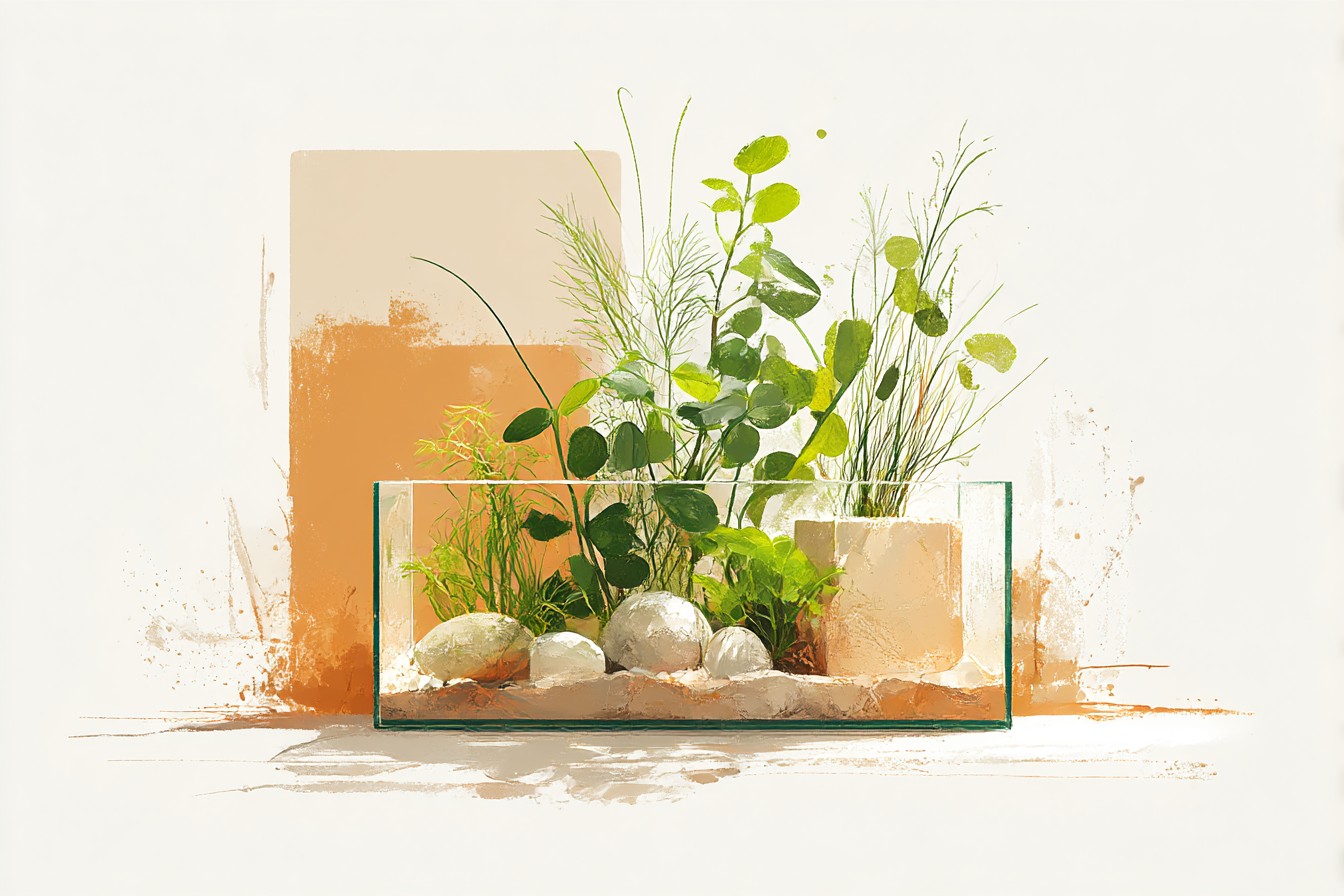
# How to Grow Aquarium Plants From Seeds and the Few That Actually Work If you’ve spent any time browsing aquascaping forums or eBay listings, you’ve probably stumbled across sellers flogging “instant carpet” seeds that promise to transform your tank into a lush green meadow within weeks. The reality is considerably less magical. Most aquarium plant seeds sold online are either terrestrial plants that’ll die the moment you flood the tank, or legitimate aquatic plants that are far more trouble than they’re worth compared to buying established plants or cuttings.
That said, there are a handful of aquatic plants you genuinely can grow from seed, and understanding the process can be useful if you’re patient, enjoy propagation projects, or want to understand how aquatic plant reproduction actually works. The key is knowing which species are worth attempting and which are marketing nonsense designed to separate you from your money. I’ve spent the last two years experimenting with various seed propagation methods after buying into the hype myself.
Some attempts were complete failures. A few worked better than expected.

What became clear is that seed propagation in aquascaping occupies a very specific niche that most hobbyists probably don’t need to explore, but for those who do, the results can be genuinely rewarding if you approach it with realistic expectations. ## The Science Behind Aquatic Plant Seed Germination **Emersed vs Submersed Growth Requirements** Most legitimate aquatic plants that can be grown from seed require what’s called emersed propagation initially.
This means starting them above water level before gradually transitioning them to fully submerged growth. The biological reason is that many aquatic plants maintain the ability to photosynthesize in air, which provides better energy production during the vulnerable germination phase when root systems are still developing. During emersed growth, plants access atmospheric CO2 directly rather than relying on dissolved CO2 in water, which can be limiting in the early stages.
They also avoid competition from algae and waterborne pathogens that might overwhelm delicate seedlings. Once established, these plants can transition to submersed growth where they adapt their leaf structure and metabolism for underwater photosynthesis. **Seed Viability and Storage Factors** Aquatic plant seeds generally have shorter viability periods than terrestrial plant seeds because they evolved in consistently moist environments rather than dry storage conditions. Most legitimate aquatic plant seeds need to be planted within 6-12 months of collection, and many benefit from being stored in slightly damp conditions rather than completely dry storage.
Temperature fluctuations during storage significantly affect germination rates. Seeds stored at consistent cool temperatures (4-8°C) typically maintain higher viability than those exposed to temperature swings or prolonged warmth. This is why many sellers who ship internationally struggle to maintain viable seed stock. **Germination Triggers and Timing** Aquatic plant seed germination often requires specific environmental triggers that mimic natural flooding cycles.
Many species need a period of cool, moist stratification followed by warming temperatures and increased light levels. Others require physical scarification to break through tough seed coats that evolved to survive dry periods. Understanding these requirements explains why simply sprinkling seeds into an established tank rarely works.
The conditions that support mature aquatic plants aren’t necessarily optimal for seed germination, particularly regarding light intensity, nutrient availability, and substrate composition. ## Species That Actually Work: Lotus and a Few Others **Sacred Lotus (Nelumbo nucifera)** Sacred lotus is probably the most reliable aquatic plant you can grow from seed, though it requires specific preparation. Lotus seeds require scarification and warm water 75–85°F (24–29°C) to germinate quickly (Alibaba Spice Basics). The scarification process involves carefully filing or nicking the hard seed coat to allow water penetration.
Lotus germination typically occurs within 24–72 hours after proper preparation (Alibaba Spice Basics Germination). First floating lotus leaves can appear in 7–14 days after germination (Alibaba Spice Basics Leaves), though lotus full blooming can take 3–4 months under optimal conditions (Alibaba Spice Basics Bloom). The challenge with lotus is space and lighting.
Lotus requires 6+ hours of direct sunlight daily for best results (Alibaba Spice Basics Sun), which means most indoor aquarium setups won’t provide adequate conditions for long-term success. They’re better suited to outdoor ponds or very large, well-lit indoor setups. **Glossostigma elatinoides** Glossostigma is one of the few carpeting plants where seed propagation might be theoretically possible, though it’s considerably more complex than buying established plants. UKAPS notes it is theoretically possible to grow some aquatic plants like Glossostigma from seed in emersed form (UK Aquatic Plant Society).
The process requires starting seeds in very shallow water or on saturated substrate, maintaining high humidity, and providing strong lighting. Glossostigma seed planting guidance suggests spacing 1-2 cm apart (EsdemGarden), though getting viable seeds from reputable sources remains challenging. Even when successful, the practical reality is that seed propagation is far quicker by runners than by seed per UKAPS discussion (UK Aquatic Plant Society Runners).
Established Glossostigma plants will carpet a tank through vegetative reproduction far more reliably than seeds ever will. **What Doesn’t Work Despite Marketing Claims** Many sellers advertise “aquarium grass seeds” that supposedly include popular aquascaping plants. Guide claims many aquarium grass seeds include Echinodorus and Glossostigma (The Aquarium Expert), but in practise, most of these seed mixes contain terrestrial grasses that will grow briefly in moist conditions before dying when fully submerged. The economics don’t add up either.
Legitimate aquatic plant seeds are expensive and difficult to collect. The cheap seed packets flooding eBay and Amazon are almost certainly terrestrial plants marketed to unsuspecting aquascapers. If something seems too cheap and promises too much, it probably is. ## Common Mistakes That Kill Seed Projects
Mistake #1: Flooding too early. Most people plant seeds directly in flooded substrate because that’s what they see in their established tanks.
Aquatic plant seeds typically need to germinate in moist but not flooded conditions before gradually transitioning to submersed growth. Flooding immediately usually leads to seed rot or poor germination rates. Start with saturated substrate and gradually increase water levels over several weeks.
Mistake #2: Using established tank substrate. Mature aquarium substrate contains established bacterial populations and often accumulated organics that can overwhelm delicate seedlings.
Seeds need sterile or nearly sterile growing medium initially. Use fresh aqua soil or a sterile sand/vermiculite mix rather than substrate from your existing tank.
Mistake #3: Insufficient lighting for germination. Seedlings need different lighting than established plants, often requiring stronger, more direct light to power initial growth. Many people try germinating seeds under the same moderate lighting they use for established low-tech tanks.
Seeds typically need lighting equivalent to high-tech planted tank setups during germination phase.
You Might Also Like
Mistake #4: Wrong temperature management. Most aquatic plant seeds need warmer temperatures for germination than you’d maintain in a typical community tank. Room temperature (20-22°C) often isn’t sufficient. You need controlled warming to 24-29°C for reliable germination of most species.
Mistake #5: Unrealistic timeline expectations. Seed propagation takes significantly longer than buying established plants.
Even successful projects typically take 8-16 weeks before you have anything resembling established growth. Many people give up after a few weeks when they don’t see dramatic progress.
Mistake #6: Buying from questionable sources. Most “aquarium plant seeds” sold online are not what they claim to be. Legitimate aquatic plant seeds are expensive, have short shelf lives, and are only available from specialist suppliers.
The cheap seed packets from overseas sellers are almost always terrestrial plants or completely non-viable.
## Research Support The limited scientific literature on aquatic plant seed propagation confirms what experienced aquascapers have learned through trial and error: most aquatic plants propagate more reliably through vegetative reproduction than sexual reproduction. Studies of natural wetland restoration projects show that aquatic plant establishment from seed requires very specific timing, environmental conditions, and often several seasons to achieve reliable results. Research into lotus propagation demonstrates the importance of proper seed preparation and environmental control.
Studies tracking germination success rates show dramatic differences between properly scarified seeds in controlled conditions versus untreated seeds in variable environments. This research supports the observation that successful aquatic plant seed propagation requires more precision and patience than most hobbyists are willing to invest. Commercial aquaculture research consistently shows that vegetative propagation methods produce more reliable, uniform results for most aquatic plant species used in aquascaping.
This explains why the aquarium plant industry relies primarily on tissue culture and cutting propagation rather than seed production. ## Application Across Different Tank Types **Large Display Tanks:** Seed propagation might be worthwhile for feature plants like lotus in tanks over 200 litres with high-intensity lighting and adequate surface area for floating leaves. **Pond Systems:** Outdoor ponds or heavily lit indoor pond systems provide the best conditions for seed-grown aquatic plants, particularly lotus species that require intense lighting. **Experimental Setups:** Dedicated propagation tanks with controlled heating, intense lighting, and adjustable water levels work best for seed experiments. Don’t attempt seed propagation in established community tanks. **Nano Tanks:** Generally unsuitable for seed propagation due to limited space for proper emersed setup phases and difficulty maintaining stable environmental conditions. **Low-Tech Setups:** Most low-tech lighting and filtration setups don’t provide adequate conditions for reliable seed germination. Seed propagation typically requires high-tech environmental control. ## Benefits of Successful Seed Propagation **Genetic Diversity:** Seed-grown plants provide genetic diversity that vegetatively propagated plants lack, potentially resulting in better adaptation to your specific tank conditions over time. **Cost Savings on Large Projects:** For very large installations, seeds can be more economical than buying hundreds of established plants, though only if you have high success rates and adequate time. **Propagation Skills Development:** Successfully growing aquatic plants from seed develops understanding of plant biology and environmental control that improves your overall aquascaping skills. **Unique Plant Access:** Some aquatic plant varieties are only available as seeds, particularly lotus cultivars and certain regional species not available through commercial plant suppliers. **Educational Value:** The process teaches you about aquatic plant life cycles, reproduction, and environmental requirements in ways that buying established plants never will. **Personal Satisfaction:** There’s genuine satisfaction in growing something from seed, particularly with the challenges involved in aquatic plant propagation. ## Step-by-Step Implementation Guide **Step 1: Research and Seed Acquisition (Weeks 1-2)** Start by identifying which species you actually want to grow and whether seeds are the best approach.
For most carpeting plants and standard aquascaping species, buying established plants or cuttings will be faster, more reliable, and often cheaper. If you decide to proceed with seeds, source them from reputable specialist suppliers rather than general online retailers. Expect to pay £15-25 for small quantities of legitimate aquatic plant seeds.
Lotus seeds from established suppliers typically cost £3-5 per seed. **Budget Breakdown:** * Legitimate aquatic plant seeds: £15-25 * Sterile growing medium: £8-12 * Heated propagation setup: £25-40 **Total Budget: £48-77** **Step 2: Propagation Setup (Week 3)** Set up a dedicated propagation container rather than attempting seed germination in your main tank. A shallow plastic container with controlled heating works better than trying to modify your aquarium. Install heating to maintain 24-29°C consistently.
Prepare sterile growing medium using fresh aqua soil or a sand/vermiculite mix. Avoid substrate from established tanks which contains bacteria and organics that can overwhelm seedlings. Set up lighting significantly stronger than your main tank lighting.
Seeds typically need lighting equivalent to high-tech planted tank setups during germination phase. **Budget Breakdown:** * Propagation containers: £10-15 * Heating equipment: £15-25 * Additional lighting: £30-50 **Total Budget: £55-90** **Step 3: Germination Phase (Weeks 4-8)** Plant seeds according to species-specific requirements. For lotus, scarify seeds carefully and soak in warm water. For Glossostigma, plant in saturated substrate with high humidity cover.
Monitor temperature, humidity, and light levels daily. Germination success depends on maintaining consistent conditions throughout this phase. Most species will show initial sprouting within 1-2 weeks if conditions are correct.
Watch for signs of fungal problems or seed rot, which indicate too much moisture or poor air circulation. Adjust environmental conditions based on seedling response rather than following rigid schedules. **Step 4: Establishment Phase (Weeks 9-16)** Gradually transition successful seedlings to higher water levels and aquarium-appropriate lighting.

This transition period is critical and rushing it typically kills seedlings that survived germination.
Begin introducing dilute liquid fertilisation once plants show established growth. Start with quarter-strength solutions and increase gradually based on plant response. Monitor for algae problems which can overwhelm slow-growing seedlings.
Maintain higher light levels than your main tank during this establishment phase. **Step 5: Tank Integration (Weeks 17-24)** Once seedlings show robust growth in the propagation setup, begin gradual introduction to your main tank conditions. This includes adjusting to your regular lighting schedule, water parameters, and filtration flow. Plant established seedlings in their final positions and maintain close monitoring for several weeks as they adapt to the new environment.
Many seedlings that survive propagation still fail during this integration phase if rushed. **Budget Breakdown:** * Fertilisation supplies: £8-12 * Integration equipment: £10-15 **Total Budget: £18-27** The reality is that seed propagation represents a significant time and money investment that most aquascapers would be better off avoiding. The few species that work reliably from seed require more environmental control than most home setups provide, and the timeline from seed to established plant typically exceeds what most hobbyists expect. For those willing to invest the time and effort, lotus propagation can be genuinely rewarding, particularly in larger setups with adequate lighting.
But for standard aquascaping plants like carpeting species, buying established plants or learning propagation from cuttings will give you better results in less time with considerably less frustration. Sometimes the traditional approach exists for good reasons.


