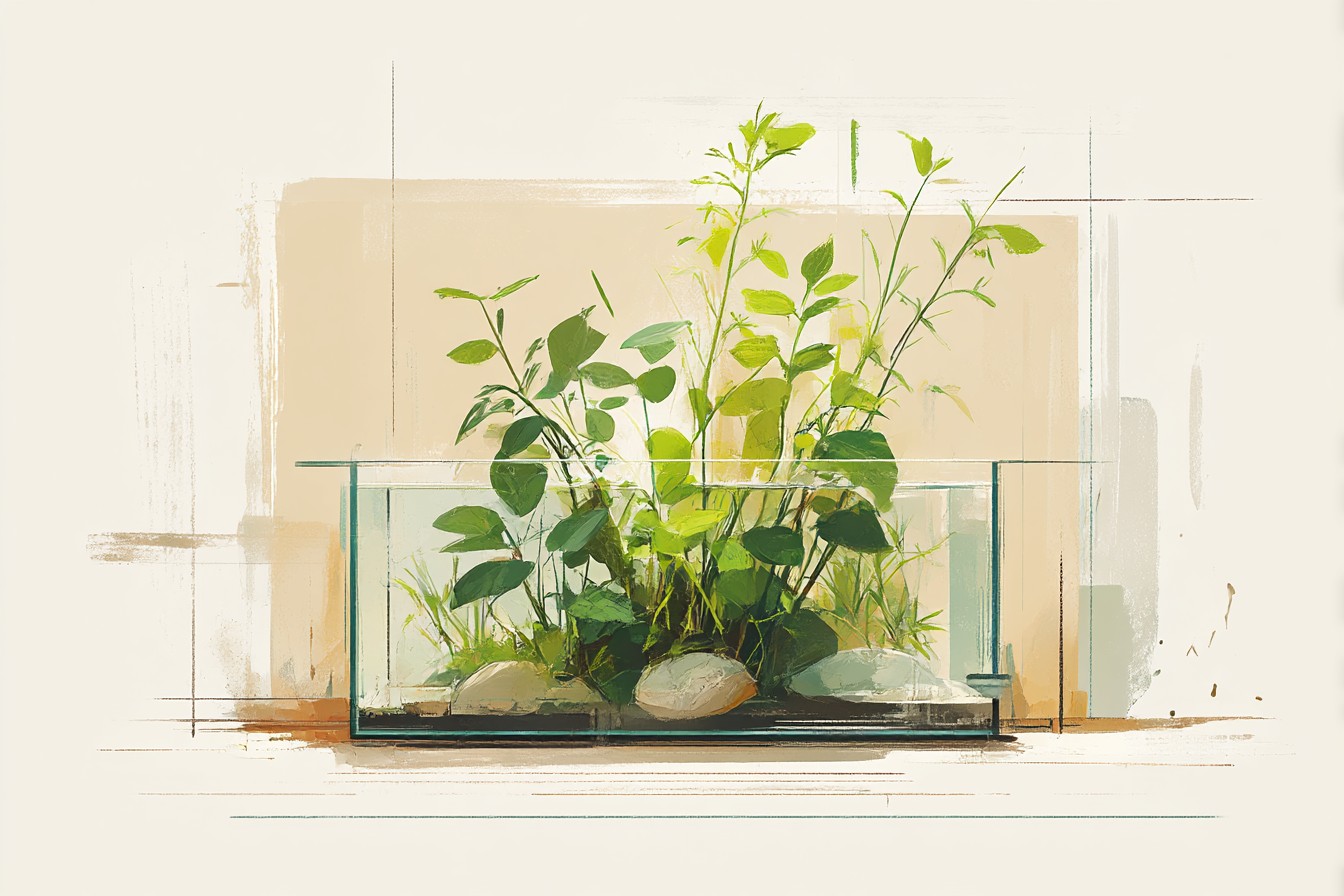
# Aquarium Plants Growing on Top of the Tank and the Emersed Setup Guide There’s something deeply satisfying about watching an aquarium plant break the surface and start reaching for the ceiling light. Most aquarists see this as a maintenance issue to be trimmed back, but it’s actually an opportunity to create something genuinely unique. Plants that grow with their roots underwater and their leaves above the surface open up possibilities you simply can’t achieve with traditional underwater scaping.
The setup creates a living bridge between your tank and the room it’s in, often with better plant health, reduced algae problems, and a completely different aesthetic than anything you’ll see in the usual aquascaping galleries. I discovered this by accident when a stem of Hygrophila broke the surface in my 90-litre setup and just kept going. Rather than cutting it back, I let it climb, and within six weeks it had transformed the whole character of the tank.
The aerial roots started filtering the water more effectively than I’d expected, the underwater portion stayed cleaner, and visitors started asking questions about what I’d done that made it look so different from every other planted tank they’d seen. This isn’t about complicated paludarium builds or expensive terrarium systems.

It’s about understanding how ordinary aquarium plants behave when you let them grow the way they want to, which is often up and out rather than perpetually pruned into neat underwater bushes. ## The Science Behind Emersed Growth Emersed growth occurs when plants have their roots anchored in water while their leaves and stems develop above the surface (Horizon Aquatics).
This isn’t just opportunistic behaviour from aquatic plants—it’s often their preferred growing method in natural habitats where water levels fluctuate seasonally. **Metabolic Advantages**: Plants growing emersed access atmospheric CO2 directly rather than competing for dissolved CO2 in the water column. Atmospheric CO2 concentrations around 400 ppm are significantly higher than what most aquarists achieve through injection systems, which typically max out around 30 ppm before fish start showing stress. This direct access allows for much more efficient photosynthesis and faster growth rates (Aquifarm). **Root System Development**: The root systems of emersed plants often develop more extensively than their fully submerged counterparts.
With unlimited access to dissolved nutrients in the water column and no competition from substrate-rooted plants, aerial root networks can spread and branch more freely. This creates significantly more surface area for nutrient uptake and biological filtration. **Stress Response Reduction**: Many aquarium plants are actually marsh plants that have adapted to underwater growth rather than true aquatics. Species like Anubias, many Cryptocorynes, and most stem plants show reduced stress markers when allowed to grow emersed, particularly during the transition period after planting when they’re establishing in a new environment.
The science also shows practical benefits for tank management. Emersed growth can help reduce algae issues by shifting a significant portion of plant mass above the water surface, reducing competition for light underwater while maintaining nutrient uptake through the root system (The Aquarium Expert). ## Primary Implementation: The Surface Garden Method The most straightforward approach is encouraging existing aquarium plants to break the surface and continue growing upward. This works particularly well with stem plants, some Anubias species, and trailing plants that naturally want to climb or spread. **Tank Modifications**: Lower your water level by 2-3 inches from the rim.
This gives plants space to emerge without immediately hitting the hood or lighting. Remove or modify your tank hood to allow plant growth—many standard hoods can be partially opened or have sections cut out for plant access while maintaining most of their functionality for containing fish. **Supporting Structures**: Install simple plant supports above the tank. Bamboo stakes positioned at tank corners and connected with fishing line create an invisible trellis system.
For heavier growth, small plastic trellises designed for houseplants can be positioned to span the tank width. The key is providing support without blocking too much light to underwater plants. **Lighting Considerations**: Your existing aquarium lighting will continue supporting underwater plants, but emersed portions need different light. Position a standard LED desk lamp or grow light 12-18 inches above the emerging plants.
Full-spectrum LED bulbs rated at 6500K work well and cost £15-25 from most hardware stores. Timer control ensures consistent photoperiods. **Water Management**: Emersed setups require more frequent top-ups since aerial plant mass increases evaporation. Expect to add 10-20% more water weekly than with fully submerged setups.
Use dechlorinated water as you would for regular maintenance—chlorine in tap water can damage exposed root systems (US EPA). **Humidity Management**: Emerging plants prefer higher humidity than typical indoor environments provide. A small humidifier positioned near the tank helps, but even placing water dishes around the tank area increases local humidity enough to support healthy emersed growth. Target 60-70% humidity around the plant area. **Plant Selection for Surface Growth**: Hygrophila species, Water Wisteria, and Brazilian Pennywort transition easily from underwater to aerial growth.
Anubias nana and Anubias barteri can produce aerial leaves when positioned near the surface. Java Moss will climb any surface it can attach to, including airline tubing or bamboo supports extending above water level. **Budget Breakdown**: * Bamboo stakes and fishing line: £8-12 * Basic LED desk lamp with timer: £20-35 * Small humidifier: £25-45 * Dechlorinator and test kit: £15-20 **Total Budget: £70-110** This approach works within existing tank setups without major modifications or equipment changes. ## Advanced Emersed Setup: The Hanging Garden Method For more extensive emersed growth, create dedicated growing areas above your tank using hanging or mounted planters that draw water directly from the aquarium. **Water Circulation Systems**: Set up a simple drip system using aquarium airline tubing and a small pump. The pump draws water from the tank to elevated planters, which then drain back into the tank through overflow holes.
This creates continuous water circulation while maintaining the aerial growing environment plants need. **Planter Construction**: Plastic mesh baskets lined with coconut fibre work well as aerial planters. Position them 6-12 inches above the tank using adjustable chains or brackets. Drill overflow holes 2 inches from the bottom to maintain water level while allowing drainage.
Fill with aquarium-safe growing media—expanded clay pebbles work better than soil for maintaining water clarity. **Plant Positioning**: Start plants in the aerial planters rather than waiting for existing tank plants to emerge. Pothos, Philodendron, and other houseplants adapted to water culture establish quickly and provide immediate visual impact while developing extensive root systems. Emergent arums like pothos have approximately 75% nitrate removal potential compared to surface water plants (Aquarium Science). **Maintenance Requirements**: Cheque water levels in aerial planters daily initially, then 2-3 times weekly once established.
Clean overflow holes monthly to prevent clogging. Trim aerial roots that become excessive—they can be composted or used to start new plants in separate containers. **Lighting for Hanging Systems**: Position grow lights 18-24 inches above hanging planters. LED panel lights designed for indoor gardening provide even coverage and consume less energy than multiple smaller lamps.
Budget £40-80 for suitable lighting depending on coverage area needed. ## Common Implementation Mistakes
Mistake #1: Insufficient humidity management. Emersed plants need much higher humidity than typical indoor environments provide. Without adequate humidity, leaves develop brown edges, growth slows significantly, and plants often retreat back underwater. Install a humidifier or create humidity trays around the tank area before starting emersed growth.
You Might Also Like
Mistake #2: Inadequate lighting for aerial portions. Aquarium lighting designed for underwater plant growth rarely provides enough intensity for healthy emersed growth 12+ inches above the water surface.
Aerial plant portions become leggy, pale, and weak without dedicated lighting. Budget for separate grow lighting from the start rather than hoping aquarium lights will suffice.
Mistake #3: Poor water circulation in aerial planters. Stagnant water in hanging or elevated planters quickly becomes anaerobic, killing roots and creating unpleasant odours. Plants grown in water culture need water replacement every 2-3 weeks to maintain oxygen levels (Gardening Know How).
Install proper drainage and circulation before planting.
Mistake #4: Wrong plant selection for emersed growth. Not all aquarium plants adapt well to emersed growth. Truly aquatic plants like Vallisneria and many Echinodorus species struggle with aerial portions and may die back entirely. Research which plants naturally grow emersed before attempting transitions.
Mistake #5: Neglecting structural support. Emersed plants can become surprisingly heavy, especially when wet after misting or high humidity periods.
Inadequate support leads to collapsed structures, damaged plants, and potentially damaged tank equipment. Overestimate support requirements rather than underestimating them.
Mistake #6: Ignoring seasonal growth patterns. Many plants slow emersed growth during winter months due to reduced daylight hours and lower indoor humidity from heating systems. Plan for seasonal adjustments in lighting duration and humidity management rather than expecting consistent year-round growth rates.
## Research Support Multiple studies demonstrate the biological advantages of emersed growth for aquarium plant health and aquarium water quality.
Research consistently shows that plants with access to atmospheric CO2 demonstrate faster growth rates and improved nutrient uptake compared to fully submerged specimens. The trend toward mixed submerged and emergent growth in contemporary aquascaping reflects both aesthetic preferences and practical benefits (Buce Plant). Water quality studies indicate that emersed root systems provide more effective biological filtration per unit of plant mass than submerged plants, particularly for nitrate removal.
The increased surface area of aerial root networks and direct access to atmospheric oxygen creates more efficient conditions for beneficial bacterial colonisation and nutrient processing. Long-term observation data from paludarium and terrarium setups shows that plants grown with emersed components typically require less frequent replacement and show fewer stress-related problems than purely aquatic setups, particularly during seasonal transitions and after tank maintenance disruptions (Horizon Aquatics). ## Broader Applications **Nano Tank Applications**: In tanks under 30 litres, emersed growth provides additional plant mass without overwhelming limited underwater space. Single stem plants growing upward create vertical interest while maintaining swimming space for small fish or shrimp colonies. **Cichlid Tank Integration**: Aggressive fish that damage submerged plants often ignore aerial portions.
Hanging planters with robust root systems provide biological filtration benefits without plant destruction.

Choose plants with thick, established root systems that can handle occasional disturbance. **Shrimp Breeding Setups**: Emersed Anubias and moss provide excellent cover for juvenile shrimp while maintaining adult accessibility. Aerial roots create additional grazing surfaces for biofilm without affecting water chemistry or requiring substrate space. **Quarantine Tank Enhancement**: Temporary emersed setups in quarantine tanks provide biological filtration and natural water conditioning without introducing substrate or permanent hardscape that might harbour disease organisms between uses. **Office or Public Display**: Emersed elements make tanks more engaging for viewers who aren’t familiar with aquatic plants.
The connection between familiar houseplant appearance and aquarium environment helps explain the biological processes happening underwater. ## Benefits Summary **Enhanced Biological Filtration**: Emersed root systems provide significantly more surface area for beneficial bacterial colonisation compared to submerged plants of equivalent mass. This typically results in more stable water parameters within 3-4 weeks of establishment and reduced dependence on traditional mechanical filtration systems. **Reduced Algae Competition**: By moving significant plant mass above the water surface while maintaining nutrient uptake through submerged roots, emersed setups often see reductions in common algae problems within 6-8 weeks. The plants continue removing nutrients while reducing underwater competition for light. **Improved Plant Health**: Many aquarium plants show improved growth rates, better coloration, and fewer deficiency symptoms when allowed to grow emersed.
This is particularly noticeable with stem plants that frequently require replacement in traditional setups but can grow continuously for months in emersed configurations. **Natural Humidity Control**: Established emersed plants naturally increase humidity around the tank area, which benefits both the aerial plants and any nearby houseplants. This creates a more stable microclimate that supports diverse plant life without mechanical humidity control. **Unique Aesthetic Appeal**: Emersed setups create visual connections between aquarium and room environment that purely underwater scapes cannot achieve. The setup becomes a living sculpture that changes seasonally and grows continuously rather than requiring constant maintenance to preserve a static appearance. **Long-term Cost Savings**: Plants that can grow continuously rather than requiring regular replacement reduce ongoing costs.
Established emersed plants often provide cuttings for expansion or sharing, creating a self-sustaining system rather than requiring frequent plant purchases. ## Step-by-Step Implementation Guide **Step 1: Assessment and Preparation (Week 1-2)** – Evaluate existing tank setup for emersed potential – Lower water level 2-3 inches from rim – Install basic support structure using bamboo stakes and fishing line – Purchase dechlorinator and basic water testing supplies – Set up humidity monitoring around tank area **Budget Breakdown:** * Support materials: £8-12 * Water testing kit: £15-20 * Humidity gauge: £10-15 **Total Budget: £35-50** **Step 2: Basic Lighting and Plant Selection (Week 3-4)** – Install dedicated lighting for emersed growth area – Select appropriate plants for transition to aerial growth – Begin allowing selected plants to break surface – Establish daily monitoring routine for humidity and plant health – Document baseline water parameters for comparison **Budget Breakdown:** * LED grow light with timer: £25-40 * Initial plants for emersed growth: £20-30 * Humidifier (small): £25-35 **Total Budget: £70-105** **Step 3: Refinement and Expansion (Month 2-3)** – Assess initial results and adjust lighting or humidity as needed – Add additional plants based on successful species from initial trial – Install more sophisticated support systems if needed – Begin regular pruning and maintenance routine – Consider adding hanging planter elements for increased capacity **Budget Breakdown:** * Additional plants and support upgrades: £20-35 * Hanging planters and circulation pump: £30-50 * Growing media and supplies: £15-25 **Total Budget: £65-110** **Step 4: Optimization and Integration (Month 4-6)** – Fine-tune lighting schedules based on seasonal changes – Develop propagation routine for successful plants – Integrate emersed elements fully into tank maintenance schedule – Consider aesthetic improvements like decorative planters or improved support systems – Document long-term water quality improvements and plant health changes **Budget Breakdown:** * Aesthetic upgrades and refinements: £25-50 * Backup equipment and spare supplies: £20-30 **Total Budget: £45-80** Our complete beginner’s guide to planted tanks covers the fundamental principles that make emersed setups successful, including water chemistry basics and plant selection criteria. The most rewarding aspect of emersed growing isn’t the immediate visual impact, though that’s certainly satisfying. It’s watching your tank develop into something that exists both underwater and in your living space simultaneously, creating connections between aquatic and terrestrial environments that feel genuinely natural rather than artificially maintained.
After eighteen months of refining my approach, I can honestly say this has changed how I think about what an aquarium can be entirely.


