
# Do You Actually Need CO2 in a Planted Aquarium and the Honest Answer I spent my first year in this hobby being told by everyone with an opinion that you absolutely must dose CO2 if you want proper planted tank. Forums, YouTube channels, the bloke at the aquatics shop – all singing from the same hymn sheet. So I bought the kit, installed the regulator, got the drop checker sorted, and watched my utility bills climb while my fish looked increasingly uncomfortable.
Six months later I stripped it all out and went back to basics. My plants are still growing, the fish are happier, and I’m not checking gauges twice daily like some sort of aquatic air traffic controller. That was three years ago.
Since then I’ve run both CO2-dosed and non-dosed tanks, killed plants in both setups, and learned that the answer to whether you need CO2 injection isn’t nearly as straightforward as the industry wants you to believe. The honest truth is more complicated, more interesting, and probably more useful than the standard advice. ## Quick Reference | **Approach** | **CO2 Levels** | **Plant Selection** | **Maintenance** | **Monthly Cost** | **Success Rate** | |————–|—————-|———————|—————–|——————|——————| | No CO2 | Natural (2-5 ppm) | Limited to hardy species | Low | £5-10 | High for suitable plants | | DIY CO2 | Variable (10-20 ppm) | Moderate selection | Medium | £15-25 | Medium | | Pressurised | Optimal (20-30 ppm) | All species | High | £30-50 | High with experience | ## What the Industry Tells You Walk into any aquatics shop and you’ll be told that plants need three things: light, nutrients, and CO2.

The sales pitch goes that atmospheric CO2 dissolved in your tank water isn’t enough for proper plant growth, so you need to supplement it.
The standard recommendation is to maintain CO2 levels between 20-30 mg/L (The Aquarium Expert), with most sources agreeing that around 30 ppm is optimal for plant health (Charterhouse Aquatics). You’ll be shown drop checkers that turn lime green when you hit the magic 30 ppm target (Rate My Fish Tank), told that blue means you need more CO2 and yellow means you’re dosing too much (Rate My Fish Tank). The logic seems sound: plants are 40 to 50% carbon by dry weight (UK Aquatics), so surely they need more carbon than what naturally dissolves in tank water.
The problem with this reasoning is that it treats your aquarium like a sterile laboratory rather than a living system. It assumes all plants have the same requirements, ignores what fish actually need to be comfortable, and completely overlooks the fact that many of the most reliable aquatic plants evolved in conditions where CO2 levels were exactly what you get in a typical tank without injection. ## The Reality of Plant Evolution Here’s what changed my thinking: most of the plants we call “easy” in the hobby come from environments where CO2 levels weren’t consistently high. Anubias species grow naturally attached to rocks in fast-flowing African streams where CO2 gets stripped out by surface agitation.
Java moss carpets the banks of Malaysian rivers that are anything but CO2-rich. Vallisneria spreads across shallow lakes where photosynthesis by other plants keeps CO2 levels low during daylight hours. These plants developed strategies to thrive in low-CO2 environments.
They grow more slowly, which is actually an advantage in a closed system where rapid growth often leads to imbalance. They’re efficient at using available carbon. They don’t suddenly become inadequate because you’re not dosing petrol into their water.
The disconnect comes from mixing these naturally low-CO2 plants with species that genuinely do need higher levels. Stick a carpet of Hemianthus callitrichoides in a tank with no CO2 injection and you’ll watch it melt away over a few weeks. Try the same thing with Anubias barteri and it’ll still be there looking exactly the same in two years’ time. ## When CO2 Injection Actually Helps I’m not anti-CO2.
There are absolutely situations where it makes sense. High-light setups with demanding carpet plants like HC Cuba or Glossostigma genuinely benefit from CO2 levels in that 20-30 ppm range (Terrarium Vibe). Red plants that you want to stay properly red rather than fade to brown often need the boost.
Anything you’re trying to grow fast for aquascaping competitions or photography will respond well to elevated CO2. But here’s the thing nobody mentions in the sales pitch: CO2 injection doesn’t just help plants grow faster. It changes the entire chemistry of your tank in ways that affect everything else in the system.
That optimal 30 ppm reading on your drop checker corresponds to a pH of about 6.6 in the reference solution (Support CO2Art EU), which might be fine for plants but can stress fish adapted to more neutral water. The CO2 concentration in your tank fluctuates throughout the day as plants photosynthesise and respire. Even with a decent regulator and timer system, you’re looking at pH swings that can unsettle sensitive fish.
I learned this the hard way with a group of cardinal tetras that never seemed comfortable until I stopped the CO2 and let the water chemistry stabilise. ## The Low-Tech Alternative That Actually Works After removing CO2 from my main tank, I had to completely rethink my approach to plant selection and tank balance. Instead of fighting to make demanding species work, I focused on plants that genuinely thrive in low-CO2 conditions. The result was more stable, required less maintenance, and looked every bit as good as the high-tech setup I’d been struggling with.
You Might Also Like
The key was understanding that lower CO2 means slower growth, which means lower nutrient demand, which means less chance of algae problems. My Anubias varieties actually looked better once they weren’t being force-fed CO2 and nutrients they didn’t need. The Java moss I’d been trying to control started behaving itself.
Even the Vallisneria that had been struggling began producing proper runners once the system found its balance. Lighting became much more forgiving too. Without CO2 pushing plant metabolism into overdrive, I could run moderate lighting levels without triggering algae blooms.
The plants still pearled occasionally on bright days, proving they were photosynthesising happily, just at a more sustainable pace. ## The Equipment Reality Cheque The financial side of CO2 injection deserves honest discussion. A basic pressurised system costs £150-200 to set up properly, then you’re looking at refill costs every few months depending on tank size and injection rate. Calculators typically target that stable 20-30 ppm range (Aquifarm), but maintaining those levels consistently requires decent equipment that doesn’t come cheap.
DIY yeast reactors are cheaper initially but inconsistent in output and more work to maintain. I tried three different DIY setups and none of them gave reliable CO2 levels for more than a few weeks at a time. The constant pH fluctuations as the yeast cultures cycled through their lifecycle made the fish noticeably uncomfortable.
Even with proper pressurised systems, the maintenance overhead is significant. Drop checkers need regular solution changes to stay accurate. Regulators need calibration.
Diffusers need cleaning. Solenoid valves eventually fail. It’s not a set-and-forget system, despite what the marketing suggests. ## What Actually Determines Success Three years of running both types of tanks has taught me that plant success depends much more on matching species to your setup than on hitting specific CO2 targets.
A low-tech tank with appropriate plants and balanced lighting will outperform a high-tech system with unsuitable species every time. The most important factors turned out to be consistency rather than absolute levels. Stable lighting periods, regular water changes, appropriate nutrient levels for your plant load, and fish that are comfortable in the water chemistry you’re providing.
CO2 injection can be part of that equation, but it’s not automatically the most important part. My current approach is to design the system around the fish I want to keep, then select plants that will thrive in those conditions.
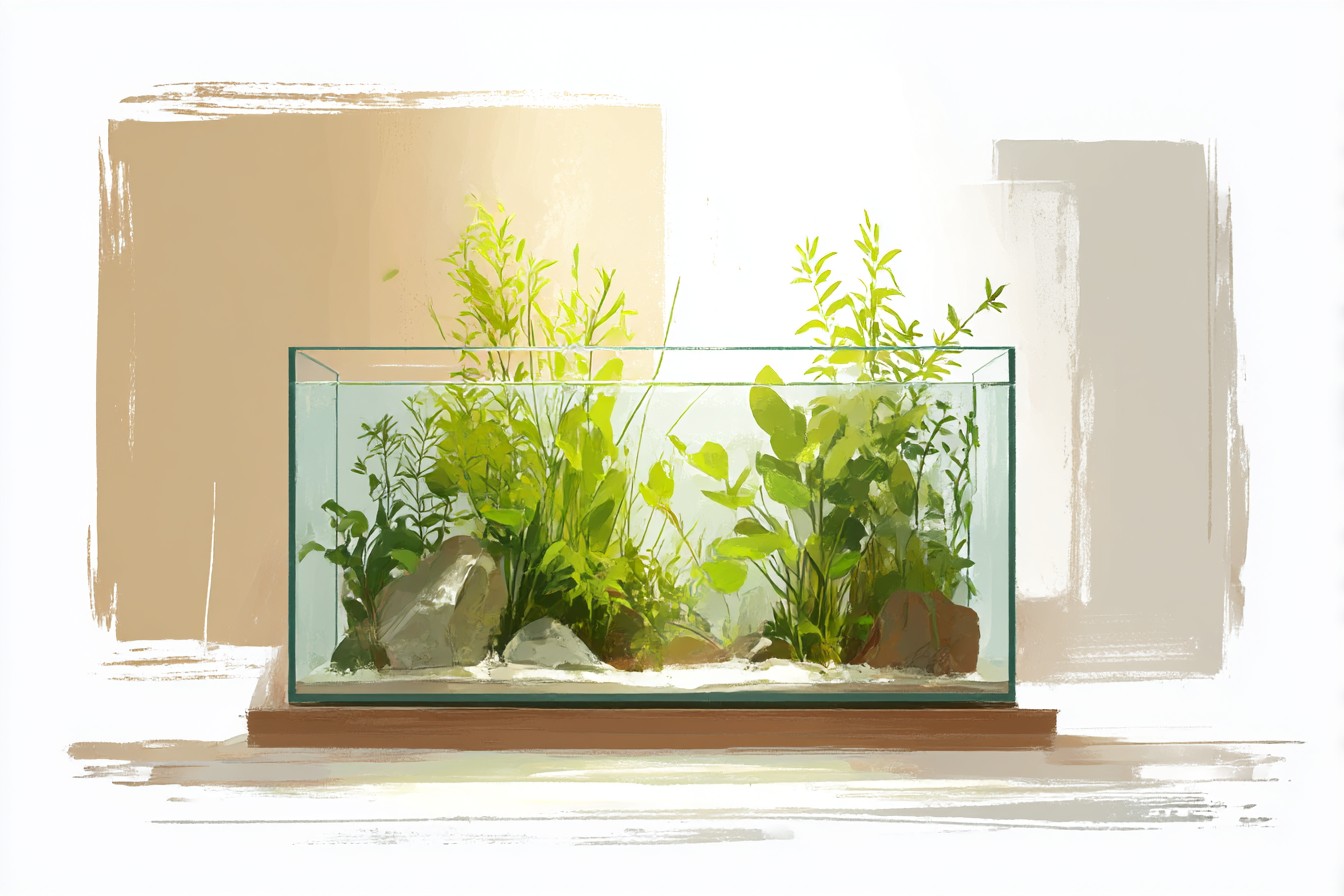
If that means sticking to Anubias, Java moss, and Vallisneria rather than attempting carpeting plants, I’m fine with that trade-off.
The tank looks natural, the fish are relaxed, and I’m not constantly adjusting equipment or worrying about petrol leaks. ## The Honest Verdict Do you actually need CO2 in a planted aquarium? For most hobbyists setting up their first planted tank, the answer is no. You need appropriate plant selection, adequate lighting, basic fertilisation, and patience.
CO2 injection can allow you to grow a wider range of species and achieve faster growth, but it’s not a requirement for a successful planted tank. The industry pushes CO2 systems because they’re profitable and because they enable the kind of rapid, dramatic plant growth that looks impressive in photos. But sustainable aquascaping isn’t about maximum growth rates.
It’s about creating stable systems that work long-term with manageable maintenance requirements. If you want to attempt demanding carpet plants or achieve competition-level growth rates, then yes, you’ll probably need CO2 injection with all the complexity it brings. But if you want a tank with healthy plants, happy fish, and reasonable running costs, there are plenty of plants that will give you exactly that without any petrol bottles in sight.
The choice isn’t between success and failure. It’s between different approaches to the same goal, each with their own trade-offs and requirements.


