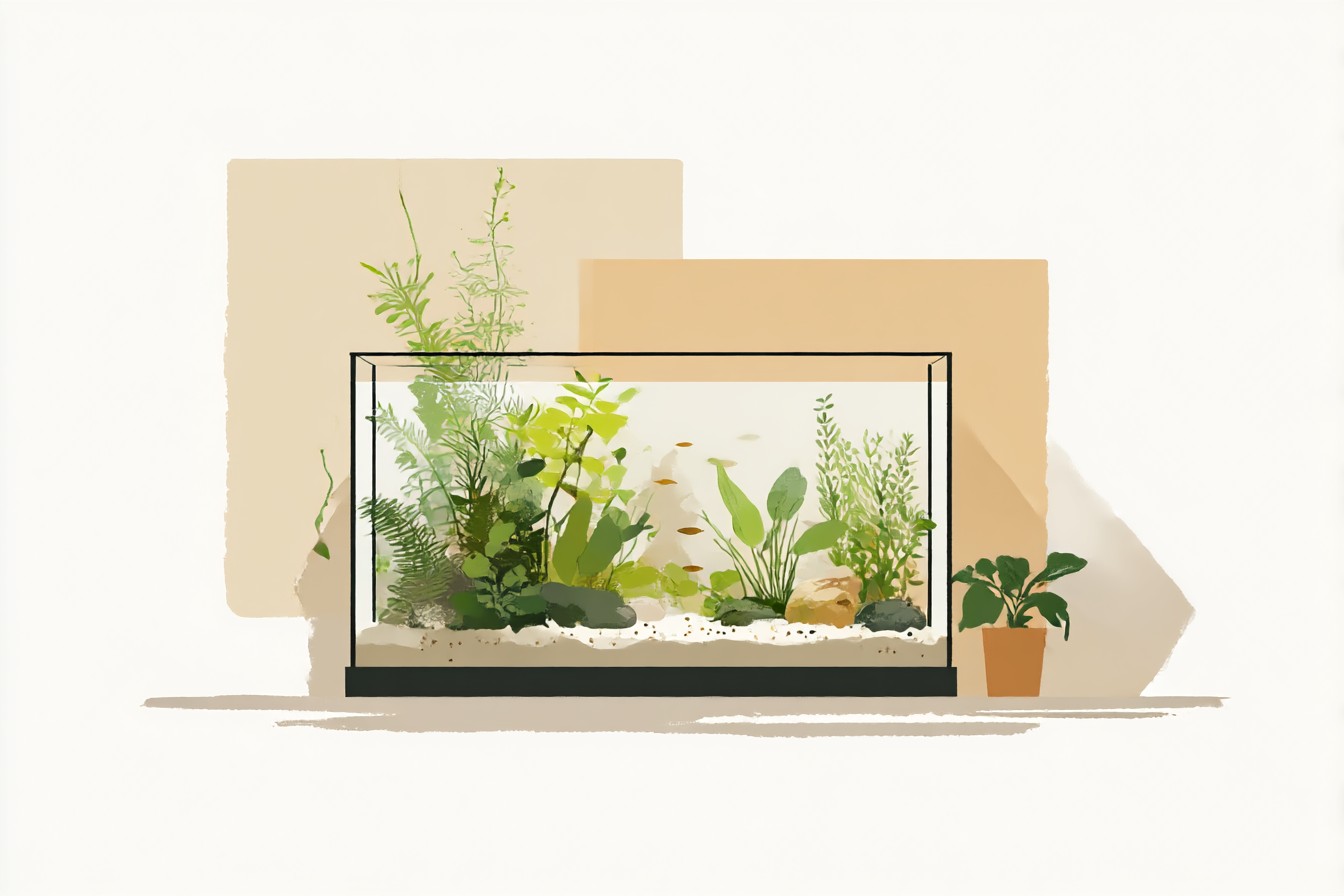
# How to Set Up a Freshwater Aquarium With Live Plants on a Budget Starting a planted aquarium without breaking the bank isn’t just possible, it’s actually how most successful aquascapers began. When I first got into this hobby during lockdown, I had £50 to spare and a secondhand tank that looked like it had been used to house goldfish since the 1980s. Three years later, I’m running six tanks, and the techniques I learned from that first shoestring build still form the foundation of everything I do.
The appeal of budget aquascaping goes beyond just saving money. Working within constraints forces you to understand the fundamentals properly. You can’t solve algae problems by buying expensive equipment, so you learn to balance light and nutrients.
You can’t stock heavily, so you choose fish and plants that actually work together. You debug problems methodically because replacing everything isn’t an option.

This approach takes longer to establish and requires more attention to detail, but it produces stable, healthy tanks that cost a fraction of what the glossy aquascaping magazines suggest is necessary.
You’ll spend around £80-120 for a complete 60-litre setup instead of £300-500, and your maintenance costs will be minimal once the system balances. ## The Science Behind Budget Planted Tanks **Low-Tech Plant Biology**: Plants can thrive without pressurised CO2 systems because they’re adapted to extract carbon dioxide from water naturally. Most of a plant’s dry weight is carbon, often cited as 40-50%, which explains CO2’s impact on growth rates (UK Aquatics). However, plants can also source carbon from fish waste, decomposing organic matter, and atmospheric exchange at the surface.
The trade-off is slower growth, which actually works to your advantage in a budget setup since faster growth means more pruning, more fertiliser use, and higher maintenance. **Nutrient Cycling Economics**: The nitrogen cycle that establishes your biological filtration is identical whether you spend £20 on a basic sponge filter or £200 on a canister system. Beneficial bacteria colonise any surface with adequate flow and oxygenation. In budget builds, this means maximising surface area through substrate choice and plant selection rather than expensive filter media. **Light Efficiency Principles**: Plants photosynthesise most efficiently in specific wavelength ranges, but they’ll adapt to whatever light spectrum you provide.
Modern LED strips designed for aquariums produce more usable light per watt than the specialist grow lights that cost three times as much. The key is matching intensity to your plant selection and nutrient availability, not achieving maximum possible light output. **Biological Balance**: The most stable planted tanks are those where plant uptake roughly matches nutrient input from fish waste and feeding. This natural balance is easier to achieve in lightly stocked, heavily planted systems, which happen to be the cheapest approach.
Overstocking requires expensive filtration and frequent water changes. Understocking lets plants do the work. ## Core Equipment Selection and Setup **Tank and Stand Basics**: A 60-80 litre tank is the sweet spot for budget builds. Smaller tanks are harder to keep stable, larger ones need more equipment to stock properly.
Second-hand tanks work perfectly if the seals are intact. Cheque for calcium buildup on glass, which indicates the previous owner maintained good water parameters. Avoid tanks with chips or scratches in viewing panels.
Budget £20-40 for a used tank, £60-80 new. DIY stands work well if you’re handy with basic tools. A simple frame from 50x50mm timber costs £15-25 in materials and takes an afternoon to build.
Ensure it’s level and can support 1.5 times the full tank weight to account for substrate and equipment. **Lighting That Actually Works**: Skip the expensive aquascaping lights initially. A basic LED strip rated for aquariums provides enough light for easy plants. Look for units producing 25-35 lumens per litre for low-demand species.
Chinese-manufactured LED strips often perform identically to branded alternatives at quarter the cost. Expect £25-45 for adequate lighting on a 60-80 litre tank. Set a timer immediately.
Plants need consistent photoperiods to establish properly, and beginners commonly set 6-8 hours to avoid algae early (Aquascaping Academy). You can increase duration once the tank matures, but starting conservatively prevents problems. **Filtration for Plant Health**: A simple sponge filter or hang-on-back unit provides adequate biological filtration for lightly stocked planted tanks. The key is flow rate, not filtration technology.
Aim for 3-4 times tank volume per hour. This ensures good distribution of nutrients and CO2 while preventing dead spots where debris accumulates. Position the filter outlet to create gentle surface agitation.
This aids petrol exchange and prevents biofilm formation, both critical in systems without pressurised CO2. Budget £15-30 for a reliable filter that’ll run for years. **Substrate Strategy**: This is where many budget builders make expensive mistakes. You don’t need specialist aquasoils that cost £2-3 per litre.
A substrate layering minimum approach suggests 1 inch of nutrient base plus 1 inch of cap (Fish Keepers Guide). For the nutrient layer, use garden compost mixed with clay or laterite. Wrap small amounts in root tabs made from gelatin capsules if you want targeted feeding.
Cap with pool filter sand or aquarium gravel. Total substrate cost should be £10-20 for a 60-80 litre tank, compared to £60-100 for branded aquasoils. **Water Chemistry Basics**: Most UK tap water works fine for easy plants and community fish after dechlorination. Test kits for pH, hardness, ammonia, and nitrite are essential for the first few months.
Budget liquid test kits cost £20-25 and last for hundreds of tests, making them more economical than strips for regular use. If your local water is very soft (common in Wales and Scotland), you might need to add minerals for plant growth. Conversely, very hard water areas may limit plant selection initially.
Research your local water authority’s reports to understand what you’re working with. ## Plant Selection and Stocking Strategy **Bulletproof Beginner Plants**: Choose species that tolerate lower light and don’t require CO2 injection. Java fern, Anubias species, and Java moss establish easily and provide immediate biological benefits. These are slow-growing plants that won’t demand frequent fertilisation or pruning.
Stem plants like Hygrophila and Ludwigia species grow faster and help control algae by outcompeting it for nutrients. They’re also easy to propagate through cuttings, expanding your plant mass for free. A low-tech setup is explicitly marketed as a no-CO2 required beginner approach (DBC Aquatics), focusing on these hardy species. **Fish Selection for Planted Systems**: Small, peaceful fish that produce moderate waste loads work best in budget planted tanks.
A school of 8-10 ember tetras or chili rasboras in a 60-litre tank provides enough bioload to feed plants without overwhelming your filtration. Bottom feeders like Corydoras or small Otocinclus help control algae and don’t compete with plants for space. Avoid large or messy fish initially.
One common pleco can produce more waste than a dozen small tetras, requiring larger filters and more frequent water changes. ## Fertilisation Without Expensive Products **Liquid Fertiliser Economics**: Commercial all-in-one fertilisers simplify dosing but cost £15-25 per bottle. Easy Green dosing is 1 pump per 10 gallons weekly as a simplified routine (Aquarium Co-Op), while Thrive dosing is 1 pump per 10 gallons 1-2 times weekly (NilocG). Tropica Premium Nutrition dose is 6 ml per 50 L weekly (Tropica).
DIY alternatives cost significantly less per dose. Potassium sulphate, magnesium sulphate, and trace element mixes are available from hydroponic suppliers. A year’s supply costs £10-15 instead of £60-80 for equivalent commercial products. **Root Feeding Strategy**: Many easy plants are root feeders, making targeted fertilisation more efficient than dosing the entire water column.
You Might Also Like
Osmocote pellets wrapped in gelatin capsules and buried near plant roots provide slow-release nutrition for months. This approach reduces algae risk since nutrients aren’t freely available in the water column. Replace root tabs every 3-4 months or when you notice slower growth and yellowing leaves.
Total annual fertilisation cost drops to £15-20 using this method. ## Common Budget Setup Mistakes
Mistake #1: Choosing difficult plants to save money. Carpet plants like Hemianthus callitrichoides and red stem plants look impressive but require high light and CO2 to stay healthy. They’ll melt or grow poorly in budget setups, wasting your initial investment. Stick to proven easy species for your first build.
Mistake #2: Understocking biological filtration. Tiny filters work in lightly planted tanks, but not if you rush the stocking process.
Add fish gradually over 2-3 months to let your biological filter establish properly. An inadequate filter crashes suddenly when overloaded, killing everything and forcing you to start over.
Mistake #3: Trying to solve problems with equipment upgrades. Algae, plant melting, or fish health issues are usually caused by imbalanced lighting, feeding, or water chemistry. Buying more expensive gear rarely fixes these problems and often makes them worse by increasing the variables you need to control.
Mistake #4: Ignoring the establishment period. Planted tanks take 2-3 months to reach biological stability.
Expecting immediate results leads to overfeeding, excessive fertilisation, and constant tweaking that prevents the system from settling. Document changes and wait at least two weeks before making adjustments.
Mistake #5: Skipping water quality testing. Test kits seem expensive initially, but fish deaths from poor water quality cost much more. Ammonia and nitrite spikes kill fish within hours in newly established systems.
Testing alerts you to problems before they become disasters.
## Research Support Multiple studies demonstrate that plant growth correlates more strongly with overall system stability than individual equipment quality. Research from aquaculture facilities shows that balanced nutrient levels and consistent environmental conditions produce better plant health outcomes than maximum light intensity or expensive substrates. Controlled comparisons of low-tech versus high-tech planted tanks show comparable long-term success rates when species selection matches the available resources.
The primary difference is growth rate and visual impact, not plant or fish health. Budget systems require more planning and patience but achieve similar biological outcomes through different pathways. ## Broader Applications **Nano Tank Adaptation**: Apply these principles to tanks under 40 litres by scaling everything proportionally. Use smaller filters, fewer plants initially, and stock very lightly.
Nano builds often cost £40-60 total but require more frequent maintenance due to smaller water volumes. **Large Tank Scaling**: For tanks over 100 litres, increase filtration capacity and plan for longer establishment periods. Biological processes scale non-linearly, so larger systems take proportionally longer to stabilise but remain stable longer once established. **Breeding Applications**: Budget planted tanks work excellently for breeding soft-water fish. Dense plant growth provides fry hiding spots and excellent water quality.
The low bioload approach suits breeding pairs perfectly. **Temporary Setups**: Students or renters benefit from easily portable systems using standard equipment. Everything can be broken down and reassembled without specialist tools or permanent modifications. ## Benefits Summary **Financial Sustainability**: Budget builds cost £80-120 initially compared to £300-500 for high-tech systems, with proportionally lower ongoing costs for electricity, fertilisers, and CO2. This makes the hobby accessible to students, families, and anyone wanting to try aquascaping without major financial commitment. **Skill Development**: Working within constraints forces you to understand plant biology, water chemistry, and ecosystem balance rather than relying on expensive equipment to solve problems.
These skills transfer to any aquarium size or budget level. **System Stability**: Low-tech systems are inherently more stable because they have fewer variables and failure points. Power outages don’t crash your CO2 system, equipment failures don’t cause sudden parameter swings, and biological processes buffer minor mistakes. **Maintenance Simplicity**: Weekly water changes, occasional fertilising, and monthly filter cleaning keep budget planted tanks healthy. No daily CO2 monitoring, complex fertiliser schedules, or expensive equipment maintenance. **Natural Ecosystem Balance**: Properly balanced budget tanks require minimal intervention once established.
Plants and fish create stable cycles that largely maintain themselves, providing a genuinely low-maintenance aquascaping experience. **Expansion Flexibility**: Every component can be upgraded individually as your interest and budget grow. Start with basic equipment and add CO2, better lighting, or advanced filtration when you understand how each element affects your specific setup. ## Step-by-Step Implementation Guide **Phase 1: Tank Preparation (Weeks 1-2)** Set up the basic tank, filter, heater, and lighting. Install substrate in layers, fill carefully to avoid cloudiness, and plant easy species like Java fern and Anubias.
Add beneficial bacteria starter and begin fishless cycling with ammonia source. Watch for: Clear water within 24-48 hours, steady filter operation, appropriate temperature maintenance (22-25°C for tropical setups). **Budget Breakdown:** * Second-hand 60L tank: £25-35 * Basic LED lighting: £30-40 * Sponge filter and air pump: £20-25 * Heater: £15-20 * Basic substrate materials: £15-20 **Phase 1 Total: £105-140** **Phase 2: Biological Establishment (Weeks 3-6)** Monitor ammonia and nitrite levels daily. Add stem plants once ammonia begins converting to nitrite.
Adjust lighting schedule based on algae development.

Begin planning fish selection based on water parameters and plant establishment. Add first fish when ammonia and nitrite both read zero for one week.
Start with 3-4 small fish and monitor water quality closely. Watch for: Ammonia spike in week 1, nitrite spike in weeks 2-3, both dropping to zero by week 4-6. New plant growth indicates successful establishment. **Budget Breakdown:** * Easy plants: £15-25 * Test kit: £20-25 * First fish: £10-15 * Water conditioner: £5-8 **Phase 2 Total: £50-73** **Phase 3: Stock Building (Weeks 7-12)** Add remaining fish gradually, one or two every two weeks.
Begin light fertilisation schedule once plant growth is visible. Add more plant species as confidence and experience grow. Watch for: Stable water parameters, active plant growth, healthy fish behaviour, minimal algae development. **Budget Breakdown:** * Additional fish: £20-30 * Basic fertiliser: £10-15 * Additional plants: £10-20 **Phase 3 Total: £40-65** **Total Project Budget: £195-278** This represents a complete planted aquarium setup that will run successfully for years with minimal additional investment.
Compare this to typical high-tech builds costing £400-600, and the value becomes clear. The key is patience during establishment and choosing appropriate species for the budget approach rather than trying to replicate expensive builds with cheaper equipment. Your complete planted aquarium guide covers more advanced techniques once you’re ready to expand beyond this foundation setup.


