
# Driftwood Hardscape Tank and Choosing Between Spider Wood, Manzanita and Mopani When I started keeping aquariums in my cramped San Jose flat, I thought hardscaping was about buying expensive rocks and following layout rules I’d memorised from YouTube videos. I was wrong on both counts. The real game changer was understanding how different types of driftwood behave in water, what they do to your tank chemistry, and which ones actually work within the constraints of small spaces and smaller budgets.
Driftwood isn’t just decoration. It creates the backbone of your aquascape, provides attachment points for plants, offers hiding spots for fish, and influences your water chemistry for months after you add it. Get the wood choice wrong and you’re dealing with constantly floating branches, water that looks like tea, or structures that autumn apart when your pleco decides to redecorate.
Get it right and you have a stable foundation that improves both the look and function of your tank. The three woods that consistently show up in aquascaping are spider wood, manzanita, and mopani.

They each behave completely differently underwater, cost different amounts, and work better for different tank sizes and fish combinations.
Understanding these differences before you buy saves you from expensive mistakes and weeks of frustration. ## **The Science Behind Driftwood in Aquariums** **Tannin Release and Water Chemistry** All aquarium driftwood releases tannins when submerged, but the rate and intensity varies dramatically between wood types. Tannins are organic compounds that leach from the wood into the water, causing a yellow or brown discolouration. More importantly for your tank’s ecosystem, tannins can lower pH slightly in freshwater tanks (LiveAquaria).
This pH effect is usually modest, typically dropping pH by 0.2 to 0.5 units in well buffered water. In tanks with very soft water or low alkalinity, the drop can be more significant. For most community fish, this slight acidification is actually beneficial, mimicking the natural conditions many species evolved in.
For fish requiring stable alkaline conditions, like African cichlids, heavy tannin release can be problematic. **Biofilm Development** Driftwood can grow biofilm during the first weeks of submersion (Reef Builders). This white, sometimes slimy coating appears as bacteria colonise the wood surface. It’s completely normal and beneficial for tank biology, providing food for fish and invertebrates.
However, it can look concerning if you’re not expecting it. The biofilm typically peaks around weeks two to four, then gradually becomes less noticeable as the bacterial population stabilises. Fish and shrimp will graze on it, and mechanical filtration removes loose pieces.
Scrubbing it off isn’t necessary and can actually delay the establishment of beneficial bacteria on the wood surface. **Density and Buoyancy** Wood density determines how quickly pieces will sink and how stable they’ll be once submerged. Denser woods like mopani wood is denser than most aquarium driftwood types (PetMD), requiring minimal pre soaking. Lower density woods can take days or weeks to become waterlogged enough to stay submerged naturally.
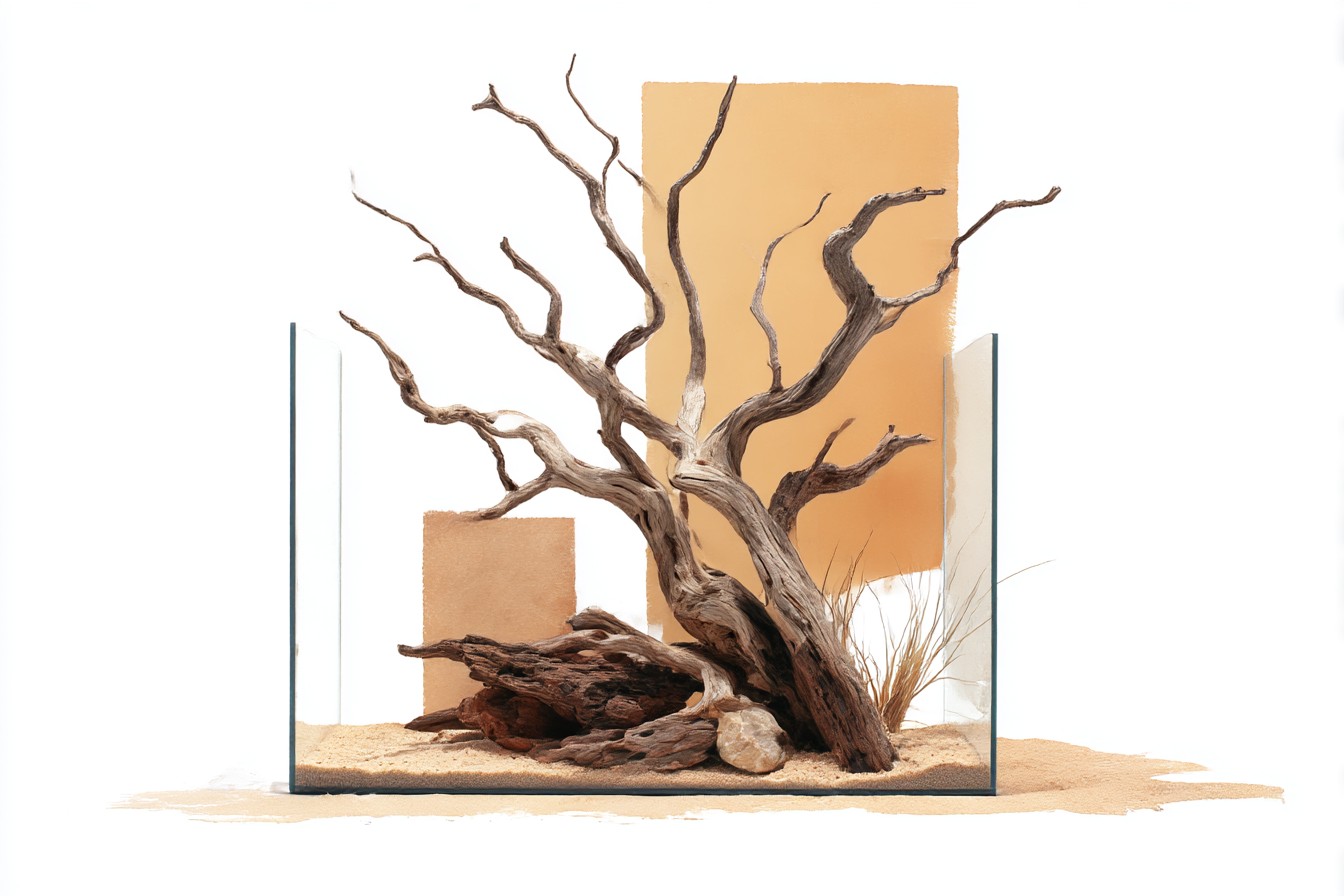
This isn’t just about convenience. Floating wood can disrupt plant roots, stress fish, and make maintenance difficult. Pre soaking addresses this, but requires planning time you might not have when setting up a new tank. ## **Spider Wood: Branching Complexity on a Budget** **Physical Characteristics and Behaviour** Spider wood is lightweight and highly branched (Buce Plant), creating intricate tree like structures that work particularly well in smaller tanks.
The branching pattern is naturally asymmetrical, which helps create depth and visual interest even in nano setups. The downside of this light weight is buoyancy. Spider wood often floats for several days if not pre soaked (Aquarium Gardens).
I learned this the hard way with my first piece, which bobbed around for nearly a week before finally staying put. If you’re setting up a tank quickly, factor in soaking time or be prepared to weigh pieces down temporarily. **Tannin Release and Treatment** Spider wood releases moderate levels of tannins, enough to colour the water noticeably but not as intensely as mopani. The tannin release is usually manageable with regular water changes and doesn’t require activated carbon unless you’re aiming for crystal clear water.
For budget conscious aquascapers, this moderate tannin release is actually useful. It provides the slight pH buffering that many fish appreciate without requiring expensive pH adjustment products. If you’re keeping tetras, rasboras, or other soft water species, the natural acidification from spider wood creates more appropriate water conditions than straight tap water in many UK regions. **Cost and Availability** Spider wood is typically the most affordable of the three options, often available for £8-15 for pieces suitable for a 60-90 litre tank.
The branching structure means you get a lot of visual complexity for the money. One well chosen piece can serve as the entire hardscape foundation for a smaller tank. The irregular shapes mean sizing can be unpredictable when buying online.
I’ve received pieces that were either much smaller than expected or had awkward proportions that didn’t work in the intended tank. If possible, seeing pieces in person before buying helps avoid disappointment. **Best Applications** Spider wood excels in tanks where you want to create a forest like or overgrown appearance. The fine branching provides excellent attachment points for moss, Java fern, and other epiphytic plants.
It’s particularly effective in tanks under 100 litres where the delicate structure doesn’t get overwhelmed by the space. For shrimp tanks, spider wood is nearly ideal. The complex surface area supports biofilm growth, providing grazing opportunities.
The fine branches offer hiding spots for shrimplets without creating dark caves where you’ll lose track of your colony’s population. ## **Manzanita Wood: Architectural Structure with Quick Setup** **Density and Immediate Usability** The key advantage of manzanita wood is that it sinks faster after soaking (Aquarium Co Op). While not as dense as mopani, manzanita typically becomes waterlogged within 24-48 hours of soaking, compared to the week plus that spider wood might require. This quick soaking time makes manzanita ideal when you need to set up a tank quickly.
If you’re rescaping an established tank or setting up a quarantine tank for new fish arrivals, manzanita lets you get hardscape in place without lengthy preparation. **Structure and Visual Impact** Manzanita branches create strong vertical lines in layouts (Green Aqua). The growth pattern tends to be more ordered than spider wood, with fewer but larger branches extending from main trunks. This creates a more architectural feel, particularly effective in larger tanks where the structure can be substantial without looking cluttered.
The branching pattern makes manzanita excellent for creating focal points. A single large piece can anchor an entire aquascape, with plants and smaller elements arranged around its structure. This works well in tanks where you want a clear visual hierarchy rather than the more organic, forest like appearance that spider wood creates. **Tannin Management** Manzanita releases tannins at a moderate rate, less than mopani but more predictable than spider wood.
The tannin output is usually manageable without chemical filtration, though boiling driftwood reduces tannin release time (Practical Fishkeeping) if you want to minimise water discolouration. For tanks where you want the benefits of natural pH buffering without dramatic water colouration, manzanita strikes a good balance. The tannins provide gentle pH adjustment while maintaining reasonably clear water with standard maintenance. **Budget Considerations** Manzanita typically costs £15-30 for tank ready pieces, placing it between spider wood and mopani in terms of price.
The higher cost reflects both the quicker preparation time and the more substantial structure you get. A single manzanita piece often provides more hardscape presence than a similarly priced spider wood piece. The more predictable shape and structure also means less waste when buying online.
Manzanita pieces photograph more accurately and the branching patterns are easier to visualise in your intended tank. ## **Mopani Wood: Dense Hardscape with Intensive Preparation** **Density and Stability** Mopani wood is denser than most aquarium driftwood types (PetMD), sinking almost immediately when placed in water. This density creates stable hardscape structures that won’t shift once positioned. Large fish can’t easily move mopani pieces, making it ideal for tanks with cichlids or other fish that like to redecorate.
The high density also means mopani pieces feel substantial relative to their size. A piece that looks modest on the shop counter creates significant visual weight in the tank. This works well for creating bold focal points but can overwhelm smaller tanks. **Intensive Tannin Release** Mopani wood releases significant tannins initially (The Spruce Pets).
Without preparation, mopani can turn tank water the colour of black tea within hours. This isn’t harmful to most fish, but it’s visually dramatic and can concern new aquascapers. Managing mopani’s tannin release requires either extensive pre soaking, boiling, or chemical filtration.
Activated carbon removes tannin discolouration from water (Marine Depot), but you’ll need to replace carbon frequently during the first month after adding mopani to your tank. Pre boiling is often the most practical approach. Boil large pieces for 2-3 hours, changing the water as it darkens.
You Might Also Like
This removes much of the available tannins before the wood enters your tank. The time investment is significant, but it prevents weeks of water changes and carbon replacement. **Longevity and Value** Mopani’s density means it breaks down very slowly underwater. While spider wood might need replacement after 2-3 years as the fine branches deteriorate, mopani pieces can remain structurally sound for many years.
For tanks you plan to maintain long term, this durability justifies the higher initial cost. The slow breakdown also means more stable tank chemistry over time. As wood decomposes, it can temporarily spike organic waste levels.
Mopani’s slow decomposition rate minimises these fluctuations. **Cost and Sizing** Mopani typically costs £20-45 for aquarium sized pieces, making it the most expensive of the three options. The higher cost reflects both the wood’s durability and the more limited supply. Mopani comes from specific regions of Africa, while spider wood and manzanita have broader geographic sources.
Sizing with mopani can be challenging because the dense wood often comes in smaller pieces than expected. What looks like it will fill a large tank might appear insignificant once submerged. Plan for larger or multiple pieces if using mopani as the primary hardscape in tanks over 200 litres. ## **Common Mistakes**
Mistake #1: Not soaking lightweight woods before tank setup. Spider wood and some manzanita pieces will float for days if not pre soaked.
This disrupts plant placement, stresses fish, and makes maintenance difficult. Soak pieces for at least 48 hours, longer for spider wood, checking that they stay submerged when released underwater.
Mistake #2: Underestimating tannin release from mopani. New aquascapers see mopani’s beautiful grain and buy it without realising how dramatically it colours water. Without preparation or carbon filtration, mopani can make a tank look like weak coffee within hours.
Either pre treat the wood extensively or plan for chemical filtration and frequent water changes.
Mistake #3: Choosing wood size based on air weight rather than underwater appearance. Dense woods like mopani look substantial when dry but can appear small once submerged in a large tank. Light woods like spider wood look impressive on the counter but might seem delicate underwater. Consider how much visual weight you want the hardscape to carry and choose accordingly.
Mistake #4: Panic removing biofilm during the first month. The white biofilm that appears on new driftwood looks alarming but is completely beneficial.
Scrubbing it off delays bacterial colonisation and removes a food source for fish and invertebrates. Let biofilm develop naturally and allow tank inhabitants to graze it.
Mistake #5: Not considering fish behaviour when choosing wood types. Large cichlids can damage delicate spider wood branches, while small fish might get trapped in complex manzanita structures. Match wood choice to fish size and behaviour patterns, not just visual appeal.
## **Research Supporting Driftwood Selection** Studies consistently show that natural materials in aquariums provide both aesthetic and functional benefits.
The tannin release from driftwood creates water conditions closer to many fish species’ natural habitats, particularly for South American and Southeast Asian species that evolved in tannin rich waters. Research on biofilm development demonstrates that submerged wood surfaces support beneficial bacterial growth that contributes to tank biological filtration. This bacterial colonisation is most effective when wood surfaces aren’t chemically treated or excessively cleaned during the establishment period.
Water chemistry studies confirm that different wood types release tannins at measurably different rates, with denser woods generally releasing more tannins initially but for shorter periods. This supports choosing wood type based on desired water parameters rather than appearance alone. ## **Application Across Different Tank Types** **Nano Tanks (under 40 litres):** Spider wood works best due to its delicate branching that won’t overwhelm small spaces. Single pieces often provide complete hardscape structure. **Community Tanks (60-200 litres):** Manzanita offers the best balance of visual impact, reasonable cost, and manageable preparation time.
Good for tanks with mixed plant and fish focus. **Large Display Tanks (200+ litres):** Mopani provides the substantial structure needed to anchor large aquascapes. The higher cost is justified by the visual impact in spacious tanks. **Cichlid Tanks:** Mopani’s density and durability handle aggressive fish behaviour. Avoid spider wood which can be damaged by large cichlids. **Shrimp Tanks:** Spider wood’s complex surface area supports biofilm growth and provides hiding spots without creating predator ambush sites. **Plant Focused Tanks:** All three work well, but consider that heavy tannin release can reduce light penetration to plants.
Pre treat heavily tanning woods or use chemical filtration. ## **Benefits of Proper Wood Selection** **Stable Hardscape Structure** — Dense woods like mopani create foundations that remain positioned long term, while proper pre soaking of lighter woods prevents floating disruptions. This stability supports consistent plant attachment and reduces maintenance needs. **Appropriate Water Chemistry** — Matching tannin output to your fish species’ preferences creates more natural water conditions. This can improve fish health and behaviour, particularly for species from tannin rich natural habitats. **Cost Effectiveness Over Time** — Choosing durable woods appropriate for your tank size prevents replacement costs and rescaping time.
Mopani’s longevity justifies its higher cost in permanent setups, while spider wood’s affordability suits experimental layouts. **Biological Benefits** — Natural wood surfaces support beneficial biofilm growth that contributes to tank biological filtration and provides supplemental food for many fish and invertebrates. **Visual Coherence** — Wood choice that matches your intended aesthetic creates more successful aquascapes. Spider wood suits natural, overgrown appearances while manzanita provides architectural structure. **Reduced Maintenance Burden** — Properly prepared driftwood requires less ongoing intervention than poorly chosen pieces that float, decompose quickly, or create water chemistry problems. ## **Step by Step Implementation Guide** **Step 1: Assessment and Planning (Week 1)** Evaluate your tank size, fish species, and water parameters to determine appropriate wood type. Measure available space and sketch intended layout.
Consider fish behaviour and plant attachment requirements. **Budget Breakdown:** * Spider wood piece: £8-15 * Manzanita piece: £15-30 * Mopani piece: £20-45 * Pre treatment supplies: £5-10 **Total Budget: £13-55** **Step 2: Wood Preparation (Week 2-3)** For spider wood and manzanita, soak in large container, changing water daily until tannin release slows.
For mopani, boil for 2-3 hours or plan for extended soaking with carbon filtration. Test that pieces sink reliably before tank placement. **Step 3: Tank Placement and Initial Monitoring (Week 3-4)** Position wood in tank, securing if necessary with aquascaping weights.
Monitor water parameters daily for pH changes. Add activated carbon if tannin levels exceed desired amounts. Document biofilm development without intervention. **Step 4: Plant Integration (Week 4-6)** Attach epiphytic plants to established wood using thread or super glue.
Allow 2-3 weeks for plant attachment before removing securing materials. Monitor plant health and adjust lighting if tannins reduce light penetration. **Step 5: Long Term Maintenance (Ongoing)** Remove excessive biofilm only if it affects water flow or plant health. Replace activated carbon monthly if using.
Monitor wood integrity annually, checking for soft spots or structural changes that might affect stability. For anyone working within flat space constraints and budget limitations, understanding these wood characteristics before buying prevents costly mistakes. I’ve learned that choosing the right wood for your specific situation matters more than following generic aquascaping advice.
Your tank, your fish, and your maintenance schedule should drive the decision, not just what looks impressive in competition layouts.


