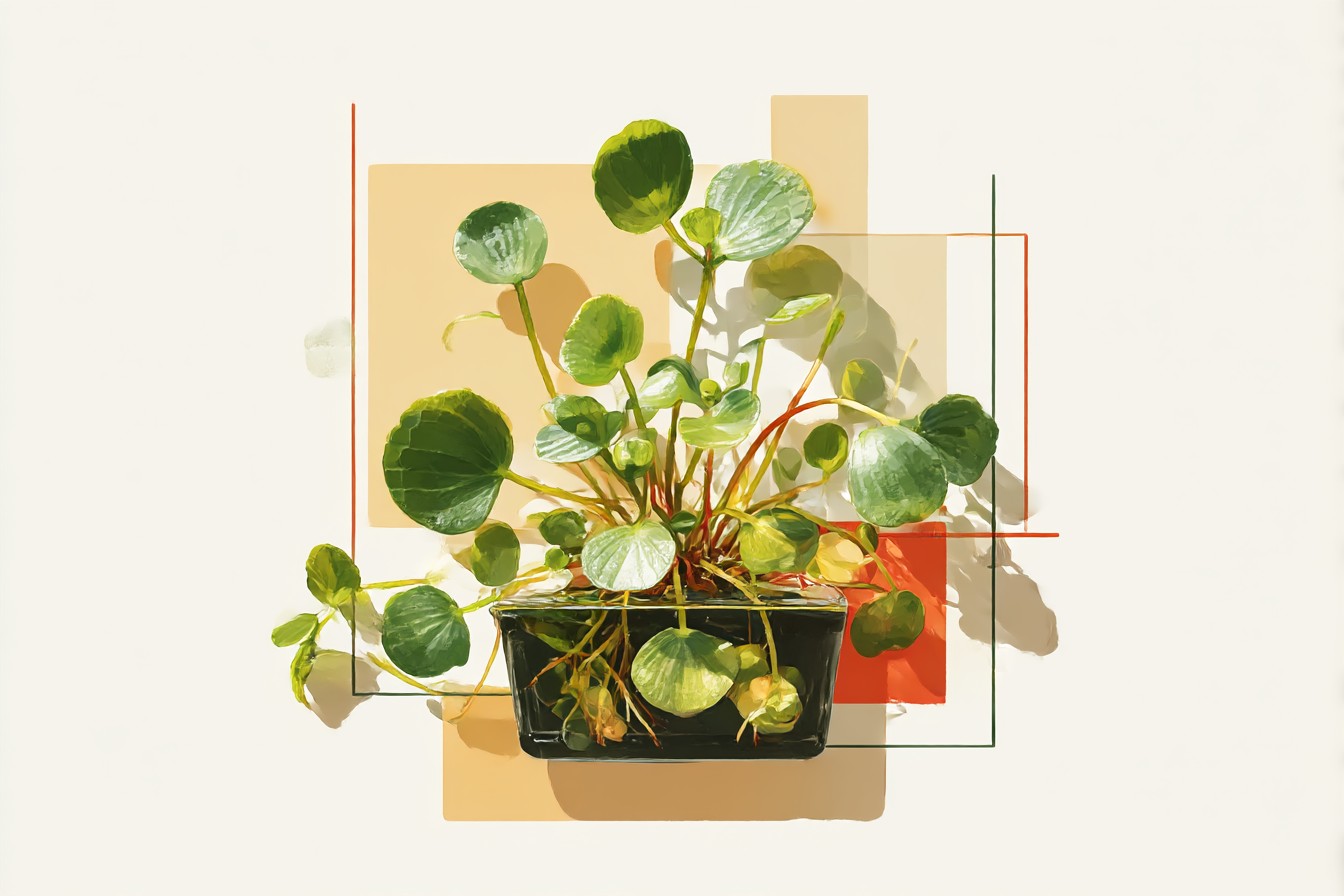
# Frogbit and Why Every Shrimp Keeper Ends Up With a Bucket of the Stuff I started keeping cherry shrimp in a 25-litre cube with a handful of Java moss and good intentions. Six months later, I had a bathroom that looked like a swamp refugee camp. Three buckets, two storage tubs, and one very confused flatmate trying to navigate around what I kept calling “quarantine containers” but which were really just overflow housing for the frogbit that had staged a complete takeover of my main tank.
Here’s the thing about Amazon frogbit that nobody tells you when you buy your first innocent little portion. It doesn’t just grow. It conquers.
And once you’ve got shrimp breeding happily beneath its roots, you’ll find yourself becoming the neighbourhood’s unofficial frogbit dealer, handing out carrier bags full of the stuff to anyone who’ll take it. Because you can’t bring yourself to bin it, and you definitely can’t let it take over every square centimetre of water surface, so what else are you going to do?
This is the plant that turned me from someone who occasionally trimmed a bit of moss into someone who genuinely understands why the Victorians got so excited about their ferneries.
It’s also taught me more about nutrient uptake and natural filtration than any textbook ever did. | Care Level | Lighting Needs | CO2 Required | Growth Rate | Max Size | Our Rating | |————|—————-|————–|————-|———-|————| | Beginner | Low to High | No | Very Fast | 5cm diameter (Abyss Aquatics) | 9/10 | ## The Plant That Ate My Tank Amazon frogbit, *Limnobium laevigatum* if we’re being formal about it, comes from Central and South America where it floats around in slow-moving waterways doing exactly what it does in your tank, just with more space to spread out. The aquarium trade picked it up as the perfect floating plant for beginners, and they weren’t wrong. What they perhaps didn’t emphasise enough was just how enthusiastic it would be about that role.
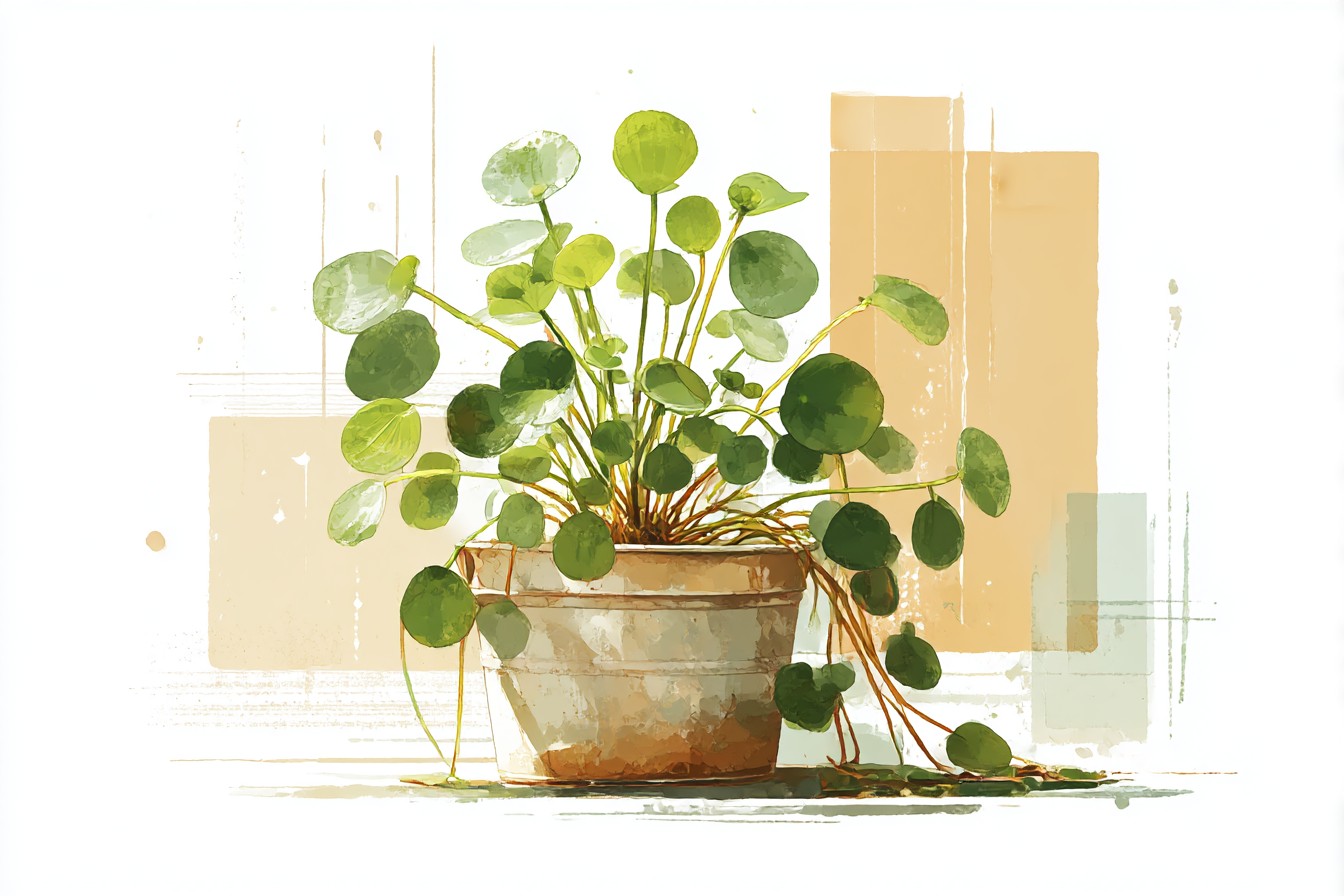
Each plant consists of a rosette of round, heart-shaped leaves that float on the surface, with a mass of trailing roots hanging down into the water column like a natural chandelier. The leaves themselves are modest enough, reaching about 5-15 cm across (Tropica), and the whole plant sits just 1-5 cm tall (Tropica) at the surface. But what you can’t see from those measurements is the root system, which can extend down 30 cm or more (aquarium.inf.ovh) into your tank like underwater curtains.
The thing entered the hobby properly in the last couple of decades as CO2 injection and high-tech planted tanks became more popular. Frogbit offered something different: a plant that could thrive without any of that complexity whilst still delivering the visual impact and biological benefits that aquascapers were after. It’s been particularly popular with the natural aquarium movement, fitting perfectly into low-tech setups that aim to recreate wild biotopes. ## What Makes It the Shrimp Keeper’s Best Friend The relationship between frogbit and shrimp is one of those perfect partnerships that makes you wonder how either species managed before they met.
The plant creates exactly the environment that shrimp colonies need to explode into proper breeding populations, whilst the shrimp provide the low-level bioload that keeps the plant growing without overwhelming it. Those trailing roots are where the magic happens. They create a three-dimensional jungle in the water column that cherry shrimp, crystal shrimp, and pretty much every other dwarf species treat like an all-you-can-eat buffet.
The roots collect biofilm, algae, and microscopic food particles that the shrimp graze on constantly. Watch a mature frogbit root system closely and you’ll see shrimp moving through it methodically, picking off invisible morsels like they’re working their way through a salad bar. The plant’s appetite for nutrients makes it a biological filter that puts most mechanical systems to shame.
Those roots are constantly pulling ammonia, nitrites, and nitrates out of the water, but they’re also absorbing dissolved organics, excess minerals, and pretty much anything else that might upset your water chemistry. In a shrimp tank, where you’re dealing with sensitive creatures that react badly to parameter swings, this constant buffering effect is invaluable. I’ve run tanks where the frogbit was doing so much of the filtration work that I could skip water changes for weeks without seeing any spike in nitrates.
The plants were processing waste faster than it could accumulate, creating the kind of stable, mature environment that shrimp breeding programs require. That’s not something I’d recommend for beginners, but it shows just how effective this plant can be at maintaining water quality. The surface coverage creates the lighting conditions that many shrimp prefer.
Wild cherry shrimp come from environments with overhead vegetation, and they’re often more active and show better colouration when they’re not under bright, direct lighting. The dappled light that filters through frogbit leaves seems to bring out the best in most dwarf shrimp species, and I’ve noticed breeding behaviour increase significantly once surface coverage reaches about 50-60%. Temperature tolerance is another advantage.
The plant handles anything from 18°C to 30°C (Valley Aqua), which covers the range that most tropical shrimp species prefer. It’s equally comfortable in soft or moderately hard water, with a pH tolerance from 6.0 to 8.0 (Fish Laboratory), though some sources suggest a slightly narrower range of 6.0-7.5 (Valley Aqua). Either way, it’s adaptable enough to work in most tap water without requiring expensive RO systems or complex buffering.
The reproduction rate is where frogbit really shows off. Each plant sends out runners that develop into new plants, and under good conditions, you can see new rosettes forming every few days. In a 60-litre tank with decent lighting, I’ve had populations double in a week.
You Might Also Like
That sounds excessive until you realise that this rapid reproduction is exactly what makes it so effective at nutrient control. More plants mean more biological processing, which means cleaner water and healthier shrimp. ## The Honest Assessment Let’s talk about the elephant in the room: frogbit’s complete inability to show any restraint whatsoever. This is not a plant you add to a tank and forget about.
This is a plant that will take over your entire setup if you let it, blocking out all light and turning your carefully planned aquascape into what looks like a neglected pond. The growth rate that makes it so effective at nutrient control also makes it a maintenance nightmare. I’ve pulled carrier bags full of frogbit out of tanks during weekly maintenance, and by the following week, you can barely tell I’d touched it.
The runners spread in all directions, and new plants establish themselves faster than you can reasonably remove them unless you’re really on top of it. Surface coverage becomes problematic quickly. Too much frogbit blocks light to lower plants, which start melting and creating the kind of organic waste that defeats the whole purpose of having good biological filtration in the first place.
I’ve learned to maintain about 60% surface coverage maximum, but that means constant harvesting and either finding homes for the excess or composting it. The root system, whilst brilliant for biological filtration, can become a tangle that’s difficult to work around when you need to do tank maintenance. Trying to siphon substrate or catch a fish when you’ve got 30cm roots trailing everywhere requires patience and usually results in accidentally uprooting plants you wanted to keep.
In high-tech setups with CO2 injection, frogbit can actually become counterproductive. The surface coverage reduces petrol exchange, which can lead to CO2 buildup issues, and the plant’s efficient nutrient uptake can starve your underwater plants of the fertilisers you’re dosing. I’ve seen planted tank enthusiasts struggle with this balance, trying to maintain frogbit for its aesthetic appeal whilst keeping their foreground carpets healthy.
Winter can be challenging if you’re running unheated tanks or if room temperatures drop significantly. Whilst the plant tolerates 18°C (Abyss Aquatics), it really prefers warmer conditions, and growth slows dramatically in cooler water. This can actually be useful for controlling it during colder months, but it also means less biological filtration when you might need it most. ## Legacy and Influence Frogbit has quietly revolutionised how people think about natural filtration in the aquarium hobby.
Before floating plants became mainstream in the planted tank community, biological filtration usually meant bacteria in external filters or substrate bacteria in deep sand beds. The idea that you could achieve superior water quality using plants alone was considered fringe thinking outside of the Walstad method enthusiasts. The plant’s success in shrimp keeping has helped legitimise low-tech approaches more broadly.
When people see thriving breeding colonies under nothing more than a basic light and some floating plants, it challenges the assumption that you need complex equipment for successful aquaculture. That’s had knock-on effects throughout the hobby, with more people experimenting with natural methods and fewer assuming that expensive equipment is always necessary. Its influence on aquascaping aesthetics has been significant too.
The natural, organic look of overhead root systems has encouraged aquascapers to think more three-dimensionally, considering not just the hardscape and planted areas but the entire water column as part of the design.
You see this thinking in competition tanks now, where floating plants are used as design elements rather than just biological tools. ## The Verdict Frogbit is the plant equivalent of that friend who’s incredibly helpful but doesn’t know when to leave. It will solve your water quality problems, create perfect conditions for breeding shrimp, and give you some of the most effective biological filtration available to the hobby.
It will also take over every available surface, require constant management, and leave you wondering what to do with buckets of excess plant matter. If you’re serious about shrimp keeping, especially if you want to breed them successfully, this plant is probably essential. The combination of water conditioning, food provision, and habitat complexity it provides is difficult to replicate any other way.
Just be prepared for it to become a significant part of your tank maintenance routine. For anyone running a low-tech planted tank who wants robust, effective biological filtration without complex equipment, frogbit delivers results that are hard to argue with. But you need to go into it understanding that you’re not just adding a plant to your tank—you’re entering into a long-term relationship with something that has very definite ideas about how much space it needs.
The buckets in my bathroom are still there, by the way. Smaller now, and better integrated into the room’s layout, but permanent fixtures nonetheless. Because once you’ve seen what properly managed frogbit can do for a shrimp colony, you find ways to accommodate its enthusiasm rather than fighting it.
See where this placed in our full floating plants ranking.


