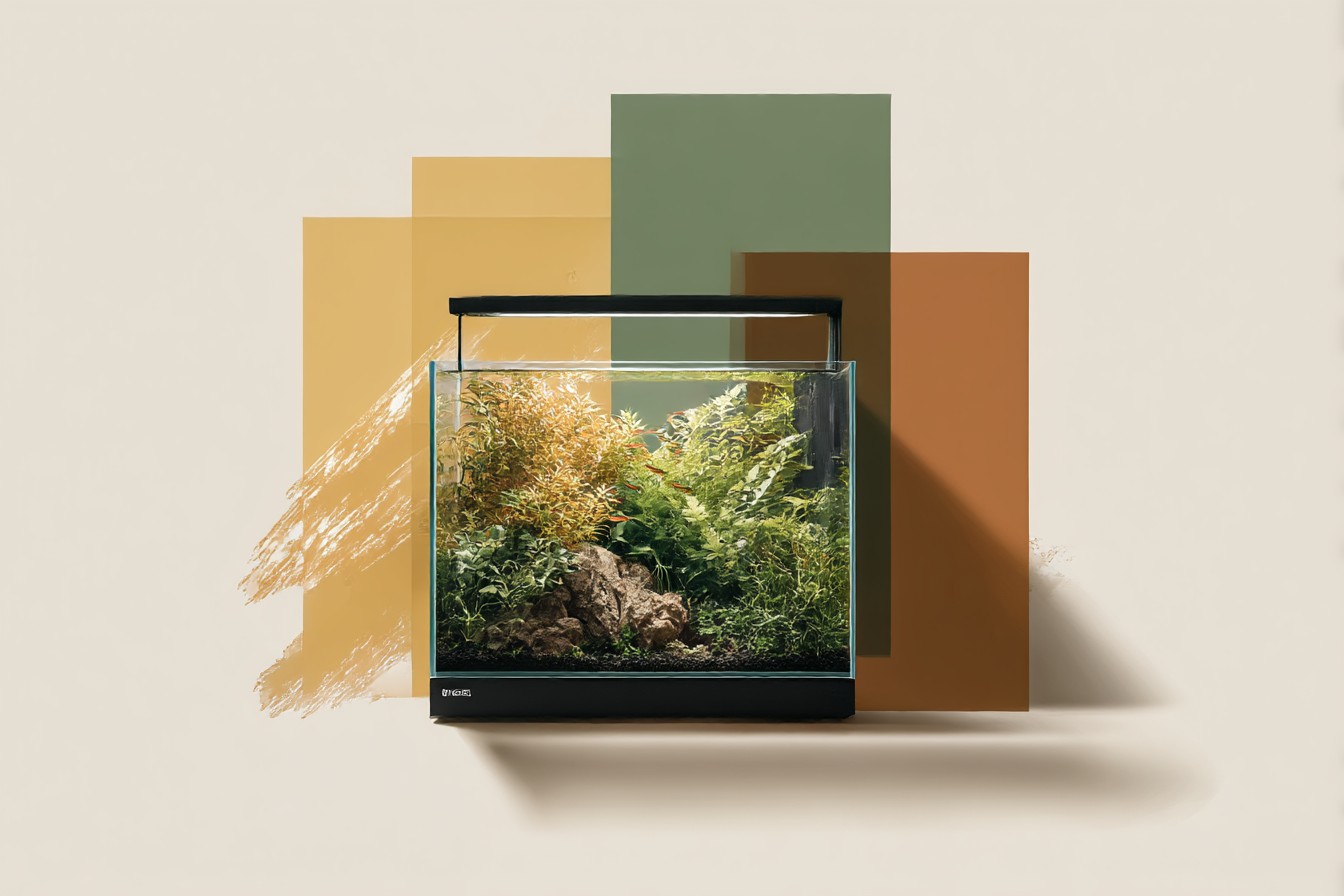
# Kessil A160WE and Whether Paying Premium Actually Gets You Premium Results I bought my A160WE during a phase where I was convinced expensive meant better. Classic mistake, really. I’d spent months optimising a 60-litre build and decided the bottleneck was lighting.
Everything I read suggested that proper planted tank LED units cost serious money, so I saved up and bought what looked like the most technically sophisticated option I could find. Two years later, I’m still using it daily, but I understand exactly what I paid for and what I didn’t. The Kessil sits above my desk tank now, casting that distinctive shimmer pattern across a carpet of *Hemianthus callitrichoides* that actually grows rather than just surviving.
Whether that justifies the price difference over alternatives is the question I spent six months testing properly. **Quick Reference** | Type | Suitable Tank Size | Power (W) | Price Range (£) | Key Feature | Our Rating | |——|——————-|———–|—————–|————-|————| | Full spectrum LED | Up to 60cm cube | 40W max | £180-220 | Tunable spectrum | 8/10 | ## The California Precision Engineering Story Kessil emerged from the California lighting industry, not the aquarium trade, which explains both their approach and their pricing structure. The company developed their Dense Matrix LED technology for commercial and architectural applications before adapting it for aquariums.

The A160WE represents their entry-level freshwater unit, though “entry-level” in Kessil terms still means paying £200 for what other manufacturers sell for £80.
The WE designation stands for “Wide Eyed,” referring to the 90-degree beam angle that provides broader coverage than their marine-focused units. Released as part of their second-generation freshwater lineup, it incorporated lessons learned from reef keeping applications where precise spectrum control matters critically for coral health. The engineering philosophy centres on their Dense Matrix LED array, which clusters multiple LED chips into a single point source rather than spreading them across a larger fixture.
This creates the distinctive shimmer effect that Kessil markets heavily but also delivers superior light penetration compared to conventional LED panels of equivalent wattage. ## What Makes the A160WE Different The first thing you notice isn’t the light output but the build quality. The housing feels substantial in a way that £50 Chinese LED panels don’t. The cooling system runs passively through the aluminium body, so there’s no fan noise to compete with filter hum.
After two years of daily use, mine still runs cool enough to touch comfortably during peak output. The Dense Matrix LED array produces a single, focused beam rather than multiple light sources. This matters practically because it creates more natural-looking shadows and reduces the harsh multi-shadow effects you get from cheaper fixtures with dozens of individual LEDs.
Plants respond well to the concentrated light source, particularly carpeting species that need high PAR values at substrate level. Spectrum control sets the A160WE apart from budget alternatives. The unit mixes 6000K to 9000K colour temperatures (Kessil) through manual adjustment knobs on the fixture body.
You’re not stuck with whatever spectrum the manufacturer decided was “plant optimised.” You can shift cooler for better green plant growth or warmer for enhanced reds without buying different fixtures. Coverage area reaches 24 inch x 24 inch according to specifications (Kessil), which works well for standard 60cm cubes or 75cm shallow tanks. The penetration depth of 24 to 30 inches (Tunze) means it’ll drive photosynthesis effectively in deeper tanks where cheaper LEDs struggle.
Power consumption maxes at 40W (Kessil), which is efficient for the light output delivered. The universal power supply handles 100-240V (ASAP Aquarium) without transformers, useful if you’re running multiple units or travel with your setup. The physical footprint stays minimal.
Dimensions of 4 inch x 2.48 inch (Kessil) and weight of 0.69 lb (Kessil) mean it doesn’t dominate smaller tanks visually. The gooseneck mount adjusts easily for different heights and angles without tools. My testing showed measurable differences in plant growth rates compared to a £70 LED panel of similar wattage. *Rotala rotundifolia* showed better red coloration under the Kessil’s adjustable spectrum. *Eleocharis parvula* carpeted more densely. *Cryptocoryne wendtii* varieties displayed more pronounced colour variation.
These weren’t dramatic differences, but they were consistent across multiple builds. The shimmer effect actually serves a function beyond aesthetics. Natural sunlight creates constantly shifting patterns as it penetrates water.
Most LED fixtures produce static lighting that doesn’t replicate this natural variation. The Kessil’s point source creates realistic light movement that appears to stimulate more natural plant behaviours. ## The Reality Cheque Premium pricing doesn’t eliminate compromises. The A160WE coverage area works well for compact tanks but becomes inadequate for longer layouts.
A 120cm tank needs multiple units, pushing total cost beyond what most hobbyists budget for lighting. At that scale, you’re spending more on LEDs than many people spend on their entire setup. The manual controls require physical access to adjust spectrum or intensity.
There’s no smartphone app, no programmable timers, no automated sunrise/sunset cycles that cheaper fixtures increasingly offer. For a £200 light, the lack of digital control feels dated compared to £80 alternatives with full app integration. Heat management, while effective, relies entirely on passive cooling through the aluminium body.
In enclosed cabinet installations or warm rooms, this can limit maximum output before thermal protection reduces intensity. I’ve seen this happen during summer months when room temperatures exceeded 28°C consistently. The mounting system works well but isn’t universally compatible.
You Might Also Like
The gooseneck arm needs something solid to clamp onto. Rimless tanks or thin-rimmed setups may require additional mounting hardware that isn’t included. The standard mount doesn’t accommodate tanks over 12mm rim thickness without modification.
Replacement parts cost significantly more than for mainstream LED fixtures. When the power adapter failed after eighteen months (outside warranty), a replacement cost £45. Comparable adapters for generic LED fixtures cost £15.
This reflects Kessil’s position as a premium manufacturer but impacts long-term ownership costs. The spectrum adjustment, while useful, requires experience to optimise. There’s no guidance on ideal settings for different plant types or growth phases.
You need to experiment and observe plant responses over weeks to find optimal configurations. Beginners often struggle with this compared to fixed-spectrum fixtures designed for planted tanks. ## Technical Evolution in the Hobby The A160WE represents Kessil’s response to planted tank lighting evolving beyond simple PAR requirements. Early LED fixtures focused on raw output, often producing harsh, unnatural illumination that grew plants but created sterile-looking tanks.
Kessil’s approach prioritises light quality alongside quantity. The Dense Matrix technology influenced other manufacturers to reconsider point source designs. Several companies now offer similar focused LED arrays, though few match Kessil’s implementation quality.
This competitive pressure has improved lighting options across price ranges. Spectrum tunability became increasingly important as hobbyists recognised that different growth phases and plant types respond to varying colour temperatures. Fixed-spectrum fixtures work adequately but can’t adapt to changing tank needs.
The A160WE’s manual adjustment provides flexibility without electronic complexity. The unit’s reliability record established Kessil’s reputation in freshwater applications. Earlier LED fixtures suffered frequent failures, particularly power supplies and individual LED chips.
The A160WE’s consistent performance over multi-year periods convinced many hobbyists that premium pricing could be justified by reduced replacement costs. Professional aquascaping adopted Kessil fixtures for competition layouts where light quality matters as much as plant health. The natural shimmer and adjustable spectrum create more photogenic results than harsh, fixed-output alternatives.
This professional endorsement influenced hobbyist purchasing decisions significantly. ## The Honest Verdict After two years of daily use, I understand exactly what I bought. The A160WE delivers superior light quality, reliable performance, and measurably better plant responses compared to budget alternatives. It’s also overpriced for what many hobbyists actually need and lacks modern conveniences that cheaper fixtures provide.
If you’re running a showcase tank where light quality matters as much as plant growth, the premium makes sense. The natural shimmer, precise spectrum control, and consistent output justify the cost difference. For utility tanks or first builds where you’re still learning what works, spending four times more for incremental improvements doesn’t make financial sense.
The build quality is genuinely premium.

Mine runs daily without issues after 24 months. The passive cooling remains silent.
The spectrum adjustment still functions precisely. The mounting hardware stays secure. This reliability has value, particularly if you’ve experienced cheaper fixtures failing unexpectedly.
For tanks up to 60cm, single-unit coverage works well. Beyond that size, multiple A160WEs become prohibitively expensive compared to alternative solutions. The sweet spot seems to be established hobbyists with compact, high-specification builds where every component is chosen for performance rather than price.
See where this placed in our full ranking alongside other premium and budget lighting options we’ve tested extensively. The A160WE earns its reputation through solid engineering and measurable performance advantages. Whether those advantages justify the premium depends entirely on your priorities, budget, and how much difference subtle improvements in light quality make to your enjoyment of the hobby.


