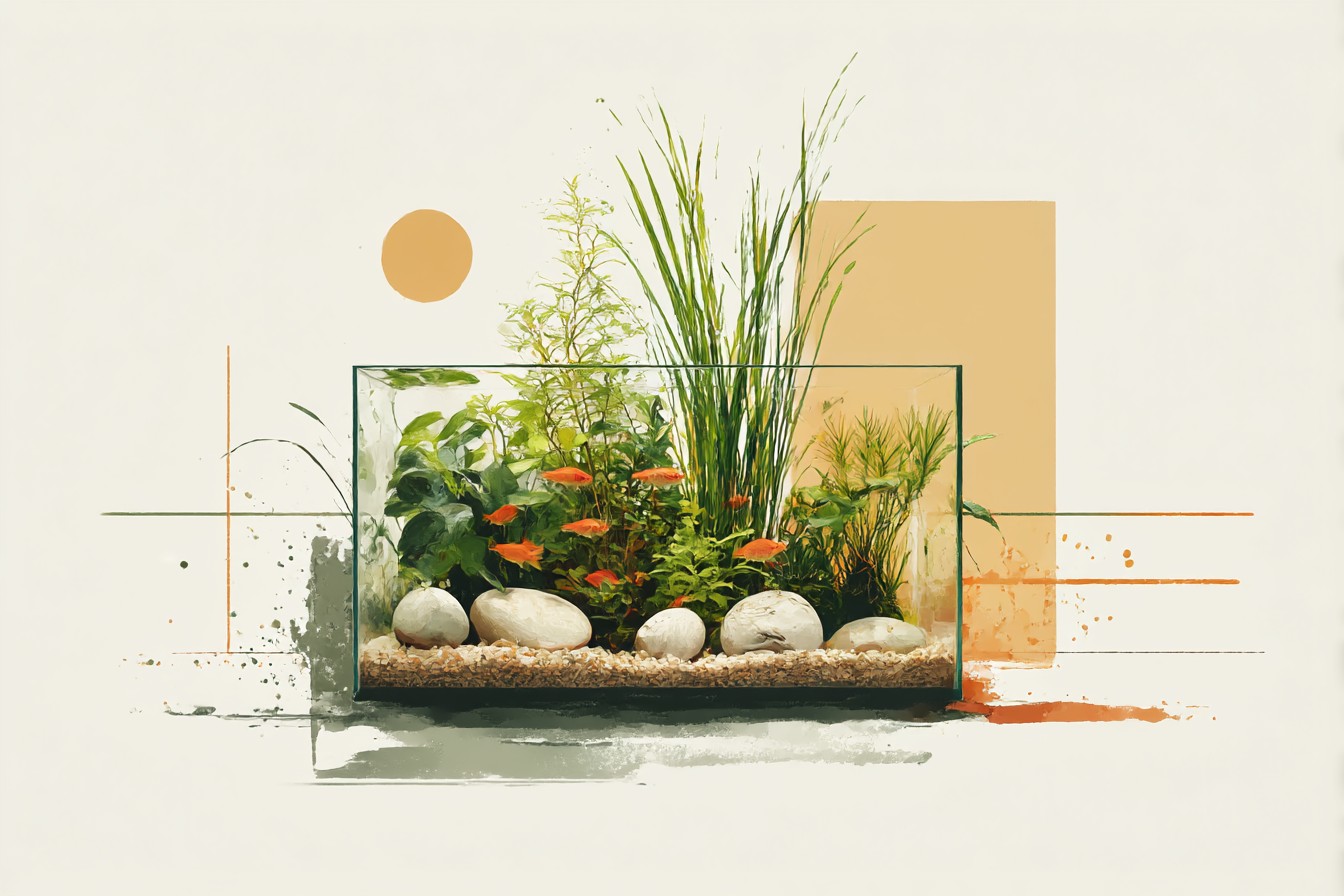
# How to Plant Live Plants in an Aquarium That Already Has Fish Adding live plants to an established aquarium feels like performing surgery with your fish watching. You’re worried about disturbing the substrate they’ve been living above for months. You’re concerned about clouding the water or releasing trapped waste that could harm them.
You’re wondering if those new plants will survive the established ecosystem or if they’ll introduce problems you haven’t thought of. The reality is that planting in an established tank is actually easier than starting fresh in many ways. Your fish have already cycled the tank, so you’ve got stable beneficial bacteria.
The water parameters are known quantities rather than variables you’re still figuring out. Your filtration is running smoothly.

What you need to understand is how to add plants without disrupting that stability, how to handle the plants themselves to avoid introducing problems, and how to adjust your tank’s routine to accommodate new plant growth.
If you’re considering making the jump to a planted setup, our complete guide to planted aquariums covers the fundamentals of lighting, substrates, and CO2. But for adding plants to your existing fish tank, here’s what actually works. ## The Science Behind Adding Plants to Established Systems **Biological Load and Nitrogen Processing** When you add plants to an established aquarium, you’re introducing a second form of nitrogen processing alongside your beneficial bacteria. Plants consume ammonia directly as a nitrogen source, and they process nitrates that bacteria can’t handle efficiently.
This dual processing can reduce measurable nitrogen waste and lower fish stress (Practical Fishkeeping). The key difference from a new tank is that your fish have already established waste production patterns. Your filter bacteria are processing a predictable amount of ammonia each day.
When plants start consuming some of that ammonia, the bacterial colony may shrink slightly to match the reduced load. This isn’t a crash, it’s a rebalancing, and it typically happens gradually over several weeks. **Substrate Disturbance Chemistry** Established substrates contain organic matter that’s been accumulating for months or years. Fish waste, uneaten food, and dead plant matter settle into the substrate where anaerobic bacteria break them down.
Large substrate disturbance can release trapped waste and hydrogen sulfide petrol, which explains why spot planting is recommended rather than major substrate upheaval (Aquarium Science). The chemistry here matters because hydrogen sulfide is toxic to fish even in small concentrations. It smells like rotten eggs and turns substrate black in anaerobic pockets.
When you plant carefully in small areas rather than tearing up large sections, you avoid releasing significant amounts of these compounds into the water column where they could harm fish. **Nutrient Competition Dynamics** Adding plants changes the nutrient dynamics of your tank within days. Plants immediately start competing with algae for nutrients, particularly nitrates and phosphates. This can be beneficial if you’ve been dealing with algae issues, but it also means your tank’s fertilization needs will shift.
Most planted tank fertilizers are designed for plant-heavy systems and may need adjustment within 1-2 weeks of adding significant plant mass (NilocG). ## Pre-Planting Preparation and Plant Selection **Quarantine and Pest Prevention** New plants can introduce snails, planaria, and other pests that weren’t in your original tank setup (Aquarium Co-Op). In an established tank with fish you care about, prevention is worth the extra time. For pest prevention, you’ve got two main approaches.
A diluted bleach dip using a 1:19 ratio can disinfect plants, but requires careful rinsing and timing (University of Florida IFAS). I find hydrogen peroxide dips less risky, using 3% hydrogen peroxide for a few minutes to control algae and pests on new plants (Reef2Reef). The hydrogen peroxide method is more forgiving.
Mix 3% hydrogen peroxide with tank water in a 1:3 ratio. Dip the entire plant for 2-3 minutes, then rinse thoroughly in dechlorinated water. You’ll see any pest snails drop off immediately, and small algae patches will start bubbling.
Rinse until there’s no bubbling when you add fresh hydrogen peroxide to a small amount of rinse water. **Plant Conditioning Process** Most aquarium plants are grown emersed in nurseries, meaning they’ve been living above water. The leaves you see are not the leaves that will survive underwater. Plants need 2-4 weeks to grow new submersed foliage and shed their emersed growth.
This is normal and expected, not a sign that you’ve killed them. Temperature matching matters more than you might expect. Use the floating bag method for 15-20 minutes to match water temperatures before planting (The Spruce Pets).
Plants experience shock from rapid temperature changes just like fish do, and stressed plants shed leaves faster and establish more slowly. **Equipment Preparation** Turn off your filters during planting to prevent debris from spreading through the tank and to avoid the current uprooting plants as you’re trying to position them (Fluval). This seems obvious once you try planting with a filter running and watch your carefully positioned plant get sucked across the tank. You’ll need aquascaping tweezers for planting in established tanks.
Your hands are too big and clumsy for precise placement without disturbing fish or existing decorations. Get tweezers that are at least 27cm long so you can reach the bottom of deeper tanks without submerging your entire arm. ## Species-Specific Planting Techniques **Rhizome Plants (Anubias, Java Fern, Bucephalandra)** These plants should never have their rhizomes buried in substrate as this causes rot (APC Magazine). In an established tank, this makes them perfect because you can attach them to existing hardscape without any substrate disturbance.
Use cotton thread or super glue to attach rhizome plants to driftwood or rocks. If using thread, tie the rhizome loosely to the surface. The roots will grow into the wood or rock within 3-4 weeks, and the thread will rot away naturally.
If using super glue, use cyanoacrylate gel (not liquid), apply a small drop to the attachment point, and press the rhizome against it for 10 seconds underwater. The glue cures instantly in water and is safe for fish. Position these plants where they’ll get moderate flow but not direct strong current.
Anubias prefer lower light areas, while Java fern can handle more light. Bucephalandra sits somewhere between the two and often shows better coloration with moderate lighting. **Rooted Plants (Cryptocoryne, Vallisneria, Sword Plants)** These need to be planted in substrate, but in an established tank you’re working around existing fish territory and decorations. The key is minimal disturbance planting.
Use tweezers to create a small hole in the substrate, just deep enough for the roots plus about 1cm. Don’t dig large areas. Trim the roots to about 2-3cm length before planting – this reduces the hole size needed and actually encourages new root growth.
Lower the plant into the hole with tweezers and gently push substrate around the crown. The crown should sit at substrate level, not buried. For larger plants like Amazon swords, you might need to temporarily move decorations or ask fish to relocate temporarily.
Most fish will move away from your hands naturally. If you have territorial species that won’t move, plant when they’re focused on feeding time. **Stem Plants (Rotala, Ludwigia, Bacopa)** Stem plants are easiest to add to established tanks because you can plant them in groups and trim them regularly to maintain size. They also grow quickly enough to start processing nutrients within a week.
Plant stem plants in groups of 3-5 stems about 2cm apart. This creates a bushy appearance and helps the group establish better than single stems. Trim off the bottom 2-3 leaves from each stem before planting to reduce the buried mass and prevent rot.
Make small individual holes for each stem rather than digging one large area. Plant each stem about 2-3cm deep, with at least two nodes buried. Nodes are the slight swellings on stems where roots and new shoots develop.
Press substrate gently around each stem. ## Common Planting Mistakes in Established Tanks
Mistake #1: Disturbing too much substrate at once. The instinct is to create a planting area by digging up large sections of substrate, but this releases trapped organic waste and hydrogen sulfide that can harm fish. Instead, plant a few plants at a time over several days, making small individual holes for each plant.
Mistake #2: Not adjusting lighting schedules for new plants. Established tanks often run longer photoperiods because there were no plants to consider. New plants need time to establish before handling full lighting.
Start with 6-hour photoperiods and increase gradually as plants show new growth (Fish Tank Mastery).
You Might Also Like
Mistake #3: Burying rhizome plants in substrate. Java fern, Anubias, and similar plants will rot if their rhizomes are buried. These should be attached to hardscape, not planted in substrate. This mistake kills plants within 2-3 weeks and creates organic waste in an established system.
Mistake #4: Adding too many plants without considering fish behaviour. Fish establish territories and swimming patterns over months.
Adding large plants that block their usual routes or territorial areas can cause stress. Add plants gradually and watch fish behaviour for signs of stress like reduced feeding or hiding.
Mistake #5: Not preparing for plant melt. Most aquarium plants will shed their emersed leaves over 2-4 weeks after planting. In an established tank with fish, this organic matter needs to be removed promptly to prevent water quality issues.
Cheque daily and remove yellowing or transparent leaves.
Mistake #6: Ignoring fertilization changes. Plants change the nutrient balance immediately upon addition. What worked for a fish-only tank may cause deficiencies in a planted tank within weeks. Watch for signs of nutrient deficiency in new plants and adjust fertilization accordingly.
## Research Support for Plant Integration Multiple studies support the biological benefits of adding plants to established fish systems.
Research shows that plants process nitrogen compounds that bacterial filtration cannot handle efficiently, creating a more stable system overall. The combination of bacterial and plant-based filtration reduces measurable waste products more effectively than either system alone. Evidence from aquaculture research demonstrates that planted systems show more stable pH and dissolved oxygen levels compared to fish-only systems of similar bioload.
Plants provide buffering through their nutrient consumption and oxygen production during photoperiods. Studies of established aquarium systems show that gradual plant addition causes less biological disruption than complete system changes, supporting the approach of incremental planting rather than full conversion at once. ## Application to Different Tank Types **Community Tanks:** Focus on hardy plants like Anubias and Java fern that won’t be damaged by active fish. Add plants to areas fish don’t frequently use first. **Cichlid Tanks:** Choose plants that can handle potential uprooting.
Attach plants to heavy hardscape rather than substrate planting where possible. Anubias and Java fern work well. **Nano Tanks:** Small volumes mean changes happen quickly. Add one plant at a time and monitor water parameters closely.
Mosses and small Anubias species work well. **Goldfish Tanks:** Select plants goldfish won’t eat immediately. Anubias, Java fern, and Vallisneria have better survival rates. Expect some plant damage and plan accordingly. **High-Tech Setups:** If adding CO2 and intensive lighting to an established tank, do so gradually over 2-3 weeks to avoid shocking fish with rapid pH changes from CO2 addition. ## Benefits of Adding Plants to Established Systems **Improved Water Quality:** Plants consume ammonia and nitrates directly, reducing the load on biological filtration and creating more stable water parameters over time.
This benefit becomes noticeable within 2-3 weeks as plants establish root systems. **Natural Algae Control:** Established tanks often develop algae issues over time. Plants compete directly with algae for nutrients, particularly nitrates and phosphates, reducing algae growth naturally without chemical intervention. **Enhanced Fish Behaviour:** Live plants provide natural hiding spots and territorial boundaries that artificial decorations can’t replicate. Fish show more natural behaviours and reduced stress indicators within 4-6 weeks of plant establishment. **Biological Backup:** Plants provide a secondary form of biological filtration that continues working even if beneficial bacteria populations fluctuate.
This creates system redundancy that improves overall tank stability. **Oxygen Production:** During photoperiods, plants produce oxygen through photosynthesis. This supplemental oxygenation benefits fish health, particularly in heavily stocked tanks or during warmer months when oxygen solubility decreases. **Long-term Stability:** Planted systems show less parameter swing over time compared to fish-only tanks. The biological mass and nutrient processing capacity of plants creates buffering against sudden changes in bioload or feeding patterns. ## Step-by-Step Implementation Guide **Phase 1: Planning and Preparation (Week 1)** Start by assessing your current tank setup and fish behaviour patterns.
Note where fish spend most of their time, territorial boundaries, and areas that could accommodate plants without disrupting established fish routines. Purchase 2-3 hardy plants to begin with rather than attempting a full conversion. Prepare quarantine dips using hydrogen peroxide method.
Set up a separate container with tank water for acclimating plants. Purchase aquascaping tweezers long enough for your tank depth. **Budget Breakdown:** * Basic tweezers: £8-12 * Hydrogen peroxide: £2-3 * Initial plants (2-3 specimens): £15-25 * Thread for attachment: £2-3 **Total Budget: £27-43** **Phase 2: First Plant Addition (Week 2-3)** Begin with one rhizome plant attached to existing hardscape. Choose Anubias or Java fern as these are most tolerant of water parameter variations and fish interference.
Quarantine the plant using hydrogen peroxide dip, then acclimate for 15-20 minutes in floating container. Turn off filters during planting. Attach plant to driftwood or rocks using cotton thread.
Position where it won’t block fish swimming routes. Turn filters back on after planting is complete. Monitor fish behaviour for signs of stress or territorial disputes.
Remove any dying plant material daily. Reduce photoperiod to 6 hours to help plant establish without encouraging algae growth. **Phase 3: Substrate Plants (Week 4-6)** Add 1-2 rooted plants if fish have accepted the first addition without stress. Choose Cryptocoryne or small Vallisneria species.
Create small individual holes using tweezers rather than disturbing large substrate areas. Plant during fish feeding time when they’re distracted. Bury roots but keep crown at substrate level.
Press substrate gently around plants without compacting it heavily. Watch for plant melt over the following weeks. Remove yellowing or transparent leaves promptly.
Begin adjusting photoperiod gradually, increasing by 30 minutes per week as plants show new growth. **Budget Breakdown:** * Rooted plants (2-3 specimens): £12-20 * Basic liquid fertilizer: £8-15 **Total Budget: £20-35** **Phase 4: System Optimization (Week 6-12)** As plants establish new growth, begin adjusting fertilization to support plant health without encouraging algae. Start with quarter-strength doses of liquid fertilizer and increase based on plant response. Add additional plants if desired, following the same gradual approach.
Consider stem plants if you want faster-growing species that can be trimmed to maintain size. Monitor water parameters weekly and adjust fertilization as plants consume more nutrients.

Gradually increase photoperiod to 8 hours once plants show consistent new growth and fish behaviour remains normal.
Establish regular maintenance routine including leaf removal and gentle plant pruning. **Budget Breakdown:** * Additional plants: £15-30 * Testing kit for plant nutrients: £12-20 * Timer for lighting consistency: £8-15 **Total Budget: £35-65** **Phase 5: Long-term Management (Month 3+)** Establish trimming and maintenance schedule based on plant growth rates. Most stem plants need trimming every 2-3 weeks, while Anubias and Java fern need minimal maintenance beyond leaf removal. Fine-tune fertilization schedule based on plant health and growth rates.
Healthy plants show consistent new growth, good coloration, and minimal leaf loss. Adjust lighting timing and intensity if needed for optimal plant growth without encouraging algae. Consider expanding planted areas if initial plants have succeeded and fish have adapted well.
Maintain gradual approach rather than making large changes to established system balance. The key to successfully adding plants to an established aquarium is patience and observation. Your fish have created a stable ecosystem over months or years.
Plants can enhance that ecosystem significantly, but only when added thoughtfully and gradually. Watch your fish, monitor your plants, and adjust your approach based on what you observe rather than rushing toward an ideal planted tank vision that might destabilise what’s already working well.


