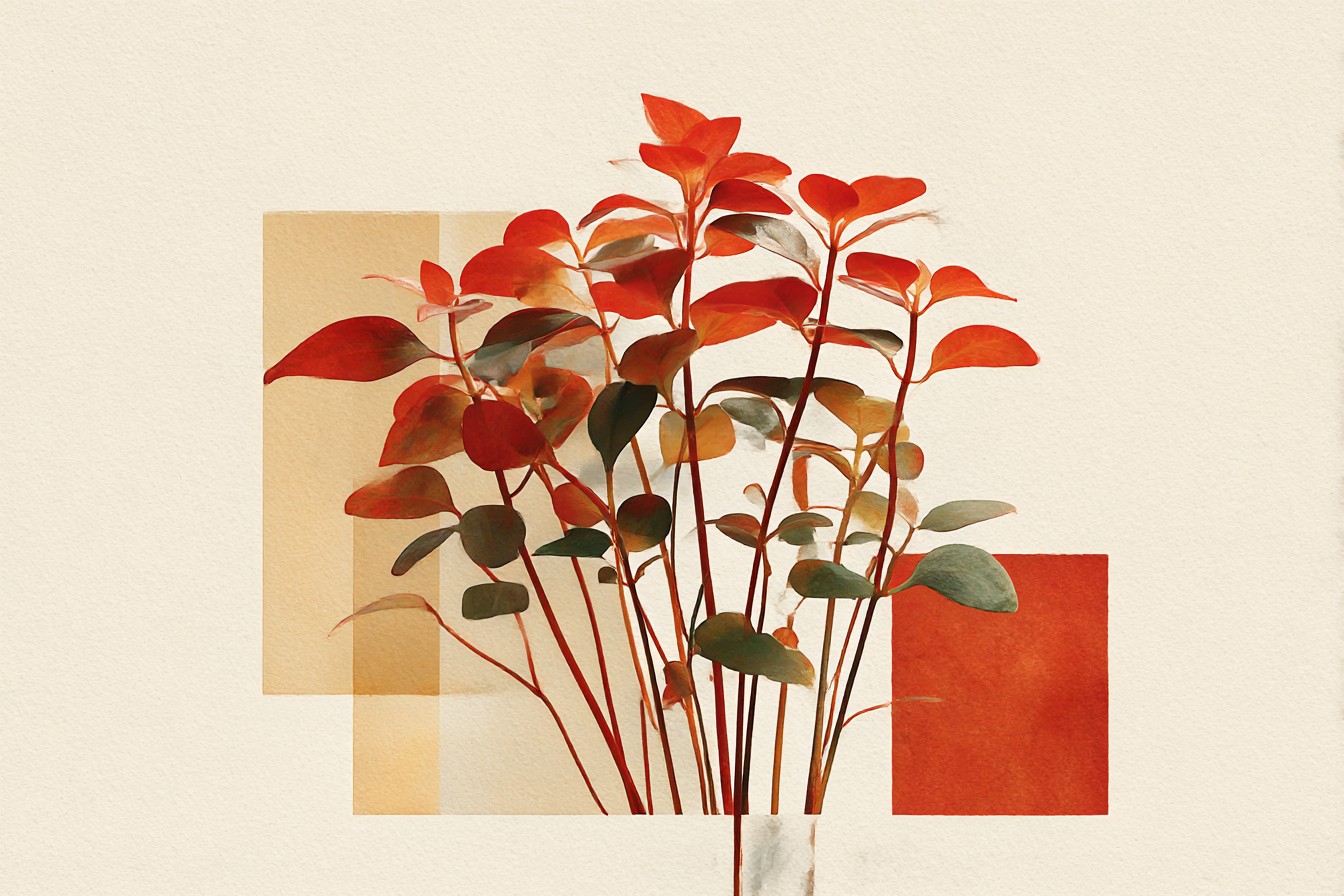
# Ludwigia Repens and the Red Plant That Doesn’t Need Expert Level Lighting I spent my first eighteen months in this hobby convinced that red plants were for other people. More experienced people. People with CO2 systems and light metres and the sort of technical knowledge I definitely didn’t have when I started keeping fish at retirement.
Every forum post about red plants seemed to come with a list of requirements as long as my arm and warnings about how they’d turn green if you looked at them wrong. Then I picked up a small bunch of Ludwigia repens at my local shop, mostly because it was cheap and the owner said it might work in my basic setup. That was two years ago.
It’s now growing in three of my tanks, stays reliably red even under my basic LED strips, and has become the plant I recommend to anyone who asks about adding colour to their aquascape without diving into the deep end of high-tech planted tank keeping. This isn’t the most exotic red plant you can grow, and it’s certainly not the most demanding.

But sometimes that’s exactly what you need. | Care Level | Lighting Needs | CO2 Required | Growth Rate | Max Size | Our Rating | |————|—————-|————–|————-|———-|————| | Easy | Low to Medium | No | Moderate | 20 inches | 8.5/10 | ## The Background Story Ludwigia repens comes from the wetlands and shallow waters of the eastern and central United States, though you’ll also find it growing naturally in parts of Mexico and Central America.
It’s one of those plants that’s been quietly living in North American waterways for centuries before anyone thought to put it in an aquarium. Unlike some of the more exotic species that have captured the aquascaping world’s attention in recent years, this one was growing in ditches and pond margins long before the planted tank hobby existed. The plant made its way into aquarium cultivation sometime in the mid-20th century, though exactly when is harder to pin down than with some of the more famous introductions.
What’s clear is that it earned its place through sheer reliability rather than any dramatic discovery story. While hobbyists were struggling with finicky imports that needed perfect conditions to survive, Ludwigia repens was quietly proving that you could have red foliage without a chemistry degree. What makes it particularly interesting from a cultivation standpoint is that it’s genuinely amphibious.
In nature, it grows both underwater and above the surface, adapting its leaf structure and colour intensity based on conditions. The underwater form tends to be more elongated with softer stems, while the emerged form develops thicker, more succulent-like leaves with intense red colouration. This adaptability is exactly what makes it so forgiving in aquarium settings.
The plant’s common names tell you something about its reputation. “Red ludwigia” is the most straightforward, though you’ll also see it called “creeping primrose” after its terrestrial growth habit. In aquascaping circles, it’s sometimes just called “the beginner’s red plant,” which isn’t meant as an insult but as recognition that it delivers what more demanding species promise without the technical requirements. ## What Makes It Special The first thing you notice about Ludwigia repens is that it actually stays red.
Not the pale pink that passes for red in bad lighting, not the green-with-red-hints that you get from struggling plants, but proper red that holds its colour even under basic aquarium lighting. The new growth tips show the most intense colouration, ranging from deep orange-red to burgundy depending on your setup, while older leaves settle into a reliable reddish-brown that provides excellent contrast against green plants. The growth habit is what makes it genuinely useful in aquascaping.
It grows as a stem plant, reaching heights of 12 to 20 inches in most aquarium conditions (Aquamarine Power), though under optimal conditions it can reach 20 to 40 cm (Aqua-Fish.Net). The stems are sturdy enough to plant individually or in small groups, but flexible enough that they move naturally in the current without looking rigid. Leaves grow in opposite pairs along the stem, creating a full, bushy appearance that fills space effectively without looking overgrown.
What sets it apart from more demanding red plants is its tolerance for ordinary lighting conditions. While high-intensity lighting will bring out the most dramatic colours, it maintains good red pigmentation under standard LED strips that would leave other species looking washed out. I’ve grown it successfully under basic planted tank LEDs running at about 30 watts over a 90-litre tank, which is hardly the sort of lighting setup that impresses anyone at aquascaping competitions but gets the job done for regular hobbyists.
The temperature tolerance is broader than many tropical plants, handling anything from 15 to 26°C (Aquatic Community), though it grows most actively in the 24-26°C range that most community tanks maintain anyway. This flexibility means it works in both heated tropical setups and cooler tanks that might experience seasonal temperature swings. Water chemistry requirements are similarly forgiving.
It adapts to pH ranges from 5.5 to 8 (Aquatic Community), though some sources suggest it’s happy in an even wider range of 6.5 to 8.5 (Bantam.earth). In practical terms, this means it works in both soft and moderately hard water without the careful pH management that some plants demand. The propagation is straightforward enough that even someone who’s never trimmed an aquarium plant before can manage it successfully.
Cut a healthy stem, remove the bottom leaves, and replant the cutting. The original plant will develop side shoots from where you cut it, while the cutting develops roots within a week or two. This means you can start with a small bunch and gradually expand it throughout your tank, or share cuttings with other hobbyists without worrying about complex propagation techniques.
You Might Also Like
One aspect that took me longer to appreciate is how it interacts with other plants in a mixed aquascape. The red colouration is intense enough to serve as a focal point, but not so overwhelming that it dominates everything around it. It works particularly well planted behind or alongside green species like Anubias or Java fern, where the colour contrast creates natural visual interest without looking forced. ## The Honest Assessment For all its strengths, Ludwigia repens isn’t perfect, and it’s worth being honest about where it falls short.
The most significant limitation is that while it doesn’t need expert-level lighting, it does need consistent lighting. Inconsistent photoperiods or lights that are underpowered will result in leggy growth and reduced colouration. It’s forgiving, but not to the point where you can neglect basic planted tank requirements entirely.
Growth rate can be an issue in smaller tanks. While moderate compared to true weeds like Hygrophila, it’s fast enough that you’ll need to trim it regularly to prevent it from overshadowing slower-growing plants. In a 60-litre tank, I found myself trimming every three to four weeks to keep it in proportion.
That’s manageable, but it’s something to plan for if you’re hoping for a low-maintenance setup. The plant can be somewhat sensitive to major parameter swings during establishment. While mature plants handle changes well, newly planted stems sometimes struggle if water conditions shift significantly in their first few weeks.
I learned this the hard way when a filter malfunction caused ammonia levels to spike in one of my tanks, and the Ludwigia repens showed stress before my established plants did. Algae competition can be problematic in low-tech setups. While the plant itself is hardy, it’s not immune to being overwhelmed by algae if nutrient balance gets out of control.
The red colouration makes algae growth particularly visible, which means problems become obvious quickly but also means the tank can look rough until you get things sorted. The colour intensity, while good for a beginner plant, isn’t the deep, vibrant red that some of the more demanding species can achieve. If you’re after the sort of intense scarlet that makes people stop and stare at your tank, you’ll probably need to consider more demanding alternatives.
Ludwigia repens gives you reliable red, not spectacular red. Availability can be inconsistent depending on your location. While it’s common enough in most areas with decent aquarium shops, it’s not as universally available as plants like Java moss or Amazon sword.
Some areas seem to have it everywhere, others struggle to keep it in stock regularly. ## Legacy and Influence Ludwigia repens has earned its place as something of a gateway plant for hobbyists moving from basic green planted tanks into colour aquascaping. It’s proven that you can introduce red foliage without committing to high-tech methods, CO2 injection, or the sort of intensive management that puts many people off planted tanks entirely. The plant has influenced aquascaping approaches by demonstrating that colour doesn’t have to mean complexity.
Many successful low-tech aquascapes use Ludwigia repens as their primary colour element, proving that thoughtful plant selection matters more than expensive equipment.

This has encouraged more hobbyists to experiment with planted tanks who might otherwise have assumed they needed significant technical knowledge to achieve attractive results. In the broader context of the planted tank hobby, it represents a practical middle ground between the ultra-basic plants that anyone can grow and the demanding species that require expert care.
This position has made it valuable for aquarium shops, as it’s something they can recommend to customers moving beyond their first planted tank without worrying about setting them up for expensive failures. The plant’s reliability has also made it a standard recommendation in online communities when new hobbyists ask about adding red plants to their setups. It appears regularly in “beginner red plant” discussions and has built a reputation as something that actually works, which matters in a hobby where many plants are oversold relative to their actual requirements. ## The Verdict Two years after that first impulse purchase, I’m still growing Ludwigia repens and still recommending it to anyone who wants to add red to their tank without diving into high-tech planted tank keeping.
It’s not the most exotic plant you can grow, and it won’t win you any aquascaping competitions, but it delivers exactly what it promises: reliable red colour that doesn’t require expert knowledge to maintain. If you’re running a basic planted tank with standard LED lighting and you want something more interesting than the usual collection of green plants, this is probably your best starting point. The colour is genuine, the care requirements are manageable, and the growth habit works well in most aquascaping styles.
It’s forgiving enough for beginners but attractive enough that experienced hobbyists still use it in their builds. The main consideration is whether you want a plant that requires regular trimming and has definite space requirements, or whether you’re looking for something more hands-off. This isn’t a set-and-forget plant, but it’s not demanding in ways that will stress you either.
See where this placed in our full ranking of red aquarium plants.



[…] the hobby. While the standard wendtii produces leaves that range from brown to olive green, the red form maintains burgundy to deep reddish-brown colouration that intensifies rather than fades in … […]