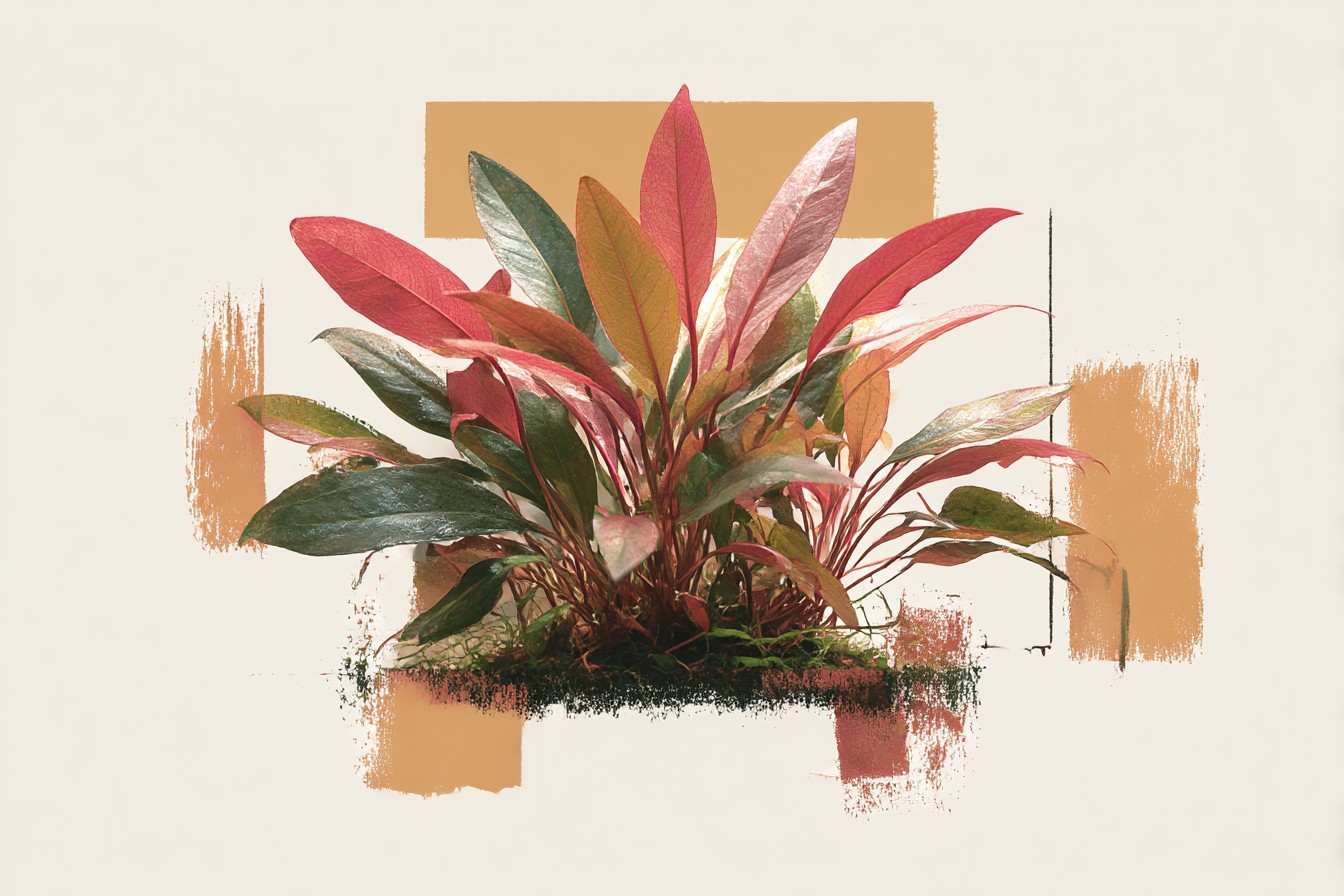
# Cryptocoryne Wendtii Red and the Low Tech Red That Doesn’t Need CO2 I spent six months trying to find a red plant that would actually stay red in my low-tech setup. Every plant I tried either turned green under my basic LED strip or melted the moment I changed the water parameters slightly. The Reddit threads were full of people insisting you needed CO2 injection and expensive full-spectrum lighting to get any decent reds.
Then I found Cryptocoryne wendtii red sitting in the corner of my local shop, looking distinctly unimpressive in a plastic pot for eight quid. Two years later, it’s the backbone of every tank I’ve built. This isn’t the flashy red plant you see in competition aquascapes.
It won’t give you that instant wow factor that stems like Ludwigia or Rotala provide. What it will do is grow steadily, stay genuinely red, and tolerate the kind of water parameter swings that would kill most of the plants marketed as “beginner friendly.” If you’re running a low-tech tank and want something red that actually works, this might be exactly what you’ve been looking for. ## Quick Reference | Care Level | Lighting Needs | CO2 Required | Growth Rate | Max Size | Our Rating | |————|—————-|————–|————-|———–|————| | Easy | Low to Medium | No | Slow to Moderate | 20-30cm | 9/10 | ## Background and History Cryptocoryne wendtii belongs to a genus that’s been driving aquarists both mad and devoted in equal measure for decades.

The species originates from Sri Lanka, where it grows along riverbanks and in areas that experience significant seasonal water level changes.
This natural environment explains a lot about why it handles fluctuating conditions better than most aquatic plants we try to grow. The red variety isn’t a separate species but a colour form that’s been selectively cultivated within the hobby. While the standard wendtii produces leaves that range from brown to olive green, the red form maintains burgundy to deep reddish-brown colouration that intensifies rather than fades in lower light conditions.
This characteristic alone makes it unusual among red aquatic plants, most of which require intense lighting to maintain their colour. In aquascaping circles, Cryptocoryne species have always occupied an interesting position. They’re not the stars of high-tech builds, but they’re the reliable supporting cast that holds everything together.
Wendtii red specifically has gained popularity among low-tech enthusiasts because it delivers on promises that many other plants don’t. When a plant is listed as “low light” and “no CO2 required,” there’s usually a catch. With this one, there genuinely isn’t.
The cultivation of colour forms within the Cryptocoryne genus has been ongoing for years, with various nurseries developing plants that show improved colour stability and growth characteristics. The red wendtii you’ll find in shops today is typically several generations removed from the original wild-type plants, bred specifically to maintain colour in aquarium conditions. ## What Makes It Special The first thing you notice about wendtii red isn’t actually the colour. It’s how solid it looks.
The leaves are thick and waxy, with a texture that immediately suggests this plant isn’t going to dissolve the moment you look at it wrong. When you handle it during planting, there’s a substantial feel to the foliage that’s reassuring if you’re used to delicate stem plants that bruise if you breathe on them. The growth pattern is distinctive.
Rather than shooting upward like most aquatic plants, wendtii red grows in a rosette formation, spreading outward from a central crown. New leaves emerge from the centre, starting as tightly furled burgundy shoots that slowly unfurl over several days. The process is slow enough that you can actually watch it happen, which becomes oddly compelling once you start paying attention.
Height varies considerably depending on conditions, ranging from 15-20cm in most setups (Bryogrow) though it can reach up to 50cm in ideal conditions (AquariumPlantenshop.nl). In my experience, expect something around the 20cm mark in a typical community tank with moderate lighting. The colour is where this plant genuinely delivers on its promises.
Unlike most red plants that fade to green under lower light, wendtii red maintains its burgundy colouration and often deepens it. The mechanism behind this seems counterintuitive, but it works consistently. Under my basic Nicrew LED running about six hours a day, the leaves show a rich reddish-brown that’s far more intense than anything I achieved with CO2-dependent reds under higher lighting.
Water parameter tolerance is genuinely impressive. The plant handles pH ranges from 6.0-8.0 (AquariumPlantenshop.nl) and temperatures from 22-28°C (The Fish Factory). More importantly, it tolerates changes in these parameters without the dramatic melting that characterises many other Cryptocoryne species.
I’ve had mine survive everything from a heater failure that dropped the tank temperature to 18°C overnight to a pH swing caused by new driftwood that took the water from 7.2 to 6.4 over three days. The root system develops into something substantial over time. After six months, you’re looking at a network that extends well beyond the visible footprint of the plant.
This makes it excellent for nutrient uptake from the substrate, but it also means repositioning established plants requires planning. The roots aren’t brittle, but they’re extensive enough that you’ll need to disturb a fair amount of substrate to move a mature specimen. Growth rate sits firmly in the “patient hobbyist” category.
You Might Also Like
You won’t see dramatic changes week to week, but over a couple of months, the transformation is significant. A single plant will gradually develop into a cluster as new crowns develop from the root system. This natural propagation method means you’ll end up with more plants over time without doing anything special to encourage it.
The plant’s behaviour under different lighting conditions is particularly interesting. Under higher light, the leaves develop a more bronze tone with deeper red undertones. Under lower light, they shift toward a darker burgundy that can appear almost black-red in certain tank configurations.
Both colour forms are attractive, which gives you flexibility in lighting choices without worrying about losing the visual impact. ## The Honest Assessment The slow growth that makes wendtii red reliable also makes it frustrating if you’re trying to fill space quickly. When you’re setting up a new tank and want something that looks established in a reasonable timeframe, this isn’t it. You’ll be looking at bare substrate around your plants for months while they slowly develop into the full rosettes you see in photos.
Cryptocoryne melt remains a possibility, though wendtii red is less prone to it than most of its relatives. The phenomenon typically occurs when plants experience sudden changes in water chemistry or lighting conditions. While this variety is more tolerant than others, it’s not immune.
I’ve seen plants lose most of their leaves after major water parameter swings, though they typically recover from the root system over several weeks. The colour, while genuinely red, isn’t the vibrant scarlet you get from high-tech red plants under optimal conditions. It’s a burgundy-brown red that reads as red in most lighting but won’t give you that intense colour pop that some aquascapers are looking for.
If you’re after the kind of red that makes people stop and stare, this probably isn’t it. Algae can be an issue on the broad leaf surfaces, particularly in tanks with nutrient imbalances. The slow growth means the plant can’t outcompete algae the way faster-growing species can, and the substantial leaves provide plenty of surface area for algae to establish.
Regular maintenance becomes important, and you’ll need to stay on top of your nutrient regime more carefully than you might with other low-tech plants. The spreading habit, while useful for propagation, can become problematic in smaller tanks. A mature wendtii red cluster can easily occupy 20-30cm of substrate space (Bryogrow), which is significant in a 60-litre tank.
The plant doesn’t respect boundaries you’ve planned in your aquascape, and managing its spread requires occasional root pruning. Price can vary significantly depending on your source, and quality isn’t always consistent. Some suppliers sell plants that have been grown emersed in nurseries and will undergo significant changes when submerged permanently.
Others offer plants that have already been converted to aquatic growth, which establish more reliably but cost more. ## Legacy and Influence Cryptocoryne wendtii red has become something of a gateway plant for low-tech enthusiasts looking to add colour to their tanks without diving into the complexity of high-tech setups. Its success has influenced how the hobby thinks about red plants generally, demonstrating that colour and simplicity don’t have to be mutually exclusive. The plant’s popularity has encouraged more nurseries to develop colour variants of traditionally green species.
The success of wendtii red has shown there’s a market for plants that prioritise reliability over dramatic appearance, leading to improved cultivation of other Cryptocoryne varieties and similar approach with species like Hygrophila and Alternanthera.
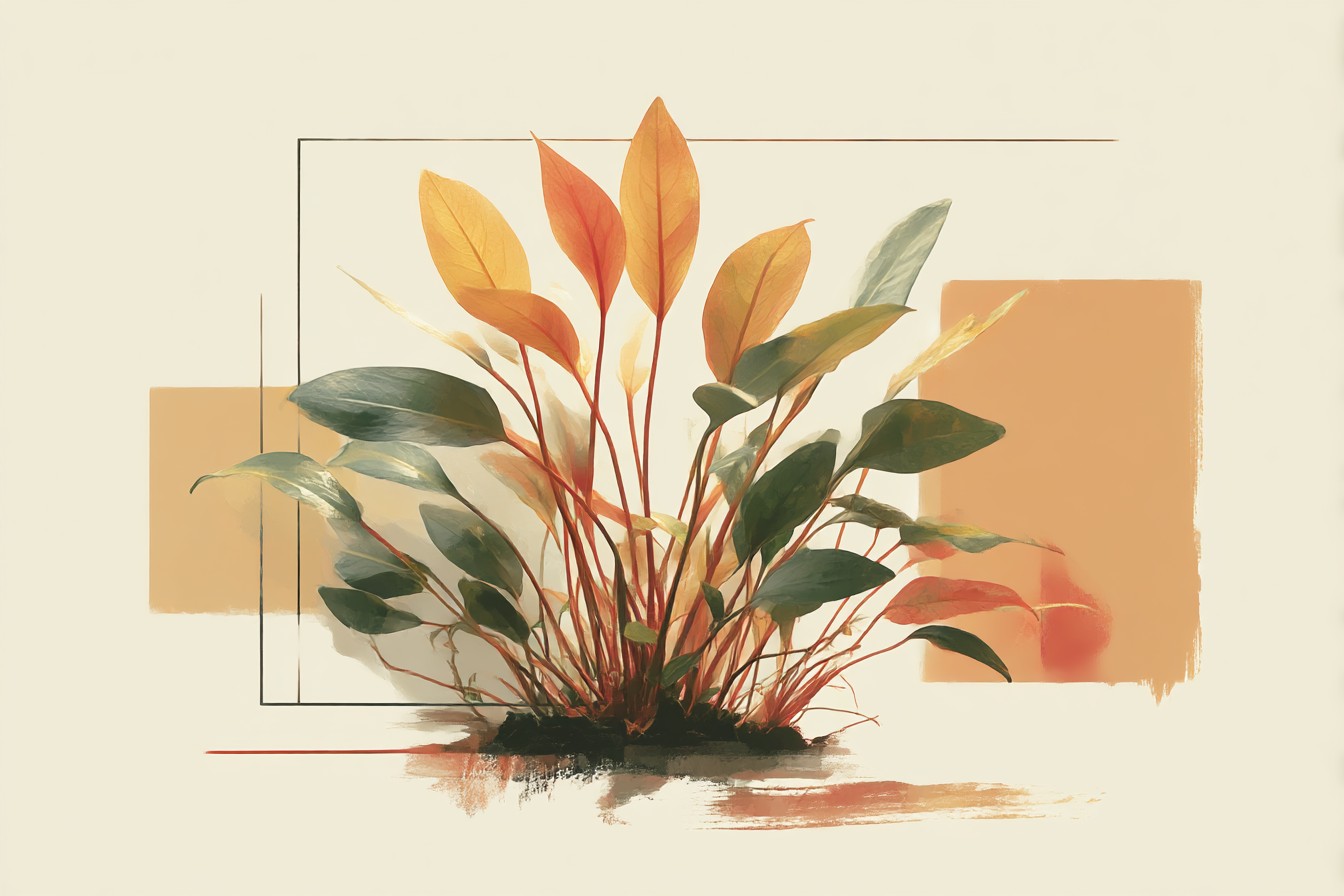
In aquascaping terms, wendtii red has carved out a niche as the reliable colour accent for natural-style tanks. It appears frequently in builds that emphasise long-term stability over dramatic initial impact, becoming a standard recommendation for hobbyists transitioning from plastic plants to live plants who want something more interesting than the usual green beginner species.
The plant’s tolerance for varying conditions has made it popular in community tanks where the needs of multiple species must be balanced. Its ability to thrive in the middle-ground conditions that suit most tropical community fish has made it a standard recommendation for mixed species setups. ## The Verdict If you’re running a low-tech tank and want genuine red colour that doesn’t require CO2, expensive lighting, or constant parameter monitoring, wendtii red is probably your best option. It’s not the most exciting plant in the hobby, but it’s one of the most reliable, and that reliability becomes increasingly valuable as you gain experience with how many “easy” plants aren’t actually that easy.
The slow growth means it’s not suitable for every application, and the burgundy-brown colour won’t satisfy everyone looking for intense reds. But if you want something that will establish steadily, stay colourful, and tolerate the inevitable mistakes that come with learning the hobby, this is exactly what you need. I’ve used it as a foundation plant in multiple builds now, and it’s never disappointed.
While other plants have come and gone, melted or overgrown their space, the wendtii red just keeps growing steadily and looking good. Sometimes the best plants are the ones that don’t give you anything dramatic to write about. See where this placed in our full ranking of low-tech aquarium plants.



[…] Don’t Need CO2 Injection In freshwater planted aquariums, we pump CO2 into the water to help plants grow. But […]