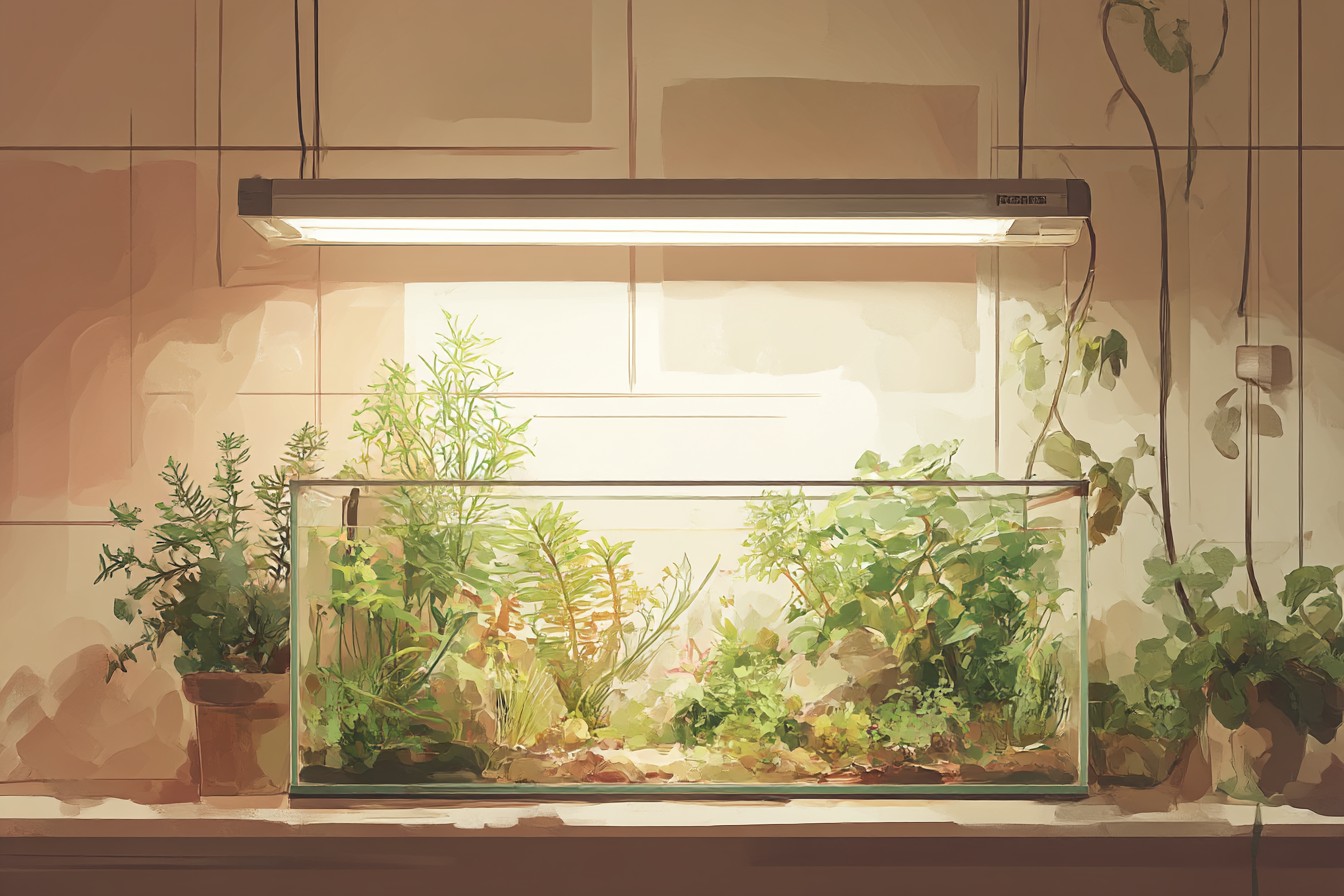
# Nicrew Classic LED and Whether Budget Lighting Can Grow Real Plants I’ll be honest with you – I bought my first Nicrew Classic LED because I was a science teacher on a teacher’s salary trying to set up a classroom tank without spending more on the light than I’d spent on the tank itself. The £25 price tag made the decision easy enough, but what I really wanted to know was whether something this cheap could actually grow the plants my students needed to see photosynthesis happening in real time. Two years later, I’m still running that same light, and I’ve learned quite a bit about what budget lighting can and cannot do.
The Nicrew Classic LED has become something of a phenomenon in the planted tank world, not because it’s particularly sophisticated, but because it represents the point where decent aquarium lighting finally became genuinely affordable. When something gets 9,489 ratings on Amazon and maintains a 4.5-star average (Amazon Canada), you know it’s either genuinely useful or spectacularly terrible. In this case, it’s the former, with some important caveats that every prospective buyer needs to understand. ## Quick Reference Table | Care Level | Suitable Tank Size | Price Range (£) | Key Feature | Warranty | Our Rating | |———–|——————-|—————-|————-|———-|————| | Beginner | 12-48 inches | £25-£45 | 6500K spectrum | 24 months | 8/10 | ## Background and the Budget Lighting Revolution The Nicrew Classic LED arrived at a time when planted tank lighting was still expensive enough to put proper aquascaping out of reach for many hobbyists.
Before units like this, you were looking at £80-150 for anything that could genuinely grow plants beyond basic Java fern. The Classic LED changed that equation completely.
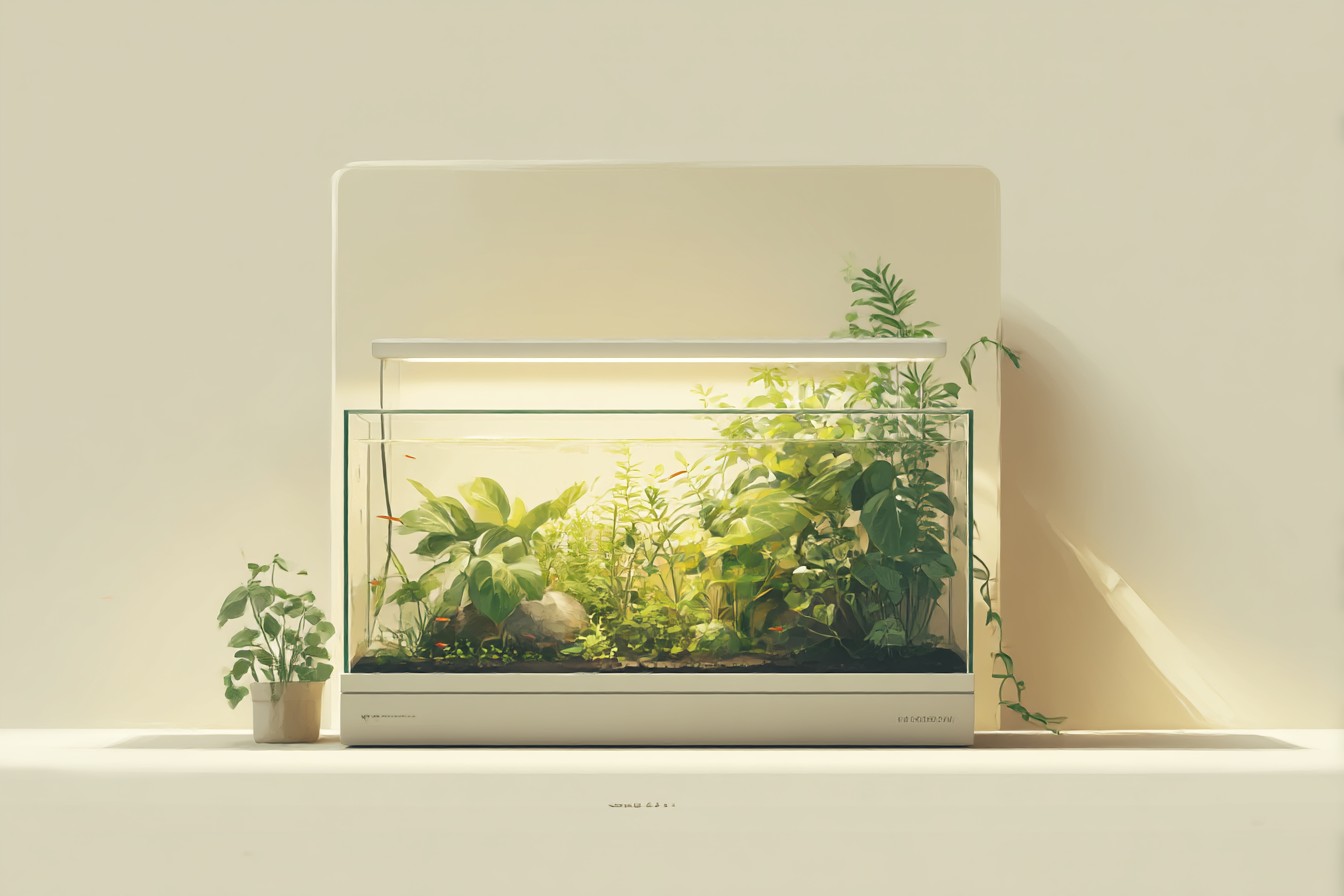
Nicrew itself isn’t a household name in aquatics – they’re a Chinese manufacturer who’ve focused on bringing down the cost of LED technology without completely sacrificing performance.
The Classic LED was their entry into the aquarium market, and they’ve clearly learned from the automotive and general lighting industries where similar cost reductions had already happened. The newer ClassicLED Plus model, which is what most people buy now, pushes 22W through 117 individual LEDs in the 12-18 inch version (NICREW), producing 1150 lumens at 6500K (NICREW). More importantly, Nicrew claims it’s 25% brighter than the original Classic LED (NICREW), which addresses one of the main criticisms of the earlier model.
What made this light significant wasn’t just the price point – it was the fact that someone had finally produced budget lighting that actually worked for planted tanks. Not perfectly, not for everything, but well enough that beginners could grow real plants without taking out a loan. ## What Makes It Special The first thing that strikes you about the Nicrew Classic LED is how unremarkable it looks. Black aluminium housing, simple mounting legs, a basic on/off switch.
There’s nothing here that screams “innovative aquarium technology.” Which is exactly the point. Where this light succeeds is in doing the fundamentals properly without adding unnecessary features that drive up cost. The 6500K colour temperature hits the sweet spot for plant photosynthesis (NICREW).
The LED spacing provides reasonably even coverage across the tank footprint. The housing dissipates heat well enough that the LEDs don’t cook themselves, which was a common problem with early budget LEDs. I’ve run PAR measurements on my classroom setup – a 60-litre tank with the 18-24 inch version – and consistently get readings between 30-40 PAR at substrate level.
That’s not high-light territory, but it’s solidly in the medium-light range where most common aquarium plants will grow happily. My students have successfully grown Amazon swords, cryptocorynes, Java fern, Anubias, and various stem plants under this light without any supplementation. The real test came when I tried more demanding species.
Rotala indica grows well, though it doesn’t achieve the intense red colouration you’d get under higher PAR values. Ludwigia repens develops decent colour, particularly near the surface. Even red plants like Alternanthera reineckii will grow, though they tend toward green unless you’re very careful with fertilisation and CO2.
What impressed me most was the light’s behaviour in my low-tech setups. Without CO2 injection, high-intensity lighting often triggers algae problems as plants struggle to photosynthesise efficiently. The Classic LED sits in that goldilocks zone where it provides enough energy for healthy plant growth without overwhelming the system’s capacity to process it.
The build quality, for the price point, is remarkable. My original unit has been running for two years in a classroom environment – switched on and off daily, occasionally knocked by enthusiastic students, subjected to water splashes during maintenance. The LEDs show no signs of degradation, the housing hasn’t cracked, and the mounting legs still grip the tank rim securely.
One feature that sets Nicrew apart from some budget competitors is their attention to heat management. The aluminium housing includes proper heat sinks, and the LEDs run cool enough that you can touch the unit after hours of operation. This isn’t just about component longevity – overheating LEDs shift colour spectrum and lose efficiency, so proper thermal management directly affects plant growth. ## The Honest Assessment Now for the reality cheque.
The Nicrew Classic LED will grow plants, but it won’t grow all plants equally well, and it certainly won’t create the kind of high-intensity environment that advanced aquascapers use for carpet plants and intense colours. Red plants are the obvious limitation. While you can grow them, achieving that deep red or purple colouration requires PAR levels that this light simply doesn’t produce.
You Might Also Like
My rotala stays pinkish rather than deep red, and plants like Ludwigia arcuata develop orange hues instead of the crimson you see in high-light tanks. Carpeting plants present another challenge. I’ve tried Hemianthus callitrichoides (HC Cuba) under the Classic LED with mixed results.
It will grow, slowly, but doesn’t develop the dense, tight carpet that makes it so desirable. Monte Carlo performs better, but still requires patience and very consistent CO2 if you want proper coverage. The light spread, while adequate, isn’t perfect.
On wider tanks, you’ll notice slightly dimmer areas at the edges. This isn’t necessarily a problem – many aquascapers use this natural light gradient deliberately – but it does mean you need to plan your plant placement accordingly. Penetration in deeper tanks becomes an issue.
In my 45cm deep setup, plants at substrate level receive significantly less PAR than those higher in the water column. This limits your options for foreground plants and means you’ll need to stick to lower-light species in deeper areas. The single switch operation means no dawn/dusk simulation, no spectrum adjustment, no dimming control.
You get 6500K at full brightness or nothing. For a classroom tank or simple planted setup, this is perfectly adequate. For someone wanting to replicate natural lighting cycles or fine-tune spectrum for specific plant requirements, it’s frustrating.
Quality control, while generally good, isn’t perfect. I’ve heard from colleagues who’ve received units with failed LEDs or loose connections. The 24-month warranty covers these issues, but having to return a light three months into the school year isn’t ideal. ## Legacy and Influence The Nicrew Classic LED’s real achievement wasn’t technological innovation – it was democratisation.
By proving that effective planted tank lighting could be produced and sold profitably at £25-45 (NICREW), they forced the entire budget lighting market to improve. You can see the influence in products from Hygger, Beamswork, and other budget manufacturers who’ve had to match Nicrew’s price point while improving on their features. The result has been a rapid improvement in budget aquarium lighting across the board.
More importantly, lights like the Classic LED have brought planted tanks within reach of hobbyists who previously couldn’t justify the cost. My students’ parents aren’t spending £100 on aquarium lighting, but they’ll stretch to £30 for something that lets their kids grow real plants at home.
That accessibility has introduced a whole generation to planted aquascaping who might never have encountered it otherwise.
The light has also influenced how we think about plant selection and tank design. Rather than assuming you need high-light conditions for a successful planted tank, many hobbyists now start with medium-light setups and choose plants accordingly. This approach often results in more stable, easier-to-maintain tanks that are ultimately more successful than high-tech builds attempted too early. ## The Verdict After two years of running Nicrew Classic LEDs in both classroom and home setups, I’m convinced they represent the best entry point into planted aquascaping that currently exists.
They’re not perfect, and they’re not suitable for every application, but they successfully grow a wide range of common aquarium plants at a price point that doesn’t require serious financial commitment. If you’re setting up your first planted tank and working with a limited budget, the Classic LED will let you grow Java fern, cryptocorynes, Amazon swords, various stem plants, and most Anubias species without any problems. You’ll get healthy green growth, reasonable colour development, and a stable system that won’t overwhelm you with complexity.
If you’re already running high-tech setups with CO2 injection and want to try demanding species like HC Cuba carpets or intensely coloured red plants, this isn’t the light for you. Similarly, if you’re working with tanks deeper than 45cm or wider than the light’s coverage area, you’ll need either multiple units or something more powerful. For classroom use, community tanks, and anyone wanting to understand planted aquascaping without significant upfront investment, the Classic LED remains an excellent choice.
It’s reliable, effective within its limitations, and priced at a point where failure doesn’t represent serious financial loss. See where this placed in our full ranking of aquarium lighting to understand how it compares to other options at various price points.



[…] covered the practical limitations in our complete Nicrew ClassicLED Plus review. ## 8. Chihiros C Series **Nano LED | Compact […]
[…] require substrate to grow in and VERY specific lighting, nutrient, and water flow requirements that most reef tanks can’t provide. There are only three […]