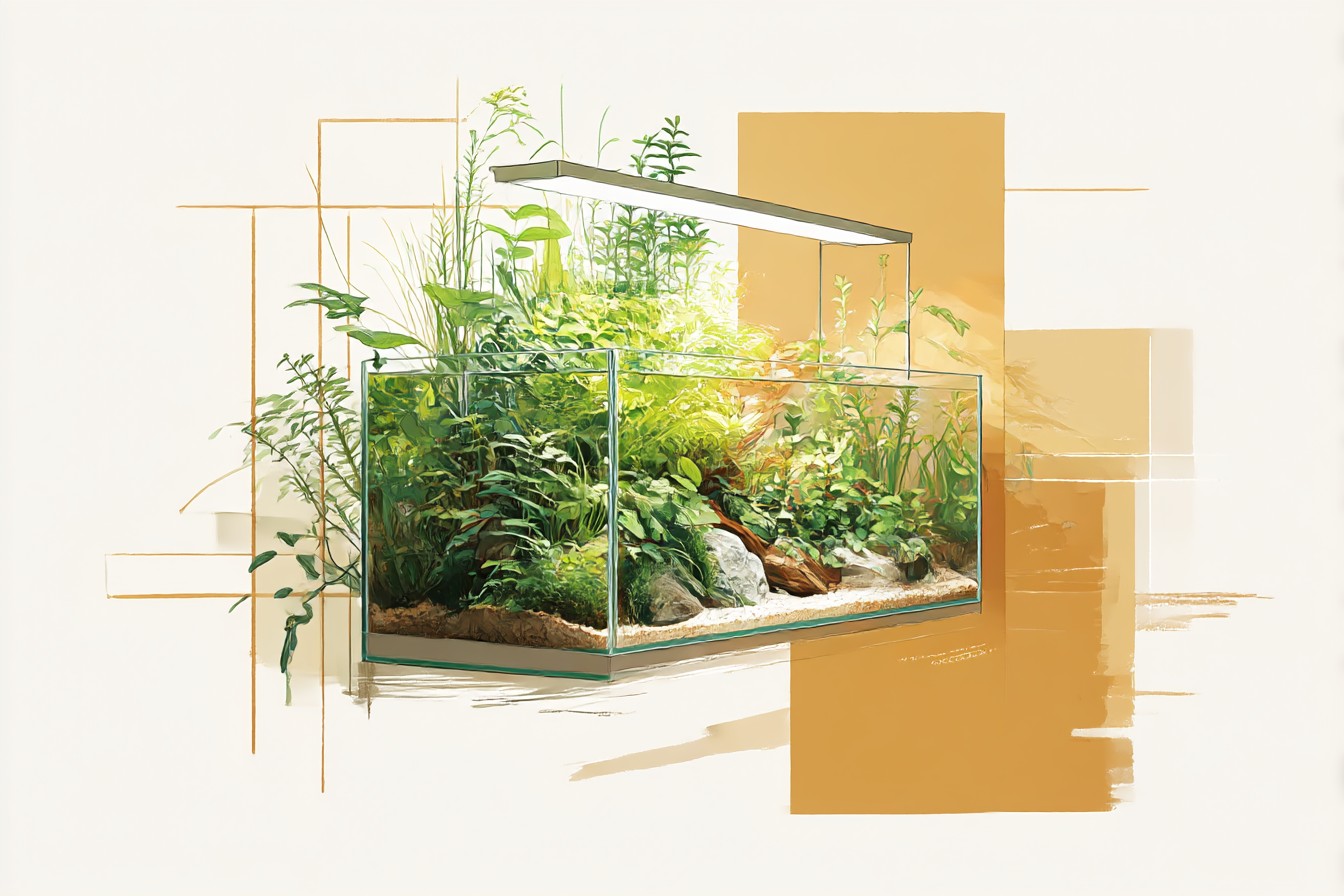
# The Hygger Planted Aquarium Light: Amazon Bestseller That Splits Opinion I bought the Hygger 26W planted light because my cryptocorynes were turning brown and nothing I tried was helping. Honestly, I was sceptical about spending sixty quid on a Chinese LED fixture when everyone on the forums was talking about brands I’d never heard of that cost three times as much. Two years later, those crypts are the greenest things in my classroom, and I’ve ended up installing Hygger lights on both my teaching tanks.
But I also understand why half the reviews on Amazon are one-star rants about dead fish and algae blooms. This light perfectly represents everything confusing about planted tank lighting. It works brilliantly if you understand what you’re doing.
It’s a disaster if you don’t. The problem isn’t the fixture itself, it’s that Hygger sells it as a solution for everyone, which it absolutely isn’t.
The default programming will wreck most tanks, the power ratings don’t match what most people actually need, and the spectrum is designed for one specific type of setup that nobody explains properly in the marketing.
But when it’s right, it’s genuinely impressive. I’ve grown red plants under this thing that I couldn’t get to colour up under more expensive lights. My students can actually see photosynthesis happening in real time when the CO2 is running and the Hygger kicks into full daylight mode.
The question isn’t whether this is a good light. The question is whether it’s right for your tank and whether you’re prepared to programme it properly instead of just plugging it in and hoping. ## Quick Reference | Type | Suitable Tank Size | Price Range (£) | Key Feature | Warranty | Our Rating | |——|——————-|—————–|————-|———-|————| | Full Spectrum LED | 12-54 inches | £45-120 | 24/7 Programming | 12 months | 7/10 | ## The Budget Light That Changed Everything The Hygger planted light launched into a market dominated by expensive German and Japanese fixtures that cost more than most people’s entire tank setup. Suddenly here was a Chinese manufacturer offering full spectrum LEDs, 24/7 programming, and proper plant-growing wavelengths for less than a hundred pounds in the largest size.
The aquascaping community didn’t know what to make of it. Hygger isn’t some random Amazon brand that appeared overnight. They’ve been manufacturing aquarium equipment in China for years, supplying OEM products to Western brands before deciding to sell direct.
The planted light represents their attempt to break into the premium market by offering features that used to cost serious money at a price point that normal hobbyists could actually afford. The timing was perfect. This launched right as YouTube aquascapers were making planted tanks look accessible to people who’d never considered anything beyond a goldfish bowl.
Suddenly thousands of people wanted proper plant lighting, but most weren’t ready to spend £300 on a Chihiros or ADA fixture for their first attempt. The Hygger offered a middle ground between the useless LED strips sold in pet shops and the professional-grade equipment that serious aquascapers use. What nobody anticipated was how divisive it would become.
Amazon UK shows a 4.2 out of 5 star rating (Amazon UK), but read the actual reviews and you’ll find people calling it everything from “the best budget plant light available” to “a tank-killing disaster that should be banned.” There’s very little middle ground, which tells you everything about how this light actually performs in practise. ## What Makes It Special The Hygger’s strength is its spectrum design, which includes specific wavelengths that actually matter for photosynthesis. The LED configuration incorporates blue 450-455nm and red 620-625nm diodes (hygger online), which target the peaks of chlorophyll absorption. This isn’t marketing nonsense, it’s proper plant science applied to aquarium lighting.
I can see the difference in my classroom tank when I compare growth under this light versus the generic white LEDs that came with the tank. The programmable controller is where this light separates itself from cheaper alternatives. You get proper sunrise and sunset transitions, the ability to create multiple lighting periods throughout the day, and independent control over different colour channels.
The default 24/7 mode runs sunrise from 6am to 8am, full daylight from 8am to 6pm, and moonlight from 6pm to 10:50pm (hygger aquarium). Most people never change these settings, which is where the problems start. The light output is genuinely impressive for the price.
The illumination range is stated as 590-2700 lumens depending on settings (hygger online), and in practise I’ve found this to be reasonably accurate. At full intensity, the 26W version I run on my 90-litre classroom tank provides enough PAR at substrate level to grow demanding foreground plants without CO2 supplementation, something I couldn’t achieve with the previous light at any setting. But what really impressed me was the heat management.
Previous LED fixtures I’d tried either ran burning hot and needed fans, or they throttled the output to stay cool and barely grew anything. The Hygger runs warm but not hot, maintains consistent output across the photoperiod, and has never shut down due to overheating even during summer when the classroom gets stuffy. The build quality surprised me as well.
The aluminium housing feels substantial, the mounting arms are adjustable and actually stay where you put them, and the waterproofing has held up to two years of classroom use with twelve-year-olds occasionally splashing water everywhere. This doesn’t feel like a budget fixture when you handle it, which probably explains why so many people take a chance on it despite never having heard of the brand. Where it gets interesting is the spectrum balance.
You Might Also Like
Most planted lights try to provide “full spectrum” by mixing lots of different wavelengths, which sounds good but often means you get a little bit of everything and not enough of anything useful. The Hygger takes a more focused approach, concentrating on the specific wavelengths that drive photosynthesis and using white LEDs to fill in the visual spectrum. In practise, this makes plants grow faster and show better colour than they do under more balanced lighting. ## The Honest Assessment The biggest problem with this light is the default programming, which is completely wrong for most tanks.
That ten-hour daylight period will cause algae problems in any setup that isn’t properly balanced with CO2 and fertilisation. I learned this the hard way when I first installed it on my home tank and ended up with a green water bloom that took weeks to clear. The light isn’t the problem, the programming is, but Hygger doesn’t make this clear in their marketing.
The power ratings are misleading as well. The 14W version is recommended for 12-18 inch tanks, the 26W for 30-36 inch tanks, and the 42W for 48-54 inch tanks (hygger aquarium). In reality, these are high-light fixtures that will drive demanding plant growth.
If you’re running a low-tech tank with easy plants, you probably need the next size down from what they recommend, run at reduced intensity, or programme much shorter photoperiods. The controller app is functional but clunky. It connects via Bluetooth, which works fine until you’re trying to adjust settings from across the room and can’t get a reliable connection.
The interface feels like it was designed by engineers rather than actual aquarists, with lots of options that most people will never use and basic functions buried in submenus. It does what it needs to do, but it’s not intuitive. Quality control seems inconsistent based on the Amazon reviews.
Most people get fixtures that work perfectly and last years. A minority get units with dead LEDs, failed controllers, or other problems within the first few months. Hygger’s customer service is apparently hit or miss, with some people getting quick replacements and others struggling to get responses.
This is the risk you take with a Chinese direct import versus buying from an established aquarium retailer. The spectrum, while effective for plant growth, doesn’t always look natural to human eyes. Under full intensity, everything takes on a slightly purplish tint that some people find off-putting.
You can adjust this by tweaking the colour balance, but it requires experimentation to get something that both grows plants well and looks good in your living room. ## Legacy and Influence The Hygger planted light forced the entire budget LED market to raise its game. Before this fixture appeared, you either bought a basic white LED strip that wouldn’t grow anything demanding, or you spent serious money on a premium fixture with proper plant spectrum. The Hygger proved that you could manufacture a genuinely effective planted light at a mainstream price point, and every other budget manufacturer has had to respond.
It also democratised advanced lighting features. Programmable controllers, spectrum adjustment, and sunrise/sunset simulation used to be premium features that cost hundreds of pounds.

Now they’re standard even on budget fixtures, largely because the Hygger showed there was demand for these capabilities among hobbyists who weren’t ready to spend premium prices.
The success has been significant enough to influence how people approach planted tank setup. I regularly see new aquascapers on forums who’ve started with a Hygger light and learned proper plant-keeping techniques to match its output, rather than starting with easy setups and upgrading later. This has probably accelerated more people into serious planted tank keeping than any other single piece of equipment in recent years.
But it’s also created unrealistic expectations. The number of posts I see from people complaining that their first planted tank failed, when they’ve got a high-output light running default settings over a tank with no CO2 and weekly feeding, suggests that accessible pricing doesn’t automatically translate to accessible results. ## The Verdict This is a genuinely capable plant light that performs well above its price point, provided you’re prepared to programme it properly and understand what you’re getting into. If you’ve got a CO2-injected tank with good fertilisation and you want strong, fast plant growth without spending premium money, the Hygger is probably the best value available right now.
But if you’re new to planted tanks, running a low-tech setup, or expecting to just plug it in and get good results with default settings, this light will likely cause more problems than it solves. The power output and default programming are designed for high-energy planted systems, not casual plant keeping. I’d recommend it for intermediate hobbyists who understand lighting requirements and are comfortable with programming and adjustment.
For beginners, I’d suggest starting with something less capable but more forgiving, then upgrading to something like this once you understand how light, CO2, and nutrients interact in a planted system. See where this placed in our full ranking of planted tank lights.


