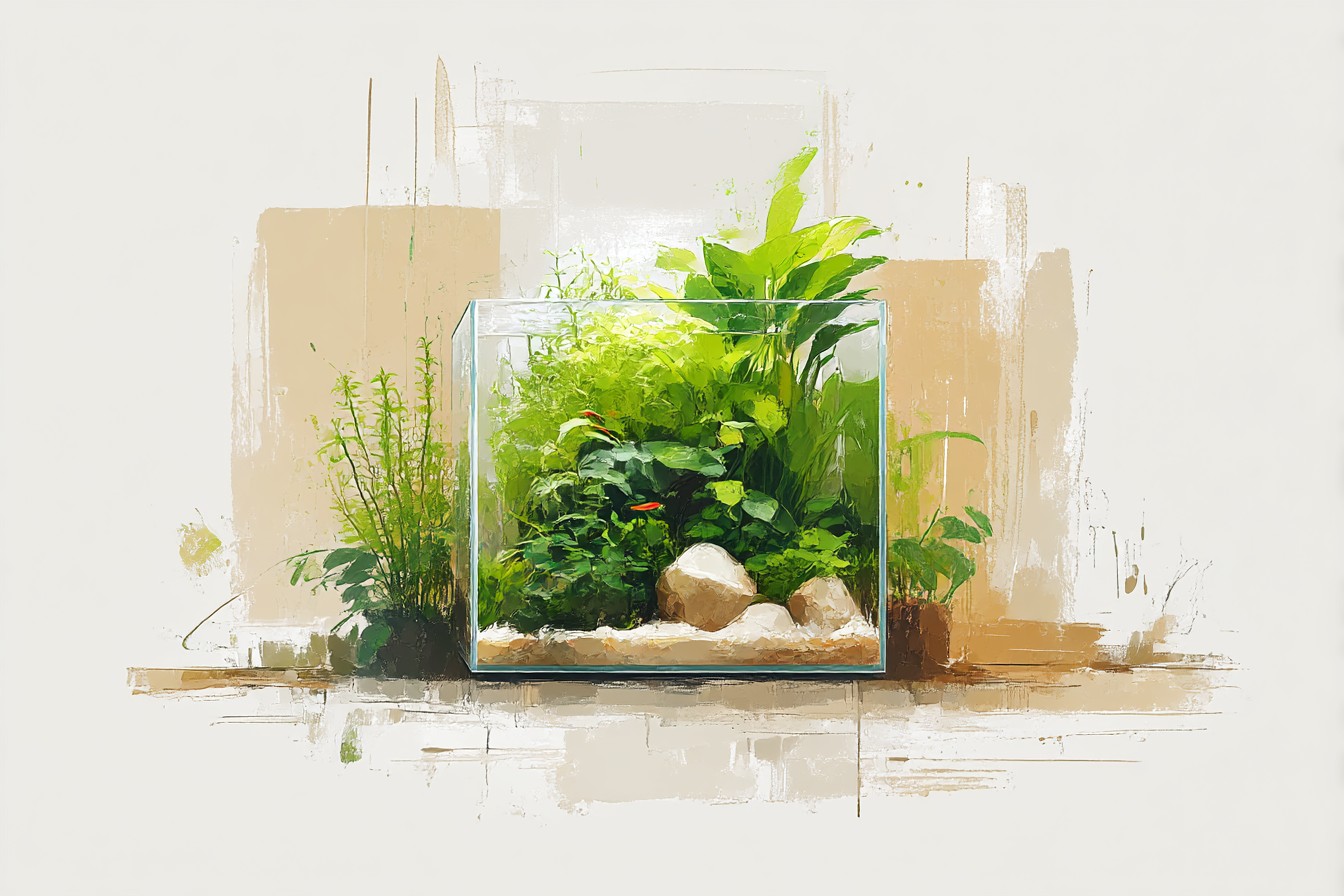
# Planted 5 Gallon Aquarium and What You Can Realistically Fit in a Nano I built my first planted nano when my daughter insisted we needed “a fish that could live in her bedroom.” The logical parent part of me figured a 5 gallon would be perfect. Small enough for her dresser, big enough for something interesting, and surely simple to maintain. Three years later, I’ve got four nanos running, she’s moved on to hamsters, and I’m still fascinated by what you can actually achieve in 18.92705892 litres (UnitConverters) of water.
The thing about nano planted tanks is they force you to think differently about every choice. There’s no room for compromise fish or plants you’re not completely committed to. Every centimetre matters.
Every nutrient addition gets amplified. But when you get it right, when you manage to create a genuine ecosystem in something that weighs just 62 pounds when full (Private Scuba), it’s more satisfying than tanks ten times the size.
This isn’t about proving you can cram loads into a tiny space.
It’s about understanding what actually works long term in a planted 5 gallon setup, what doesn’t, and why the constraints make the hobby more interesting, not less. ## Quick Reference: 5 Gallon Planted Tank Basics | **Aspect** | **Details** | |————|————-| | **Tank Dimensions** | 16″ × 8″ × 10″ (Fish Tank Focus) | | **Total Weight (Filled)** | 62 lb (Private Scuba) | | **Volume in Litres** | 18.9L (UnitConverters) | | **Ideal Fish Load** | 3-5 nano species max | | **Maintenance** | 2-3 water changes weekly | | **Our Rating** | 9/10 for learning | ## Why 5 Gallons Became the Sweet Spot The 5 gallon planted tank sits in this interesting space where it’s small enough to fit almost anywhere but large enough to support actual aquatic life properly. The standard dimensions of 16 inches by 8 inches by 10 inches (Fish Tank Focus) give you a footprint that works on most furniture without dominating a room. At 7 pounds empty (Private Scuba), you can move it around easily before adding water and hardscape.
But it’s that filled weight of 62 pounds (Private Scuba) that tells the real story. This isn’t a bowl you can shift around casually. Once it’s set up and cycled, it becomes a permanent feature.
That weight comes from the fact that one gallon of freshwater weighs 8.3454 pounds (Fish Tank Focus), so your 18.9 litres of actual aquatic environment has genuine mass and stability. I’ve run smaller setups. My 2.5 gallon measures 12 inches by 6 inches by 8 inches (Fish Tank Focus) and weighs 26.9 pounds when filled (Fish Tank Focus), but the difference in what you can actually keep healthy long term is enormous.
The 5 gallon gives you just enough water volume for parameter stability and just enough space for fish to exhibit natural behaviours. ## What Actually Fits: The Fish Reality Here’s what I learned the hard way about stocking a 5 gallon planted tank. The old “inch per gallon” rule is useless here. A single inch of fish in 5 gallons sounds conservative until you realise that one inch could be a neon tetra that needs a school of six, or it could be a betta that produces more waste than three tetras combined.
The reality is that you’re looking at one of three approaches. A single betta with heavy planting. A small school of true nano fish like chili rasboras or ember tetras, maybe six maximum.
Or a colony setup with cherry shrimp as your primary residents and possibly a few otocinclus for algae control. I tried the “community nano” approach once. Six neon tetras, three cherry shrimp, and two otocinclus in a heavily planted setup.
It looked great for about three months. Then the bioload caught up with me. The tetras started showing stress colours.
The shrimp population crashed. The otos were constantly grazing but still couldn’t keep up with the algae bloom that followed the water quality decline. The fish that actually work in a planted 5 gallon are the ones that don’t fight the constraints.
Bettas work because they’re territorial rather than schooling, so one fish gets the entire tank as its territory. They’re also relatively low waste producers compared to their size, and they actually benefit from the planted environment. Micro schooling fish like chili rasboras or celestial pearl danios work because they’re genuinely tiny and their bioload matches the tank size.
But you need to accept that six is probably the maximum, not the minimum. A school of six chilis in a well planted 5 gallon behaves naturally and stays healthy. Try to push it to ten and you’re asking for trouble. ## The Plant Selection Game Changes Everything Plant choice in a nano planted tank isn’t just about aesthetics.
It’s about biological function. You need plants that will process nutrients efficiently, provide genuine biological filtration, and not outgrow the tank in six weeks. Fast growing stems like hornwort or water sprite become essential, not decorative.
They’re your primary nutrient export. I learned to think of them as living filters that happen to look nice. The slower growing showcase plants, the anubias and cryptocorynes that give you structure and visual weight, are the decoration.
The stems are the life support. Ground cover becomes critical because you need every square centimetre of substrate working. Monte carlo or dwarf baby tears aren’t just carpeting plants in a nano.
They’re biological processing surfaces. Every leaf is contributing to water quality maintenance. The hardscape needs to work harder too.
A piece of driftwood isn’t just visual structure. It’s surface area for beneficial bacteria. It’s shelter for fish.
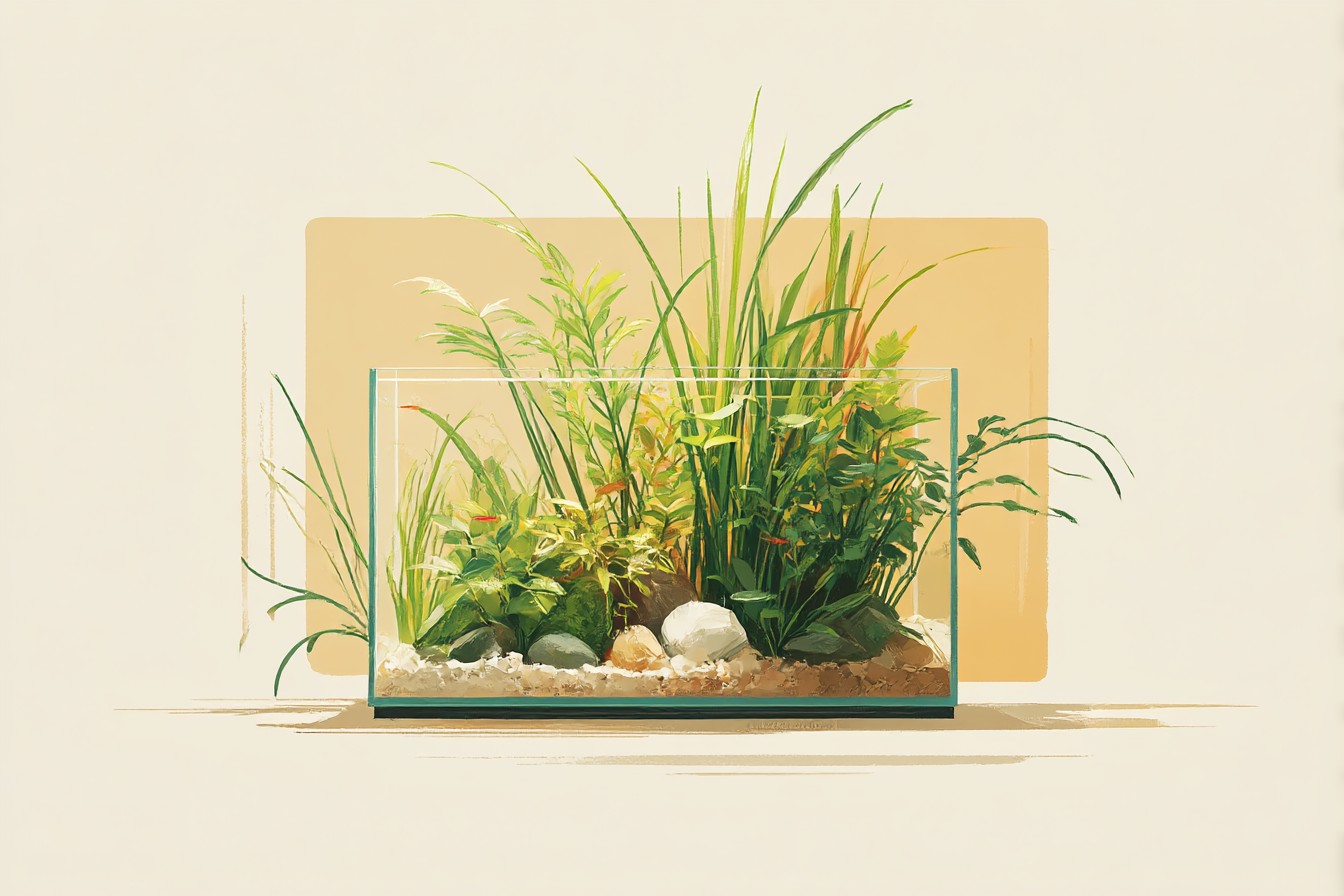
It’s a growth surface for java moss or anubias. Everything has multiple jobs in a space this small. I’ve found that the most successful planted 5 gallons use maybe five plant species total.
One fast growing stem for nutrient processing. One carpeting plant for ground coverage. One slow growing mid ground plant for structure.
You Might Also Like
Java moss or another moss for texture and additional surface area. And maybe one floating plant for surface coverage and additional nutrient uptake. More species than that and you’re managing too many different growth rates, nutrient requirements, and trimming schedules.
The tank becomes work instead of enjoyment. ## The Technical Reality: Equipment That Actually Fits Equipment selection for a planted 5 gallon is where you really feel the space constraints. A heater for small tropical tanks needs to be under 6.5 inches in length (AquAnswers) to fit properly without dominating the visual space or creating dead spots in water circulation. Filter choice becomes critical because you need biological and mechanical filtration without creating current that’s too strong for nano fish.
I’ve had good results with small internal filters positioned to create gentle water movement that doesn’t stress small schooling fish or blow around fine-leaved plants. Lighting is where you can actually get an advantage in a nano. LED strips designed for small tanks can provide genuinely good PAR levels because the light doesn’t have to penetrate much depth.
The 10-inch height of a standard 5 gallon means your substrate plants are getting meaningful light intensity even with modest equipment. CO2 becomes interesting in a nano planted tank. You don’t need much, but because the volume is small, changes happen quickly.
I’ve run successful planted 5 gallons with liquid carbon supplements, with DIY CO2 from yeast fermentation, and with proper pressurised CO2 using tiny diffusers. The pressurised system gives the most consistent results, but it’s probably overkill unless you’re trying to grow demanding carpeting plants. ## What Goes Wrong and Why The failure modes of planted nano tanks are predictable once you understand them. Parameter swings happen faster because there’s less water volume to buffer changes.
A feeding mistake or missed water change has more immediate impact. Algae problems amplify quickly because the light intensity is often higher relative to the bioload, and there’s less space for error in fertilisation. I’ve seen beautiful planted 5 gallons turn into green soup within a week because the owner added too much liquid fertiliser or left the lights on too long during a holiday period.
Fish stress happens because natural territories and swimming spaces are compressed. A fish that seems fine in a 5 gallon for months can suddenly show stress behaviours if something in its environment changes. The margin for error is smaller with everything.
Plant growth becomes a management challenge rather than just a success metric. Fast growing plants can fill a 5 gallon tank in weeks if you don’t stay on top of trimming. Slow growing plants can get shaded out or crowded by faster species before you notice the competition happening.
Maintenance schedules become critical. A 20 gallon planted tank might forgive a missed water change. A 5 gallon won’t.
I do 30-40% water changes twice weekly on my planted nanos, not because there’s a crisis, but because preventing problems is much easier than solving them in a small system. ## The Learning Value of Constraints What I didn’t expect when I started with planted nano tanks was how much they would teach me about the fundamental principles of aquarium keeping. When you only have 18.9 litres to work with, you can’t hide problems behind water volume. You can’t mask poor planning with equipment.
Every decision matters immediately. I learned more about plant nutrition from managing fertilisation in a 5 gallon than I had from running larger tanks for years. The cause and effect relationships are immediate and obvious.
Too much phosphate and you see the algae response within days. Not enough nitrogen and the plants show deficiency symptoms quickly enough to correct course. Fish behaviour becomes more apparent too.
In a larger tank, you might not notice subtle stress signals or territorial disputes. In a 5 gallon, every interaction is visible. You learn to read fish body language because you can’t miss the signals.
The equipment lessons transfer directly to larger systems. Understanding filtration, circulation, and heating in a nano makes you much more effective when you scale up. You develop an intuitive sense for what actually matters versus what just looks impressive. ## Making It Work Long Term The planted 5 gallon setups I’ve kept successfully for over a year share certain characteristics.
They’re understocked rather than fully loaded.
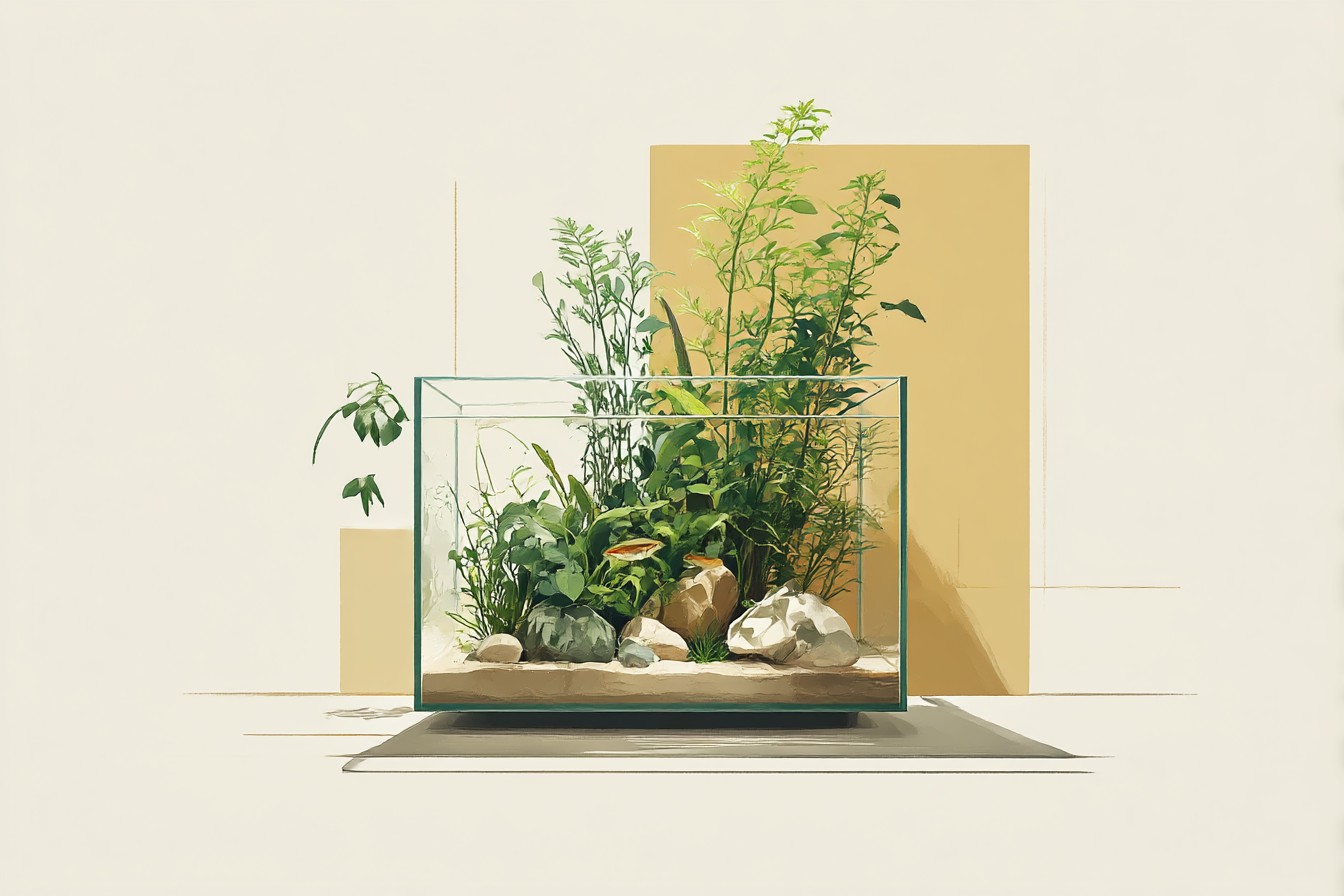
They use proven, hardy plant species rather than challenging ones. They have consistent maintenance schedules that prevent problems rather than react to them.
Most importantly, they’re planned as complete ecosystems from the start, not as experiments that get modified constantly. The fish species, plant selection, feeding schedule, and maintenance routine all work together as a system. The visual design matters more than you might expect because you’ll be looking at this tank closely and frequently.
It needs to be genuinely pleasing to watch, not just technically successful. The constraint of working in such a small space forces you to make strong design choices, and that usually results in more attractive tanks than trying to include everything you like in a larger system. After three years of running various planted nano setups, I’m convinced they’re the best way to learn fundamental aquarium principles.
They force you to understand what you’re doing rather than just following instructions. They reward good technique immediately and punish mistakes quickly enough to learn from them. The constraint isn’t a limitation.
It’s what makes the whole exercise worthwhile.


