
I bought my first pot of Rotala Blood Red because the photo on the website looked impossible. Deep crimson leaves that seemed to glow from within, like someone had backlit stained glass. I’d been running planted tanks for three years by then, had decent success with most things, figured I could handle one more stem plant.
How hard could it be? The answer, it turns out, is very hard indeed. That first batch went from vibrant red to muddy brown in about ten days, then melted entirely by week three.
The second attempt lasted longer but never coloured up properly, staying a disappointing orange-pink that looked nothing like the photos. It took me four tries and a complete rethink of my approach before I got my first proper Blood Red stem that actually lived up to its name.
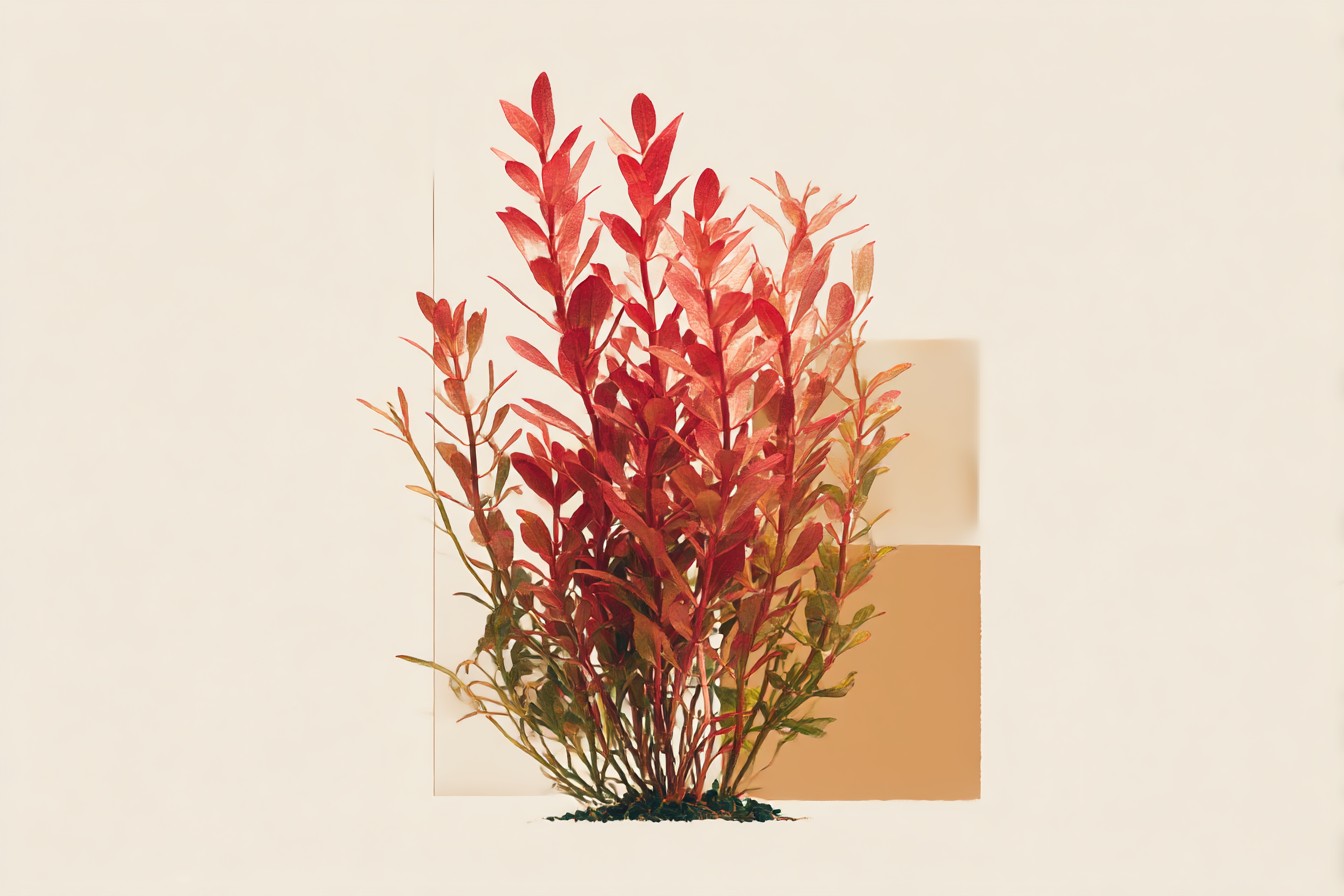
Even now, two years later, it’s the plant that keeps me honest about whether I’m actually maintaining my tanks properly or just coasting. **Quick Reference Table** | Care Level | Lighting Needs | CO2 Required | Growth Rate | Max Size | Our Rating | |————|—————-|————–|————-|———–|————| | Expert | Very High | Essential | Fast | 30+ cm | 8/10 | ## The Origins of an Unforgiving Beauty Rotala Blood Red is marketed as the “most intensely red-coloured variation” of Rotala rotundifolia (Tropica), which is saying something given how many red rotala variants exist.
The parent species, R. rotundifolia, comes from Southeast Asia where it grows in marshes and rice paddies, transitioning between submerged and emersed forms as water levels change seasonally. This particular cultivar appears to have been developed through selective breeding programs focused on enhancing the red pigmentation that naturally occurs when the plant receives intense light. Unlike the original species which can show decent colour even in moderate light conditions, Blood Red seems to have been bred specifically for maximum visual impact under high-tech conditions.
The plant entered the European market through commercial propagation facilities, with Tropica being one of the primary distributors. It’s now available through most specialist aquatic plant suppliers, though availability can be patchy since it requires more careful handling during transport and storage than hardier varieties. What makes this cultivar significant in the hobby isn’t just its colour potential, but what it represents.
It’s a plant that was bred specifically for the high-tech planted tank market, designed to reward aquascapers who can provide perfect conditions rather than adapt to whatever setup they’re placed in. It’s uncompromising in a way that reflects where the hobby has gone in recent years. ## What Makes Blood Red Special The colour is genuinely extraordinary when you get it right. Under proper conditions, the leaves develop a deep crimson that’s darker than most other red rotala varieties (Pro Shrimp).
It’s not the orange-red you get from many stem plants, or the pink-tinged red that passes for proper colour in a lot of aquascaping content. It’s a genuine blood red that looks almost black in the shadows and glows like ruby when the light hits it directly. The growth habit is classic rotala, forming dense clusters of upright stems that create natural focal points in a scape.
It reaches heights of 10-30+ cm (Dennerle Plants UK), making it suitable for midground to background placement depending on your tank size. The leaves are small and numerous, creating a fine texture that contrasts beautifully with broader-leaved plants. But here’s what sets it apart from other red plants: the intensity of its demands.
To get the most intense colour, you need plenty of light and added CO₂ (Tropica). Not just “some CO₂” or “decent light.” You need proper high-tech conditions with CO₂ levels of 20-30 mg/L (AquariumTrader) and lighting that would make many other plants pearl visibly. The temperature tolerance is surprisingly broad, technically handling anywhere from 18-28°C (AquariumTrader), though I’ve found it performs best at the warmer end of that range. pH flexibility is also decent, working in anything from 5-8 (AquariumTrader), which means it can fit into most water chemistry setups.
What really makes this plant special is how it responds to perfect conditions. Get everything right and it doesn’t just grow well, it grows aggressively. New shoots appear constantly, side branches develop rapidly, and the colour deepens week by week until you have stems that look like they were dipped in red paint.
It’s one of the few plants where the difference between adequate conditions and optimal conditions is immediately visible. The visual impact in a mature scape is remarkable. Blood Red creates natural depth and drama in ways that green plants simply can’t match.
A cluster of properly coloured stems draws the eye like nothing else, creating focal points that work from across the room. In my current 240-litre setup, three groups of Blood Red positioned according to the rule of thirds completely transformed how the tank reads visually. It’s also a plant that photographs extraordinarily well, which matters more than it probably should in an Instagram-driven hobby.
The colour saturation and contrast it provides make entire scapes look more professional and finished. There’s a reason you see it in competition tanks and magazine features. ## The Honest Assessment Let me be completely clear about this: Blood Red will humble you if you’re not prepared for what it actually needs. It’s not a plant for someone who’s still working out their CO₂ system or trying to get by with budget lighting.
It’s brutally honest about setup deficiencies that other plants might tolerate. The colour fading issue is the most frustrating aspect. Unlike some plants that simply stop growing when conditions aren’t ideal, Blood Red will keep growing but lose its defining characteristic.
You Might Also Like
You’ll end up with healthy green stems that look like any other rotala, completely defeating the point of choosing this variety in the first place. And once the colour starts to fade, getting it back requires weeks of perfect conditions, not just a quick adjustment. CO₂ stability is critical in a way that can catch experienced aquascapers off guard.
Even brief drops in CO₂ concentration can trigger colour loss, and the recovery period is longer than you’d expect. I learned this the hard way when a CO₂ cylinder ran out over a weekend. The plant survived fine, but it took nearly a month to regain proper colour intensity.
Nutrient balance becomes more crucial with Blood Red than with most stem plants. Too little iron and the colour never develops properly. Too much nitrogen and you get rapid green growth that overwhelms the red pigmentation.
Finding the sweet spot requires careful monitoring and adjustment, especially in newer tanks where the nutrient cycling isn’t fully established. The growth rate can become a maintenance burden if you’re not prepared for it. Under optimal conditions, Blood Red grows fast enough to require weekly trimming to maintain proper proportions in a scape.
Miss a week and you’ll find yourself dealing with stems that have grown too tall and are shading other plants below them. Availability and cost are also considerations. Blood Red typically costs more than basic rotala varieties, and it’s not always in stock at local shops.
You’re often looking at online orders with shipping costs, and the plant doesn’t always travel well if it’s not packed properly. Perhaps most importantly, it’s a plant that requires consistency. You can’t set up perfect conditions, get it established, and then relax your maintenance routine.
Any drop in standards shows up in the colour within days, and recovery takes weeks. It’s a plant for aquascapers who genuinely enjoy the technical challenge of maintaining high-end conditions. ## Legacy and Influence Rotala Blood Red represents something significant in how the planted tank hobby has evolved. It’s a plant bred specifically for the high-tech market, designed to reward technical excellence rather than adaptability.
Its success has encouraged breeders to develop other cultivars that prioritise visual impact over ease of care. The plant has become something of a benchmark in competitive aquascaping. Successfully growing and colouring Blood Red demonstrates mastery of the technical fundamentals that separate casual planted tank keepers from serious aquascapers.
It appears regularly in contest submissions because it’s a plant that immediately signals to judges that the aquascaper has their system properly dialled in. Its influence extends beyond just being another red plant option. Blood Red has raised expectations for colour intensity across the hobby.
Other red plants that were considered impressive five years ago now look pale by comparison. It’s created a new standard for what “proper red” looks like in an aquascape. The plant has also contributed to the ongoing technical arms race in planted tanks.
Successfully growing Blood Red requires lighting, CO₂, and filtration systems that would have been considered overkill a decade ago but are now increasingly common in serious setups.

It’s both a product of and a driver for the high-tech direction the hobby has taken. ## The Verdict Rotala Blood Red is not a plant for everyone, and it shouldn’t be. It’s a specialist tool for aquascapers who have mastered the fundamentals and want to push their scapes to the next level visually.
If you’re still working out your CO₂ system, struggling with algae, or looking for low-maintenance plants, this isn’t for you. But if you’re running a properly set up high-tech tank and want a red plant that will actually stay red, Blood Red delivers like nothing else I’ve grown. The colour is genuinely extraordinary when you get the conditions right, creating visual impact that transforms entire scapes.
It’s a plant that rewards excellence and punishes shortcuts, which makes success with it genuinely satisfying. The key is being honest about whether your setup can actually support it before you buy it. Perfect lighting, stable CO₂, balanced nutrients, and consistent maintenance aren’t suggestions with this plant, they’re requirements.
Meet those requirements and you get one of the most visually striking plants in the hobby. Autumn short and you get expensive disappointment. See where this placed in our full ranking of red aquatic plants.



[…] home aquariums, you’ll get better results with more forgiving red options. Samuel’s detailed analysis explains why this needs everything dialed in perfectly. ## […]