# The Complete Guide to Setting Up a Planted Aquarium From Scratch > **TL;DR: Start Here** > > Set up your planted aquarium in three foundational steps: First, establish proper substrate depth (2-3 inches minimum) and lighting (6-8 hours daily at 20-40 PAR for easy plants). Second, cycle your tank with plants from day one using ammonia dosing to 2 ppm while monitoring levels weekly. Third, start with genuinely easy plants like Java fern, Anubias, and Vallisneria that don’t need CO2 injection.
Your tank will complete its nitrogen cycle in 4-6 weeks, plants will show new growth within 2-3 weeks, and you can add fish once ammonia and nitrite read zero. Budget £150-300 for a proper 60-litre setup including quality lighting, or start with a low-tech approach for under £100 if you choose plants carefully. I started keeping fish because I needed a break from staring at screens for twelve hours a day.
What I got was a crash course in aquatic chemistry, plant biology, and why most of the advice you’ll read online comes from people selling you things rather than people who’ve actually kept plants alive for more than six months. I’ve been running planted tanks for eight years now.
I’ve killed expensive plants through ignorance, crashed tanks by following bad advice, and spent far too much money on equipment that didn’t solve the problems I thought I had.
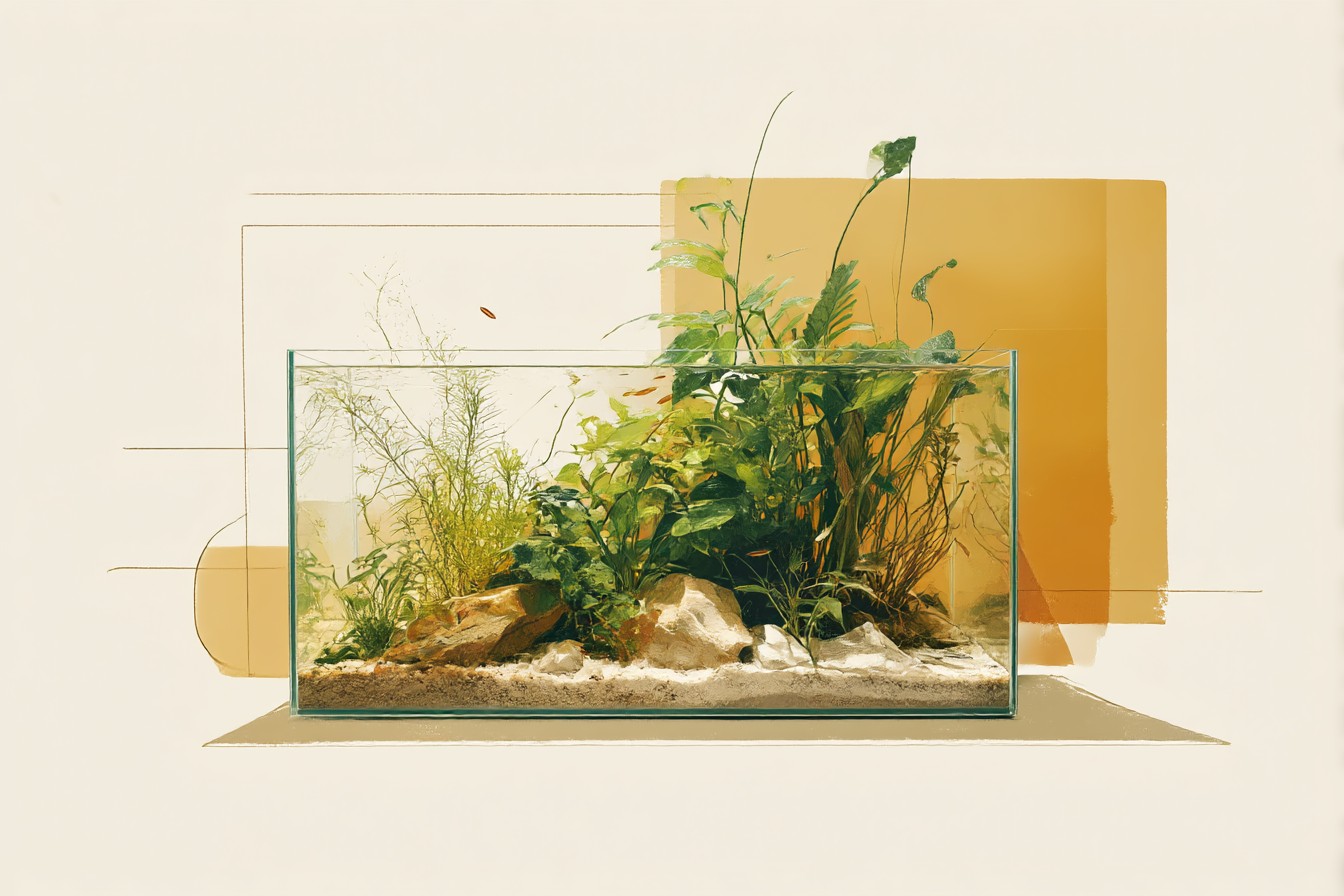
I’ve also learned what actually works, what you can skip, and how to set up a planted tank that stays stable without constant intervention. This guide covers what I wish someone had told me at the start. ## What Is a Planted Aquarium? A planted aquarium is an ecosystem where live aquatic plants grow alongside fish, creating a balanced environment that’s more stable and healthier than a fish-only setup.
The plants consume the waste products fish produce, oxygenate the water during the day, and provide natural hiding spots and territorial boundaries that reduce stress. The concept gained popularity through Takashi Amano’s Nature Aquarium philosophy in the 1990s, which demonstrated that heavily planted tanks could maintain crystal-clear water with minimal chemical filtration. Amano proved that understanding the relationship between light, nutrients, and CO2 could create aquascapes that were both beautiful and biologically sound.
What makes this approach powerful is measurable water quality improvement. Plants consume ammonia directly, preventing its conversion to toxic nitrite. They absorb nitrates that would otherwise accumulate and require water changes to remove.
A well-planted tank typically maintains stable pH, produces oxygen during photoperiod, and creates conditions where fish show better colouration, more natural behaviour, and higher survival rates. The practical benefit is a tank that requires less maintenance once established. Instead of fighting algae and managing waste buildup, you’re working with natural processes that keep the system balanced. ## The Science Actually Works I was sceptical about planted tanks initially.
The forums made it sound complicated, expensive, and prone to failure. Then I looked at the actual research and my own tank parameters. Plants reduce measurable nitrogen waste by consuming ammonia and nitrate, which lowers fish stress (Practical Fishkeeping).
In my tanks, nitrate levels that used to climb to 40-50 ppm between water changes now stay below 10 ppm with the same fish load and feeding routine. The difference is that plants are using those nutrients for growth instead of letting them accumulate. During the nitrogen cycle, which typically takes 4-6 weeks for bacterial colonies to develop (Fish Keepers Guide), plants can consume ammonia directly before it gets converted to nitrite.
This means you can often add fish to a planted tank sooner than a bare tank, assuming you monitor water parameters carefully. The light requirements aren’t as demanding as people claim. Low light plants commonly target 20-40 umol m²/s PAR range (The Aquarium Expert), which most modern LED fixtures can provide easily.
That’s less light than many houseplants need. What surprised me was how much this affected fish behaviour. In my planted community tanks, fish spend more time in the open, show brighter colours, and establish natural territories around plant groupings.
The stress reduction is visible, not just measurable in water chemistry. ### Here’s What I Got Wrong **Buying a “beginner plant bundle” without checking light requirements.** The bundle included plants that needed medium to high light, but I was running a basic LED strip. Half the plants melted within two weeks. Cost me £45 and taught me that “beginner friendly” often means “good profit margin for the shop.” **Starting with gravel instead of proper substrate.** I thought plants would grow in any substrate if I added fertiliser.
The root feeders struggled, everything looked sparse, and I ended up tearing down the tank after three months to add proper plant substrate. Should have spent an extra £30 on substrate from the start instead of £80 fixing it later. **Following high-tech advice for a low-tech setup.** I tried to copy someone’s CO2-injected tank using just liquid fertiliser and an LED light. The nutrient ratios were completely wrong without CO2 to drive uptake.
Got persistent green spot algae and stunted plant growth for two months. **Assuming more fertiliser equals better growth.** Overdosed liquid fertiliser thinking it would help struggling plants. Instead triggered an algae bloom that took six weeks to resolve. Plants need balanced nutrition, not just more of everything. **Not testing water parameters during cycling.** Assumed the plants would handle everything automatically.
Lost four neon tetras to an ammonia spike I didn’t see coming because I wasn’t monitoring levels. Standard cycling requires test monitoring, and the cycle is typically 4-6 weeks (Fish Keepers Guide). ## What Actually Works (The Approach) The key is understanding that a planted tank is a nutrient processing system, not just a decoration. Plants consume fish waste, CO2, and light to produce biomass and oxygen.
Get those inputs balanced and the system runs itself. Get them wrong and you’ll be constantly fighting algae and plant deficiencies. | Setup Type | Light Level | CO2 | Substrate | Maintenance | |————|————-|—–|———–|————-| | Low-tech | 20-40 PAR | None | Basic + tabs | Weekly water change | | Medium-tech | 40-80 PAR | Optional DIY | Nutrient substrate | Bi-weekly water change | | High-tech | 80+ PAR | Pressurised | Layered system | 2-3x weekly trimming | Honestly, you don’t need to memorise all this. The main thing is matching your plant choices to the setup you can actually maintain.
A low-tech tank with the right plants will look better and stay healthier than a high-tech system you can’t keep balanced. ## Getting Started (For Real) **If You Want Results:** 1. Choose your approach based on time and budget, not what looks good in photos 2. Set up proper substrate depth and essential equipment before adding water 3.
Cycle with plants from day one using the modified approach for planted tanks **Priority One: Substrate and Equipment Setup** Substrate depth matters more than brand. You need 2-3 inches minimum for most plants (The Aquarium Expert). I use 3 inches of plant-specific substrate or a layered system: 1 inch nutrient base, 1 inch middle layer, 1 inch cap (Fish Keepers Guide).
For lighting, start with 6-8 hours photoperiod (Aquascaping Academy) and adjust based on plant response. LED units that provide 20-40 PAR will handle most beginner plants without triggering algae issues. **Priority Two: Cycling Your Planted Tank** Cycling a planted aquarium works differently than fish-only tanks. Keep ammonia around 2 ppm because plants use ammonia as food (Aquarium Genius).
Test ammonia, nitrite, and nitrate weekly. The cycle typically takes 4-6 weeks, but plants can allow earlier fish stocking if parameters stay stable. **Priority Three: Plant Selection and Placement** Start with genuinely easy plants that don’t need CO2. Java fern, Anubias, Vallisneria, and Cryptocoryne species work in most water conditions.
Avoid plants marked as “medium light” or “fast growing” until you understand how your system responds to nutrients and lighting. | Budget Range | What You Get | Suitable Plants | Realistic Expectations | |————–|————–|—————–|———————-| | Under £100 | Basic LED, simple substrate, hardy plants | Java fern, Anubias, Vallisneria | Slow growth, low maintenance | | £100-200 | Better lighting, nutrient substrate, wider plant selection | Crypts, easy stems, carpeting plants | Moderate growth, weekly maintenance | | £200-400 | Quality LED, CO2 system, full plant range | Most plants except very demanding species | Fast growth, daily adjustments needed | ## Aquascaping on a Budget **Under £100:** You can set up a 60-litre planted tank with a basic LED strip (£25-35), simple plant substrate (£20-30), and hardy plants (£20-30). This supports slow-growing plants that don’t need CO2 injection. Accept that growth will be gradual and plant selection limited, but the tank will be stable and low-maintenance. **£100-200:** Adds a better LED fixture (£50-80) that can grow medium-light plants, proper nutrient substrate (£30-40), and opens up options for low-tech planted setups with more variety.
You can grow most Cryptocoryne species, some stem plants, and basic carpeting plants. **£200-400:** Gets you into CO2 injection territory with a pressurised system (£80-120), high-quality lighting (£80-150), and layered substrate systems (£40-60). This supports fast-growing plants, complex layouts, and the full range of aquascaping techniques. **£400+:** Professional-grade equipment for serious aquascaping. Quality costs more but reliability and results justify it if you’re committed to maintaining a complex planted system long-term.
You Might Also Like
Budget-to-results timeline: Low-tech setups show plant establishment in 4-6 weeks, stable growth in 8-12 weeks. Medium-tech systems with CO2 show visible growth in 2-3 weeks but need more frequent maintenance. High-tech systems can achieve dramatic results in 4-6 weeks but require daily attention to stay balanced. ## The Specific Things (Dive In If You Want) **Plant Aquarium Setup Equipment List and What You Actually Need vs What Gets Pushed on You** breaks down essential equipment versus marketing hype.
Covers substrate depth calculations, lighting PAR requirements, and CO2 systems that actually work. Essential reading before you spend money on gear. **How to Create a Planted Aquarium Using Only Low Tech Equipment** focuses on no-CO2 setups that work reliably. Covers plant selection, fertilising routines, and lighting schedules for sustainable planted tanks on minimal equipment. **Cycling a Planted Aquarium and What Changes When You Add Plants From Day One** explains how plants affect the nitrogen cycle and when you can safely add fish.
Includes testing schedules and troubleshooting guide for planted cycling. **How to Set Up a Freshwater Aquarium With Live Plants on a Budget** provides specific product recommendations and cost breakdowns for different budget levels. DIY solutions for CO2, lighting, and substrate that actually work. **How to Add Live Plants to an Established Aquarium Without Disrupting Everything** covers retrofitting plants into existing fish tanks. Substrate modification, gradual plant introduction, and maintaining fish health during the transition. **How to Plant Live Plants in an Aquarium That Already Has Fish** handles the practical aspects of planting while fish are present.
Quarantine procedures, planting techniques that minimise disruption, and adjusting parameters safely. **How to Plant Aquarium Plants in a Fish Tank Without Them Floating Away** solves anchoring problems with specific techniques for different plant types. Substrate depth, plant weights and anchoring methods, and root establishment tips. **How to Set Up a Planted Aquarium Step by Step for Complete Beginners** provides the detailed walkthrough for your first planted tank build. Complete setup sequence, timing, and what to expect during establishment. ## Real Examples That Actually Work **Low-Tech Community Tank**: 120-litre tank with Java fern, Anubias, Vallisneria, and Cryptocoryne wendtii.
Basic LED lighting on 7-hour photoperiod, no CO2, weekly liquid fertiliser dosing. Supports 15 small fish with nitrates staying below 20 ppm between weekly water changes. Setup cost £180, maintenance 30 minutes weekly. **Budget CO2 Setup**: 80-litre tank using DIY CO2 system with citric acid and baking soda recipe (200g citric acid plus 600ml water, 200g baking soda plus 200ml water) (CO2 Supermarket).
Grows Rotala, Ludwigia, and carpeting plants successfully. Total setup cost £220, but requires CO2 mixture replacement every 2-3 weeks. **Pressurised CO2 Medium-Tech**: 200-litre tank with layered substrate, pressurised CO2 at 30 ppm target (Charterhouse Aquatics), and quality LED lighting. Supports most plant species including demanding foreground carpets.
Setup cost £450, but stable and reliable once established. **Flat Shrimp Tank**: 40-litre cube with dense plant growth, no fish, breeding colony of Crystal Red shrimp. Plants process all bioload from shrimp waste, water changes every 2-3 weeks. Demonstrates how heavily planted tanks become self-sustaining ecosystems. ### What I Actually Notice Now My planted tanks smell different from fish-only setups.
There’s no “fishy” smell, just clean water with a faint earthy scent from healthy substrate. Fish behaviour changed dramatically once plants established. They spend more time in the open, show better colours, and establish natural territories around plant groupings.
Water quality stays stable much longer between maintenance. Nitrates that used to climb to 40 ppm in my fish-only tanks now rarely exceed 15 ppm with the same stocking density. pH stays more stable because plants buffer acid production during the day through photosynthesis. Plant growth compounds over time in ways I didn’t expect.
Slow-growing species like Anubias suddenly produce multiple new leaves after months of apparent inactivity. Fast-growing stems that looked scraggly for weeks suddenly take off and need weekly trimming. The system reaches a tipping point where everything starts working together. ## Quick Reference Table | What | Why | Difficulty | Where to Start | |——|—–|————|—————-| | Substrate 2-3 inches | Root anchoring and nutrition | Easy | Any plant-specific substrate | | LED lighting 6-8 hours | Photosynthesis without algae | Easy | 20-40 PAR for easy plants | | Weekly fertiliser | Balanced nutrition | Easy | All-in-one liquid fertiliser | | CO2 injection | Fast growth, more plant options | Moderate | DIY system or small cylinder | | Plant selection | Success vs frustration | Easy | Java fern, Anubias, Vallisneria first | Timeline for results: Nitrogen cycle completion in 4-6 weeks with regular testing.
Plant establishment and new growth visible in 2-4 weeks for easy species, 1-2 weeks with CO2 injection. Algae typically settles down 6-8 weeks after setup once plants establish and nutrient cycling stabilises. Fish show improved behaviour and colouration within 2-3 weeks of plant establishment. ### Most Commonly Asked Questions I Receive **Q: Can I start with difficult plants if I have good equipment?** A: No.
Plant success depends more on understanding your system’s balance than having expensive gear. Start with genuinely easy plants, learn how they respond to your water and lighting, then add more demanding species once you can keep the easy ones thriving. **Q: My flat has terrible natural light and I’m worried about electricity costs. Can I still do this?** A: Yes.
Planted tanks don’t need natural light, just consistent artificial light on a timer. A basic LED setup uses about as much electricity as leaving a laptop charger plugged in. Budget £3-5 monthly for electricity costs on a 60-litre setup. **Q: I keep killing plants even though my water parameters look fine.
What am I missing?** A: Usually lighting duration or nutrient balance. Test your photoperiod first – reduce to 6 hours if you’re getting algae, increase to 8-10 hours if plants are growing slowly. Then cheque if you’re fertilising regularly.
Plants need consistent nutrition, not just clean water. **Q: Do I need CO2 injection to grow plants successfully?** A: Not at all. Low-tech planted tanks can look stunning and stay healthy without any CO2 injection. You’ll be limited to slower-growing species, but they’re often easier to maintain and more forgiving of beginner mistakes. **Q: How do I know if my plants are actually healthy or just surviving?** A: Healthy plants produce new growth regularly – new leaves, runners, or side shoots depending on species. Colours stay consistent or improve over time.
Surviving plants maintain existing leaves but don’t grow much and may lose older leaves gradually. Growth rate tells you everything about plant health. **Q: My water is very hard/soft. Does this limit what I can grow?** A: Some plants have preferences, but most adapt to a range of water conditions if other factors are right.
Focus on lighting, nutrients, and plant selection rather than trying to adjust water chemistry.
Many successful planted tanks use straight tap water without modification. ### Conclusion Setting up a planted aquarium successfully comes down to understanding you’re creating a balanced ecosystem, not just adding decorations to a fish tank. The plants aren’t there just to look good – they’re processing waste, producing oxygen, and creating stability that makes everything easier to maintain.
It’s not as complicated as the forums make it sound once you understand what’s actually happening in the tank. Plants consume the waste your fish produce, light drives that consumption, and nutrients need to stay balanced for the system to work properly. Get those three things roughly right and the rest sorts itself out.
What matters most for beginners is starting with plants that will actually grow in your setup, not the ones that look best in photos. Master Java fern and Vallisneria before you worry about complex carpeting plants or CO2 injection systems. Start small, understand your first planted tank thoroughly, then expand from there.
A simple 60-litre setup with easy plants and basic equipment will teach you everything you need to know about plant care, water chemistry, and system balance. Once that’s running smoothly for six months, you’ll have the knowledge to tackle anything more complex. The next step is choosing your approach – low-tech with no CO2, or adding CO2 for faster growth and more plant options.
Either way works, but they’re different systems with different requirements and different maintenance routines.