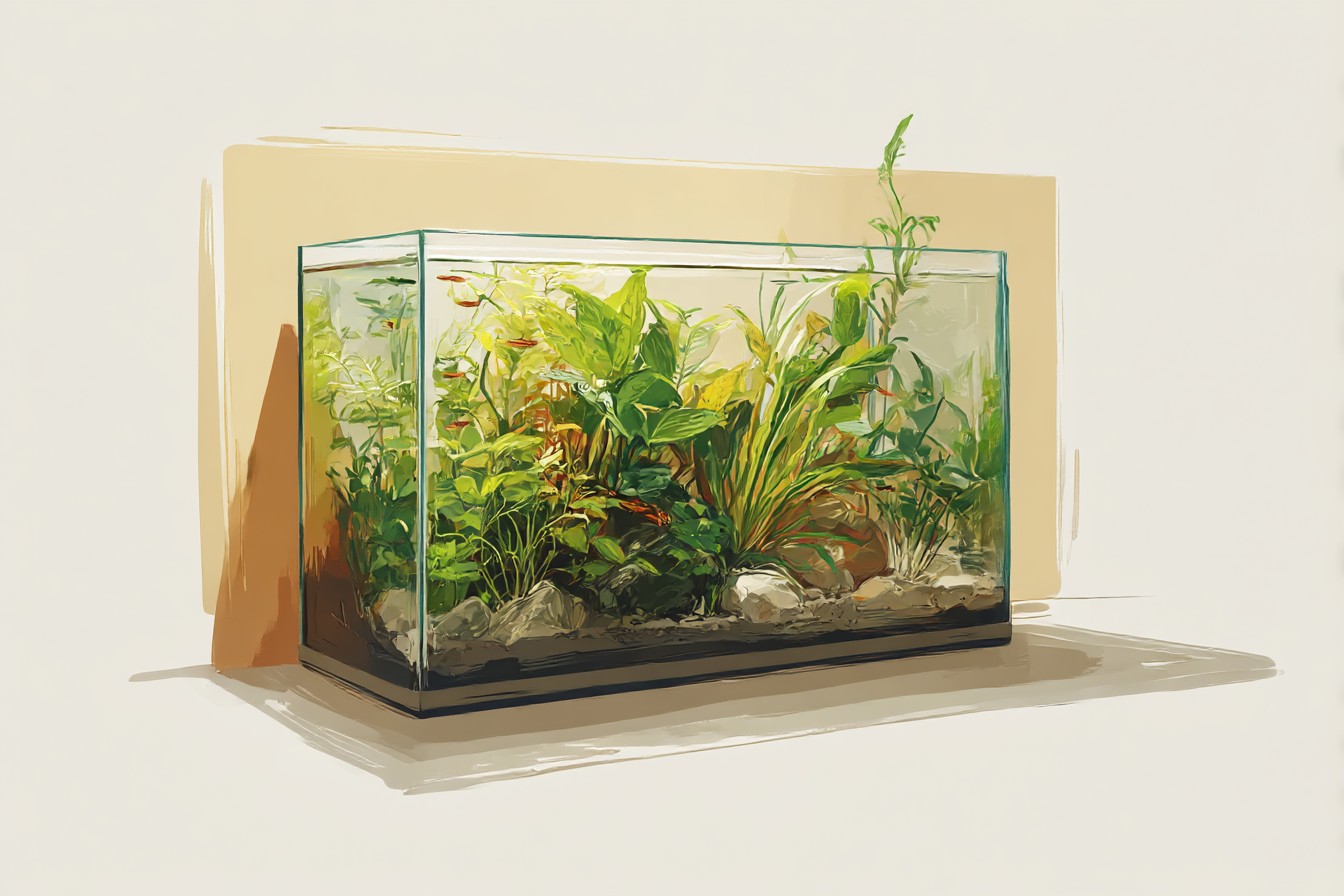
# How to Add Live Plants to an Established Aquarium Without Disrupting Everything Your tank’s been running smoothly for months. Fish are healthy, water parameters are stable, and you’ve got that satisfying routine down. Then you see someone’s planted tank on Reddit or walk past a properly set up display at the aquarium shop, and suddenly your bare-bottom setup or plastic plant collection feels a bit lifeless.
The urge to add real plants hits hard, but so does the worry about messing up what’s working. I get it. When I first tried to retrofit my established community tank with live plants, I basically destroyed three months of careful stability in about ten minutes.
Substrate everywhere, fish stressed to the point of hiding for days, and water so cloudy I couldn’t see the back wall. The plants didn’t make it either, mostly because I’d created chaos instead of the gentle transition they needed.
The thing is, you absolutely can add live plants to an established tank without starting over.
It just requires understanding what plants need, how to introduce them without shocking your system, and which mistakes will definitely wreck your afternoon. Done properly, established tanks actually have advantages for plant introduction that new setups don’t, mainly because your biological filtration is already sorted and your fish aren’t adding extra stress to the equation. ## The Science Behind Plant Integration **Nitrogen Cycle Considerations**: Live plants change your tank’s nitrogen dynamics in ways that can either complement or conflict with your established biological filter. Plants consume ammonia directly through their roots and leaves, which sounds brilliant until you realise they’re competing with your beneficial bacteria for the same resource (Fish Keepers Guide).
In established tanks with stable cycling where you see 0 ammonia and 0 nitrite with measurable nitrate, this usually works to your advantage because plants help process excess nutrients your fish produce. **Nutrient Competition**: The key difference between adding plants to new versus established tanks is that your fish have already been producing waste for months, and your bacterial colony is sized to handle that specific bioload. Plants essentially become a secondary processing system, taking up nutrients that would otherwise fuel algae or accumulate as nitrate. Research shows this can dramatically reduce the need for water changes in heavily planted systems, but only if the plant mass is sufficient to handle the nutrient load. **Substrate Chemistry**: Most established tanks have substrate that’s been accumulating organic matter and beneficial bacteria for months.
This actually creates a more nutrient-rich environment than fresh substrate, but it also means any disturbance releases months of accumulated waste back into the water column. The bacterial films on established substrate contain established communities that plants can benefit from, but disturbing them creates temporary instability. **Lighting Adaptation**: Established tanks often have lighting chosen for fish viewing rather than plant growth. Most fish-only setups use lighting that’s insufficient for demanding plants but perfect for low-light species.
Understanding this difference helps you choose plants that will actually thrive under your existing setup rather than struggle and die. ## Strategic Plant Selection and Placement The key to successful plant addition is choosing species that complement rather than fight your existing system. Start with plants that thrive in the conditions you already have rather than plants that require you to change everything. **Low-Light Pioneers**: Java fern, Anubias species, and Java moss work brilliantly in established tanks because they don’t need substrate nutrients or intense lighting. They attach to your existing hardscape without requiring substrate disruption.
Java fern particularly excels in established tanks because it actually prefers slightly higher nutrient water, which established tanks often have. Anubias grows slowly enough that it won’t shock your system with sudden oxygen swings or rapid nutrient uptake. **Substrate-Friendly Options**: If you want rooted plants but don’t want to disturb your substrate completely, focus on species that don’t need rich substrate. Cryptocoryne species adapt well to established aquarium substrate and actually prefer slightly aged water.
Vallisneria can establish in basic aquarium gravel and will spread naturally once it’s happy. Amazon swords work well if you add root tabs without disturbing the main substrate layer. **Surface and Column Plants**: Water sprite and hornwort can be floated initially, letting them adapt to your water parameters before deciding whether to plant them. They also help immediately with nutrient uptake, which can prevent algae blooms that sometimes follow plant additions. **Budget Planning**: For a 60-litre established tank, expect to spend £30-50 on initial plants, £15-25 on root tabs or liquid fertilizers, and possibly £40-80 on upgraded lighting if your current setup isn’t suitable for plant growth.
Starting with low-light plants keeps initial costs down and lets you test how your system responds before investing in more demanding species. **Placement Strategy**: Position new plants where they’ll get the best light without blocking flow to existing equipment. Plants placed too close to filter intakes can get damaged by suction, while plants in dead flow zones accumulate debris and struggle. Consider how your fish use the space too.
If you’ve got bottom-dwellers that like open substrate, don’t carpet the entire bottom immediately. ## Installation Techniques That Preserve Stability The physical process of adding plants determines whether you maintain your tank’s stability or create days of cloudy water and stressed fish. Every movement in an established tank releases accumulated organic matter, so technique matters enormously. **Pre-Installation Preparation**: Remove about 25% of your tank water into clean containers before starting. This gives you clean water for immediate top-ups and reduces the volume that can become cloudy.
Clean all tools with aquarium-safe methods and rinse any hardscape additions thoroughly. When adding plants, expect temporary clouding and mulm disturbance, so pre-rinsing hardscape and tools is advised (Fluval). **Substrate Modification Without Chaos**: If you need to add nutrient layers, do it in sections rather than emptying the entire tank. The substrate nutrient layer approach suggests a bottom nutrient layer 1-2 inches then cap (AquariumCalculator.net).
For established tanks, you can create planting pockets by removing substrate in specific areas, adding nutrient substrate, and capping with your existing gravel. This minimises overall disruption while giving plants what they need. **Root Tab Integration**: For most established substrates, root tabs offer better nutrient delivery with less disruption than substrate changes. Root tabs are often placed near heavy root feeders and replaced about every 3 months (Seachem).
Push them 2-3 inches into substrate near where you’ll plant, spacing them roughly 6 inches apart for medium-sized root feeders like Amazon swords or larger Cryptocoryne. **Plant Installation Order**: Start with epiphyte plants that attach to hardscape, as these create no substrate disturbance. Then add any background plants, working forward to foreground species. This prevents trampling newly planted foreground plants while installing background ones.
Plant the largest, most disruptive plants first while the water is clearest, saving small detailed work for last. **Water Management During Installation**: Work with water levels 2-3 inches lower than normal to reduce mess and improve access. Fill slowly along hardscape or use a plate to diffuse water flow when topping up. Add the reserved clean water back gradually rather than all at once, which helps settle suspended particles faster. ## Common Implementation Mistakes
Mistake #1: Disturbing too much substrate at once. Trying to add nutrient layers throughout the entire tank creates massive cloudiness and releases months of accumulated organic waste.
You Might Also Like
This can cause ammonia spikes that stress fish and create algae blooms. Instead, work in sections or use root tabs for localised nutrition without major substrate disruption.
Mistake #2: Adding high-demand plants to low-tech setups. Established fish-only tanks often have basic lighting and no CO2, but new plant keepers get excited about carpet plants or red species that need intense conditions. These plants struggle, die, and decompose, potentially affecting water quality.
Start with plants suited to your existing conditions and upgrade equipment only if needed.
Mistake #3: Overfertilising immediately. Seeing slow initial growth, new plant keepers often blast the tank with fertilizers, forgetting that established tanks already have nutrient buildup from fish waste. This frequently triggers algae blooms that can take weeks to resolve. Begin dosing fertilizers lightly then adjust based on new growth and algae response (Tropica).
Mistake #4: Planting everything at maximum density immediately. Dense planting looks impressive but creates massive swings in oxygen, pH, and nutrient uptake that can destabilise established tanks.
Start with 30-40% of your planned plant mass and let the system adapt before adding more.
Mistake #5: Ignoring existing fish behaviour. Your fish have established territories and movement patterns over months. Adding plants that block their preferred swimming routes or hiding spots creates stress that can manifest as aggression or illness. Consider how your fish actually use the space before committing to a full layout.
Mistake #6: Installing plants without quarantine. Established tanks have stable populations, but new plants can introduce pest snails, algae, or diseases.
At minimum, inspect plants thoroughly and consider dipping in plant-safe solutions to remove hitchhikers and potential pathogens before introduction.
## Research Support Studies consistently show that live plants provide measurable benefits to established aquarium systems, but the transition period requires careful management. Research on aquatic plant establishment indicates that plants added to cycled systems with existing biofilms establish faster than those added to sterile environments, but only if the introduction doesn’t disrupt the existing bacterial colonies. Nutrient uptake studies demonstrate that live plants can reduce nitrate levels by 40-60% in established tanks within 4-6 weeks of installation, but this depends heavily on plant mass relative to bioload.
The research also shows that gradual plant introduction creates more stable long-term systems than sudden high-density planting, which can cause temporary but significant parameter swings. Water chemistry research indicates that established tanks with stable parameters provide better conditions for plant establishment than new setups, primarily because beneficial bacteria and organic compounds are already present in the substrate and filter media. ## Broader Applications **Nano Tanks (20-40 litres):** Use smaller quantities of everything and work more slowly. One Anubias or a small bunch of Java moss makes more proportional impact than in larger tanks.
Consider that medication treatments for illness affect plants more severely in smaller volumes. **Community Tanks with Aggressive Species:** Position plants to create sight barriers and territory breaks rather than open carpets. Cichlids and some territorial fish may uproot plants during spawning, so focus on epiphytes and very sturdy rooted species. **High-Bioload Systems:** Heavy feeding schedules and fish populations mean more nutrients available but also higher risk of algae if plant mass isn’t sufficient. Start with faster-growing species that can handle higher nutrient levels. **Coldwater Setups:** Many tropical plant species struggle in unheated tanks.
Research temperate aquatic plants or focus on species like Java fern that tolerate cooler temperatures well. **Breeding Tanks:** Dense planting can provide fry protection, but sudden plant additions can stress breeding pairs.
Plan plant additions between breeding cycles rather than during active spawning periods. ## Benefits of Proper Plant Integration **Enhanced Water Quality**: Properly established plants act as living filters, consuming ammonia and nitrates while producing oxygen during photosynthesis. In established tanks, this typically results in noticeably cleaner water within 3-4 weeks and reduced maintenance requirements within 6-8 weeks. **Natural Fish Behaviour**: Live plants provide the environmental complexity that encourages natural behaviours like territorial establishment, foraging, and breeding displays.
Fish in planted tanks typically show less stress-related behaviour and more vibrant colouration within 2-3 weeks. **Biological Stability**: The combination of established bacterial colonies and live plants creates redundant biological processing that makes tanks more resistant to parameter swings from feeding variations or minor maintenance lapses. **Algae Prevention**: Healthy plants outcompete algae for nutrients, particularly in established tanks where nutrient levels may have been gradually increasing over months. This preventive effect usually becomes apparent within 4-6 weeks of plant establishment. **Reduced Maintenance Requirements**: Once established, planted tanks typically require less frequent water changes because plants consume waste products that would otherwise accumulate. Most planted tanks can transition from weekly to bi-weekly water changes within 2-3 months. **Cost-Effective Upgrade**: Adding plants to established tanks costs significantly less than starting over with a purpose-built planted setup.
You’re working with existing equipment and fish populations rather than building from scratch. ## Step-by-Step Implementation Guide **Phase 1: Assessment and Planning (Week 0)** – Test current water parameters thoroughly, including pH, ammonia, nitrite, nitrate, and hardness – Evaluate existing lighting for plant compatibility – Choose plant species based on current conditions rather than ideal conditions – Order plants and any necessary supplies **Budget Breakdown:** * Plant selection for starter setup: £25-40 * Root tabs or liquid fertilizer: £15-25 * Plant-safe tools and substrate additions: £10-15 **Total Budget: £50-80** **Phase 2: Pre-Installation Setup (Day 1)** – Remove 25% of tank water and store in clean containers – Clean all tools and rinse any new hardscape – Set up workspace with towels and containers for temporary fish housing if needed – Turn off filters and heaters temporarily to prevent equipment damage **Phase 3: Plant Installation (Day 1-2)** – Install epiphyte plants first by attaching to existing hardscape – Add substrate modifications in small sections if needed – Install rooted plants working from background to foreground – Add root tabs near heavy root feeders, spacing roughly 6 inches apart – Refill slowly using reserved water plus fresh dechlorinated water **Budget Breakdown:** * Additional plants if phase 1 selection proves insufficient: £15-25 * Replacement of any damaged equipment: £10-30 **Phase 4: Initial Monitoring (Weeks 1-4)** – Test water parameters every 2-3 days for the first two weeks – Begin dosing fertilizers lightly, starting at half manufacturer recommendations – Monitor for algae development and adjust lighting duration if needed – Remove any plants that show signs of severe melting or death **Phase 5: System Stabilisation (Weeks 4-12)** – Gradually increase fertilizer dosing based on plant response and algae levels – Replace root tabs around week 12 for established plants – Add additional plants once system demonstrates stability – Adjust maintenance routine based on new plant requirements **Budget Breakdown:** * Fertilizer refills and root tab replacements: £15-20 * Additional plants for filling out layout: £20-40 **Total Phase Budget: £35-60** What to watch for during each phase: healthy new growth indicates successful establishment, while yellowing leaves or algae blooms suggest nutrient imbalances. Clear water within 48 hours indicates minimal system disruption, while persistent cloudiness suggests overfeeding or excessive substrate disturbance. Fish behaviour should return to normal within a week of installation.
The whole process takes patience, but it’s genuinely rewarding when you get it right. My own established tank took about two months to fully settle with its new plants, but the transformation from plastic decorations to living ecosystem was worth every careful step. Just remember that your fish were happy before the plants arrived, so any changes should make things better for them, not worse.


