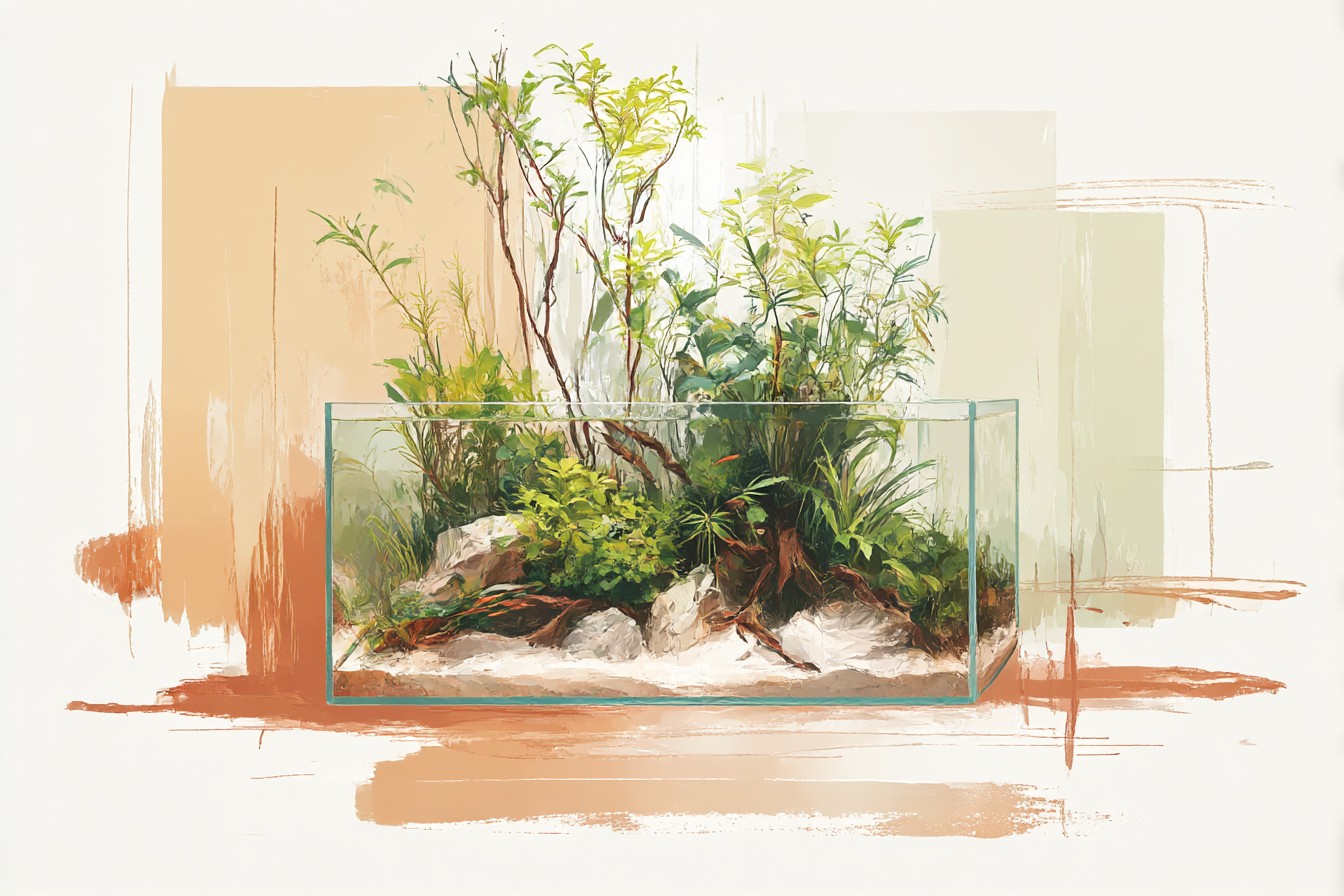
I approach most hobbies through the back door. Spend significant time learning everything I can about it from people who are already passionate, dive head first, fail miserably, and start over better than before. This happened with aquascaping.
I was setting up content sites and needed to become planted-tank literate enough to talk about the subject. Instead of reading a book, I built my own tank so I could see what the hype was about. That was three years ago, and now I’m in a position to run four tanks at once.
Each aquarium is different and teaches me something new about aquascaping. The problem is that aquascaping looks easy to do.
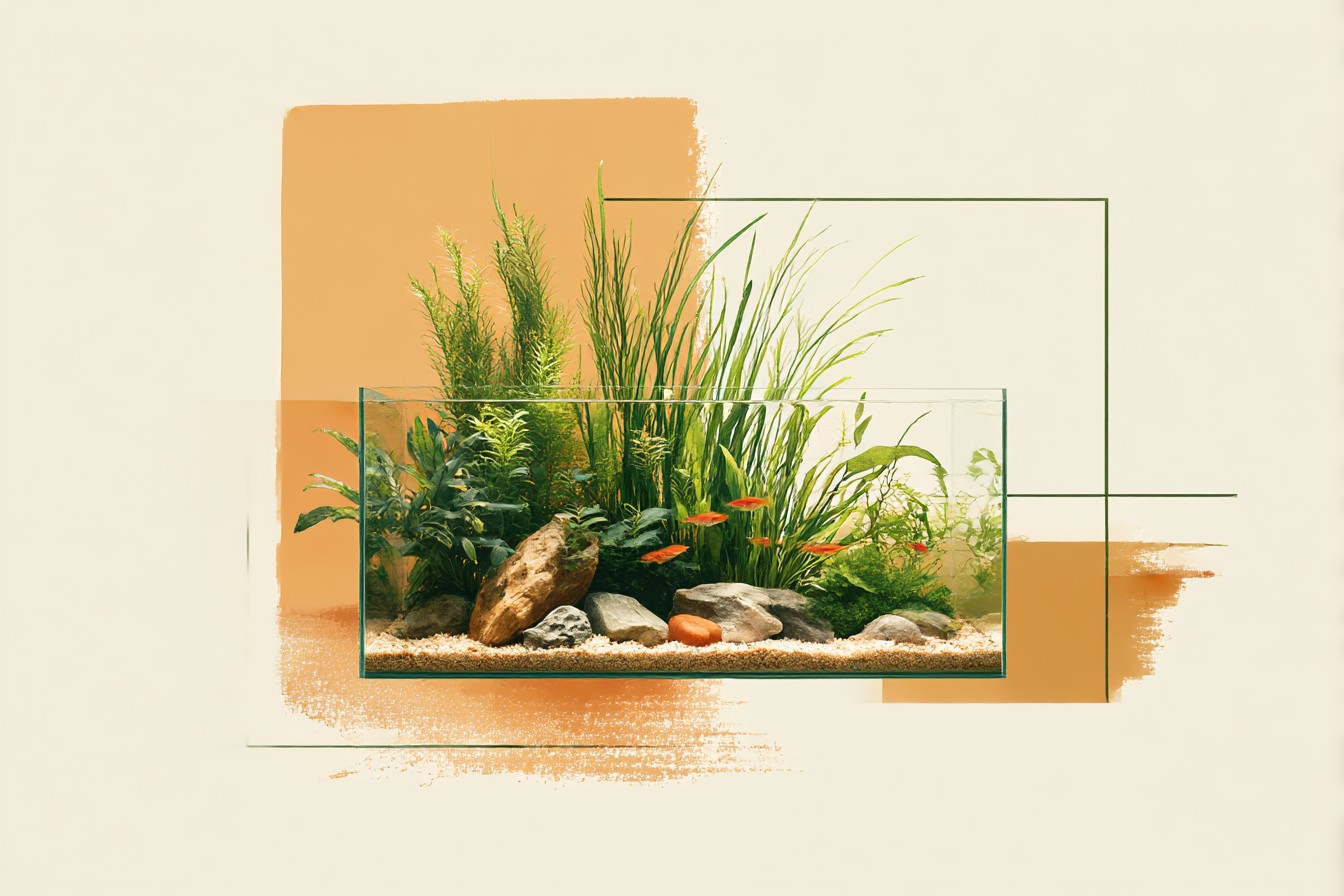
Go on Instagram or look at aquascaping competitions and all you see are beautiful tanks with meticulously placed rocks and plants.
Anyone can buy a bunch of plants at the store, chuck them in some gravel, and throw a few pieces of wood on the side. But for some reason, they never look as good as the pros. Except they’re not.
Those Instagram photos and aquascaping competition photos don’t appear overnight. Someone planned those layouts. Maybe their first aquarium got boring after a few months because the plants outgrew the rock, but they learned from that mistake.
Now they know to leave more space. Maybe they spent months researching different species of aquatic plants or perfecting their CO2 set up. You don’t see that side of aquascaping.
I did every mistake possible. I bought expensive plants that yellowed and lost leaves within three weeks because I knew nothing about lighting requirements. I spent hours putting together layouts that looked breathtaking for a fortnight before falling apart completely.
But now I know what actually works, and so will you.
What Is Aquascaping?
Aquascaping is the practise of designing and arranging aquatic plants, rocks, wood, and substrate in an aquarium. It’s a step beyond regular fishkeeping. Fishkeeping focuses on the fish; aquascaping focuses on designing your aquarium as a deliberate composition rather than just a container for livestock. Dutch aquascaping began in the Netherlands in the 1930s, focusing on lush plant arrangements without visible hardscape.
Japanese influence arrived later through Takashi Amano’s Nature Aquarium movement in the 1990s, which brought principles of landscape design and composition into planted tanks. Each tradition developed different approaches to layout, plant selection, and technical requirements. Aquascaping focuses on artistic layout rather than just fish keeping, which means every decision about substrate depth, plant placement, and hardscape positioning serves the overall composition. Understanding how different species grow and replacing them when they outgrow their area is just as important as planning your layout around your fish.
The current problem it addresses is that most planted tanks lack coherent design principles. People buy plants they like, arrange rocks randomly, and wonder why their tanks never achieve the polished look they admired online. Proper aquascaping provides a way of making consistent decisions about layout, scale, and plant selection that result in tanks that improve over time rather than gradually falling apart.
The Science Actually Works
I was sceptical at first.
A set of rules for layouts? Photosynthesis isn’t going to care if you planted your hardscape at the golden ratio position or not. But when I started breaking down my favourite tanks and discovered every one of them followed certain principles, I was sold. Golden ratio 1.618 creates natural focal balance in ways that are measurably different from centred compositions.
Placing key hardscape or plant groupings off-centre at 1.618 instead of dead centre creates dynamic tension that holds your attention longer. Test this yourself by photographing two layouts, one perfectly symmetrical and one with focal points at golden ratio positions. The difference is obvious. Rule of thirds divides layout into nine equal sections, and positioning key elements at the intersection points creates focal tension that keeps your eye moving through the composition.
Visual media is divided into thirds horizontally and vertically, and placing your focal points where those lines intersect forces your eyes to move through the entire layout rather than settling on whatever is centred. Plant selection follows biological realities that determine success or failure. Beginner friendly plants include Java fern and Anubias because they tolerate low light and don’t require CO2 injection. Planted tanks require higher lighting intensity than basic fish tanks, typically 30-50 PAR for low-light plants and 50-80 PAR for carpet species. CO2 injection significantly increases plant growth rates when combined with appropriate lighting and fertilisation. These aren’t arbitrary recommendations, they reflect the photosynthetic requirements of different plant species.
Here’s What I Got Wrong
Copying layouts without understanding the requirements. I bought the same plants and attempted to arrange them identically to one of my favourite aquascapes online.
Problem was, the original used high-end LED lighting and CO2 injection. My basic setup wasn’t going to support that kind of plant density. Cost me £40 in plants and taught me that you can’t separate aesthetics from biology in planted tanks. Jumping into advanced styles before learning fundamentals. Nature Aquarium looked so intricate I assumed it would be straightforward.
Two months later my aquascape had fallen apart. I didn’t even know you had to trim plants. High tech aquascapes depend on CO2 systems and consistent fertilisation schedules I wasn’t prepared to maintain. Buying on impulse. I picked out hardscape and plants without having a layout in mind. Whenever I attempted a composition it just didn’t work with what I had. Sketching layout ideas helps refine composition before you spend money, but I skipped this entirely and ended up buying twice as much hardscape as I needed. Ignoring budget realities. My first serious attempt cost over £300 and I still didn’t have everything needed for the style I was attempting. Hardscape can represent up to 30 percent of total budget, and that’s before CO2 systems, quality lighting, and nutrient-rich substrates. Rushing the establishment phase. I expected results within days and kept repositioning things when plants didn’t grow as quickly as online tutorials suggested.
Planted tanks need 6-8 weeks to establish properly. Constant disruption just extended the ugly phase indefinitely.
What Actually Works (The Approach)
The underlying principle is matching your chosen style to your technical setup, available time, and realistic budget rather than trying to force a high-maintenance approach into a low-maintenance situation.
You Might Also Like
| Style | Technical Needs | Maintenance | Best For |
|---|---|---|---|
| Dutch | High light, CO2, regular fertilisation | Weekly trimming, frequent replanting | Plant enthusiasts who enjoy hands-on care |
| Nature Aquarium | Moderate to high light, often CO2 | Monthly trimming, seasonal adjustments | People who want natural-looking landscapes |
| Iwagumi | High light, CO2 for carpets | Precise trimming, algae management | Minimalists who appreciate clean lines |
| Low-tech planted | Basic lighting, no CO2 | Minimal trimming, occasional fertilising | Beginners or people wanting low commitment |
Dutch aquascaping uses fast-growing stem plants that need regular trimming to maintain defined colour groups. Nature Aquarium styles balance slower-growing species with hardscape elements that provide permanent structure.
Iwagumi relies on perfect carpet growth that requires intensive light and CO2 to succeed. The main thing is understanding that you can’t mix and match elements from different styles without considering whether your setup can actually support them. A low-tech approach works brilliantly for certain plants and layouts, but it won’t support the carpet species that make Iwagumi possible. If you want results:
- Choose one style that fits your current technical setup and don’t try to upgrade your equipment and learn a complex style simultaneously.
- Plan your layout completely before buying anything, sketch it out, research plant requirements, and calculate costs.
- Start with plants that suit your chosen approach and match species to your lighting and CO2 availability rather than buying what looks appealing.
For equipment priorities, lighting comes first because everything else depends on it. High end aquascaping lights can exceed 300 dollars, but basic LED units under £50 will support low-tech planted tanks effectively.
CO2 systems add £100-£200 to your budget but enable plant species that simply won’t grow without supplemented carbon. Read more about how to plan an aquascape layout properly before you start positioning hardscape.
Aquascaping on a Budget
| Budget Range | What’s Possible | Recommended Approach |
|---|---|---|
| Under £150 | Low-tech planted community tank | Java fern, Anubias, basic LED lighting |
| £150-£300 | Nature Aquarium with moderate plants | Driftwood, easy stem plants, better lighting |
| £300-£500 | High-tech setup with carpets | CO2 system, quality lights, demanding plants |
Under £100: Stick with basic LED lighting (£20-£40), inert gravel substrate (£10-£15), Java fern or Anubias plants (£15-£25), and liquid fertilisers (£10-£15). You’ll have slower plant growth and limited species options, but low tech planted tanks can run without CO2 injection and still create attractive, stable environments. £100-£250: Upgrade your lighting to something with higher intensity, move to a nutrient-rich substrate, and add DIY CO2.
Nature Aquarium layouts with driftwood and stone arrangements become achievable here, and your plant species options expand significantly. £250-£500: Serious planted tank territory with proper CO2 systems, quality LED fixtures with full spectrum control, and premium substrates. This level supports Dutch-style layouts with fast-growing stem plants, Iwagumi arrangements with carpeting species, and competition-level technical setups. £500+: Full high-tech setups with premium equipment and advanced filtration. Competition layouts often use rimless aquariums that cost £200+ before adding any equipment. Timeline expectations should reflect budget realities.
Low-tech setups take longer to establish because plants grow more slowly without intensive lighting and CO2. Plan for 8-12 weeks before your low-tech tank looks fully established, compared to 6-8 weeks for high-tech setups with optimal growing conditions.
Articles That Can Help You Dive Deeper
How to Plan an Aquascape Layout Before You Spend Any Money covers the essential planning phase that prevents expensive mistakes and design failures. Read this first if you’re starting your first serious aquascape or if previous attempts have fallen apart structurally. Planted Aquarium Styles Compared and Finding the One That Suits Your Tank breaks down the major aquascaping styles in detail, with technical requirements and maintenance expectations for each approach. Aquarium Planting Ideas and Layouts That Use the Rule of Thirds Properly explains composition principles that separate professional-looking layouts from random arrangements. Simple Planted Aquarium Ideas for People Who Don’t Want a Full Aquascape is for people who want the benefits of live plants without complex design work or intensive maintenance. Planted Aquarium Ideas for Every Budget From Beginner to Competition Level provides specific equipment recommendations and plant selections for different budget ranges. Nature Aquarium Style and What Takashi Amano Actually Meant by It explores the principles behind the most influential modern aquascaping movement. Dutch Aquascape and the Plant Focused Style That Predates Everything covers the traditional plant-focused approach that emphasises colour, texture, and growth patterns over hardscape elements. Iwagumi Aquascape and the Minimalist Rock Layout That Looks Simple but Isn’t breaks down the most technically demanding minimalist style. Japanese Planted Aquarium Styles and What Makes Them Different From Everything Else examines the aesthetic and technical principles that distinguish Japanese aquascaping approaches from Western traditions. Planted Aquarium Aquascaping and the Difference Between a Fish Tank and an Aquascape clarifies the fundamental differences in approach, equipment, and goals between general fishkeeping and dedicated aquascaping.
Real Examples That Actually Work
Low-Tech Nature Style: Basic LED lighting (30-40 PAR), no CO2, Java fern attached to driftwood with Cryptocoryne species in the substrate. Low tech planted tanks can run without CO2 injection and this combination creates stable, attractive layouts with minimal technical requirements.
It worked because plant requirements were matched to available light and nutrients rather than trying to force high-tech species into low-tech conditions. Budget Dutch Layout: DIY CO2, inexpensive stem plants like Hygrophila and Ludwigia arranged in colour groups, and modest lighting. DIY CO2 systems are cheaper but less stable, but they enable Dutch-style planting on limited budgets. Regular trimming maintained defined plant streets and colour contrasts. Total setup cost under £200 including plants. Minimalist Iwagumi: Single large stone positioned at the golden ratio point with a carpet of Monte Carlo, full high-tech CO2 system, and precision lighting schedule. Iwagumi layouts typically use an odd number of stones, but this single-stone approach focused attention completely on stone placement and carpet quality. Community Tank with Planted Background: Traditional community fish tank enhanced with a planted rear section using easy species like Amazon swords and Java moss. Minimal fish stocking enhances focus on layout design, but this reversed the priority, using plants to enhance the fish display rather than creating a plant-focused aquascape.
Quick Reference Table
| Element | Purpose | Difficulty Level | Where to Start |
|---|---|---|---|
| Lighting | Drives photosynthesis, determines plant options | Moderate | Basic LED, 6-8 hour photoperiod |
| CO2 | Accelerates plant growth, enables demanding species | High | DIY system or skip entirely for low-tech |
| Substrate | Plant nutrition, root support, aesthetic base | Low | Inert gravel for beginners, active soil for advanced |
| Hardscape | Structure, focal points, composition framework | Moderate | Single piece of driftwood or stone group |
| Plants | Living elements, colour, texture, movement | Varies | Java fern, Anubias, then progress to stems |
| Fertilisation | Plant nutrition in high-tech setups | High | Liquid fertilisers weekly, root tabs quarterly |
Most Commonly Asked Questions
Which aquascaping style should I start with if I’ve never kept plants before? Start with a basic planted community tank rather than jumping into a specific aquascaping style.
Use hardy plants like Java fern and Anubias with simple LED lighting and no CO2. This builds understanding of plant care and water chemistry before you attempt complex layouts. Budget £80-£150 for a proper start that won’t frustrate you. Can I do proper aquascaping in a small flat with limited space and budget? Yes, but focus on low-tech approaches and smaller tanks (40-60 litres). Simple planted aquarium ideas work well in limited spaces and don’t require expensive equipment.
Nature Aquarium principles scale down effectively, whilst Dutch layouts need more space for proper plant grouping. Expect to spend £100-£200 for a quality small setup. How do I know if my lighting is sufficient for the plants I want to grow? Match your plant choices to your lighting rather than the other way around. Basic LED lighting (20-40 PAR) supports Java fern, Anubias, and Cryptocoryne species.
Moderate lighting (40-60 PAR) enables most stem plants. High lighting (60+ PAR) with CO2 supports carpet species. Planted tanks require higher lighting intensity than basic fish tanks, so upgrade lighting before attempting demanding plants. My plants keep dying even though I follow online guides exactly. What’s going wrong? Most plant failures come from mismatched technical requirements rather than care mistakes.
High-light plants fail in moderate-light setups regardless of fertilisation.
CO2-dependent species won’t survive in low-tech tanks no matter how good your substrate is. Get your basic technical setup stable first, then choose plants that actually suit your conditions. Is it worth spending extra money on expensive aquascaping equipment when starting out? Start with adequate rather than premium equipment until you understand what you actually need. High end aquascaping lights can exceed 300 dollars but basic LEDs work fine for low-tech setups.
Invest in quality where it affects long-term success as lighting, filtration, and substrate matter more than expensive tools. How long should I expect to wait before my aquascape looks like the photos I see online? Three to six months for most styles, longer for complex layouts. Typical planted tank lighting duration ranges from 6 to 8 hours daily and plant establishment follows predictable timelines. Low-tech setups develop slowly but stay stable. Competition-level aquascapes often take 6-12 months to reach peak appearance.
Getting Started with Real Expectations
Aquascaping works when you match your chosen style to your actual technical setup, available time, and realistic budget.
Most people fail not because they lack artistic vision or technical skill, but because they try to copy advanced setups without understanding the infrastructure that makes them possible. The encouraging reality is that every style can create genuinely impressive results when executed properly within its technical parameters. Low-tech Nature Aquarium setups with Java fern and driftwood can be every bit as visually striking as high-tech carpet layouts, just in different ways. The difference between a fish tank and an aquascape isn’t the amount of money spent, it’s the application of consistent design principles and appropriate plant selection.
Choose one approach and learn it thoroughly rather than mixing elements from different styles randomly. Start with a style that fits your current situation, master the basic principles of composition and plant care, and then progress to more complex approaches once you understand how planted tanks actually work. The simple next steps: decide which style genuinely appeals to you and matches your budget, spend time properly planning your layout before you buy anything, and start with plants that will actually thrive in your setup rather than the ones that look most impressive online.
Everything else follows from getting these fundamentals right.

[…] tanks that some manufacturers offer. Great for tight spaces and the height works well for certain aquascaping styles, but they’re just not common enough to make the main […]