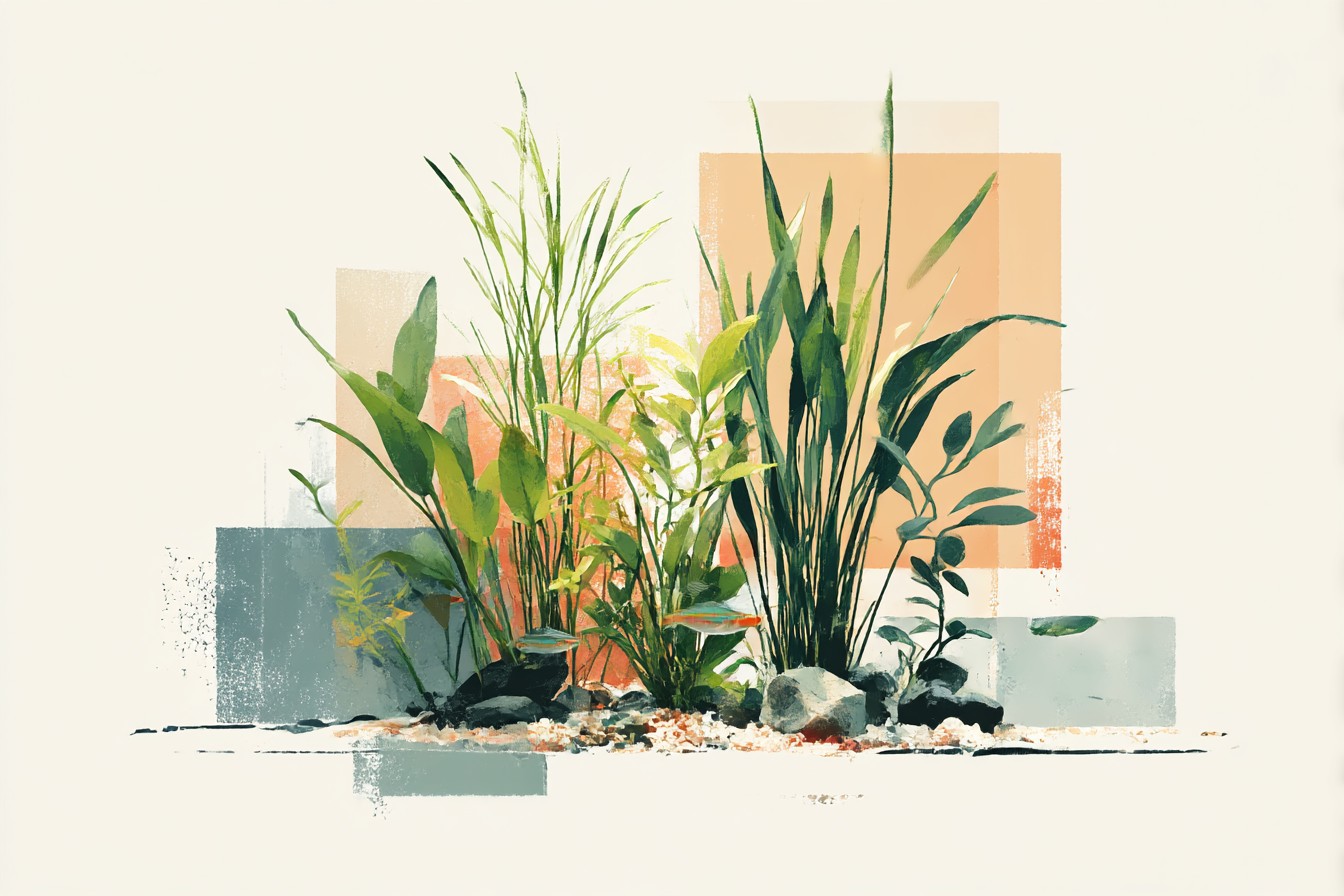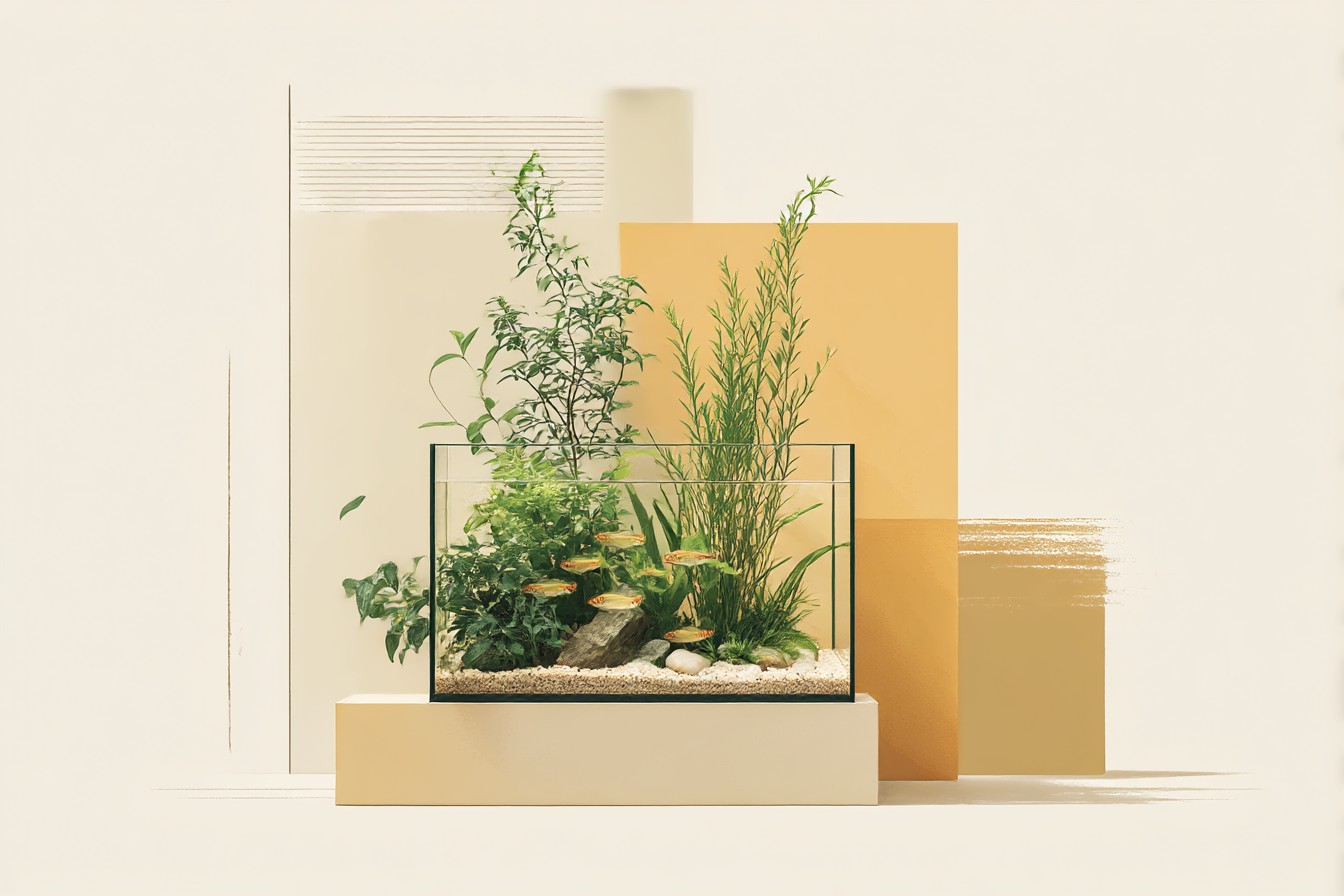
Aquarium Planting Ideas and Layouts That Use Rule Of Thirds Properly It took me ages to build the same tank over and over again trying dozens of plant placements, hardscape adjustments, taking hundreds of photos, staring at them, wondering why one looks spectacular and another “blah”. Then one day it hit me…I wasn’t placing plants properly according to basic design rules. I wasn’t looking at my aquarium as an artists would look at a canvas.
Ever since that moment everything changed for me. Learning how to use rule of thirds not only changed my aquarium designs, but how I viewed aquascapes in general. Applying these principles can take your tank from random plant placement to gallery quality shot in just a few simple steps.
Follow along and learn how you can use rule of thirds to improve your aquascaping game. Understanding Balance in Aquascaping Composition Rule of thirds divides the layout into thirds both horizontally and vertically (Aquascaping Love), creating four intersection points where elements of the scape can be placed to draw attention.
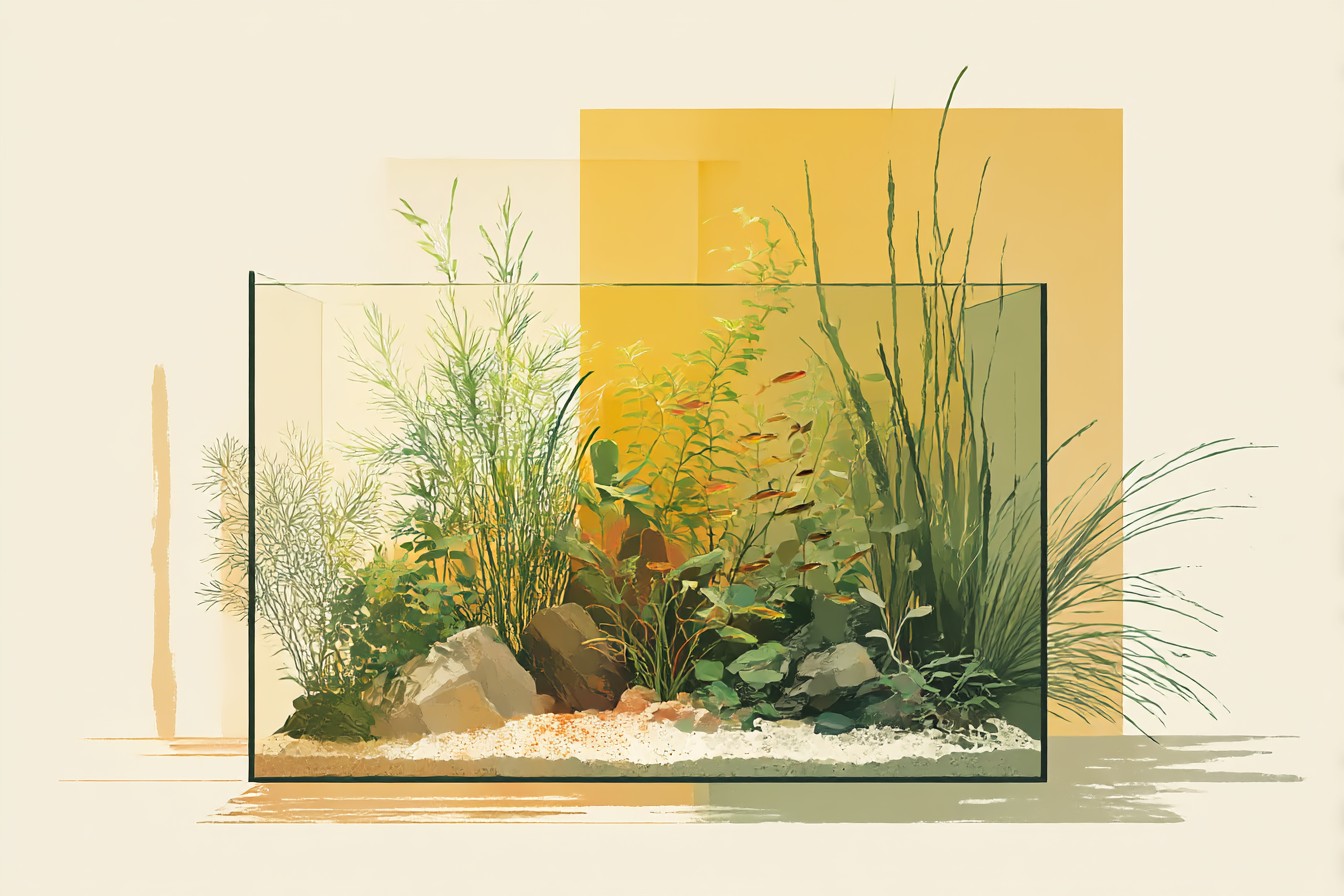
Many ignore this concept, instead placing their dominant plant or focal point in the dead centre of the aquarium.
Humans are hardwired to notice these points, however. Studies of eye-tracking clearly show that even when presented with random layouts, the human eye doesn’t scan scenes uniformly. We look at intersection points first, then move to other areas along gridlines called leading lines.
Why Do We View Symmetrical Aquascapes as Boring? ! [](../../uploads/2019/07/whydoeweviewaquascapesassymmetricalboring-1024×589.png) Let’s examine the theory behind why this is. **The Golden Ratio**: Everything in this photo is perfectly symmetrical and evenly spaced, which is precisely why it fails as an aquascape (The Spruce Pets). Remember how I said rule of thirds creates a golden ratio? Well it applies here too.
Picture that grid superimposed over this aquarium. Everything that isn’t on an intersection point or a leading line is ignored by the brain. There is no single point for the eye to land on, and without that anchorscape feels “empty”.
The human eye is naturally drawn to symmetry, which is why we perceive mirrored aquascapes as perfectly balanced. But too much symmetry too quickly. While relaxation may be the goal of a fishkeeping hobby, we also demand visual interest from the things we spend hours staring at every day.
Let’s look at a couple more examples. Proper depth perception in aquascaping Your eye needs something to focus on other than green plants. So we go back to intersections and leading lines.
By placing larger plants at left third, our eyes travel right to left following the imaginary diagonal line that two larger aquarium plants create. We then go back to the left plant before looking back at fish, swimming shrimp, or simply admire the hardscape. Scapes that hold our interest use the rule of thirds to create this visual flow.
So how do you create depth in the aquarium? You trick the eye into perceiving more than what is there. Depth can be defined by a few different factors (**Depth Perception**).
Plant height is the most obvious, with taller plants in the back and shorter plant in the front. If you plant green crypts from front to back your aquarium will look flat because the plants all have the same colour intensity. Same thing if you plant mostly short foreground plants, or shrimp-safe plants that only grow an inch or two tall.
Our eyes also use size to gauge distance. Even if your tallest plant isn’t in the back of the aquarium, if it’s significantly larger than the plants around it your eye will perceive it as being farther away. Left to right and top to bottom can also impact perceived depth.
When designing your aquascape, place taller plants on the left or right third of your aquarium rather than centre. Our eyes move left to right when scanning horizontal spaces, so we naturally start in the left third of your aquascape. Notice how in the aquascape below not only is there height difference, but the carpet makes the aquarium look longer than it really is.
This is perceived depth in action (Buce Plant). Plant a carpet that runs the entire length of your aquarium and it will look shorter. There are tons of other visual clues your brain uses to add depth.
I’ll cover a few more of them below, but for now just know that if your aquascape looks flat, adjusting the placement of your plants can help. Top Aquascaping Layout Ideas Applying the Rule of Thirds Triangle layouts If you asked ten different aquascapers what the most popular aquascape style is, I’d be willing to bet at least half would say triangle. Triangular layouts are a tried-and-true composition style (Green Aqua) for a reason.
By design, they naturally incorporate rule of thirds while creating strong visual lines and depth. This triangle’s focal point is the tallpiece of wood directly above the intersection of left third and back third. The focal point of any triangle layout should always sit on an intersection.
Because the other two points of the triangle lay on left and right thirds we know this layout uses rule of thirds properly. I’ve built several successful triangle aquascapes with nothing more than a large piece of driftwood running diagonally from bottom right to top left. Java fern and Anubias growing at different heights create the triangle.
The foreground carpet extends all the way to the front left corner, creating short side of the triangle. By running the carpet all the way to the corner you make the planted area feel larger by comparison. This creates what we call negative space, which we’ll talk about more later.
On the right side I kept plants small and used open substrate to balance out the dense planting on left side of the aquascape. This is another example of left thirds. Left thirds vs Right thirds You’ve probably heard the terms left thirds and right thirds floating around aquascaping groups and forums.
Well it’s true…most beautiful aquariums are either left or right third dominant. This means the larger of the two plants groupings (remember, plants don’t have to be in one chunk to count as a grouping) sits on either the left or right third of your aquarium. Left thirds look great if you plan on viewing your aquarium from the right side of your room.
Vice versa with right thirds. In the aquascape above you can clearly see that larger group of stem plants falls on the left third line. When viewing this aquarium from across the room your eyes naturally go to that large planting first.
Then you look back at the smaller Crypts on the right third before taking in the entire scape. Subtle differences like that is what creates that “ WOW factor”. Left third aquariums give the illusion that the aquascape is moving into your viewing space.
While right thirds exude a sense of already being there. Incorporating Negative Space Earlier I mentioned negative space and how it can make a planted area appear bigger. Here’s another example of that concept in use.
Take a look at this aquarium and pay attention to the space directly above and to the right of the driftwood. This is negative space. By not completely filling every inch of your aquarium you allow the eye places to “rest”.
This is crucial for applying rule of thirds to your aquascapes. You should always try to leave at least one entire third of your aquarium as negative space. That being said, it doesn’t necessarily have to be empty substrate.
Negative space can be occupied by a foreground carpet, small stones that contrast with your main focal point, or even just simple hardscape without a bunch of plants tied to it. Rock placement Normally when you hear people talking about aquascape techniques with rule of thirds they are referring to how your rocks or driftwood should be placed. Most properly designed aquascapes have the intersections of their wood or largest rock sitting on or near an intersection point.
Instead of placing your wood so that the branches are horizontal with the water surface position the wood so the branches point towards two intersection points. Instead of stretching from top to bottom your wood should point from the left or right third all the way to the opposite third. Leading Lines Simply put, branches should always create implied lines that lead your eye through the aquarium.
A perfect example of this would be positioning your driftwood so that one of the larger branches points directly from the upper left intersection point to the lower right intersection point. Stones can create leading lines too! Don’t feel limited to just wood when trying to create these lines.
Vertical Dimension Rule of thirds applies to the height of your aquarium as well. Most aquascapers fail to use this technique vertically and as a result their aquariums end up looking too bottom heavy or top heavy. Divide your tank into thirds vertically as well.
Place tall plants, wood or rocks that reach the top third of your aquarium. Mid-height plants in the middle and foreground plants in the bottom third. Adding height variation to your aquascape is what really brings the rule of thirds full circle.
Plant Grouping Ideas Foreground, Midground, Background You knew this was coming. All those years of looking at aquarium photos and studying the greats taught me that good rule of thirds planting requires proper understanding of foreground, midground, and background plant placement. Foreground plants occupy the bottom third of your aquarium’s visual space.
Background plants occupy the top third, and midground connects the two. Remember, actual height is important when it comes to placement. Don’t just because a plant is small you throw it in your foreground.
If it looks weird then it is. There’s a reason most people display their taller Crypts and BG stem plants in the midground rather than background. Colour and Texture Same rules apply here as with height.
Contrast is key (Aquatic Gardeners Association). Instead of randomly sprinkling a few reddish coloured plants throughout the aquascape concentrate them on one third or specific intersection point. Use green plants to create mass then accent with reds, purples, and yellows.
Contrasting texture works the same way. Place a fine-leaved plant like cabomba or limnophila next to a broad-leaf plant like a cryptocoryne or echinodorus. Asymmetry This goes back to the whole relaxation vs stimulation argument.
Group your plants unevenly, larger group on one third line and a smaller group on another. If you plant a big group of stem plants along left third make sure it occupies about 2/3 of the background space. You can balance this out with a small cluster of say, crypts along right third.
Nothing on the centre third background. This will create movement and allow your eye to wander the aquascape rather than focusing on one large chunk of plants. Aquascaping Rule of Thirds Mistakes to Avoid 1.
Centring everything in the aquascape. Everyones instinct is to want to place their best hardscape piece or showiest plant in the middle of the tank. Problem is, that made every thing else in the aquascape too symmetrical.
By centring your main focal point you eliminate visual flow and movement, making your tank appear smaller. Plus, it just looks unnatural. Again, look at pictures of landscapes or lake fronts.
Sure there may be areas that are symmetrical here and there, but the overall balance is almost always achieved through asymmetry. Find the biggest, coolest, best-looking element in your aquascape and place it on one of the four intersections. It’s as simple as that.
2. Even spacing and symmetry. Some aquascapers take it to extreme and create perfect mirror images on left and right side of their aquarium.
You Might Also Like
Others fail to break up their aquarium into “ sections”. If you space plants evenly throughout your aquarium it not only looks boring as hell, but unnatural. Mother nature doesn’t work in perfectly balanced increments like we do.
Add interest by grouping your plants instead of evenly spacing them out. Only you decide how much space to put between each group. And if you have three small rocks.
Don’t make left and right side mirror images of eachother. 3. Not using proper scale.
Scale matters. Pairing a baby crypt next to a giant amazon sword just looks wrong. If you love that sword, fine.
Make it your centerpiece and build the rest of your aquascape around it. But placing it in a nano just because you love it isn’t going to work. Your focal point should be the largest and most dominant feature in your aquascape.
Don’t take scale into consideration and you’ll end up with a bunch of plants that are either too big or too small for their designated space. 4. Planting too much stuff.
This one is tough for beginners because we want to fill every inch of the aquarium with plants. Don’t do it. Remember what I said about negative space?
If every inch of your aquarium is densely planted your eye has nowhere to rest. You loose that focal point you worked so hard to create. Same thing for using too many plants instead of really great ones.
One really nice piece of hardscape will look ten times better than ten rocks that don’t have anything interesting about them. 5. Ignoring the layers of depth.
This only applies to aquariums that are short. But even if you have a tall aquarium, planting everything at the same height collapses that sense of depth your aquascape otherwise creates. This one sucks for nano tanks because you don’t have a lot of space to work with.
Even if your tallest plant only reaches 2cm higher than your foreground plants it makes a difference. You want your foreground plants to be…well…foreground. There should be a clear height difference between them and your mid and background plants.
Studies Show.. Human eyes don’t enjoy scanning symmetrical patterns, but aren’t fully satisfied with random layouts either. Just as we crave visual interest from our aquascapes, we also need order and balance to truly feel at ease when looking at them.
Rule of thirds applies to horizontal layout, but also vertical. Water refracts light, affecting our perception of how deep the aquarium is compared to it’s actual depth. Providing proper contrast and colour balance can train your viewer’s eye into seeing more space than what is really there.
Bonus Tips: Adding height variations to your aquascape tricks the eye into perceiving more depth than there actually is. Same rules apply to horizontal depth. Goodness knows I didn’t cover everything aquascaping related to rule of thirds.
So if there are any specific topics you would like me to address make sure you leave them in the comments below! Nano Tanks Rule of thirds can be applied to nano tanks, but it requires planning and proper plant selection. Don’t say you dont have any small plants.
You do. Crypt parva, Monte Carlo, and Java moss are all great options for foreground planting in a nano. If your tank is on the taller side anubias or java fern make great midground focal points.
Small stem plants can be used for background work if your aquarium is tall enough, but usually single stems of rotala or ludwigia work better. Community Display Tanks These aquarium sizes work best with rule of thirds. You have enough space to add large background plants, make big impactful plant groupings, and add larger wood and rock.
Just remember to create distinct differences in height between your foreground, midground, and background plants. Shallow Tanks Horizontal thirds are more important in shallow aquariums than vertical. Foreground doesn’t necessarily mean plants that only grow an inch or two tall.
It means plant that stay low to the substrate. If your tank isn’t very tall use the left thirds and right thirds rule I talked about earlier to create strong focal points. Tall/Towers Once your aquarium reaches 50cm or more height becomes your new best friend.
Use it to your advantage by adding lots of height variation within your aquascape. True aquatic trees are your new background friends. LargeCrypts, Echinodorus, etc.
Shrimp-Only Tanks Rule of thirds almost seems useless in shrimp-only tanks because they typically incorporate dense planting. While you shouldn’t ditch the rule altogether you can use different mosses or small coloured plants as your focal points. Place high interest plants at intersection points and leave the rest of the tank densely planted.
Benefits of Following Rule of Thirds Looks Awesome! Well executed rule of thirds will make your aquarium look ten times better than it did before. Not only will it look better IRL, but your photos will get tons more attention because they look amazing.
Easy Maintenance If you plan your aquascape using your foreground, midground, and background you can easily break up maintenance. Trim foreground plants one week, midground the next and leave background until last. Add supplements to foreground flora knowing you won’t risk pouring fertilizer on your cherished BG plants.
Showcase Your Plants Placing your plants strategically means you can really show off their best features. Rosette style plants like Crypts look best when the entire rosette can be seen. While stem plants like ludwigia are show off through height and density.
Makes Your Aquarium Look Bigger Another benefit to incorporating depth into your aquascape is it can make your aquarium look bigger than it is. Whether you have a nano or a giant tank that illusion of extended depth can work wonders for both. Looks Natural Mother nature is the worlds greatest artist.
She’s also a huge fan of asymmetry and rule of thirds. Chances are if you incorporate these principles into your aquascaping you’ll achieve that natural look you’ve been chasing for years. Satisfaction Once you start breaking aquascapes down and learning what makes them work you’ll view aquascaping in a whole new light.
Some people will glance at your tank and see random plant placement. You’ll know better. Completely obsess over that image linked below if you want.
Planning and Budgeting Your Rule of Third Aquascape Phase 1: Planning out your grid and Layout. Week 1 Grab some graph paper and a pencil. Using the size of your aquarium, draw it out to scale on the graph paper. easiest way to do this is by counting the number of squares that would fit horizontally and vertically inside your aquarium.
Once you have that square drawn use something like a ruler or pizza cutter to score the thirds grid on your graph paper. Lightly mark where your intersections are and decide which will be home sweet home to your main focal point. Now comes the fun part.
Position your plants on the graph paper according to where you want to place them in relation to the grid. Again, take into consideration where you’ll be viewing your aquarium from the most and plan your triangles apex accordingly. Materials Needed: * Graph Paper: £0-5 * Measuring tool: £5-10 Total Budget: £5-15 Phase 2: Install Hardscape.
Week 2 Ok terrain is set. Install your substrate and hardscape, making sure the main feature in your aquascape (driftwood, largest rock, etc.) is positioned so that interesting qualities like branch forks or cool looking trunk patterns sit on an intersection point. Now this is probably something you should do with every aquascape, but take a photo of your hardscape from where you’ll be viewing your aquarium most often.
Does it look balanced? Or does it feel like too much is packed on one side? Adjust your layout if necessary, making sure everything is where you want it before adding water.
Materials Needed: * Substrate: £15-30 * Hardscape (wood, rocks, etc. ): £20-50 * Basic aquascaping tools: £10-20 Total Budget: £45-100 Phase 3: Planting and initial water/ adjustments. Weeks 3-4 Time to add those lil green buddies of yours. Install your foreground plants first, then work your way up.
Remember, don’t overcrowd your aquascape! Position specimen plants on intersection points instead of scattering them randomly throughout the scape. Materials Needed: * Foreground planting: £15-25 * Midground Specimens: £20-40 * Background: £15-30 * Weights & fertilizer (optional): £10-20 Total Budget: £60-115 Phase 4: Make adjustments and monitor scape growth.
Weeks 5-8+ This is where the fun begins. As your aquascape comes together you’ll notice areas that don’t look right or parts of the scape that just don’t appeal to you. Don’t be afraid to move things around!
Take a photo of your aquarium once a week from the same spot and angle. Consistency is key. You’ll be able to look back and see exactly what changed or what stayed the same as your aquarium matures.
Materials Needed: * Plants (to fill in gaps): £10-20 * Trimming tools: £15-25 * Supplement fertilizer (optional): £10-15 Total Budget: £35-60 Phase 5: Continued Maintenance By now you should have a pretty good idea of how often you need to maintain different areas of your aquascape.
Foreground plants will probably need trimmed more frequently than your background plants. Document what plants you’ve learned work well as foreground, midground, and background plants in your aquarium.
Take note of which species made great focal points and which helped to fill in spaces or created beautiful contrasting texture. Monthly Maintenance: * Plant trimming * Fertilizer * Water changes £10-20 Per Month. Conclusion Rule of thirds is subjective and it should be treated as such.
These are basic guidelines that every aquascaper should know, but that doesn’t mean you have to follow them to a tee. Learn the why of each rule and you can effectively apply them to any aquascape no matter the style. Don’t overthink it!
Take everything I said with a grain of salt and focus on what works best for you. If you have any questions feel free to drop them below. Don’t forget to cheque out our full beginner’s guide to planted tanks.