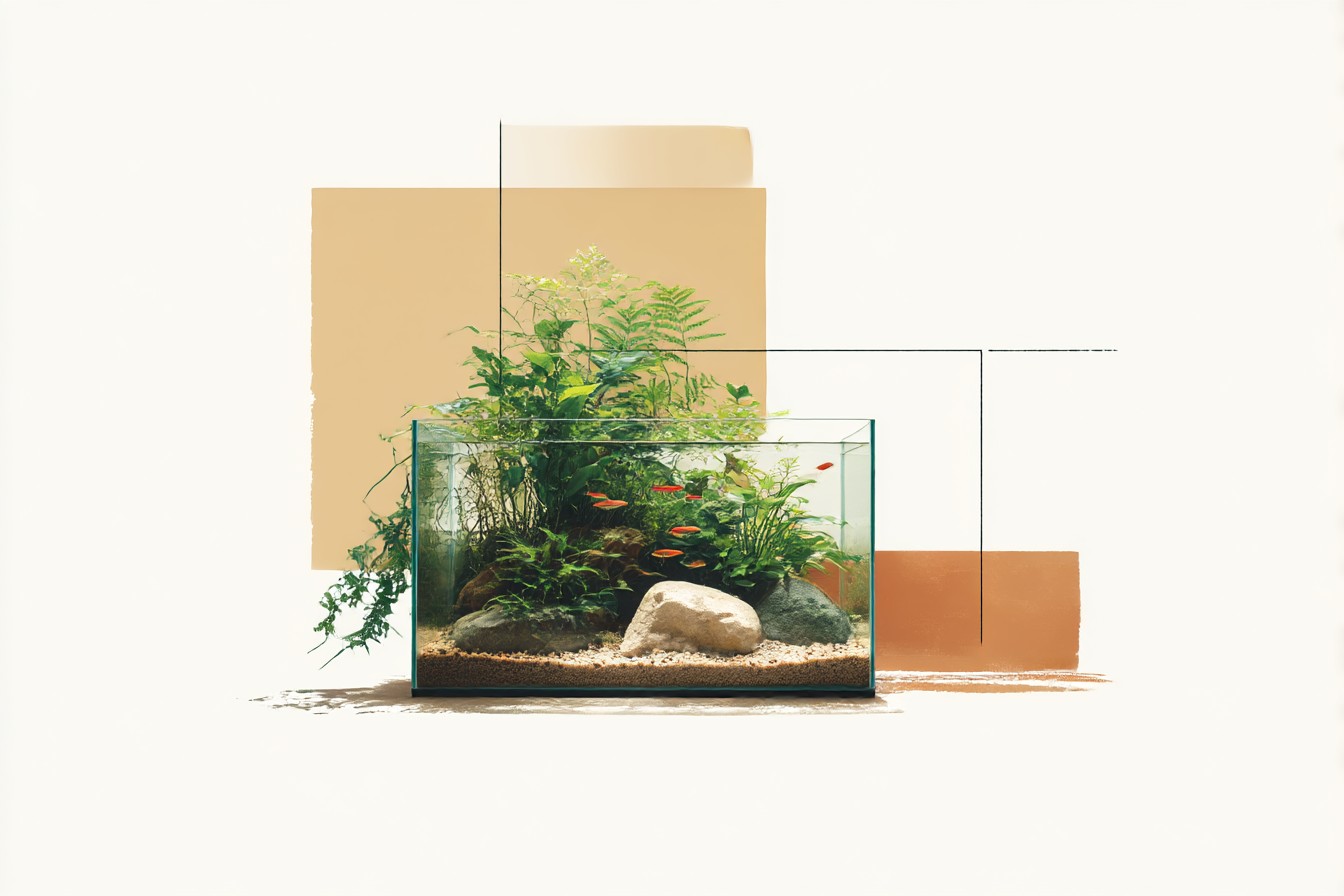
When searching for aquarium inspiration online, it doesn’t take long to come across photos of aquariums that look effortlessly beautiful. Perfect even spreads of mosses extending into the distance, stones so perfectly placed you’d think they came from Jurassic Park, and a harmony and spaciousness rarely found in most aquariums. This is Japanese aquascaping, and it is different from normal planted tanks in nearly every way.
When it comes to the rules of plant growth, hardscape arrangement, and aesthetic principles, Japanese styles of aquascaping operate on an entirely different playing field than regular community tanks do. Instead of focusing on growing plants and keeping livestock healthy, Japanese aquascaping emphasises composition, negative space, and the creation of underwater scenes that authentically emulate natural landscapes. Plants and fish exist to complete the look rather than being the focal point.
If you want that Ikki-sized water garden in your living room, knowing the rules is key. Of course, understanding how and why these principles differ from what you might already know matters if you want to duplicate those photos.
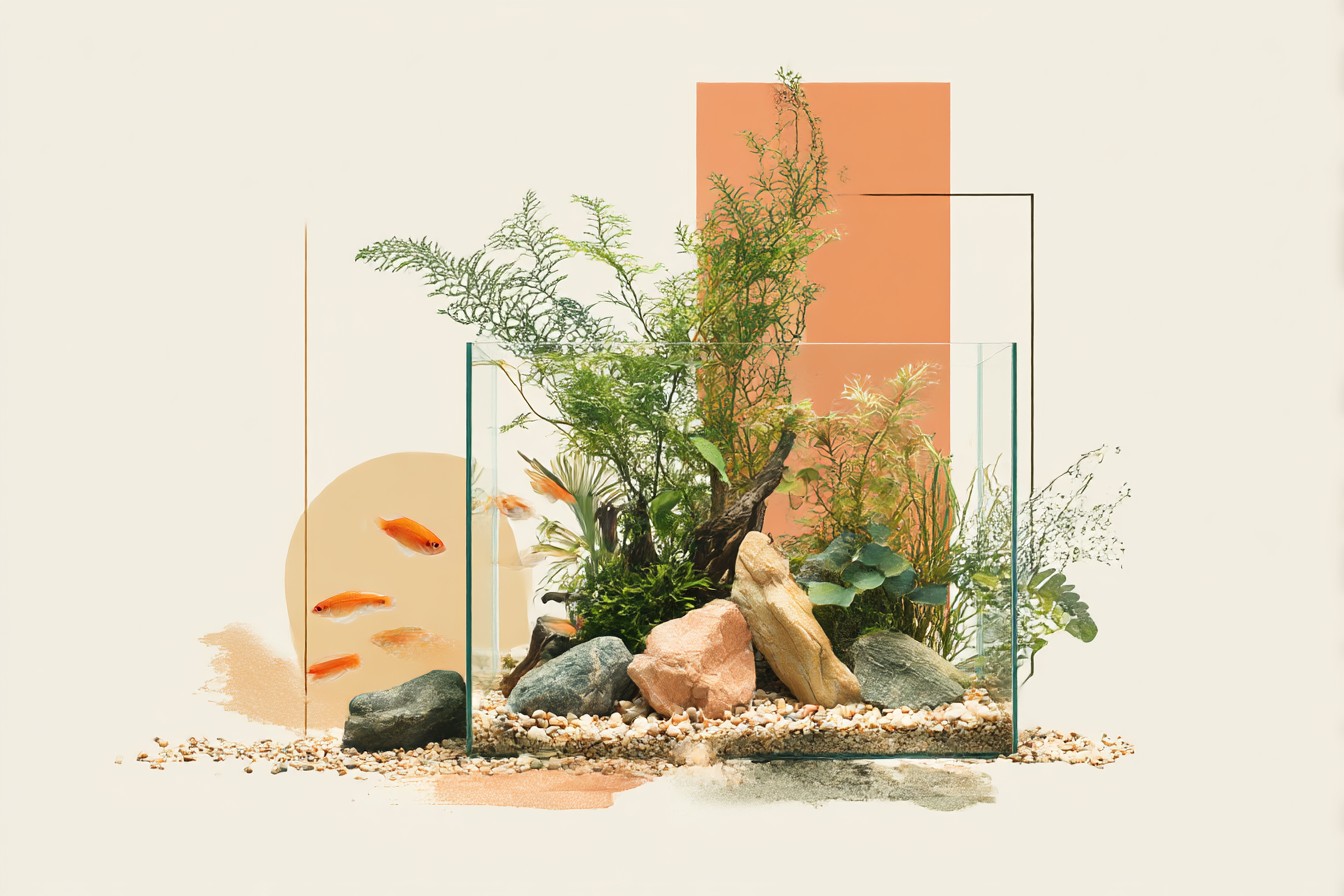
It also matters if you’ve tried building your own Japanese aquascape and can never seem to quite get it right.
The principles of Japanese aquascaping extend far beyond simply buying the right stones and plants. Our complete beginners guide to aquascaping fundamentals will walk you through the basics, but Japanese styles take things to another level entirely. ## Japanese Aesthetic Philosophy ### Nature Aquarium Origin The foundational Japanese style of planted aquarium is known as the Nature Aquarium, created in Japan during the 1990s (ADA Global). As the name suggests, this style sought to bring elements of the outdoors into the home aquarium by building realistic representations of natural landscapes underwater.
Takashi Amano was one of the figures who popularised recreating natural landscapes in aquariums (Aquascaping Love) through the principles of aquascaping, taking influence from traditional Japanese gardening, photography, and landscape painting to create convincing reproductions of natural scenes from mountain forests, river valleys, coastal shores, and beyond. This focus on realistic underwater landscapes contrasts with Western aquascaping philosophies, which historically put more emphasis on growing healthy aquatic plants and fish than on making a particular aesthetic statement with the layout. ### Importance of Negative Space Unlike most Western styles of aquascaping, (Aquarium Gardens) Japanese planted aquariums emphasise open space, or what we often refer to as negative space. This focus on negative space is easily the biggest visual distinction between a typical planted aquarium and a Japanese style aquascape.
Instead of filling every inch of your aquarium with decoration, plants, or fish, Japanese aquascapes utilise empty space to draw attention to certain areas of the layout and give the viewer’s eye somewhere to rest. In practise, this philosophy means thinking carefully about what you choose to include in your layout and minimising decorations and hardscape to the bare minimum required to complete the look. This concept of restraint extends to every aspect of the aquascape. ### Applying Math to Aquascaping Japanese aquascapes apply concepts of mathematical ratios and relationship when deciding placement of stones and aquascape elements.
Most importantly, Japanese layouts use the golden ratio (The Spruce Pets) when it comes to stone placement. With a value of 1.618, you’ll often see this ratio applied to the size of stones in a layout with the largest stone being 1.618 times bigger than the next stone down in size. Applying this ratio to plant groupings, decorations, and even fish stocking creates a sense of balance and intention that feels natural to the human eye.
Math doesn’t just apply to the rules of composition in aquascaping, either. Stone placement follows a set of unspoken rules about angles and how stones interact with their neighbours. Specific rules about triangular shape and placement exist when it comes to properly arranging stones.
Plant groupings are typically odd numbers, and even the fish you stock should follow a numerical principle that supports the overall aquascape. ## The Ikagumi Style: Building With Stone ### Basic Principles of Iwagumi If you’ve browsed photos of Japanese aquariums online, you’ve undoubtedly come across the Iwagumi style of aquascaping. Dominated by stones and carpeting plants, iwagumi strips away most traditional aquascaping elements and focuses on perfecting the minimal layout. One of the first rules when working with iwagumi layouts is using an odd number of stones (Green Aqua).
While it’s not uncommon to create layouts with five stones or more, most iwagumi setups utilise only three stones. There are purposes for each stone in the layout. The primary stone, or oyaishi, is the largest stone and sets the tone for the entire aquascape.
Subsidiary stones, or fukuishi support the main stone without upstaging it. Accent stones, or soeishi fill out empty spaces as needed and help lead flow throughout the aquarium. ### Rules for Stone Selection Selection and placement of stones in an iwagumi build are crucial to bringing your vision to life. Stones should all be similar in colouration and texture as if they were plucked from the same rock formation in the wild.
Each stone should have a clear front and back, with angles that generate flow throughout the layout. Placement of stones is as important as correct stone selection. Stones should never be centred in the tank or placed equidistant from the edges of the aquarium or each other.
When looking down on your aquascape, the stones should create triangles. More specifically, the three largest stones should create the largest triangle with other stones filling out additional triangles inside the first. ### Carpeting Plants in Iwagumi The most popular plants used in Japanese aquascaping (Buce Plant) are carpeting species. Without fills, ornaments, or even driftwood to distract the eye, iwagumi layouts use carpeting plants to fill space and smooth transitions between stones or open areas of the tank.
Glossostigma elatinoides is still the industry standard for many aquarists looking to build an iwagumi aquascape, but Hemianthus callitrichoides ‘Cuba’ and Eleocharis species can be used to great effect as well. Not all carpeting plants are alike, however. Many species of carpeting plants create very even spreads that lend themselves well to filling open areas of the tank or space between stones.
Other carpeting plants have a more patchy, uneven growth habit that can help bring your carpet plant selection more closely in line with natural vegetation you might see growing near rocks or a stream bed. ## Technical Considerations for Japanese Aquascapes ### Lighting and CO2 Requirements Competition grade Japanese planted aquariums (Practical Fishkeeping) run high tech equipment as a basic necessity. Without intense lighting and CO2 injection, those perfect carpets of moss will turn brown and stringy, quickly ruining the polished look of your aquascape. While mid-tech Japanese layouts are possible, it requires plants and placement that doesn’t match the images you see depicted throughout the hobby.
Most successful Japanese aquariums utilise between 40-60 PAR lights positioned directly over the substrate. Lighting provided at this intensity creates an environment where photosynthesis occurs at a rate that allows carpeting plants to maintain their dense growth without growing long and leggy. Adequate lighting is vital for maintaining the aesthetics of Japanese aquascapes, which often struggle under low-tech conditions.
Similarly, high volumes of CO2 injection are required to maintain aesthetics with a minimal planting style. Dosages of 25-30 ppm throughout the light cycle is typical of Japanese aquascapes. Maintaining these levels is critical, as needle-thread algae can quickly take over a layout with such little plant mass to absorb excess nutrients. ### Stability is Key Japanese aquascapes require near laboratory level stability when it comes to water parameters.
This isn’t just from a hobbyist standpoint, either. Weekly water changes of 50-70% are typical to ensure parameters don’t swing beyond ideal ranges. Nutrients are dosed on a strict schedule to ensure plants receive exactly what they need without providing excess nutrients that will feed nuisance algae.
Commercial complete fertilisers divided into macro and micro dosing are common in Japanese tanks, but the quantities and frequency of dosing are usually tied to specific measurements of plant mass. Lighting intensity, plant selection, even growth rates play into decisions about how much and when to dose. Casual dosing schedules won’t work.
Japanese planted tanks also typically feature some of the best equipment in the hobby hiding out of sight. Because Japanese aquascapes often feature (Aquarium Co Op) rimless aquariums, equipment that influences the viewer’s impression of the aquascape is hidden from view. External filtration, inline heaters, and carefully placed CO2 reactors are typical in Japanese tanks.
When it comes to these layouts, the equipment needs to help the aquascape, not overwhelm it. ## Japanese Aquascaping Doesn’t Have to Be PERFECT Aquascaping
False #1: Everything in a Japanese style aquascape needs to be perfectly trimmed and maintained. While plants in a Japanese aquascape do require regular maintenance, allowing plants to grow into their intended placement before beginning intense trimming and pruning will let plants establish in your layout. Trust the process and have patience.
You don’t have to trim moss Stabs daily.
Myth #2: Japanese aquascapes aren’t for beginners. You don’t need years of experience keeping fishless tanks to get started. Many of the principles can be applied at any experience level.
Sure, beginner aquascapers may not be ready to build a layout out of 5 Crypts and a Dragon stone but you can get creative by starting small.
You Might Also Like
Urban Legend #3: Ramblingstone can’t be used in Japanese aquariums. While it’s true that most ‘traditional’ Japanese aquascapes use stone from the same rock formation, there’s no written law saying you can’t use mixed stone types. Feel free to use whatever stones you like, just try and make them flow together nicely.
## Aquascaping J isn’t All work, No Play Looking at images of aquariums built by experts and seasoned hobbyists can be intimidating, but that doesn’t mean you shouldn’t enjoy building your own layouts.
Japanese inspired aquascapes can be adapted to fit any size aquarium, built on a budget, or incorporated into a community aquarium. Miniaturising a full Iwagumi doesn’t work well, but many Japanese principles still apply if you focus on single-stone aquascapes. Pare back decorations and plant selection rather than trying to build an ultra-small version of what you see professionals doing.
Budget aquascapes are absolutely possible, too. It just might take some time to get there. Begin with a basic iwagumi using inexpensive local stones and low-maintenance carpeting plants like Eleocharis parvula.
Invest in your lighting first, get CO2 hooked up when you can afford it. While many of the techniques still apply to medium tech aquariums, your plant selection will be limited. There’s nothing stopping you from adding Japanese influence to your regular community aquarium, either.
A little restraint applied to ornamentation goes a long way, and you don’t need to stop fish entirely. You will have to accept more fish movement and won’t be able to get hung up on perfect plant placement, but you can still lean into Japanese principles to help guide layout design. Every aquarium changes as seasons pass and plants reach the end of their lifecycles.
Japanese aquascapes are no different. Plan ahead for changes in carpet thickness as plants mature, and allow some natural variation to bring life to those perfect green carpets. While there are definite benefits to sticking with a particular style and letting your aquarium evolve under those rules, there is something to be said for jumping between aquarium styles.
Rules are great, but part of what makes hobbies fun is deviating from the norm once in a while. ## Why Japanese Aquascapes Are Worth the Effort There’s something special about a well-built Japanese aquarium. Few other aquascaping styles can claim to be legitimately useful as home décor, but that’s exactly what Japanese aquascapes are. Instead of distracting attention away from your living room, a polished Japanese build earns compliments almost every time I display one of my tanks at aquascaping club meetings.
Your skills as a fishkeeper will improve as you begin diving into the world of Japanese aquascaping. High light levels and CO2 injection teach you how to provide optimal conditions that will help you keep any aquatic plant alive. Perfecting your maintenance schedule and water testing routine will help you grow better plants than almost anyone you know.
Japanese aquascapes actually require LESS maintenance once they’ve matured than many other aquarium styles. Sure, they might take some time to get perfect, but claygrass doesn’t need to be trimmed every other week and carpeting stems can be left intact for months. Stability is the name of the game with these layouts, and means we spend less time chasing phosphate spikes and more time perfecting placement.
Speaking of those perfect carpets, didn’t you notice how all of those perfect green carpets looked healthier than the plants in your aquarium? That’s because they are. Lighting and CO2 requirements for Japanese aquascapes are perfect for *ALL* aquatic plants, not just the ones we think look nice underwater.
You’ll grow faster-growing species faster, have more vibrant colours, and keep healthier plants overall. There’s an immense sense of pride that comes with building a laid out from start to finish. Sure, we can thank ADA for making it easy to pick up premade aquascapes, but there’s something to be said for pouring your time and effort into a fishless tank for several months.
When those cubes finally fill in and your stone arrangement is perfectly angled, you’ll be thrilled you did it yourself. Think about how many times you’ve paused to take in the beauty of a forest, a mountain lake, or a rocky stream bed. Studying the composition and details of these natural landscapes translates to better aquariums and a better appreciation of the world around you.
Japanese aquascaping can improve your photography, gardening, and make you notice all sorts of things you never paid attention to outdoors before. Imagine having the ability to transplant any of those scenes into your living room. Japanese aquascapes do just that.
Once you get the basics down, there’s no limit to what you can build. ## Taking the Plunge: Building Your First Japanese Style Aquascape For the purposes of this example build, we’ll dive into the process of setting up a basic Iwagumi aquascape. Building out a full layout from bare tank will take several months, especially if it’s your first go at a Japanese style aquascape. Be patient and don’t worry if your first build isn’t perfect. ### Step 1: Planning and Equipment (Weeks 1-4) The first step to any successful aquarium is planning, and Japanese aquascapes are no exception.
Pick out your stone arrangement and take several photos of the potential layout from different angles before you even think about buying fish or plants. Select a single aquascape plant palette that matches your lighting capabilities and experience level. Set up your high-intensity lighting system according to manufacturer recommendations for your tank size and plant selection.
Add CO2 to your system and ensure you have reliable controls and monitoring in place. Write out your maintenance schedule and acquire all fertilisers and testing equipment you need before planting a single grain of substrate. **Approximate Costs** * Lighting system: £120-£300 * CO2 system, including regulator: £80-£180 * Stones & Hardscape decoration: £40-£80 * Budget substrate & planting materials: £30-£60 **Total: £270-£620** ### Step 2: Planting and Establishing (Weeks 5-8) Once your hardscape is set, planted up your chosen species. Japanese aquascapes often rely on very particular spacing to achieve the desired look, so leave yourself room to grow.
Your plants won’t fill in overnight, and patience is your best friend during the establishment phase. Systematically begin nutrient dosing and commence regular monitoring. Your goal during this phase is stability, not rapid plant growth.
Expect some algae issues as you dial in your lighting duration/intensity. Make minor adjustments as necessary, but avoid cutting your lights off too early just because you don’t see immediate results. **Approximate Costs** * Plants: £40-£80 * Fertiliser system: £25-£50 * Water chemistry monitors: £30-£60 **Total: £95-£190** ### Step 3: Patience (Weeks 9-16) This step is mostly going to be a waiting game. Allow your plants to grow into their desired location while keeping technical parameters as stable as possible.
Begin carefully trimming your plants to encourage proper growth forms while maintaining the overall aesthetic of the aquascape.
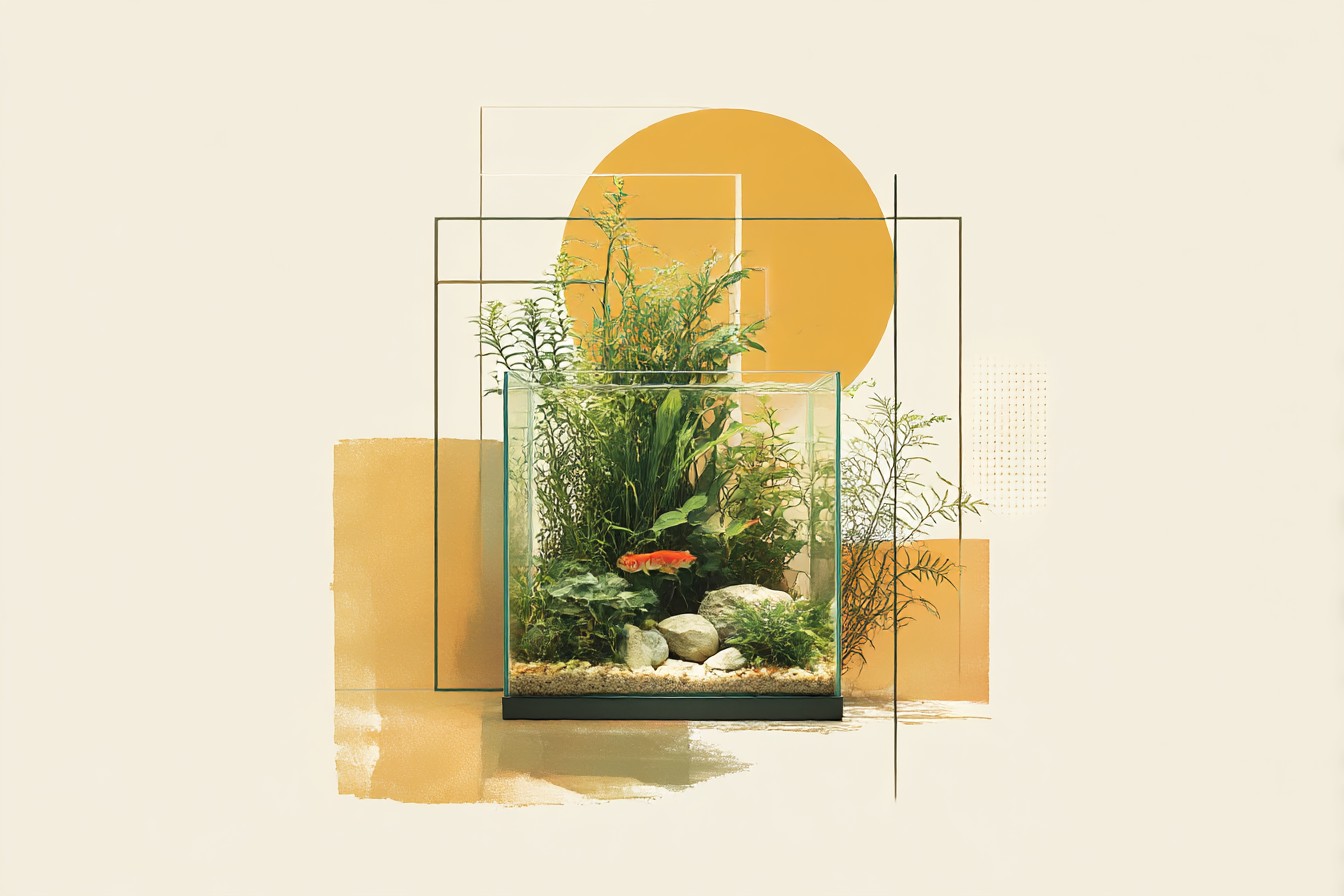
Monitor plant health and adjust fertiliser dosing as needed. Take plenty of pictures during this phase.
Documenting your progress as your aquascape matures will help you see how far your aquascape has come and identify problem areas that need tweaked. Resist the urge to make large changes until your plants have reached their target locations. ### Step 4: Fish (Weeks 17-20) Fish are OPTIONAL when it comes to Japanese aquascapes. I say this because a key part of the Japanese aesthetic is drawing attention away from your aquarium and onto everything else in the room.
Don’t feel compelled to rush out and buy fish for your new aquarium just because your plants have arrived at their desired locations. If you do add fish to your aquarium, stick to small schooling species and avoid larger fish that tend to distract attention. Brightly coloured species that you wouldn’t find in a natural landscape we’re building also take away from the whole ‘natural scene’ thing we’re trying to achieve.
Slow and steady stocking wins the race. **Approximate Costs** * Fish: £30-£80 * Additional Biofiltration: £20-£40 **Total: £50-£120** Want to Build Something Awesome? Now that you know how to build your first aquarium from scratch, it’s time to get building. Armed with a better understanding of Japanese aquascapes and how to complete your first build, you’ve got all the tools you need to get started.
Build networks with other aquascapers in your area and share your progress with us @BucePlant on Instagram and Facebook.