
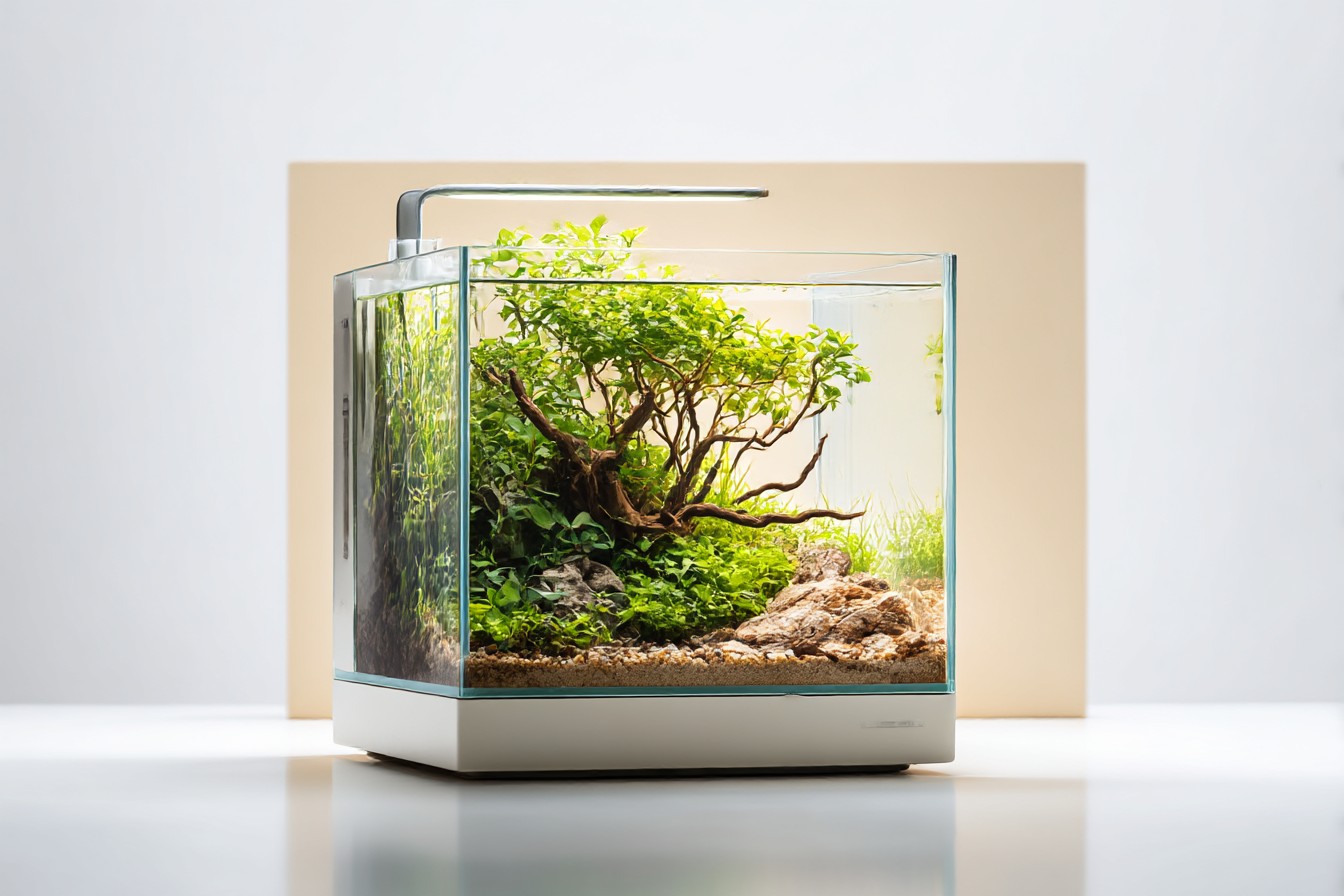
# The Nano Tank CO2 System That Actually Works (And the Ones That Don’t) I started keeping planted tanks three years ago with a 20-litre cube on the kitchen windowsill. Figured I’d keep it simple – a bit of sand, some Java moss, maybe a Betta if I was feeling ambitious. That lasted about six weeks.
Then I saw a photo of someone’s Iwagumi setup online and decided I needed red plants. Red plants, it turns out, need CO2. Proper CO2, not the liquid stuff that costs more than champagne and does about as much good as wishing very hard.
The problem with nano tanks and CO2 is that most systems are built for proper-sized aquariums. Stick a full-bore regulator on a 10-gallon tank and you’ll petrol everything in it before you’ve had your morning tea.
But skip CO2 entirely and you’re stuck with the same half-dozen plants that’ll grow in anything, none of which are particularly exciting to look at.
I’ve run CO2 on tanks from 8 litres up to my current 90-litre setup. Made plenty of mistakes along the way, killed a few fish I shouldn’t have, and learned what actually works when you’re trying to get decent plant growth in something the size of a shoebox. Here’s what I’ve figured out. ## Quick Reference Guide | System Type | Suitable Tank Size | Price Range (£) | Key Feature | Refill Frequency | Our Rating | |————-|——————-|—————–|————-|——————|————| | Disposable Cartridge | 5-25L | £80-150 | Simple setup | 2-4 weeks | 8/10 | | DIY Generator | 10-40L | £30-60 | Low ongoing cost | 1-2 weeks | 6/10 | | Nano Regulator | 8-30L | £120-200 | Precise control | 4-8 weeks | 9/10 | ## The Nano CO2 Problem CO2 injection in small tanks is fundamentally different from running it in larger systems.
In a 200-litre tank, you’ve got thermal mass, biological buffering, and room for error. Add a bit too much CO2 and the fish might look slightly uncomfortable until the next water change. In a 20-litre cube, that same mistake will have everything floating belly-up before you notice something’s wrong.
The maths work against you too. Most regulators are designed to handle pressures and flow rates that make sense for tanks measured in hundreds of litres. Try to dial them down to what a nano tank actually needs and you’re working at the very bottom of their range, where consistency goes out the window.
One day you’re getting a perfect bubble every three seconds, the next day the needle valve has drifted and you’re pumping out petrol like a Victorian factory. Temperature swings hit nano tanks harder as well. That 20-litre cube I started with would swing 4°C between morning and evening just from the kitchen lighting.
CO2 solubility changes with temperature, so your carefully calibrated injection rate becomes a moving target twice a day. ## What Actually Works: Complete Nano Systems The best solution I’ve found is purpose-built nano systems that acknowledge these limitations from the start. Complete nano CO2 systems are specifically designed for small aquariums and typically run around £126.99 (CO2 Supermarket), though the investment pays off in reliability. These systems consistently rate 4.9 out of 5 across 305 reviews (CO2 Supermarket), which tells you something about how well they work in practise.
The UNS Micro CO2 Bundle is typical of what works well – it includes a disposable cartridge plus regulator plus solenoid (Glass Aqua) in one package designed to work together. No mixing and matching components that weren’t meant to play nicely, no trying to throttle down a regulator that wants to supply a tank ten times the size. Tropica’s CO2 System Nano takes a similar approach, positioned specifically for small aquariums (Tropica).
What I like about the Tropica setup is that it’s been developed by people who actually grow aquatic plants professionally, not just people who sell CO2 equipment. They understand that CO2 addition improves colour development (Tropica) but only if you can control it precisely enough not to kill everything while you’re doing it. ## The DIY Generator Route If you’re comfortable with a bit more hands-on work, DIY CO2 generators offer a cheaper entry point. The Fzone 2.5L generator is designed for nano aquarium use and supports up to 30 gallon tanks (Aquariawise), which gives you room to grow if you decide to upgrade your setup later.
These systems work by mixing citric acid plus sodium bicarbonate plus water to create CO2 (Tulip Aqua) in a controlled reaction. The chemistry is straightforward and the ongoing costs are minimal – you’re buying citric acid and bicarbonate by the bag rather than pressurised cartridges. The Fzone unit uses SUS304 stainless steel construction (Fishing Emporium), which matters more than you might think.
I’ve seen cheaper generators where the bottle corrodes after six months and you’re replacing the whole thing anyway. The downside to DIY generators is consistency. The reaction rate depends on temperature, how much you shake the bottle, the exact ratios you mix, and the phase of the moon as far as I can tell.
Some weeks it’ll run perfectly, others you’re mixing new batches every three days because the reaction has petered out. If you enjoy tinkering and don’t mind the occasional adjustment, it’s a good system. If you want to set it and forget it, look elsewhere. ## Why Most Standard Systems Don’t Work I tried running a standard CO2 setup on that first cube tank and it was a disaster from day one.
Standard regulators are built for consistency across a wide flow range, which sounds good until you realise the flow rate you need for a nano tank is so low it barely registers on their gauges. The solenoid valves are the worst part. They’re designed to open and close cleanly at working pressures, but when you’re trying to run them at the bottom of their range, they leak.
Not dramatically – just enough to petrol your fish overnight when you thought the system was off. Needle valves on full-sized regulators are similarly problematic. They’re built to give you fine control across their full range, but when you need to dial them down to deliver one bubble every few seconds, you’re working in the first millimetre of travel.
You Might Also Like
Touch the adjustment screw slightly and your flow rate doubles. Even the pressure gauges work against you. A standard dual-gauge regulator shows bottle pressure and working pressure, but when your working pressure needs to be barely above atmospheric, you can’t read it accurately enough to matter. ## What to Look For in a Nano CO2 System First, make sure everything is designed to work at nano tank pressures and flow rates.
The regulators should have gauges that actually read accurately in the range you’ll be using, not gauges where your operating pressure is barely a tick mark above zero. Second, look for solenoid valves that close completely at low pressures. The cheap solenoids that come with budget systems often weep CO2 when they’re supposed to be shut, which defeats the point of having a timer-controlled system.
Third, consider the CO2 source. Disposable cartridges are more expensive per gram of CO2, but they’re consistent and convenient. DIY reactors are cheaper to run but need more attention.
Refillable cylinders offer the best value if you can find somewhere to fill them locally, but that’s a big if in many areas. ## The Reality of Running Costs CO2 systems aren’t expensive to buy, they’re expensive to run. A disposable cartridge that costs £15 might last a month on a 20-litre tank, maybe six weeks if you’re conservative with flow rates. That’s £120-180 per year just in petrol, before you factor in replacement components.
DIY generators cut the running costs to almost nothing – citric acid and sodium bicarbonate cost pennies per gram. But you’re trading money for time and consistency. If you value your time highly, the disposable cartridge route makes more sense.
Refillable systems offer the best of both worlds if you can make them work. A small refillable cylinder costs about £12 to fill and will run a nano tank for three to four months. The problem is finding somewhere to fill it – most places that handle CO2 refills are set up for larger cylinders and fire extinguishers, not aquarium equipment. ## Installation and Safety CO2 is heavier than air, which means it settles.
In a nano tank on a desk or shelf, that’s not particularly dangerous – there’s not enough petrol involved to cause problems. But it’s worth understanding that CO2 displaces oxygen, so if something goes wrong with your system, your fish will show distress before you notice anything yourself. A drop checker is essential, not optional.
It’s the only reliable way to know what your CO2 levels actually are in the tank, as opposed to what you think they should be based on your bubble count. I use a glass drop checker with 4dKH solution and bromo blue indicator – it changes from blue to green to yellow as CO2 levels rise, giving you a visual indication that’s accurate enough for practical purposes. Position your CO2 diffuser where it’ll get good circulation but won’t blast directly at your fish.
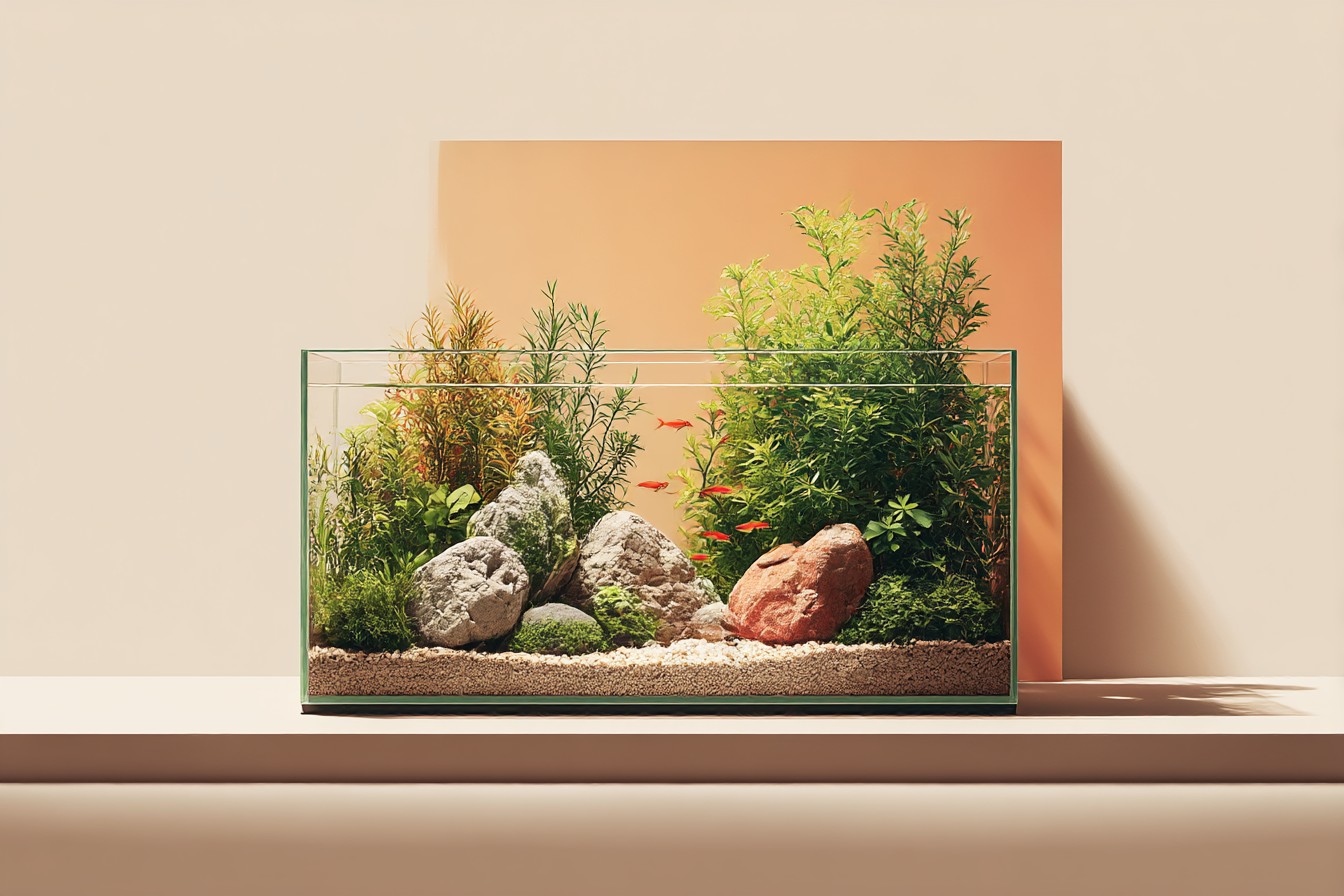
In a nano tank, that usually means placing it opposite your filter outlet so the flow carries the CO2 around the tank before it can off-petrol at the surface. ## When CO2 Isn’t Worth It Not every nano tank needs CO2. If you’re happy with Anubias, Java fern, Java moss, and Cryptocoryne, you can build attractive layouts without any petrol injection. These plants grow slowly and stay compact, which suits nano tanks well.
CO2 becomes worthwhile when you want faster growth, brighter colours, or access to plants that won’t thrive without it. Rotala species, Ludwigia, most carpeting plants, and anything you want to keep red all benefit significantly from CO2 injection. But CO2 also adds complexity, ongoing costs, and potential failure points.
If your nano tank is your first planted setup, consider mastering the basics first.
Get comfortable with lighting, fertilisation, and water parameters before you add petrol injection to the mix. ## The Long View Three years later, I’m running CO2 on three tanks and wouldn’t go back to low-tech setups. The plant growth is faster, the colours are better, and I can grow species that would struggle or fail without supplemental carbon.
But it took me six months and several dead fish to get the first system dialled in properly. The nano systems available now are considerably better than what was available when I started. They’re more reliable, easier to set up, and designed by people who understand the specific challenges of small tank CO2 injection.
If you’re starting fresh, they’re worth the investment over trying to adapt full-sized equipment. See where different CO2 systems placed in our complete nano tank equipment ranking. ## My Recommendation For most people setting up their first nano CO2 system, I’d recommend starting with a complete package from a reputable manufacturer. The UNS Micro bundle or Tropica Nano system will cost more upfront than piecing together components, but they’ll save you the months of frustration I went through getting a DIY setup working reliably.
Once you’ve got experience with a working system and understand how CO2 behaves in your specific tank, then consider whether a DIY generator or refillable setup makes sense for your situation. But for getting started, nothing beats equipment that’s designed to work together from day one. That first 20-litre cube is still running, now with a proper nano CO2 system and a carpet of Monte Carlo that would have been impossible without it.
Sometimes the expensive option really is the smart option, particularly when fish lives are on the line.



[…] rocks look pro. Aquascaping Equipment & Materials We Mention * Where To Buy Aquarium Supplies * CO2 Systems: DIY CO2 or Buy Pre-Built * ADA Aqua Soil Aquarium Substrate * Affordable LED Aquarium Lighting Kits […]