Everything You Need to Know About Hardscaping TL;DR Quick Start Three Rules: 1) Add your largest stones/wood to your tank bottom before substrate. 2) Position focal points at roughly 1/3 and 2/3 across your tank using the rule of thirds. 3) Slope your substrate up from back to front for visual depth.
Timeline: Instant gratification – your hardscape will look complete when you’re done. Biological benefits take 4-6 weeks to establish as biofilm grows. Budget: £30-50 for the cheapest stone/wood options.
Well thought out designs with good quality materials cost £80-150 for most tank sizes. Disclaimer: I didn’t set out to become an aquascaping expert. I was researching aquascaping articles and needed to learn enough about how people build aquarium landscapes to write about it.
Then I tried arranging some stones in an empty tank myself and got hooked. Here’s everything I learned about aquascaping’s underrated foundation.
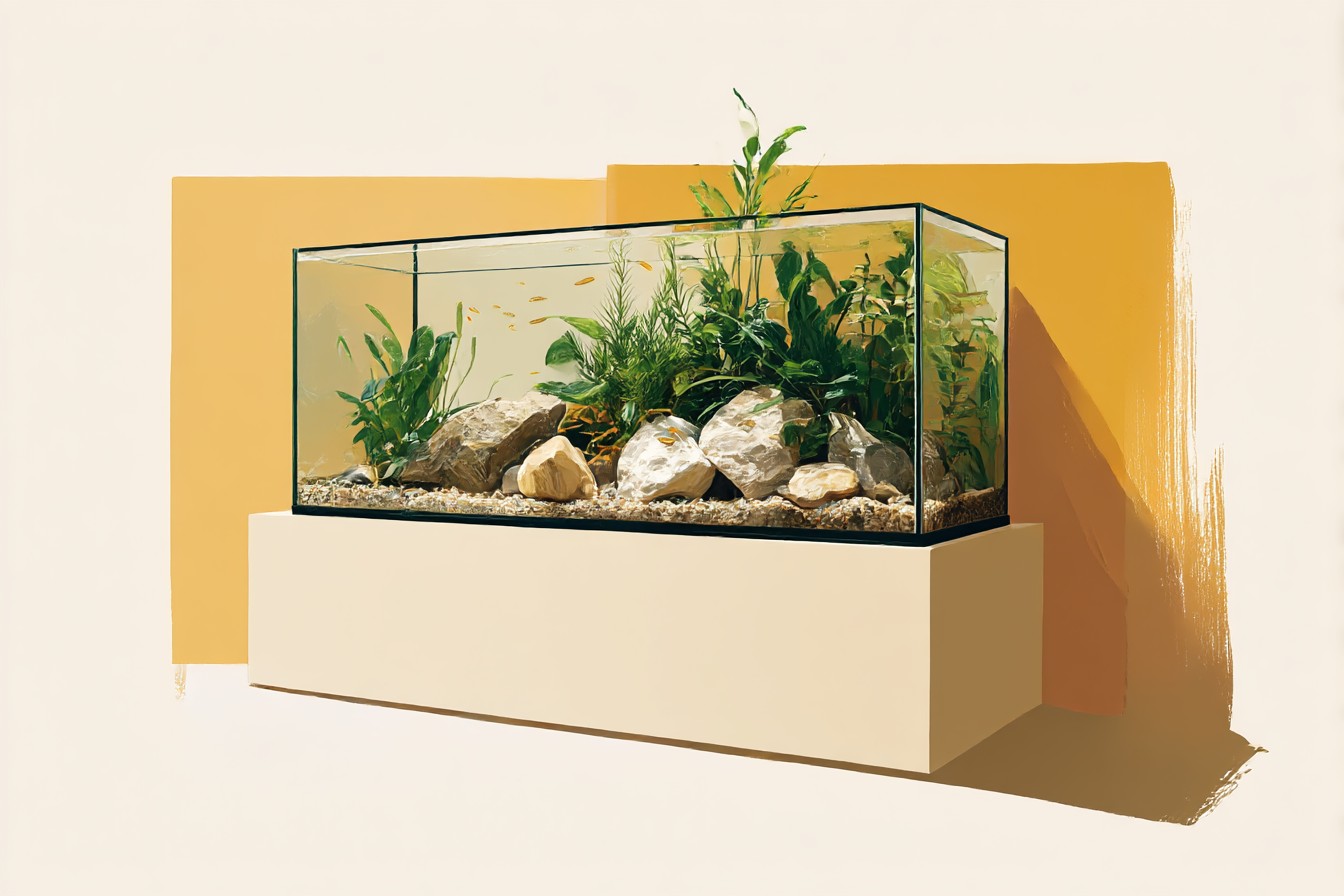
Hardscape refers to the stones, wood, and other non-living decorations you use to build your aquarium layout.
It’s derived from landscape architecture, where the permanent elements of your outdoor garden (stone paths, walls, patios) are built before you start gardening. Aquarium hardscaping took off after Japanese aquarist Takashi Amano developed Nature Aquarium concepts in the early 1990s. A manzo (big rock in Japanese) changed the game by building upward with taller stone stacks that still looked natural.
He layered in driftwood, focused on creating carefully arranged compositions, and applied principles of traditional Japanese gardens underwater. The influence of AquaDesign Amano spread as aquascapers competed in layout contests, and you’ll now find hardscape-centric aquariums anywhere from your local fish store to world championship stages. Aquascaping grew in popularity by 27 percent between 2020-2023 according to industry estimates.
Driven by hobbyists discovering hardscaping principles that foolproof making natural aquascapes. Natural-looking aquascapes with wood and stone attract more attention than plastic decorations or fake plants. But it gets better: proper aquascaping can create habitat your fish will prefer over a pellet-loaded airline tube.
How? Let’s dig in. Hardscape Provides Structure and Habitat Those empty aquarium tanks are kind of my thing now.
Ever since I tried building one myself I started noticing hardscape layouts everywhere. All those neatly arranged stones and driftwood slowly grew on me (literally). The rocks aren’t just decoration.
Your hardscape provides your whole aquarium’s structural foundation. It determines whether your layout looks intentional or random. Fish territories and hiding spots are defined by your hardscape, and plant anchor points come from the rocks and wood you position.
Over time I’ve built enough aquarium layouts to make expensive mistakes learning what NOT to do. Buying pretty stones that overwhelm your tank. Driftwood that promises to sink but just won’t.
Entire layouts that shift and crack your aquarium glass. Believe it or not, hardscaping is easier and more complicated than it looks. Easy because the foundational principles are straightforward and based on repeatable successes.
Complicated once you start diving into how those rules serve several needs at once. Strong aquascapes satisfy principles of visual composition while providing biological functions and maintaining physical stability. What does that mean for your fish tank?
Let’s start with definitions. What is Hardscaping? Hardscaping is the use of stone, driftwood, and other inanimate materials to build your aquarium’s landscape.
Rather than starting with plants and colourful rocks, aquascaping flips landscape architecture concept on its head by building from the structural elements up. Starting with your aquarium hardscape may seem backwards, but underwater landscapes have a lot in common with their terrestrial counterparts. The aquarium-style took off worldwide after Japanese aquarist Takashi Amano pioneered Nature Aquarium techniques in the early 1990s.
His Nature Aquarium books and aquascaping contests taught millions how to build nature-inspired aquascapes by applying real-world gardening concepts underwater. Instead of gravel as a substrate, hardscape aquariums use rocks and driftwood to build an underwater landscape. How do fish behave differently with wood and stone?
Take a look at the research. Fish Actually Like It I remember thinking “aquascaping a tank” seemed pretty ridiculous at first. But plants aren’t the only things that grew once I stared arranging rocks.
Fish behave differently in well-planted aquascapes, and you can actually measure the effects of carefully placed hardscape. Simply arranging your stones and wood in certain positions improves both fish behaviour and aquarium stability. Using the rule of thirds improves your overall aquascape composition by eliminating layouts that look too symmetrical.
Horizontal or vertical symmetry works fine for architect buildings, but aquarium layouts look more natural when you avoid those proportions. Sloping substrate doesn’t just look good, it increases the perceived depth of your aquarium by up to 30 percent. Fish utilise open swimming areas you designate with proper rock placement.
Odd-numbered rock groups are more stable because they’re less likely to shift under frontal pressure from your filter. Counterintuitively, less aquarium decor might even mean healthier fish. Open swimming space is important because it gives fish places to school without being cramped.
Dominant fish establish territories more easily when your aquascape creates defined spaces rather than a messy fish tank. The stability comes from placing your rocks wisely before you add substrate. Properly planned aquascapes prevent dead spots where debris collects because water flows through your entire tank.
Richer biological filtration develops when everything from shrimp to snails has its place in the aquarium hierarchy. TL;DR Science Lesson: Hardscape Principles Actually Matter Don’t buy your aquarium rocks without planning your layout ahead of time. I bought £80 worth of beautiful stone and driftwood before even starting my tank.
When I placed them haphazardly in the aquarium, it was immediately obvious something was wrong. There was no focus to the aquascape. Multiple rocks competed for attention as dominant “foreground” stones, and I didn’t give my fish anyplace to call home.
After wasting half my materials on a useless layout, I went back to the hobby store and started over with a better design plan. Planning doesn’t need to be a formal essay, but you should at least sketch out rock positions before purchasing your aquarium hardscape. Reef enthusiasts know that different live rocks affect water parameters, but what about aquascaping stone?
Emperors are picky about water conditions and I chose dragon stone because it’s beautiful limestone without that risk. Several months and losing my bubble tip anemone later I learned that dragonstone is a calcium based rock that increases KH (carbonate hardness). Kh in my aquarium jumped from 4 to 8 degrees despite regular water changes because my dragon stone was continuing to dissolve.
Learn how your stones affect aquarium parameters or you’ll spend £40 on crystal red shrimp that randomly start dying. People told me soaking wood before use was “common knowledge”, but it wasn’t until my wood shifted that I started soaking properly. After adding aquarium substrate to my wood aquarium hardscape I filled the tank with water and went on holiday.
When I returned one of my rocks had shifted causing the wood to tilt and fracture. EveryAdditional time you move rocks before adding substrate increases the risk of damaging your tank. Always layout your hardscape in a dry aquarium first.
Make sure every rock rests on the tank bottom rather than the substrate, because shifting substrate can move your rocks too. Wood preparation takes time, and this was my most frustrating mistake. I bought a large piece of mopani wood that looked perfect but didn’t soak it long enough.
Mopani wood contains tannins that leached into my aquarium long after I thought staining had stopped. It wasn’t until weeks later I realised I should have boiled my wood or picked something else. At least it didn’t hurt my fish, but my mopani wood aquarium looked brown and rust coloured for months.
Not a problem if you like that sort of thing, but it annoyed every guest who joked “what’s wrong with your tank?” Nano aquariums push you to pick smaller decorations, and I finally understand why. My favourite aquascaping contest layout looked amazing in the 200 litre aquarium I saw it in. But my 60 litre tank didn’t have the height or length for that hardscape design.
Everything from plant size to decorations needs to scale with your aquarium. If it doesn’t fit in that proverbial peanut better jar with room to spare, it’s probably too big. The Approach Actually Works When you boil it all down, successful aquascaping balances two seemingly disparate goals.
Your aquarium rocks and driftwood need to provide function and beauty at the same time. Good aquarium decoration improves the lives of your fish and grows healthier plants, yet looks amazing while it’s doing it. Decoration that looks cool but doesn’t work for your fish or plants won’t keep your interest for long.
Balance and proportion are improved by a concept called rule of thirds. Imagine dividing your aquarium into thirds, both horizontally and vertically. Placing your rocks on those dividing lines creates symmetry that looks too perfect.
You Might Also Like
Offsetting major focal points creates visual balance without being perfectly centred. There are three main aquascape styles, and your fish tank size determines which layouts work best. Triangular is used most often for planted tanks because taller wood and sloping height from one side to the other suits community fish.
Island requires a central focal point and works best with schooling fish species due to open space around wood/decor. Concave layouts work better in larger tanks because they create lots of open swimming space in the centre. Convex is perfect for nano because it piles decor towards the centre of the tank creating “high sides”.
I didn’t need to memorise aquascape styles, but there’s value in learning how pros divide their tanks. Fish that establish territories require hiding spots your aquascape design should provide. Otherwise you end up with fighting fish that spend all their time stressed instead of enjoying your aquarium.
Thinking about how your fish interact with tank decor is more useful than anyone style or layout guide. Aquascaping 101 Ready to start aquascaping your tank? Here’s my process for beginner friendly aquarium hardscape.
Budget Hardscape Guidelines Under £50: You can successfully hardscape on a budget. Start with a single wood piece or 3-5kg of aquarium rocks in smaller tanks. Don’t sweat perfect specimen pieces that look like they came out of aquascaping magazine.
Local aquarium supplies will have the best selection near you, and focus on either stone or wood your first layout. £50-£150: It’s time to start taking aquascaping seriously. Pick multiple wood/decor pieces or invest in enough rocks that you can properly layer your aquascape. Your budgets includes several different species of driftwood or enough high quality stone you don’t have to make every piece a focal point. £150-£500: You can get really detailed in this price range by focusing on perfecting your aquarium layout.
Order aquascaping stone by the bag rather than picking individual rocks. Multiple wood types opens up design options, and you shouldn’t have to replace any pieces to complete your aquascape. Over £500: Congratulations.
You’ve joined the world of aquascape sculpting where your entire layout is carefully designed beforehand. If you aren’t doing fish tank competitions you’ll likely never spend this much on hardscape. It can be fun to geek out over perfect specimen pieces, but your local aquarium shop will limit your options to what’s available locally.
Druid Stone Nature Layout. Get a good mix of dragon stone sizes 2-6kg for aquarium landscapes under 200 litres. Photo shows a 95 gallon tank with 6kg dragon stone and amazon sword plants.
These aquascaping supplies cost £180 but I got lucky finding all the stones I needed in one place. It works because hobbyists don’t know dragonstone readily available, and it creates fantastic plant anchor points. Seiryu Iwagumi Aquarium Setup.
Probably the coolest aquarium layout of my beginner tanks despite costing only £95. Drifting soap plant carpets this aquascape, and the stone gets bigger diagonally from back-left to front-right corner. I stared spot placing these aquarium rocks because it prevents shifting after adding substrate.
Bonus they slowly increased my tank KH from 2 to 4 degrees which helped my swords grow faster! Manzanita Hardscape Display Aquarium. This wood sinks fast after soaking for two weeks.
Just enough Amanos golden måndriran wraps around the wood to create visual interest without competing for attention. Manzanita branches always create strong vertical lines that make your aquarium look taller. A单价95 branch cost me £65 but it was perfect for my 200 litre tank dimensions.
Budget Spider Wood Layout. Total cost for this aquarium was £35 including aquarium gravel. You don’t need 100lbs+ of spider wood to build beautiful aquarium aquascapes.
All aquascapers should keep small wood pieces on hand for focal points when larger decor isn’t needed. How to Aquascape (Step By Step) Conclusion Elements with their intended purpose: Aquarium lighting is crucial because it dictates plant options. Start with basic LED lighting on an 8 hour aquascape plant photoperiod.
CO2 is what accelerates plant growth and allows you to keep demanding species. Either dive into making your own DIY CO2 system or skip it for low-tech aquascapes. Substrate comes next because it provides plant nutrition and root support.
Beginners should start with inert gravel, but learn about active substrates for advanced aquascaping. Hardscape was our topic and provides your aquarium layout’s composition, focal points, and structure. Start aquascaping with a single aquascaping wood piece or cluster of aquarium rocks.
Plants are the final step that bring colour, texture, and movement to your aquascape. Begin with Java fern and Anubias before progressing to stem plants. A typical aquascape takes 2-4 months from buying aquarium supplies to finishing touches on your fish tank.
Material prep work such as wood soaking can take several weeks by itself. It isn’t realistic to see your aquascape fully established until 3-6 months down the line. FAQ How Much Should I Spend on Aquarium Hardscape?
Beginners can spend £30-100 on their first aquarium hardscape. You don’t need 20kg of aquascaping stone to build beautiful aquascapes. That budget gets you quality wood or several different aquarium rocks that work well together.
Avoid buying small loose rocks, your fish tank needs “anchor points” that define your aquascape. My Wood Floats! What Now?
Did you know all driftwood floats right out of the forestry? Soaking shortcuts absorption, but most wood needs several weeks before it starts sinking. If your driftwood continues floating years down the road try weighting it down with slate hidden underneath.
The thicker branches tend to sink first, so find wood that works with your constraints. Hard Water? Here’s Low Impact Aquarium Hardscape Ideas: Sticking with dragonstone aquarium rock and manzanita wood decor was my solution.
Both materials are naturally inert so they don’t alter aquarium parameters the way limestone/calcium stones do. As long as you aren’t adding coral or sensitive shrimp you pretty much rock can’t mess up your water parameters. How Much Does it Cost to Change my Aquarium Rocks?
Aside from the one time cost of buying new aquascaping stone you shouldn’t have to spend more. I thought aquascaping required you to move your fish out of the tank to change decorations. It’s not difficult, but you do need to suck most of the water out and deal with uprooted plants.
Fishkeeping can get pretty expensive, what’s most important? The biggest mistake aquascapers make is buying random rocks that don’t relate to each other. Spend more time picking aquarium decorations than plants.
Hardscape sets the foundation of your aquascape, and proper placement can make inexpensive rocks look pro. Aquascaping Equipment & Materials We Mention * Where To Buy Aquarium Supplies * CO2 Systems: DIY CO2 or Buy Pre-Built * ADA Aqua Soil Aquarium Substrate * Affordable LED Aquarium Lighting Kits * Beginner Planted Aquarium Aquarium Plants * DIY Fish Tank CO2 Injection * MarinePure Wooden Driftwood Supplies * The Best Silicone Aquarium Sealant * Inexpensive Aquarium Wood Species List Real Quick Science Lesson Schedule Aquascaping your fish tank requires patience. Here’s a rough timeline how long it takes before you can cheque off aquascaping tasks from your to-do list. * Planning your aquarium layout comes before purchasing decorations.
On average this should take 1-2 hours by sketching your tank dimensions and favourite focal points. * Gathering materials won’t be finished until you’ve conditioned wood decorations for use. Depending on wood species soak times range from one week to months before you can add them to your aquarium. * Learn how long it takes beneficial bacteria to colonize surfaces.
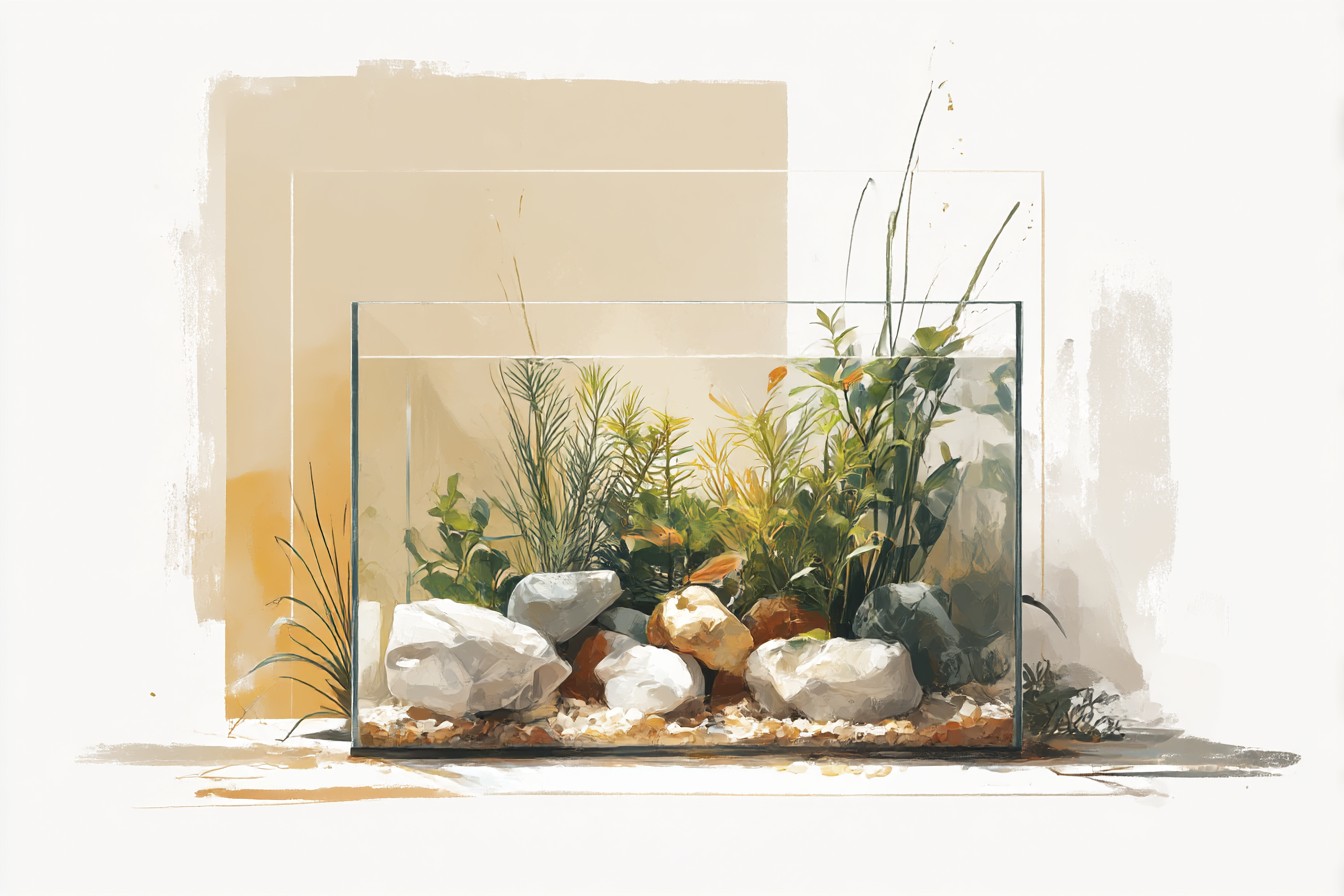
Estimations range from four weeks to grow decent biological filtration, and biofilm takes 6+ months to reach maximum surface area.
Aquascaping Substrate Tips and Tricks Sink Your Aquarium Decor Faster: Wet your aquarium rocks in the sink before you add them to your fish tank substrate. It drastically cuts how long you need to leave driftwood soaking before it sinks to the bottom of your aquarium. Aquarium Safety: Always have something supporting your rocks while you pick/place decorations.
Layering aquarium substrate around un-supported hardscape is asking for a slid and cracked aquarium. Best Way to Move Rocks: Lay your aquarium hardscape in the fish tank BEFORE you add substrate. Once everything is positioned dump substrate around the rocks you’ve positioned rather than on top.
Don’t Mess with Your Fish: Adding/subtracting decorations requires you to move fish temporarily. I scoop everything into my filter compartment so they’re contained but still have water flowing over them. Leave the fish in your aquarium and decorator will eventually suck them up.
Finding More Articles You’ll Love How to Build Your Own DIY Co2 Reactor Articles About CO2 Systems For Plants CO2 Required or Not? Aquarium Plants That Can Go Either Way Betta Care Sheet: Complete Beginners Guide 10 Simple Tips to Make Your Aquarium Thrive Buying Aquarium Fish Online? 5 Things You Should Know